
Reviewed · YOKOHAMA TOURS
Learn Sushi-grade fish with a licensed guide @Yokohama fishmarket
Fresh fish lessons start early.
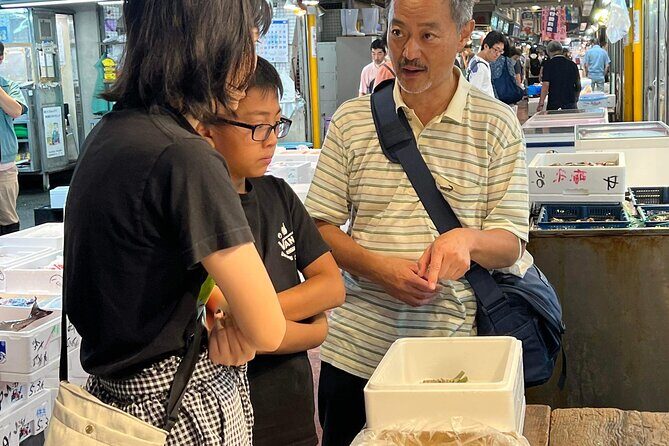
This Yokohama Fish Market tour is interesting because you’re not just looking at seafood. You’re learning how fishermen catch it, how it’s handled to stay fresh, and how that turns into sushi you can order with confidence. I especially like the focus on practical fish knowledge (names, uses, and what to ask), and I also like that it’s small, with a licensed guide who explains the process clearly as you walk the market.
There is one thing to consider: this is a fish wholesaler environment, so you’ll see raw fish, including eyes and bones. If that’s not your idea of fun, skip this and choose a lighter food experience instead.
In This Review
- Key takeaways before you go
- Yokohama’s fish market logic: fresher starts than Tokyo
- Meeting at JR East Yokohama and the quick walk to the market
- Entering the wholesale market: sushi toppings and real ingredient variety
- Catch-to-counter: how your guide explains freshness handling
- Tuna tastings and buying confidence in a local market
- The dismantling show: what to watch for (and why it counts)
- Walking the in-market restaurants: sushi sets come after the lesson
- Price and value: what $55.28 buys you in Yokohama
- Who should book, and who should skip this fish-first tour
- Should you book this Yokohama fish market sushi-grade lesson?
- FAQ
- Where does the tour start, and what time is it?
- How long is the Yokohama Fish Market tour?
- Where is the tour located?
- What’s included in the ticket price?
- Is food included?
- Do I get to taste anything during the tour?
- Do I need to bring water?
- How much walking is involved?
- Is it okay if I don’t want to see raw fish?
- What weather is required?
Key takeaways before you go
- Small group feel: max of 2 travelers, so your questions actually get answered.
- Local-market access: permission to enter the wholesale market areas.
- Free tuna taste: you get a bite, not just a lecture.
- Tuna dismantling explanations: watch the breakdown and learn what the guide wants you to notice.
- Freshness logic, not myths: how fish is kept fresh before freezing was common.
- Japanese you can use: learn fish names and how to ask for them.
Yokohama’s fish market logic: fresher starts than Tokyo
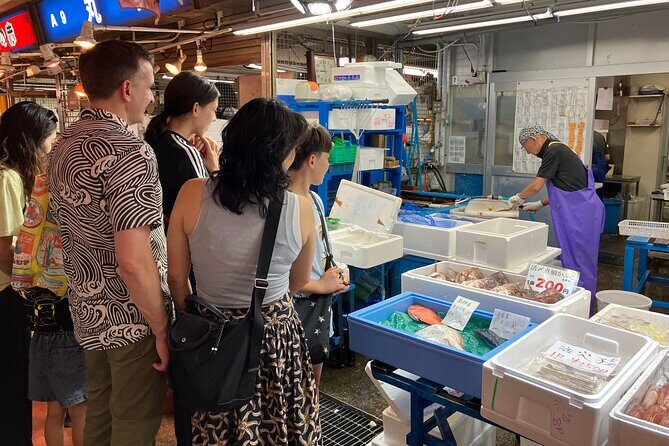
One big reason I like this tour is that it gives you a realistic map of seafood supply. The tour frames Yokohama as a working seafood hub with access to morning catches from many local fishing grounds. You also get a useful comparison that matters when you eat sushi in Japan: Tokyo’s big markets are famous, but this tour makes the point that you don’t have fisheries in the greater Tokyo area, so the supply chain can feel different.
Here’s what you’ll actually take away while walking: you’ll stop thinking of seafood as just a restaurant ingredient. You start seeing it as a product with a timeline—caught, brought in, sorted, handled, and then sold. That makes it much easier to judge quality when you order later.
Also, you’re doing this in Yokohama, about 25 minutes from Tokyo Station by train. That means you can get the local market experience without turning your whole day into a long commute.
Meeting at JR East Yokohama and the quick walk to the market
Start time is 7:30 am, at the North gate of JR East Yokohama Station (2 Chome-16 Takashima, Nishi Ward). The tour includes about a 15-minute walk to reach the fish market, then a walking loop inside the market area and nearby in-market restaurants and shops.
This schedule is ideal for two reasons. First, it matches how wholesale seafood works—morning is when the action is fresh and active. Second, it keeps the experience short enough that you can still eat after. The tour is designed to wrap back around 9:00–9:30, and you can stay behind if you want a meal from one of the market restaurants.
Practical tip: the tour specifically warns that the market floor can be very slippery. Wear stable shoes. Avoid high heels. You’ll be glad you did when you’re stepping carefully between stalls.
Entering the wholesale market: sushi toppings and real ingredient variety
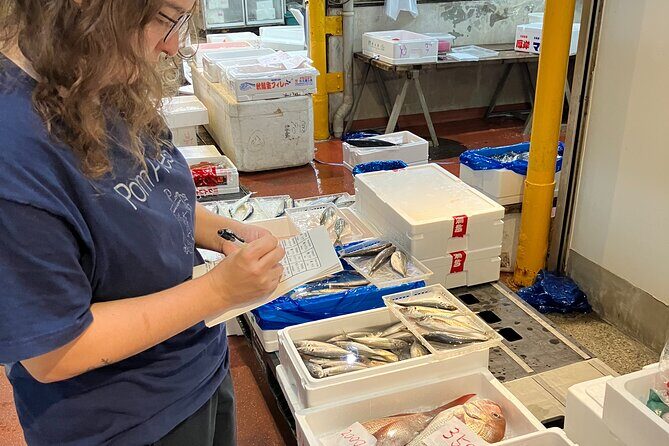
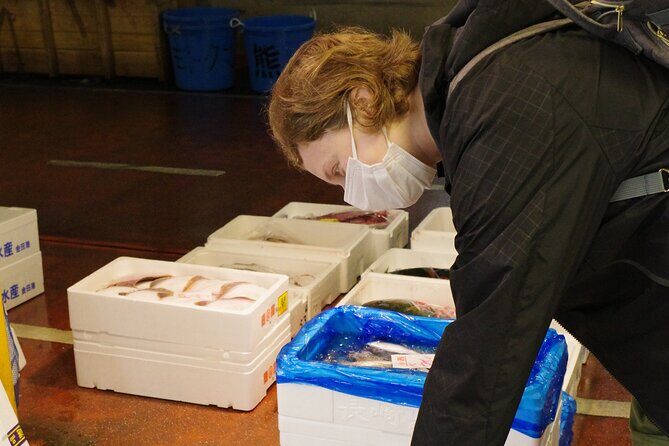
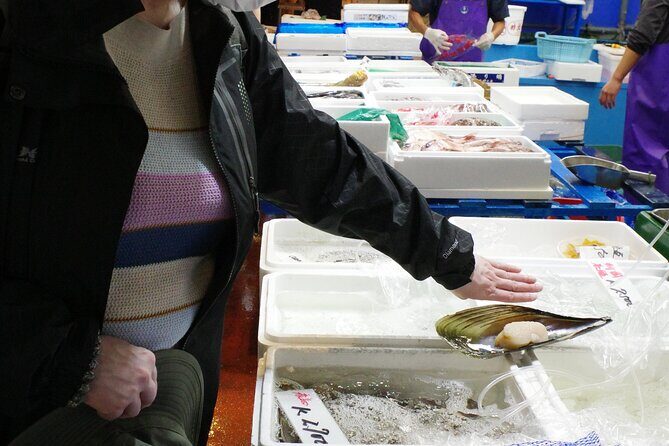
Once you get permission to enter, the market feels different from the typical sightseeing version of a fish market. You’re in the part of the market where fish is treated like a working product. You’ll browse and learn about sushi-grade fish and toppings, and you’ll see a range of seafood and other items tied to sushi meals.
The tour is built around morning sourcing. It talks about fish caught that morning at over 20 local fishing grounds, so your guide can connect what you see to where it came from. Expect the walk to feel like an ingredient class with visuals: fish types, seafood forms, and the logic behind why certain pieces are chosen for sushi.
Why this matters for you: later, when a restaurant menu lists a fish name you can pronounce, you’re not stuck guessing. You’ll know what role that fish plays and what you’re paying for. That turns sushi ordering from a guessing game into a skill.
Catch-to-counter: how your guide explains freshness handling
A highlight is the guide’s real-world perspective on seafood handling. The tour describes a licensed guide with decades of fishing experience across Japan, from places like Hokkaido to Kyushu, for over 50 years. That background shows in the explanation style: not just what fish is, but how it’s caught and kept fresh.
You’ll also learn how seafood was preserved before freezing technology spread widely. Even if you know the basics of sushi-grade fish, this kind of “how it used to be done” context is useful. It helps you understand why certain handling methods matter—temperature, timing, and careful storage—rather than treating freshness as a marketing word.
This freshness lesson also connects directly to why sushi tastes different from one place to another. If two restaurants use the same fish name, but one is handling it with better process control, the mouthfeel and flavor can shift. That’s the kind of difference this tour trains you to notice.
Tuna tastings and buying confidence in a local market
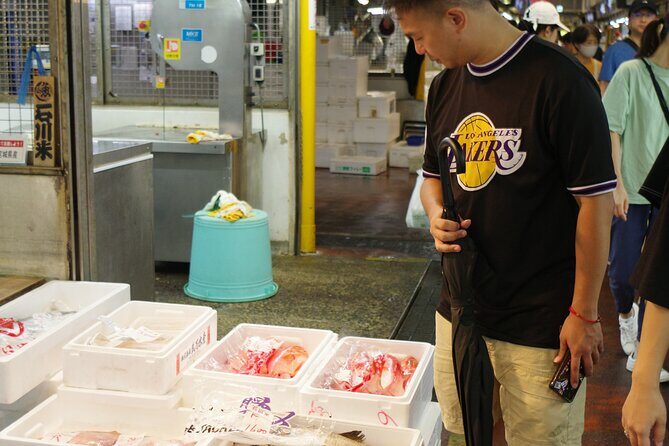
You’ll get FREE TUNA during the tour. That’s a rare treat in a market lesson, because it turns knowledge into something you can taste right away. Even small tastings help you calibrate what you think you’re tasting versus what you actually are.
Then there’s the buying side. The tour encourages you to purchase fresh tuna fillets or blocks, and it also explains that navigating the market without a guide can be tricky because of local Yokohama dialect. In other words, this isn’t only about sightseeing. It’s about learning how to communicate and how to not sound lost when you want something specific.
If you like sushi, you’ll probably love the practical outcome: you don’t just learn fish names in Japanese. The tour also teaches you how to ask for the fish name in Japanese, so you can walk into a sushi restaurant later with a useful script.
Small caution: don’t expect the tour to be a quiet museum experience. You’ll be around working stalls and lively market talk. If you’re the type who gets overwhelmed easily, plan to slow down and follow your guide.
The dismantling show: what to watch for (and why it counts)
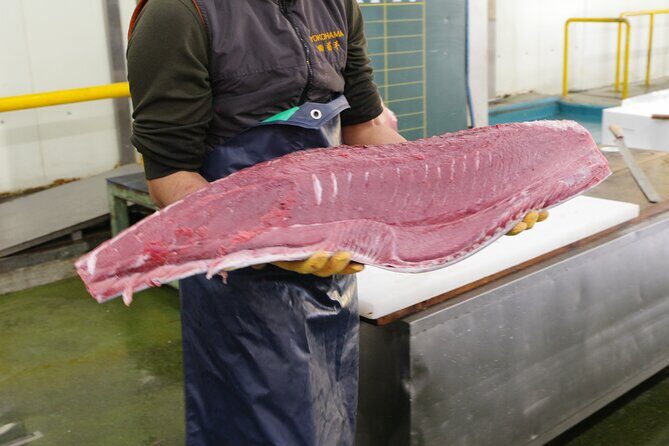
One of the most praised parts is the tuna dismantling show, with excellent explanations by the guide. This kind of moment is valuable because you see technique, not just results.
When fish is broken down, you learn what matters:
- where different cuts come from,
- why certain portions are preferred for sushi,
- and how thickness and texture can change how the fish eats.
It also keeps the tour from being only verbal. You get a visual reference, which is huge if your Japanese is basic. Even if you only catch parts of what’s said, you’ll remember the shapes, the cuts, and the guide’s point about what to look for.
For you as a future diner, that show becomes a mental shortcut. When you see a tuna plate later, you’ll think: which cut is this, and how does it likely differ from the tuna I tasted?
Walking the in-market restaurants: sushi sets come after the lesson
After the market stroll, the tour ends with a walk around in-market restaurants and shops where you can eat sushi and fish dishes. Food is not included in the tour price, so you cover the meal cost.
The tour notes an approximate price for a sushi set menu of ¥2,200. If you want to eat, it’s smart to plan your meal budget now rather than deciding on the spot. Also remember: you’ll be hungry after a morning walk through fish counters, so give yourself enough time to choose.
This restaurant loop is more than a casual “optional lunch.” It’s where the tour’s learning clicks into daily life. You’ll be able to match what you saw—species, cuts, and handling—to what’s actually served. That’s how you turn a market visit into a skill you can use on your next meal.
Price and value: what $55.28 buys you in Yokohama
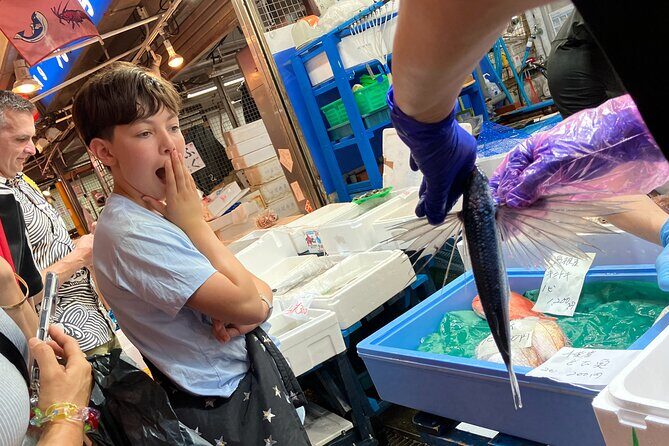
The price is $55.28 per person for about 2 hours (approx.), and it includes permission for entrance to the whole sale market. That matters more than it sounds. Many market experiences are only outside-facing. Here, your ticket gets you into the wholesale setting where the real handling knowledge lives.
What’s not included is the meal, plus bottled water and soda/pop. Food is optional at your own cost, and you’ll likely want it because of the free tuna and the sushi-focused theme.
So is it worth it? For me, the value comes from three things:
- the focused guide education (freshness, preservation, and fish knowledge),
- the small-group format (max 2 travelers),
- and the access component (wholesale entrance), not just a walk through public areas.
If you’re the type who enjoys learning ingredients and you plan to eat sushi in Japan anyway, this tour is a high-return use of time. It costs less than many “food tours” once you factor in that you’re also buying your own meal and drinks.
Who should book, and who should skip this fish-first tour
This is a good fit if you:
- love sushi and want to understand what’s behind the menu names,
- want to learn how to ask for fish names in Japanese,
- enjoy market scenes where you can see fish processing up close,
- and like guided context more than wandering alone.
It’s also ideal if you’ve ever thought, I like sushi, but I don’t know what I’m looking at. This tour gives you a framework.
Who might skip it:
- If you don’t want to see raw fish, including eyes and bones, this is not your tour.
- If you’re sensitive to very active market conditions, you may prefer a less intense food experience.
One more honest note: the tour is designed for people who can benefit from Japanese explanations. It specifically says navigating the market can be tricky without the guide, due to local dialect. In practice, that means you’ll get more from the tour if you’re comfortable with guided instruction (or if you can follow along even when Japanese details are moving fast).
Should you book this Yokohama fish market sushi-grade lesson?
Book it if you want more than photo ops. This is a structured market education with free tuna, a tuna dismantling show, and a guide who explains catch, handling, and preservation. The small group size makes it easier to ask questions and actually remember what you learn.
Don’t book it if you hate the idea of seeing raw fish up close. Also, if you’re only looking for a casual breakfast stroll, you might feel like the tour is too ingredient-focused and active.
If you’re planning to eat sushi after this (and you should), think of this tour as your decoder ring. You’ll return to the restaurant loop with better questions and better understanding, so you get more out of the meal you’re already going to buy.
FAQ
Where does the tour start, and what time is it?
Meet at the North gate of JR East Yokohama Station at 7:30 am. The tour returns around 9:00–9:30.
How long is the Yokohama Fish Market tour?
It runs about 2 hours (approx.).
Where is the tour located?
It’s in Yokohama, Japan, around the Yokohama Fish Market area.
What’s included in the ticket price?
The ticket includes permission for entrance to the whole sale market.
Is food included?
No. You can walk through in-market restaurants and shops, but meals are excluded. The tour notes an approximate cost of ¥2,200 for a sushi set menu.
Do I get to taste anything during the tour?
Yes. You’ll get FREE TUNA during the experience.
Do I need to bring water?
Water is not included. The tour specifically lists bottled water as not included.
How much walking is involved?
You’ll walk about 15 minutes to reach the market, plus walking inside the market and around nearby shops.
Is it okay if I don’t want to see raw fish?
The tour says it is not recommended for people who do not want to see raw fish, including eyes and bones.
What weather is required?
The experience requires good weather. If it’s canceled due to poor weather, you’ll be offered a different date or a full refund. You can also cancel for a full refund up to 24 hours before the experience’s start time.
Easier with a Guide
More Tour Reviews in Yokohama


Next Door in Yokohama
Yokohama Tours, compared.
 ★ 4.9EVO, WRX, Skyline – JDM Night Run to Daikoku Car MeetFrom $125478 reviews
Best Price Daikoku Parking Area JDM Car MeetFrom $76192 reviews
★ 4.9EVO, WRX, Skyline – JDM Night Run to Daikoku Car MeetFrom $125478 reviews
Best Price Daikoku Parking Area JDM Car MeetFrom $76192 reviews
 ★ 4.9Daikoku & Tokyo Private JDM Tour by 700HP R34 GT-RFrom $586101 reviews
 ★ 5.0Tokyo 8hr Private Tour with Licensed Guide from YokohamaFrom $20194 reviews
 ★ 5.0【Tokyo】JDM Daikoku Parking Area & Nissan Facility TourFrom $5587 reviews
 ★ 4.5Narita Airport: One Way Private Transfer to Tokyo|Yokohama HotelsFrom $7769 reviews
 ★ 5.0R34Skyline Daikoku PA Fast & Furious Private ExperienceFrom $10963 reviews
 ★ 5.0Shuttle Van Transfer, Yokohama(Port)⇒Tokyo, Narita, Haneda, TDRFrom $12263 reviews
Browse the lists this tour appears in