
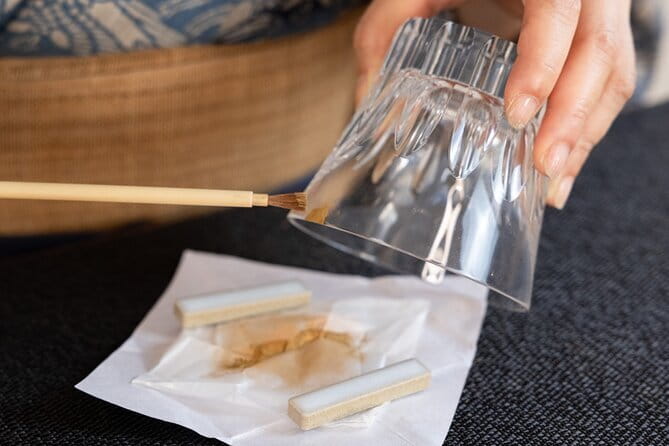
Reviewed · TOKYO
Kintsugi Workshop Class in Shibuya, Tokyo with mon cadeau
Tokyo has a funny way of slowing you down.
This kintsugi workshop is interesting because it swaps queues and cameras for hands-on repair work and a mindful rhythm. I also like how you get personal guidance while making a real, take-home object. One possible drawback: it’s not a “quick souvenir” class. You’re going to spend the full ~2 hours learning and doing the process, so it’s best when you can give it your attention.
You’ll start with a calming matcha moment and local sweets, which sets the tone fast. The class is capped at a maximum of 6 travelers, so it doesn’t feel like you’re watching from the back row. Instructors Michiko-san and Yuki-san provide step-by-step help, and that homey, welcoming vibe matters when you’re working with something delicate like broken pottery.
What you’ll take home is the point. You choose your own piece from mon cadeau’s collection, learn the background of kintsugi, then restore it with guidance so you actually get to finish. That said, if your only goal is to “see Japan,” you may find this workshop slower than a typical sightseeing block.
In This Review
- Key Things to Know Before You Go
- Kintsugi in Shibuya: Why This Class Feels Calmer Than Sightseeing
- Meeting mon cadeau: Matcha, Sweets, and a Very Welcoming Pace
- Choosing Your Pottery: Making the Class Personal From Minute One
- The Kintsugi Lesson: Origins, Traditions, and the Step-by-Step Repair
- Why the Max of 6 Travelers Matters So Much
- Matcha, Local Sweets, and the Break You Actually Need
- Time, Tickets, and Getting There in Shibuya Without Stress
- Price and Value: Is $145.35 a Good Deal?
- Who This Workshop Suits Best (And Who Might Skip It)
- Should You Book This Kintsugi Workshop?
- FAQ
- What is the duration of the kintsugi workshop?
- Where do I meet for the workshop?
- How many people are in the class?
- Is this workshop private?
- What happens at the start of the workshop?
- What is the cancellation policy?
Key Things to Know Before You Go
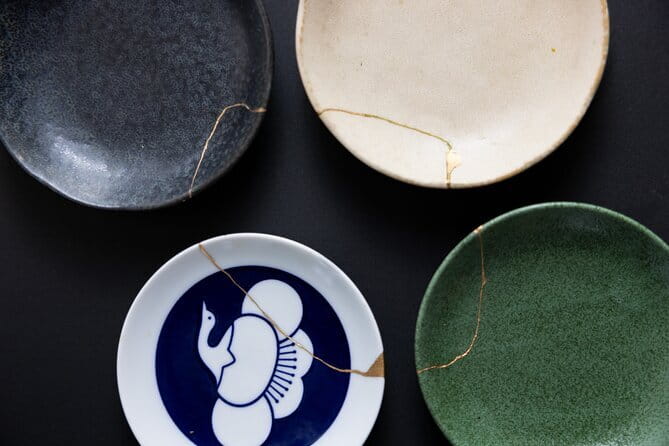
- Small group (max 6) means more hands-on help instead of crowd control
- Matcha and local sweets start you in the right mindset before you touch the pottery
- Choose your own crockery from mon cadeau’s collection, so your final piece feels personal
- Michiko-san and Yuki-san guide the process step-by-step during your repair
- You learn the origins and traditions of kintsugi, not just the technique
- You end back at the meeting point, keeping your logistics simple in Shibuya
Before you commit, see how this one stacks up against a few Tokyo favourites:
- Mt Fuji and Hakone 1-Day Bus Tour Return by Bullet Train★ 5.0 · 26,383 reviews
- 1-Day Tokyo Bus Tour★ 5.0 · 14,250 reviews
- Tokyo: teamLab Planets TOKYO Digital Art Museum Entry Ticket★ 4.6 · 9,779 reviews
Kintsugi in Shibuya: Why This Class Feels Calmer Than Sightseeing
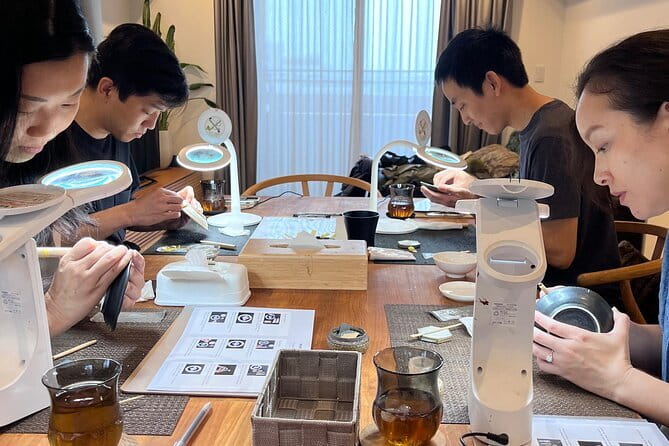
Shibuya is busy by default. This workshop is the rare Tokyo plan that asks you to slow down on purpose. Kintsugi isn’t just a craft trick. It’s the idea that breakage doesn’t have to be hidden. Instead, repaired lines become part of the object’s story.
That philosophy is what makes the experience work for most people, even if you’re not crafty. You’re not trying to be perfect. You’re learning a tradition that turns an imperfect outcome into meaning. And because the session is about restoring one piece, you can focus without feeling like you’re constantly moving from one stop to the next.
Meeting mon cadeau: Matcha, Sweets, and a Very Welcoming Pace
The experience begins at Central Hospital, 25-1 Shinsenchō, Shibuya, Tokyo 150-0045. The workshop then runs for about 2 hours and ends back at the same meeting point, which is a big plus when you’re figuring out transit in a dense neighborhood.
Before you get to the hands-on part, you’ll have a matcha tea moment. It’s not just a nice touch. Starting with tea and local sweets helps you settle your body and your attention—exactly what you want before working on fine, breakable surfaces. This is also where the instructors’ tone shows up: you feel like you’re joining a small class in someone’s space rather than being processed through a high-volume activity.
Michiko-san is known for a warm welcome, and Yuki-san helps keep the process moving with clear, supportive guidance. That pairing matters because kintsugi requires patience. If you get stuck, you’re not left guessing.
Choosing Your Pottery: Making the Class Personal From Minute One
A key detail you’ll like: you don’t just repair any random sample. You choose the piece of crockery you’ll work on from mon cadeau’s collection. That choice changes the whole mood of the class. When your object feels like it’s yours, you pay closer attention to the steps and the outcome.
Because the workshop is capped at 6 travelers, you also don’t feel rushed while you’re deciding. You can ask questions, look closely, and think about what kind of broken pattern you want to bring back together.
Practical tip: pick a piece you feel comfortable handling carefully. You want something that excites you visually, yes, but also something you can work with calmly for the full process.
The Kintsugi Lesson: Origins, Traditions, and the Step-by-Step Repair
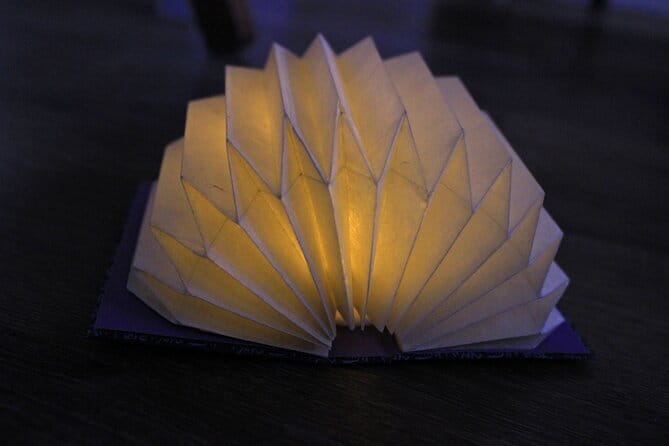
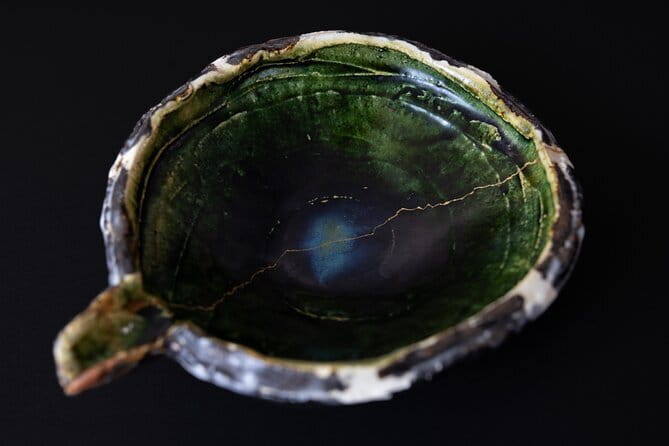
You’ll learn the origins and traditions surrounding kintsugi as part of the workshop. That context is valuable because it gives your hands-on work a purpose. You’re not only applying a method—you’re participating in a long-running Japanese idea: repaired objects can be more beautiful than what came before.
Throughout the class, your instructor provides step-by-step demonstrations. Then you get hands-on experience restoring your chosen pottery piece. This is one of the better formats for beginners because you’re shown the sequence first, instead of jumping straight into your own work with no reference.
What you should expect, in plain terms:
- you’ll watch a demonstration and get the goal of each stage
- you’ll practice with personalized guidance so you’re not guessing
- you’ll work at a pace that fits the small-group setting
- you’ll leave with a completed, restored piece
The workshop also focuses on mindful crafting. That doesn’t mean you need to be a zen master. It means you’ll slow down enough to follow the steps correctly, rather than trying to hurry through.





Why the Max of 6 Travelers Matters So Much
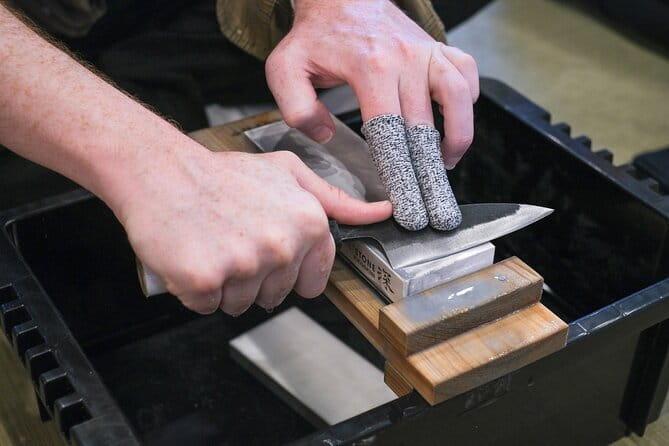
A big reason this class earns strong marks is the group size. When a workshop holds up to 6 people, it becomes more like a guided lesson than a factory tour.
You get personalized guidance while you work, and that’s not a minor detail. Kintsugi is precise work. Tiny choices—how you handle the piece, how you proceed in order, how you manage your time within the class—can make your result look better and feel more satisfying.
This also affects the vibe. If you’re nervous about being the slowest person, a small group helps. If you’re excited and want to move forward, the instructor can still keep you on track. Either way, you’re not competing for attention.
Matcha, Local Sweets, and the Break You Actually Need
Most hands-on workshops feed you the moment you’re already committed. This one does it earlier: matcha tea and local sweets are part of the start.
I like this approach because it creates a small pause before the craft begins. Your brain has time to switch into “learning mode,” and your hands feel steadier once you’re relaxed. Plus, having a snack in the middle of the day helps if you’re also doing other Shibuya stops.
If you’re planning meals after the class, do it with the idea that you’ll already have something in your stomach. It makes the rest of your Tokyo time more enjoyable.
Time, Tickets, and Getting There in Shibuya Without Stress

The duration is listed as about 2 hours. That’s a sweet spot: long enough to learn and actually finish your repair, short enough to fit into a day of sightseeing.
You’ll receive a mobile ticket. That matters in Tokyo, where pulling up a ticket on your phone is usually faster than coordinating printouts. The venue is near public transportation, so you’re not stuck with a long taxi ride.
You’ll meet at Central Hospital (25-1 Shinsenchō) and return back to the meeting point when the experience ends. That makes it easier to plan the rest of your route. You’re not trying to figure out how to get somewhere new after a hands-on workshop when your brain is already tired from focus.
Price and Value: Is $145.35 a Good Deal?
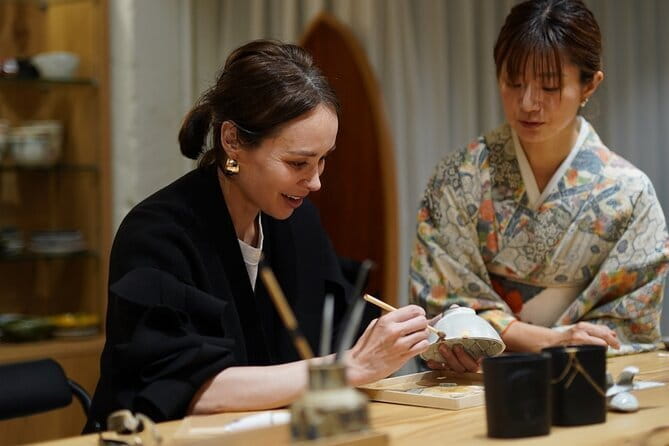
$145.35 per person is not cheap, especially for a 2-hour class. But it can be good value when you look at what’s included in the experience design.
Here’s what you’re paying for, based on the details you’re given:
- A small group format (max 6), which drives higher instructor attention
- Matcha tea and local sweets at the start
- Step-by-step demonstrations and personalized guidance
- You choose your own piece from mon cadeau’s collection
- You learn the origins and traditions, not just the technique
- You leave with a restored crockery piece you can keep
If you compare this to a typical “maker” activity that’s cheaper but larger-group or vague about the end result, the value shifts. This one is designed around finishing a repair with help. That’s what you want if this is your first time trying kintsugi.
If you’re on a tight budget, you could still treat it as a once-per-trip experience. If you love crafts, gifts, or Japanese cultural hands-on activities, it may feel like a fair trade for the time and instruction.
Who This Workshop Suits Best (And Who Might Skip It)
You’ll probably love this if:
- you want a calmer, hands-on alternative to Tokyo sightseeing
- you enjoy slow, focused activities
- you like Japanese philosophy expressed through craft
- you’re looking for a meaningful take-home item, not just a photo stop
- you don’t mind spending the full time learning and doing the steps
You might skip it if:
- you only have a tiny window and need something you can complete in under an hour
- you’re not interested in learning the background and just want the fastest possible entertainment
- you’re hoping for a big, public-facing spectacle
Should You Book This Kintsugi Workshop?
My take: yes, if you want a real Tokyo experience that trades speed for meaning. The small group size, the matcha start, and the fact that you repair a piece you personally choose all make it feel thoughtful rather than generic. And with instructors Michiko-san and Yuki-san guiding you step-by-step, beginners aren’t left to wing it.
If you can spare ~2 hours and you like the idea of taking home a restored object with a story, this is the kind of class that tends to become a favorite memory—because you made it with your own hands.
FAQ
What is the duration of the kintsugi workshop?
The workshop lasts about 2 hours.
Where do I meet for the workshop?
You’ll start at Central Hospital, 25-1 Shinsenchō, Shibuya, Tokyo 150-0045, Japan, and the experience ends back at the meeting point.
How many people are in the class?
The class has a maximum of 6 travelers, so it stays intimate and focused.
Is this workshop private?
Yes. It’s a private tour/activity, and only your group will participate.
What happens at the start of the workshop?
You begin with matcha tea and local sweets to help you get into the right mindset before the crafting begins.
What is the cancellation policy?
The experience is non-refundable and cannot be changed for any reason. If it’s canceled because a minimum number of travelers isn’t met, you’ll be offered a different date/experience or a full refund.
More Tour Reviews in Tokyo



Fresh reviews from around Tokyo






Tokyo, compared.
 ★ 5.0Mt Fuji and Hakone 1-Day Bus Tour Return by Bullet TrainFrom $16326,383 reviews
 ★ 5.01-Day Tokyo Bus TourFrom $12914,250 reviews
 ★ 4.6teamLab Planets TOKYO Digital Art Museum Entry TicketFrom $259,779 reviews
 ★ 4.0Mt Fuji & Hakone Cruise, Drum Show Bullet Train 1 Day from TokyoFrom $1497,413 reviews
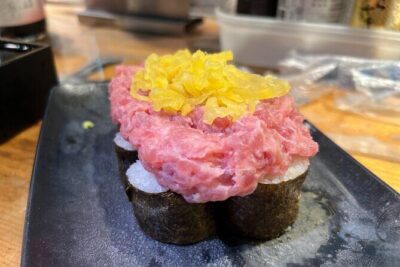 ★ 5.0Shinjuku Food Tour (13 Dishes at 4 Local Eateries)From $866,603 reviews
 ★ 4.4Tokyo Mt Fuji 5th St & Hakone Cruise Bus Tour w/Bullet TrainFrom $1545,024 reviews
 ★ 5.0Flagship 2-Hours Official Street Go-Kart Tour – Tokyo Bay ShopFrom $644,974 reviews
 ★ 4.5From Tokyo: Mount Fuji Full-Day Sightseeing TripFrom $684,970 reviews