
Reviewed · TOKYO
Japanese Food Experience Night Tour in Ueno
Food is a shortcut to a neighborhood. This Japanese Food Experience Night Tour in Ueno mixes serious eating with a guided walkthrough of how Tokyo works beyond the postcard spots. What I like most is the small group size (up to 10) and the way you get an English-speaking Japanese guide who helps you understand what you’re actually ordering. One thing to consider: this isn’t a sit-everywhere-and-watch tour. You’ll be moving, standing, and eating through a packed meal rhythm, so comfortable shoes matter.
Ueno is a smart choice for this kind of night because locals eat and drink there every day, not just weekend crowds. The guides are part of the fun too; one review specifically called out Nguyen as enthusiastic and competent, with extra assistant support that kept the night light and organized. If you have food allergies, plan carefully. The tour notes make it clear that allergies are your responsibility, and the restaurant controls quality details.
In This Review
- Key highlights you’ll feel right away
- Ueno After Dark: Why this food tour feels more local than tourist dinners
- Meeting at Hotel Monday Premium Ueno Okachimachi: how the night starts
- The eating route: yakitori, yakiton, sashimi, and the “about 9 dishes” rhythm
- Ramen as the finish line: what it adds to the whole meal
- Japanese drinks with an English-speaking guide: sake, highball, hoppy
- Ueno’s story in motion: town history and modern Japan without the lecture feel
- Price and value: is $103 fair for 3.5 hours of food and drink?
- Who should book (and who should skip) this Ueno food night
- Should you book this Japanese Food Experience Night Tour in Ueno?
- FAQ
- Where is the meeting point?
- How long is the tour?
- What food and drinks are included?
- Is transportation to the meeting point included?
- How big is the group?
- Is the tour suitable for people with food allergies or wheelchair users?
Key highlights you’ll feel right away
- Up to 10 people means you’re not lost in a crowd while ordering and tasting
- English-speaking Japanese guide helps you decode menus and restaurant etiquette fast
- About 9 dishes across 3–4 restaurants plus ramen so the night stays varied, not repetitive
- Around 6 drink items including sake, highball, and hoppy options
- Ueno local lanes, not just famous shopping streets with stops chosen for where Japanese people eat
Before you commit, see how this one stacks up against a few Tokyo favourites:
- Mt Fuji and Hakone 1-Day Bus Tour Return by Bullet Train★ 5.0 · 26,383 reviews
- 1-Day Tokyo Bus Tour★ 5.0 · 14,250 reviews
- Tokyo: teamLab Planets TOKYO Digital Art Museum Entry Ticket★ 4.6 · 9,779 reviews
Ueno After Dark: Why this food tour feels more local than tourist dinners
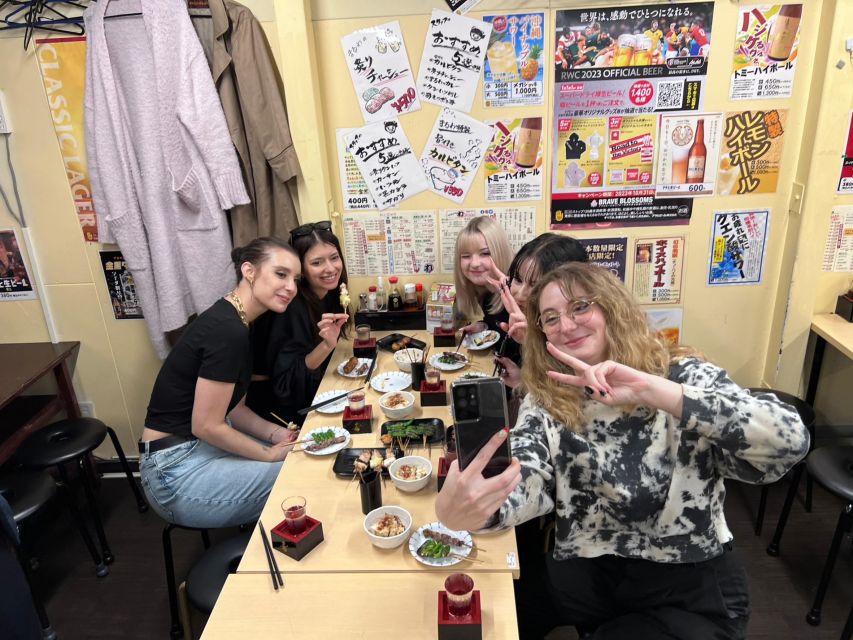
Tokyo has a few obvious food routines. This tour is designed to get you out of the default “most famous places” loop and into Ueno’s regular evening scene—restaurants and bars where Japanese diners show up and carry on conversations that sound like your TV set just turned into real life.
The big value here is that food is paired with context. You’re not only tasting; you’re also getting a guided read on the town and modern Japan as you go. That matters because Japanese restaurants can feel intimidating at first—ordering, portion size, drink flow, and the way courses come out. A guide turns that from stress into a simple system.
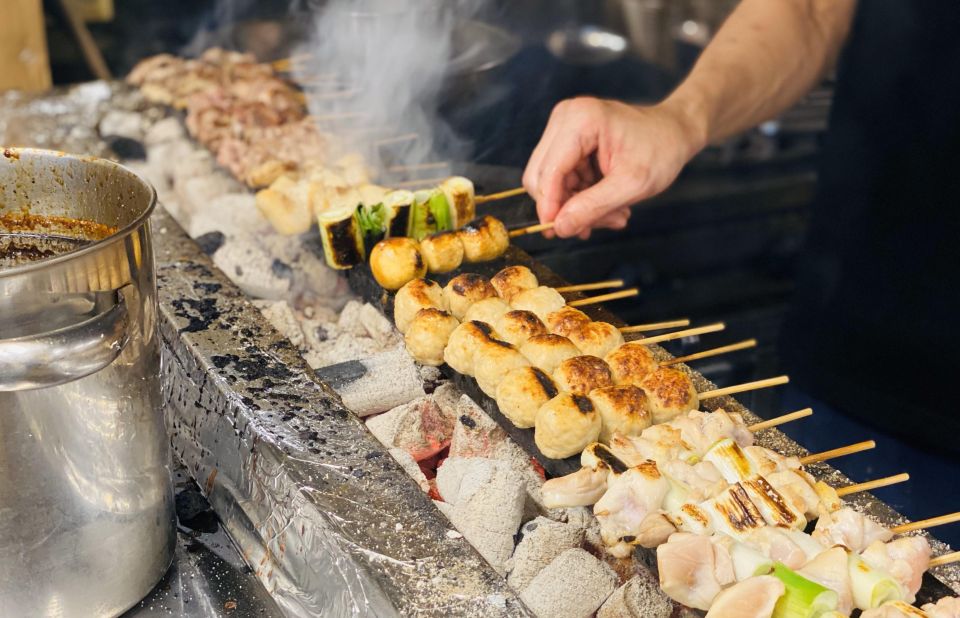
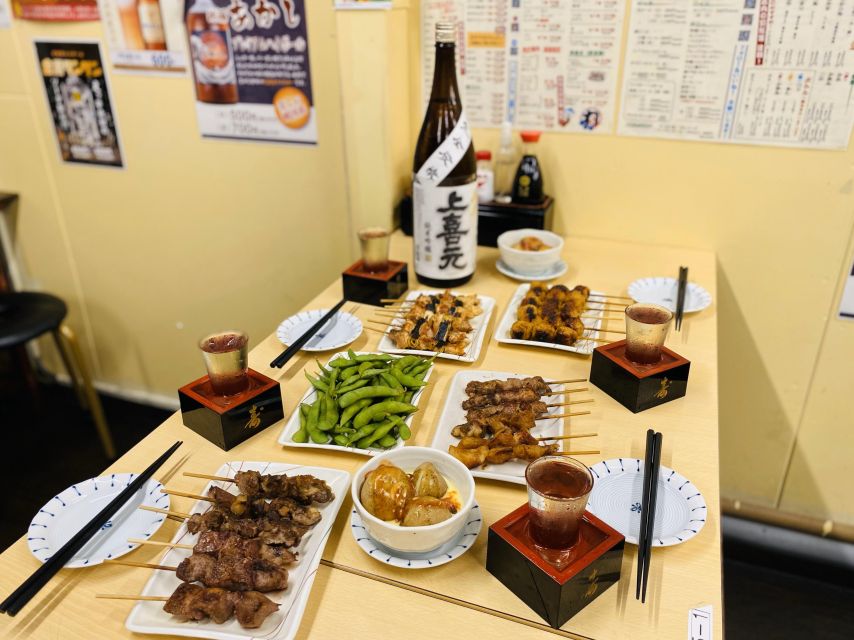
You’ll also get variety in a way that’s hard to DIY in a short window. The tour includes yakitori and yakiton (grilled chicken styles), sashimi, and ramen, plus additional dishes at multiple spots. Instead of one long meal at one restaurant, the night is built like a snack-and-sip route.
One more practical point: the tour includes a welcome drink and a small souvenir. It’s a small touch, but it signals this is meant to be an event evening, not just a group dinner where you show up, eat, and leave.
Meeting at Hotel Monday Premium Ueno Okachimachi: how the night starts
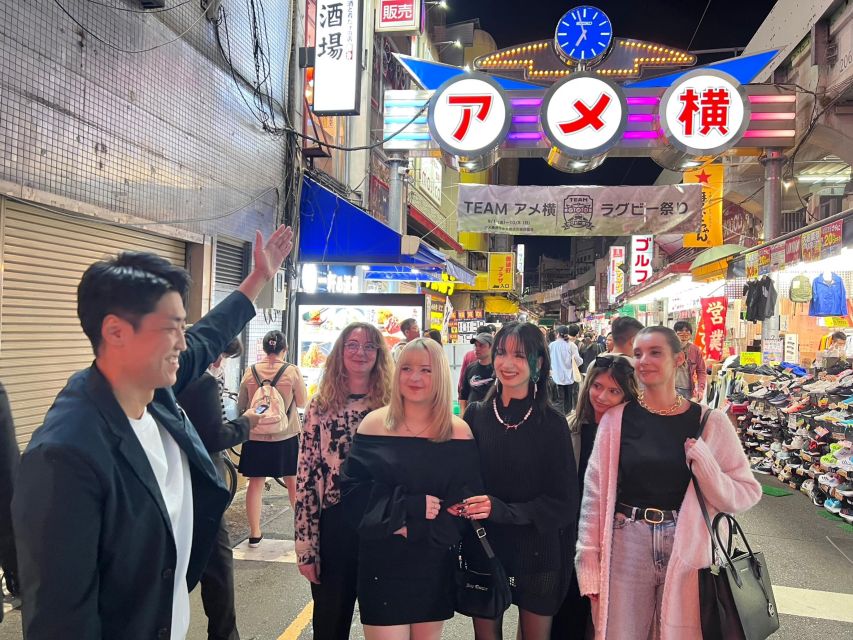
Your meeting point is the Hotel Monday Premium Ueno Okachimachi, at the 14th floor restaurant. That matters because you’ll start the experience in a centralized, organized way before heading out into the neighborhood. You’ll likely begin with a quick welcome and a drink.
At the meeting place, you’ll receive a document explaining participation conditions, and you’ll need to read and sign a consent form to take part. Then the guide kicks off the night—what you’re eating, how the group will move, and what to expect from the restaurants.
The tour runs 210 minutes. That’s about 3.5 hours, which is long enough to feel like an evening out, but not so long that you’re exhausted before ramen. A small group size (limited to 10 participants) also helps the pacing. The guides can keep an eye on everyone’s questions, dietary needs in general terms, and where you are in the schedule.
Also note the rule set: no pets, and no luggage or large bags. Plan to travel light. Bring comfortable shoes because the night is structured around multiple restaurant stops.
The eating route: yakitori, yakiton, sashimi, and the “about 9 dishes” rhythm
Here’s the core idea: you’re eating around 9 dishes across 3–4 restaurants, plus ramen. That means the night doesn’t rely on one highlight dish to carry everything. You get a sequence of small plates that lets you sample more of what Ueno-style dining feels like.
The food examples given are yakitori, yakiton, sashimi, and ramen. Expect the grilled bites to show up early or mid-rotation, because grilled items are a natural fit for izakaya-style flow—shareable, fast to serve, and easy to compare from one place to the next. Yakitori and yakiton are both chicken-focused, but they can differ in cut and preparation, so you’ll likely notice texture and flavor differences without needing to translate every word yourself.
Sashimi adds a different vibe: cleaner flavors, a different pace of chewing, and a good counterpoint to the smoky, salty side of grilled food. It’s also a nice checkpoint for your palate. If you start feeling “grilled chicken burnout,” sashimi resets things.
The tour also lists additional dishes beyond the examples. That’s important for value. If you only booked this expecting yakitori, you might be surprised—in a good way—that the selection usually covers more than one cooking style.
Potential drawback: the schedule and menu can change without notice. This is normal for restaurant-based tours, but it means you should view it as a guided food experience, not a guaranteed checklist of exact dishes at exact times. You’ll still get a ramen stop and the main dish categories are clearly included, but minor swaps can happen.
Ramen as the finish line: what it adds to the whole meal
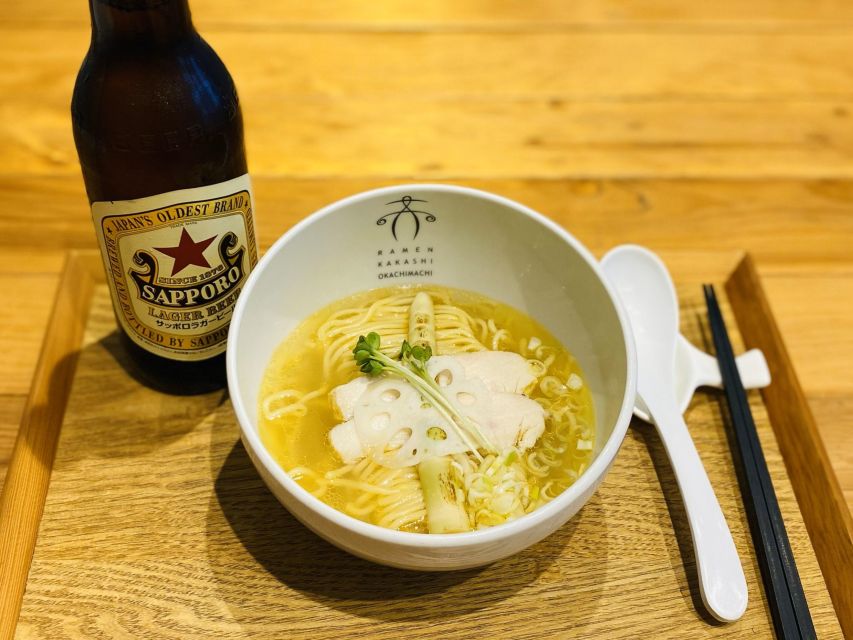
Ramen isn’t just dessert-with-no-meaning. It’s a late-night anchor in Tokyo food culture, and this tour treats it that way by including ramen as part of the set.
After several small dishes and a handful of drinks, ramen works because it’s filling, warm, and satisfying in a way that doesn’t require you to “finish strong” with another heavy plate from scratch. It’s also a fun end point for comparison. If you’ve eaten ramen before in another city or country, you’ll have a new reference point—how Ueno tends to handle broth, toppings, and portion style for an evening crowd.
You should also expect ramen to shift the overall texture of the meal. Earlier stops may lean grilled and raw (sashimi). Then ramen brings in noodles and broth, which changes the rhythm of eating and helps you slow down enough to actually enjoy the last stretch of the night.
One more practical note: since ramen is included, you don’t need to hunt for the “best ramen after the tour” plan. You can walk away thinking you already handled the big finale.





Japanese drinks with an English-speaking guide: sake, highball, hoppy
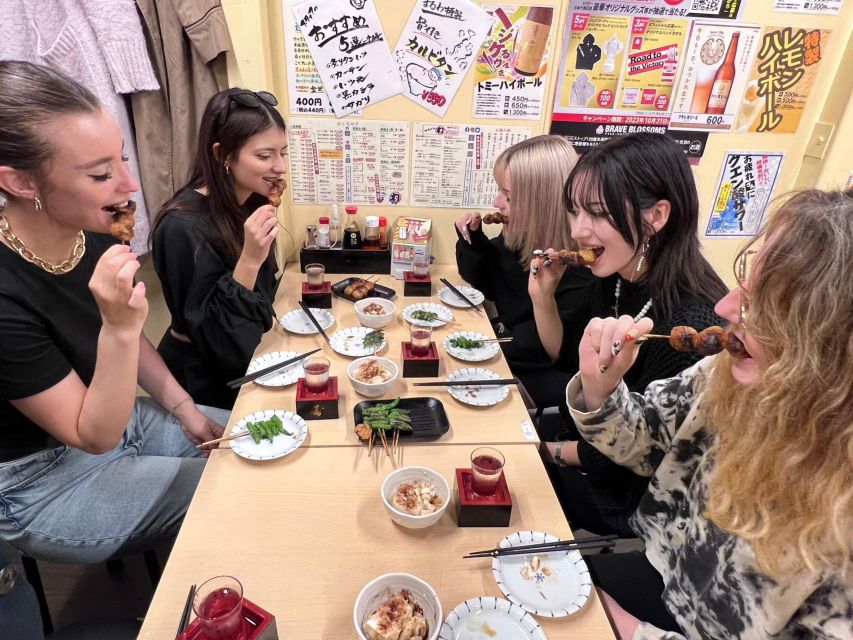
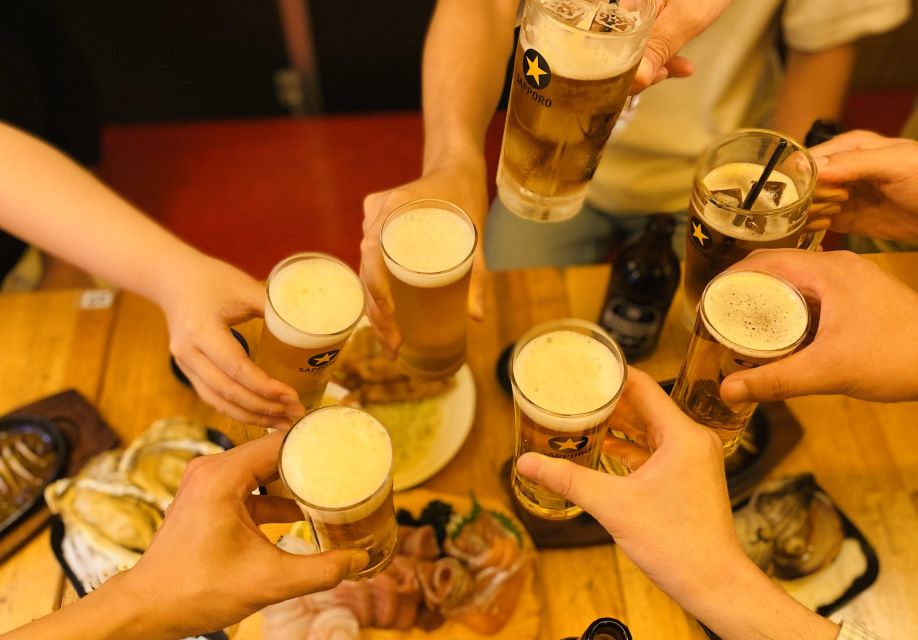
Alcohol is part of what makes this tour feel like a night out with locals. You get around 6 drink items total, and the examples include sake, highball, and hoppy.
Even if you don’t drink much, this is worth considering because the guide can help you interpret what you’re being offered and how it fits the food. For example, highball tends to pair well with salty grilled items because the drink cuts through fat and smoke. Sake is often chosen for its clean, slightly varied profile depending on type, and it can be a good match when the menu shifts from grilled to more delicate flavors like sashimi.
Hoppy is also specifically called out. That’s a popular casual drink category in Japan, often chosen for an easy, friendly drinking vibe rather than something super formal. You’re not being asked to treat this like a wine class. It’s about tasting and learning what locals reach for during a meal.
Important reality check: your comfort and choices matter. The tour notes say you’re responsible for allergies, and that same responsibility logic applies to your own drinking comfort. If you know you react badly to certain ingredients or spirits, plan ahead.
Ueno’s story in motion: town history and modern Japan without the lecture feel
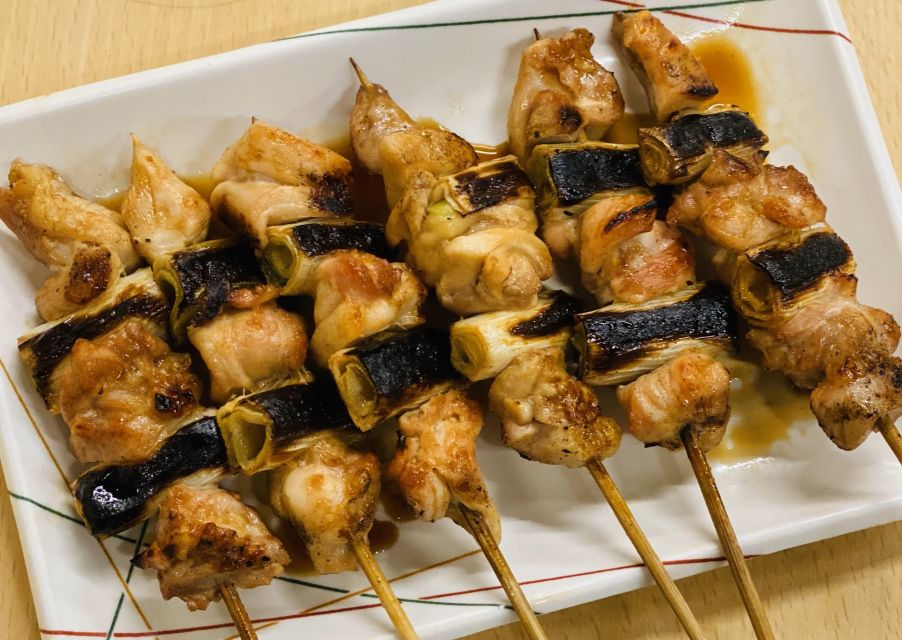
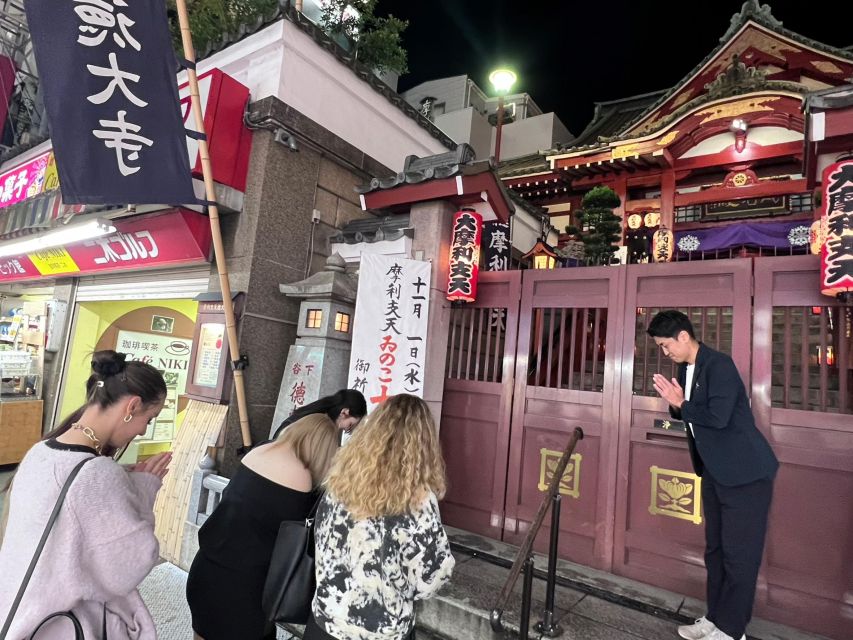
A lot of food tours stop at eating and maybe a quick “this is traditional” line. This one includes guidance on the history of the town and modern Japan as you move through the area. That’s a big deal because Ueno can look like just another neighborhood if you only pass through it during daylight.
Your guide’s job is to connect the food to the place. Why these restaurants show up here. Why izakaya-style dining exists in the rhythms of daily life. How modern Tokyo still runs on old patterns of community eating—where the drink comes, the small plates arrive, and the night builds naturally.
The reviews reinforce that the guides keep the tone friendly and the pacing smooth. One account highlighted two guides and mentioned how they were accommodating, which is exactly what you want when the evening is built around multiple restaurant transitions. Another noted that assistant guides helped keep the fun going, which suggests the group is supported even if you’re asking practical questions or just trying to follow the flow.
You don’t need a history degree to enjoy this. If you like learning by doing—tasting, watching how people order, hearing small explanations—you’ll get more value out of the guided story.
Price and value: is $103 fair for 3.5 hours of food and drink?
At $103 per person for 210 minutes, the value comes down to what’s included: around 9 dishes, ramen, and around 6 drink items, plus a local English guide, a welcome drink, and a small souvenir.
This is one of those prices where you should compare against the cost of doing it alone. In Japan, a single izakaya night can be expensive once you add multiple drinks and a couple of small plates. This tour turns that into a planned package across several places. You’re also paying for the guide, the translation help, and the logistics of getting a group fed without everyone scrambling.
The “skip the ticket line” detail may sound odd for a food tour, but the practical meaning is clear: you’re minimizing waiting that can happen at popular places. Even a few minutes saved between stops can make the night feel smoother.
Group size matters for value too. A maximum of 10 people keeps the experience controlled. Larger groups can slow down ordering and make you feel rushed. Here, the structure supports a more relaxed flow, which helps you enjoy the tasting rather than just survive it.
The one drawback on value: menus can change. If you’re the type who likes strict certainty about every dish, this may feel less predictable than a restaurant reservation with a fixed menu. Still, the food categories and ramen are included, and that’s the main promise.
Who should book (and who should skip) this Ueno food night
This tour is a strong fit if you want:
- Local Ueno food and drinks with guidance
- An English-speaking Japanese guide to help ordering and etiquette
- A night that feels social but stays small
- A built-in structure that ends with ramen
It’s also a good choice if you’re visiting Tokyo for a short window and don’t want to spend your limited time researching which izakaya makes sense for your taste and comfort level.
Skip it if:
- You need wheelchair accessibility. The tour notes say it’s not suitable for wheelchair users.
- You have significant food allergies. You’re responsible for dealing with allergies, and the tour notes add that the restaurant is responsible for quality details. The risk is on you, so only book if you’re confident you can safely manage it.
- You’re under 20 years old. The tour notes say it’s not suitable for people under 20.
One more practical fit check: this is not a luggage-friendly experience. If you’re carrying a big bag, plan to leave it behind rather than showing up with bulky luggage.
Should you book this Japanese Food Experience Night Tour in Ueno?
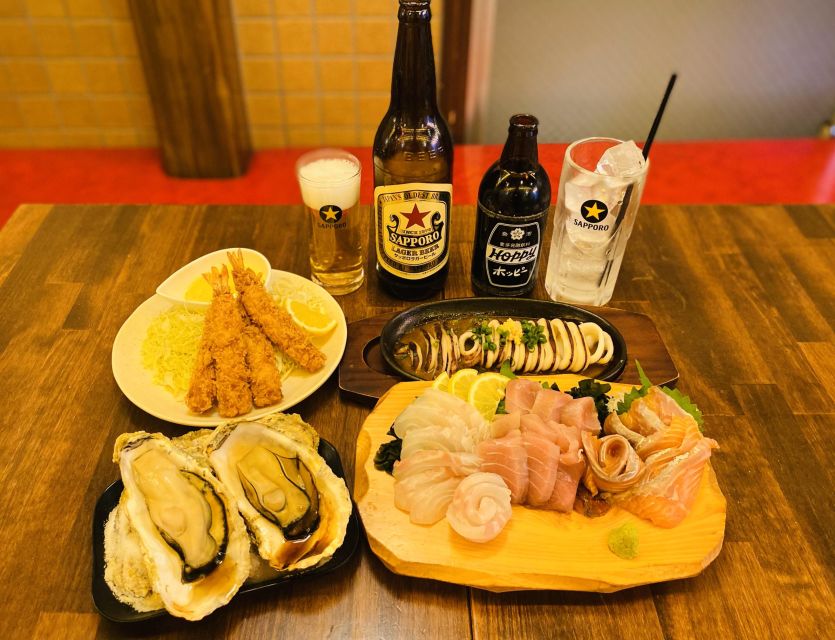
I’d book it if your goal is a guided, local-feeling food night with real restaurant variety, not just a single meal. The mix of yakitori/yakiton, sashimi, and ramen, plus around 6 drinks, gives you a lot of taste coverage for the time. The small group limit and the English-speaking Japanese guide are the difference between “I ate” and “I understood what I ate.”
I’d think twice if you’re highly allergy-sensitive, need accessibility accommodations, or you hate the idea of a structured, multi-stop evening. Also, if you want a quiet cultural museum vibe, this is a food-forward route with drinks and restaurant energy.
If you’re the type who enjoys learning through taste and likes the idea of Ueno after dark, this one is a solid value bet for your Tokyo trip.
FAQ
Where is the meeting point?
The meeting point is at Hotel Monday Premium Ueno Okachimachi, in the 14th floor restaurant.
How long is the tour?
The tour lasts 210 minutes.
What food and drinks are included?
You’ll get around 9 dishes across 3–4 restaurants plus ramen, and around 6 drink items. Drink options mentioned include sake, highball, and hoppy.
Is transportation to the meeting point included?
No. Transportation to the meeting point is not included.
How big is the group?
The tour is a small group limited to 10 participants.
Is the tour suitable for people with food allergies or wheelchair users?
No for wheelchair users. The tour also notes that customers are responsible for dealing with allergies, so it is not suitable for people with food allergies.
More Tour Reviews in Tokyo



Fresh reviews from around Tokyo






Tokyo, compared.
 ★ 5.0Mt Fuji and Hakone 1-Day Bus Tour Return by Bullet TrainFrom $16326,383 reviews
 ★ 5.01-Day Tokyo Bus TourFrom $12914,250 reviews
 ★ 4.6teamLab Planets TOKYO Digital Art Museum Entry TicketFrom $259,779 reviews
 ★ 4.0Mt Fuji & Hakone Cruise, Drum Show Bullet Train 1 Day from TokyoFrom $1497,413 reviews
 ★ 5.0Shinjuku Food Tour (13 Dishes at 4 Local Eateries)From $866,603 reviews
 ★ 4.4Tokyo Mt Fuji 5th St & Hakone Cruise Bus Tour w/Bullet TrainFrom $1545,024 reviews
 ★ 5.0Flagship 2-Hours Official Street Go-Kart Tour – Tokyo Bay ShopFrom $644,974 reviews
 ★ 4.5From Tokyo: Mount Fuji Full-Day Sightseeing TripFrom $684,970 reviews