
Reviewed · TOKYO
Japanese Calligraphy Experience
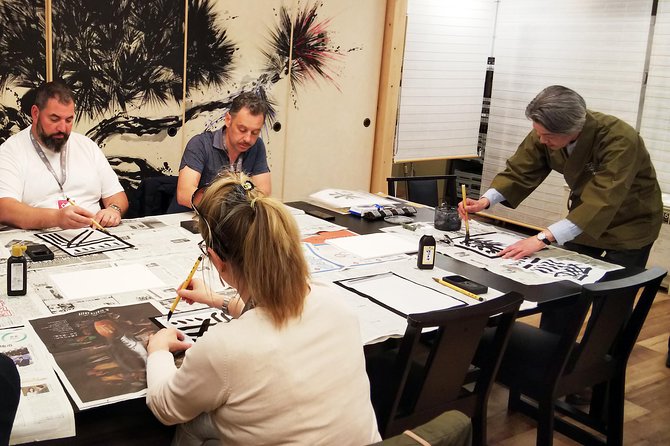
Japanese calligraphy feels way harder than it is. This workshop is a friendly way to get started in Tokyo, with an accredited instructor guiding you through the basics and then helping you create a take-home piece.
I like that you get both history + hands-on technique in a tight 1 hour 30 minutes. I also like the “you can actually practice” pace, which makes it less stressful if your handwriting isn’t already perfect. One thing to consider: it’s a short class, so you won’t become a calligrapher by the end, but you will leave with solid basics and a finished souvenir.
You meet in Minato City at Kikai Shinkō Kaikan, and this small group format (max 10) keeps things manageable. If you’re looking for a meaningful activity that isn’t just watching, this is a great fit.
In This Review
- Key things to know before you write
- Tokyo calligraphy workshop setup at Kikai Shinkō Kaikan
- What you actually learn: history plus the mechanics that matter
- Using the inkstone and brush without fear
- Writing your name: the fastest way to feel the system
- Building your souvenir calligraphy board in the second half
- Instructor attention in a max-10 group
- Equipment and inclusions that reduce friction
- Price and value: what $77.26 really covers
- Who should book this Japanese calligraphy experience?
- Tips to get better results (and enjoy it more)
- Should you book the workshop?
- FAQ
- How long is the Japanese calligraphy experience?
- Where does the experience start?
- What’s included in the price?
- What is not included?
- How big is the group?
- Do I need to bring calligraphy tools?
- Will I get to make something to take home?
- When will I get confirmation after booking?
- What is the cancellation policy?
Key things to know before you write
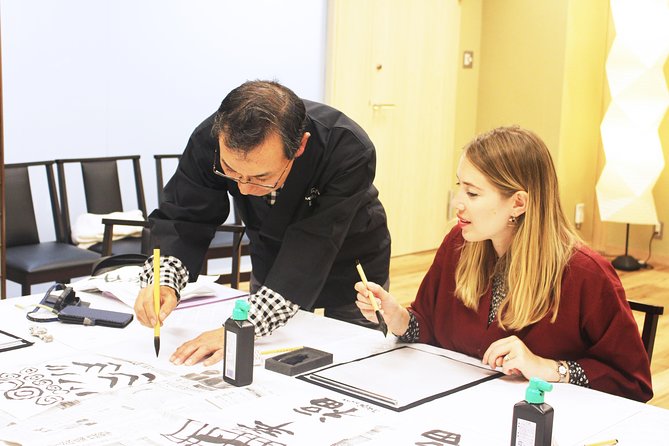
- Small group (up to 10) means you’re more likely to get the help you need.
- Accredited guide-interpreter keeps the lesson clear and accessible.
- Inkstone + brush practice is included, so you can focus on learning.
- Two-part lesson structure: tools and strokes first, then your souvenir piece.
- A souvenir calligraphy board is part of the price, not an optional add-on.
Before you commit, see how this one stacks up against a few Tokyo favourites:
- Mt Fuji and Hakone 1-Day Bus Tour Return by Bullet Train★ 5.0 · 26,383 reviews
- 1-Day Tokyo Bus Tour★ 5.0 · 14,250 reviews
- Tokyo: teamLab Planets TOKYO Digital Art Museum Entry Ticket★ 4.6 · 9,779 reviews
Tokyo calligraphy workshop setup at Kikai Shinkō Kaikan
Your experience starts at Kikai Shinkō Kaikan in Minato City (3-chōme-5-8 Shibakōen). The good news: it’s listed as near public transportation, so you can fit it into a day without building your whole schedule around one tricky commute.
This matters more than you might think. Calligraphy classes need a calm start. If you arrive rushed, you’ll feel it in your posture, your grip on the brush, and your willingness to take direction. Aim to show up a little early so you can settle in before the instructor starts explaining the tools and the writing mechanics.
The group size cap of 10 is another practical plus. You’re not competing for attention, and you’re not stuck watching from the sidelines while others get help. From the way the class is described, the instructor’s role is to guide you step by step, then check in as you practice.
What you actually learn: history plus the mechanics that matter
The lesson is built around two goals: understanding what you’re writing and learning how to physically do it. That combo is why the class works. Lots of activities tell you that calligraphy has a long tradition, but this one also pushes you to connect that tradition to real, repeatable movements.
In the first half, you’ll learn the history and basic mechanics of Japanese calligraphy. You’ll also get guidance on how to handle the basic calligraphy tools properly, especially the inkstone and brush. That’s not just ceremonial. How you prepare ink and how you move the brush changes the line you produce.
You’ll also learn about Japan’s varied writing system at a basic level, so you’re not just copying random shapes. The class includes writing your name in Japanese characters. That’s a smart teaching choice for beginners because it gives your practice a clear target: something personal, something you’ll recognize.
And yes, the personal part shows up in how the class is taught. Reviews highlight instructors being patient with beginners and taking time to explain the motions. If you’re worried about getting it wrong, this is exactly the kind of class that helps you relax and improve rather than freeze.
Using the inkstone and brush without fear
If you’ve never used an inkstone, this workshop is designed to make that learning curve feel normal. You’ll learn how to use the inkstone and brush, which means you’re not just making marks with a pen. You’re working with tools that encourage slower, more deliberate control.
The inkstone and brush combo can intimidate people, because the surface and the ink behavior are different from what you’re used to. But that’s also the point. Once you get the basics of the process down, the strokes start to make sense.
You’ll also master basic brushstrokes of Japanese characters. That’s another key detail: you’re not thrown straight into a final piece without building the foundation. The strokes are where control lives—pressure, direction changes, the rhythm of lifting and reapplying the brush.
I like this because it turns calligraphy from a vague aesthetic into something you can actually practice. You get a set of skills you can repeat at home if you keep a simple brush and practice paper later on.
Writing your name: the fastest way to feel the system
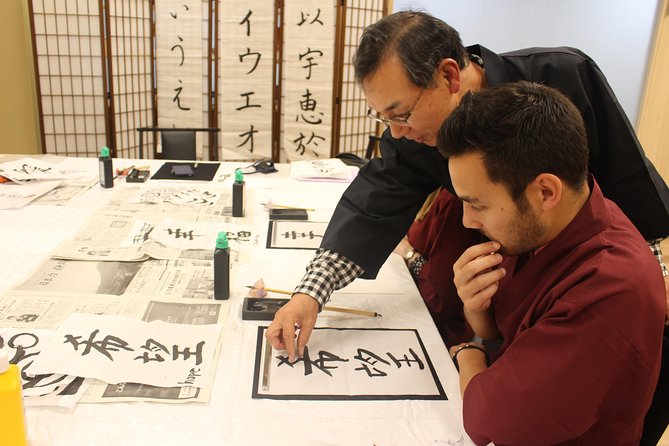
One of the most practical parts of the class is writing your name in Japanese characters. It’s included, and it gives you a natural reason to pay attention to spacing, stroke order, and shape consistency.
This also turns the lesson into something personal. When you write your name, you stop thinking like a student and start thinking like the person who will live with the souvenir board later.
You’ll also get to grips with Japan’s varied writing system in a beginner-friendly way. The goal isn’t to make you fluent—it’s to give you enough context that the characters don’t feel like random symbols. That context helps you understand why the instructor keeps nudging you back to specific stroke motions.
Reviews specifically mention practice time and patience. That lines up with what you need here. If your handwriting style is messy, you won’t be judged for it. You’ll be guided toward the correct motions. That’s the kind of correction that makes a difference in a short workshop.





Building your souvenir calligraphy board in the second half
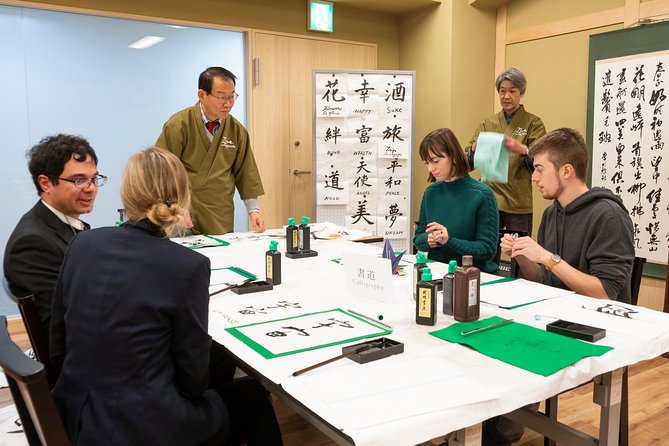
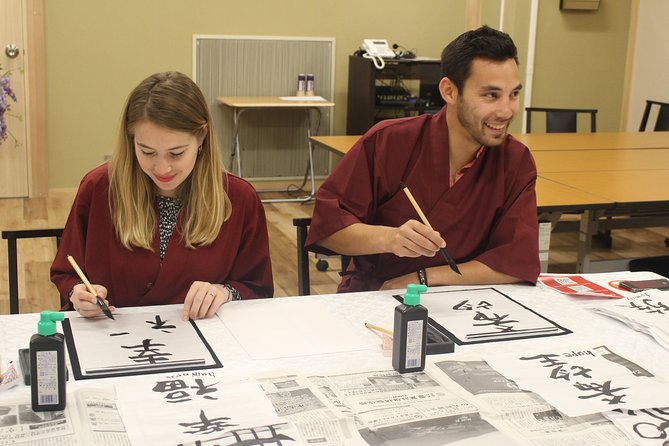
The second half shifts from learning to making. You’ll create a calligraphy piece of your own on a souvenir board, which is one of the best parts of this experience because it turns practice into an artifact you can keep.
This is where your early brushstroke lessons pay off. If the first half taught your hands what to do, the second half gives you a chance to apply it to something you’ll want to display.
The workshop format is set up so you spend time producing, not just listening. That matters because calligraphy is muscle memory as much as it is art. If you only watch, it’s a memory exercise. If you create, it’s a skill exercise.
You’ll also get help from an accredited instructor, and reviews point out that teachers took the time to create what participants asked for. That’s reassuring if you’re unsure what you want on your board or you’re nervous about spelling or character choices. A teacher who slows down and checks details helps you end with something you feel good about.
When you leave, you’re bringing home more than an object. You’re bringing home proof that you learned a real technique—ink, brush, and stroke control—inside a real calligraphy setting.
Instructor attention in a max-10 group
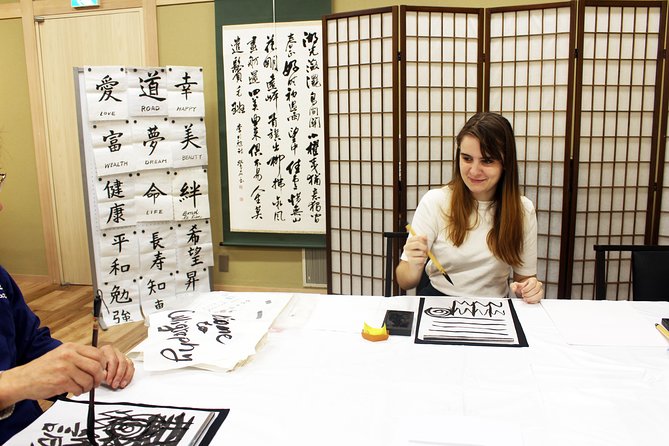
For a lot of art classes, the instructor talks, you try, and then you hope your turn comes. Here, the setup is different. The class is described as small-group and you get more personal attention from an accredited instructor.
With a maximum of 10 travelers, the instructor can circulate and adjust your technique. That’s crucial for calligraphy, because a tiny change—angle, pressure, or timing—can affect the whole line.
Reviews also mention that instructors were super patient and kept the class friendly and informative. Another review notes that the teacher was polite and well spoken with English, and that time passed quickly because the class was engaging. That combination is exactly what you want: clear instruction, kind corrections, and a pace that doesn’t rush you.
If you’re traveling with friends, you’ll get the social experience of a group class without the chaos of a big crowd. If you’re traveling solo, it still feels supportive because the instructor isn’t trying to run a lecture.
Equipment and inclusions that reduce friction
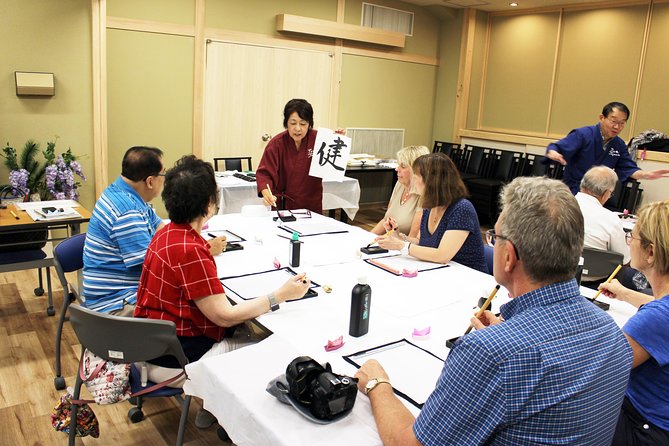
This workshop includes calligraphy equipment rental and the souvenir calligraphy board. It also includes a nationally accredited tour guide-interpreter.
That matters because calligraphy supplies can vary a lot in quality and convenience. When the tools are provided, you don’t have to hunt down inkstone or worry about whether you’re using the wrong kind of brush. You can show up, learn the correct method, and use the tools the instructor expects.
It also keeps the experience focused on learning. You’re not spending your first half-hour figuring out where to buy supplies or how to transport them. For a 1 hour 30 minutes class, cutting friction is a big deal.
Transportation is not included, so you’ll need to plan your own way to the venue. The upside is it’s near public transportation, so you’re not stuck with taxis or a long walking trek.
No food or beverages are included. That’s normal for a short workshop. Still, it’s worth checking your schedule so you’re not hungry or dehydrated during instruction, especially if you plan to go straight to dinner after.
Price and value: what $77.26 really covers
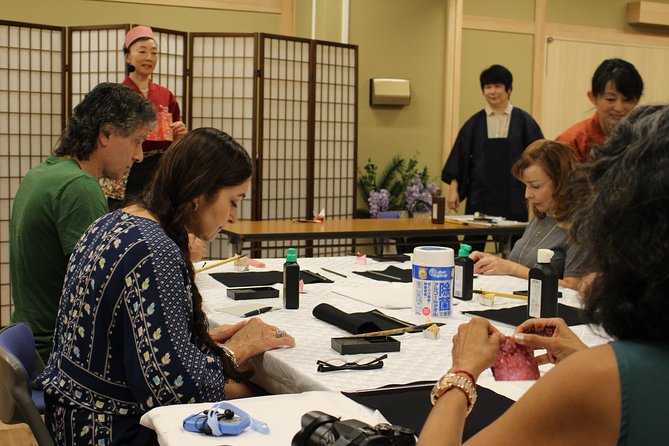
At $77.26 per person for about 1.5 hours, this isn’t a bargain price. But it also isn’t just “sit and watch.” You’re paying for:
- Instruction from an accredited, guided setup
- Tool access via equipment rental
- A take-home souvenir board (not just a practice sheet)
- A small-group environment (max 10)
When you factor in the included equipment and the finished board, the cost starts to make sense. You’re not just buying a class; you’re buying materials and a finished result.
Also, booking typically happens about 53 days in advance on average, which suggests this is a popular add-on activity. If you wait until the last week, you may find the times you want aren’t available.
If you’re the type of traveler who likes activities where you leave with something tangible, calligraphy is one of the better “value-per-memory” options in a city full of museums and tours. You get an experience you can remember every time you see the board at home.
Who should book this Japanese calligraphy experience?
This workshop is a great match if you want an authentic cultural activity that doesn’t require prior skills. The program also notes that most travelers can participate, which usually means beginners are welcome and the class is paced to be doable.
I’d especially recommend it if:
- You like hands-on learning more than lectures
- You want a souvenir that’s personal, not generic
- You’re nervous about getting things wrong and want patient coaching
- You’d like some context about calligraphy’s tradition, not only the final product
It may be less ideal if you’re looking for a deep, multi-day immersion program. This is short on purpose. You’ll learn the basics and leave with a finished board, not a full mastery course.
Tips to get better results (and enjoy it more)
A few small choices can make the class feel smoother:
- Arrive a little early so you’re not distracted by the clock.
- Pick a realistic pace for yourself. The strokes will improve as you repeat, not as you rush.
- Treat mistakes as feedback. With calligraphy, your first attempts are often the ones that teach you how to correct.
- Think ahead about your name writing. It’s included, so it’s worth understanding what you want on the board.
Because the instructor experience is central here, you’ll benefit most if you’re willing to follow the guidance for how to hold the brush and how to make each stroke. Reviews point to teachers taking time and making sure participants can produce what they ask for, and that’s your best path to a satisfying result.
Should you book the workshop?
If you want a short, guided way to learn calligraphy fundamentals in Tokyo—with real tools, patient instruction, and a take-home souvenir—this is an easy yes. The small-group cap and the two-part structure (learn, then create) are exactly what beginners need to leave feeling proud instead of confused.
I’d book it if you’re the type who likes doing, not just watching. If your main goal is to get one meaningful cultural keepsake, this workshop does that job well.
One caution: because it’s only about 1 hour 30 minutes, go in expecting basics and a finished board, not mastery. You’ll still come away with skills you can practice again.
FAQ
How long is the Japanese calligraphy experience?
It runs for about 1 hour 30 minutes.
Where does the experience start?
The meeting point is Kikai Shinkō Kaikan, 3-chōme-5-8 Shibakōen, Minato City, Tokyo 105-0011, Japan.
What’s included in the price?
It includes a nationally accredited tour guide-interpreter, calligraphy equipment rental, and a souvenir calligraphy board.
What is not included?
Transportation to and from the venue, plus any food or beverages.
How big is the group?
The experience has a maximum of 10 travelers.
Do I need to bring calligraphy tools?
No. Calligraphy equipment rental is included.
Will I get to make something to take home?
Yes. You’ll create a calligraphy piece on a souvenir board.
When will I get confirmation after booking?
Confirmation is received within 48 hours of booking, subject to availability.
What is the cancellation policy?
Free cancellation is available. You can cancel up to 24 hours in advance for a full refund.
More Tour Reviews in Tokyo



Fresh reviews from around Tokyo






Tokyo, compared.
 ★ 5.0Mt Fuji and Hakone 1-Day Bus Tour Return by Bullet TrainFrom $16326,383 reviews
 ★ 5.01-Day Tokyo Bus TourFrom $12914,250 reviews
 ★ 4.6teamLab Planets TOKYO Digital Art Museum Entry TicketFrom $259,779 reviews
 ★ 4.0Mt Fuji & Hakone Cruise, Drum Show Bullet Train 1 Day from TokyoFrom $1497,413 reviews
 ★ 5.0Shinjuku Food Tour (13 Dishes at 4 Local Eateries)From $866,603 reviews
 ★ 4.4Tokyo Mt Fuji 5th St & Hakone Cruise Bus Tour w/Bullet TrainFrom $1545,024 reviews
 ★ 5.0Flagship 2-Hours Official Street Go-Kart Tour – Tokyo Bay ShopFrom $644,974 reviews
 ★ 4.5From Tokyo: Mount Fuji Full-Day Sightseeing TripFrom $684,970 reviews