
Reviewed · TOKYO
Hands On Wagyu Sushi Making Experience
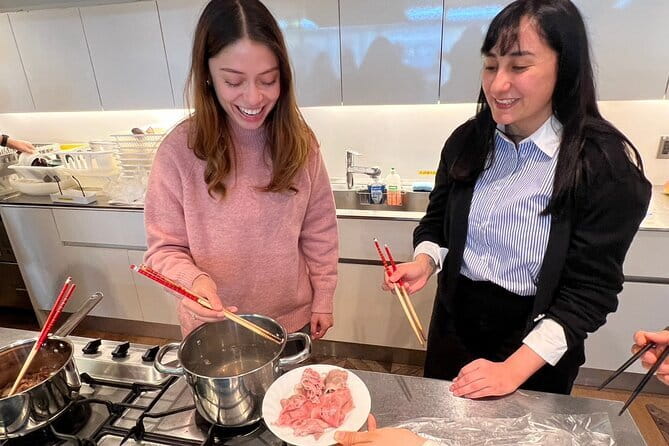
Wagyu sushi is a fun plot twist. This hands-on Tokyo class turns premium beef into sushi styles like nigiri, gunkan maki, and temaki, and you get to eat what you make. It is run in a small group of up to six, with clear guidance from instructors including Hiroko and Saori.
I like two things a lot: first, the class feels hassle-free because ingredients and equipment are provided, so you focus on learning. Second, you practice the full process, from rice Shari basics to plating, so the finished pieces look good and taste right.
One consideration: vegan and vegetarian options are not available, so this is very much a meat-based sushi class. If that fits your diet, you will likely have a great time.
In This Review
- Key Highlights You Should Know
- Wagyu Sushi in Tokyo: What You Really Do for 90 Minutes
- Why Wagyu Works (and Why It Changes Your Sushi Skill)
- The Classroom Setup: What Makes It Feel Low-Stress
- Meeting the Team: Hiroko and Saori Lead With Clear Guidance
- The Core Skill: Shari Basics and Rice Handling
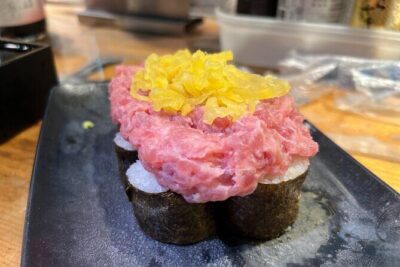
- Nigiri, Gunkan Maki, and Temaki: Building Three Different Bites
- Cooking the Wagyu: How Meat Fits the Sushi Equation
- Plating and Presentation: Make It Look Like Real Sushi
- Your Meal at the End: Lunch Included, and You Eat What You Make
- Price and Value: Is $104.51 a Smart Deal?
- Logistics That Affect Your Day (Without the Headache)
- Who Should Book This Wagyu Sushi Class
- Should You Book It?
- FAQ
- How long is the Hands On Wagyu Sushi Making Experience?
- What time does the class start?
- Where is it located?
- How much does it cost?
- How many people are in the group?
- Is lunch included?
- Are vegan or vegetarian options available?
- Do I get photos?
- What is the cancellation policy?
Key Highlights You Should Know
- Small group size (max 6) for hands-on attention and less waiting around
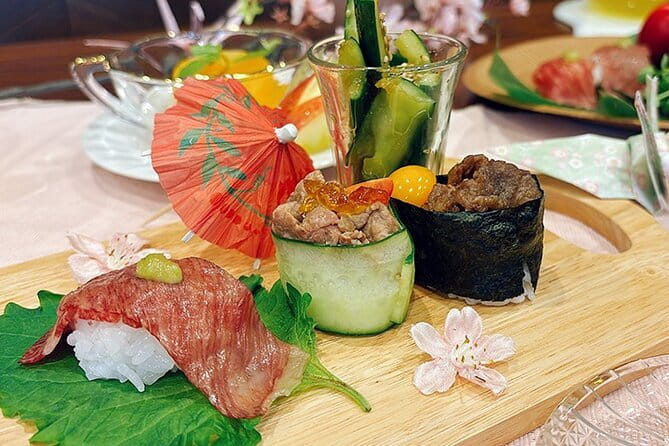
- Premium Wagyu used as the star of multiple sushi styles
- Learn Shari and plating so your sushi looks as good as it tastes
- English support from friendly instructors, including Hiroko and Saori
- Lunch included, plus later-downloadable photos from the experience
Before you commit, see how this one stacks up against a few Tokyo favourites:
- Mt Fuji and Hakone 1-Day Bus Tour Return by Bullet Train★ 5.0 · 26,383 reviews
- 1-Day Tokyo Bus Tour★ 5.0 · 14,250 reviews
- Tokyo: teamLab Planets TOKYO Digital Art Museum Entry Ticket★ 4.6 · 9,779 reviews
Wagyu Sushi in Tokyo: What You Really Do for 90 Minutes
This class is built for people who want the skill of sushi making, without the guesswork of sourcing ingredients or equipment. You show up, get set up, then learn how to build sushi with Wagyu beef instead of the usual fish-and-seafood focus. It runs about 1 hour 30 minutes and starts at 12:00 pm, then ends back at the meeting point.
The biggest value here is pacing. In a shorter class like this, the goal is practical technique, not a long lecture. You learn just enough sushi craft to leave with confidence, especially around rice, shaping, and presentation. And since lunch is included, the lesson does not end when cooking stops. You eat your creations, which is the fastest way to understand what worked and what to tweak next time.
Why Wagyu Works (and Why It Changes Your Sushi Skill)
I get why some people hesitate with sushi classes. If the lesson is fish-heavy, it can feel like a one-note skill. This one flips the script using premium Wagyu, which means you learn to think about texture and seasoning in a different way.
You will still practice core sushi fundamentals: making a cohesive bite, shaping pieces cleanly, and balancing flavors. The Wagyu part simply asks you to work with a different protein and develop instincts for when to cut, cook, and assemble so the meat complements the rice rather than overpowering it.
Also, this is a good way to broaden your sushi knowledge. Nigiri, gunkan maki, and temaki are classic forms. You are not just learning a novelty. You are learning how Japanese sushi shapes are built, then applying that framework to a meat-forward ingredient.
The Classroom Setup: What Makes It Feel Low-Stress
You do not need to arrive with special tools or a shopping list. The experience is designed to be hassle-free: the class provides the ingredients and equipment. That matters in Tokyo, where it is easy for cooking lessons to become half logistics, half teaching.
You also have a small group size, capped at six travelers. In practice, that usually means more time at the counter and less waiting for a turn. Since the format is hands-on, the pacing really depends on group size. Smaller groups help you get feedback while your sushi is still on the cutting board, not after it is already eaten.
Another practical point: the location is near public transportation, and you have a mobile ticket. Hotel pickup and drop-off are not included, so you will want to build your schedule around getting yourself there smoothly.
Meeting the Team: Hiroko and Saori Lead With Clear Guidance
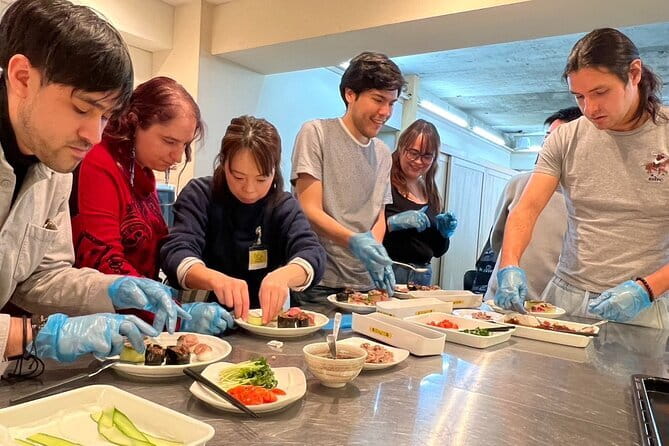
One of the strongest positives is the teaching style. Instructors including Hiroko and Saori come across as patient and supportive, with English-speaking help that makes the steps feel manageable.
That is important because sushi technique has a few points where small changes matter. If you are left to figure it out alone, you can end up with rice that does not hold the shape or pieces that look messy. Good instruction helps you avoid the common mistakes fast.
The class also emphasizes not just what to do, but how to do it. You learn how to create dishes and how to plate them up in a way that looks intentional, not accidental. For photo-friendly food, that plating practice is a big deal.





The Core Skill: Shari Basics and Rice Handling
The rice step is where a lot of people lose confidence with sushi. Here, the lesson includes guidance on Shari, which is the sushi rice seasoning and handling approach.
Even if you already like sushi, learning Shari basics is useful because it changes how the rest of the sushi works. When the rice is properly seasoned and handled, the whole bite becomes cohesive: flavor shows up in every mouthful, not just at the topping.
You also get a chance to work through the rice shaping component. Sushi is a craft. You are learning how to get consistent portions and clean edges, especially for nigiri.
If you’ve ever had sushi where the rice tastes fine but the piece falls apart, this is the kind of class that helps you prevent that. Not by magic, but by showing you how to handle rice so it stays together.
Nigiri, Gunkan Maki, and Temaki: Building Three Different Bites
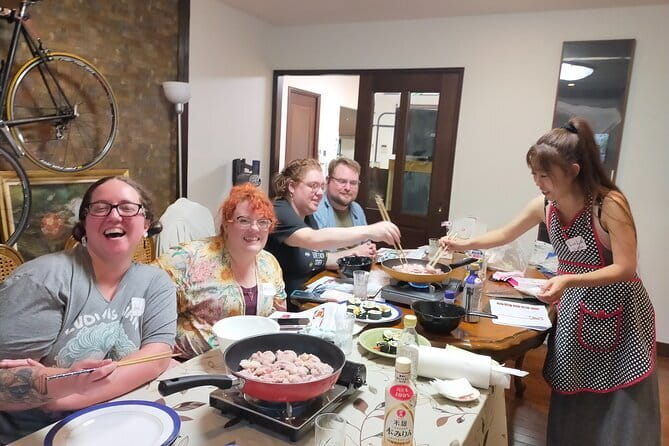
You will learn to make a variety of Wagyu sushi styles, including:
- Nigiri: shaped rice topped with Wagyu
- Gunkan maki: a rice form shaped to hold a topping
- Temaki: hand-formed sushi with a more casual, cone-like shape
Each form teaches a slightly different technique. Nigiri focuses on proportion and clean shaping. Gunkan maki is about structure, since it needs to hold its topping. Temaki is about speed and control, because the shape is built by hand and needs to stay neat enough to eat.
This mix is a smart choice for a first-timer. You do not just learn one style and walk away feeling that you still only know one trick. Instead, you leave with a small set of practical shapes you can try at home with other fillings.
Cooking the Wagyu: How Meat Fits the Sushi Equation
Wagyu sushi sounds unusual until you see how it is put together. The class includes instruction on preparing the meat as part of the sushi-making process, and you might also work with styles that feel closer to shabu-style preparation depending on the step sequence.
What matters for you is the lesson underneath the food: you learn how to manage cooking and assembly so the meat plays nicely with the rice and seasonings. In many sushi bites, seafood is naturally delicate. With Wagyu, the richness changes the balance. You have to think about texture, temperature, and portion size so the flavor stays pleasant rather than heavy.
This is one reason the class is worth it even if you do not eat much meat normally. You are learning how sushi changes when the ingredient changes, and that is real cooking education, not just a gimmick.
Plating and Presentation: Make It Look Like Real Sushi
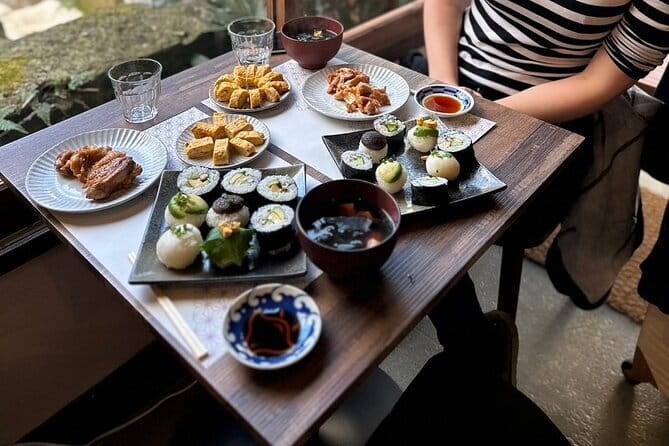
A surprising part of why people enjoy this class is the focus on plating. You will not just assemble pieces and call it done. The instruction includes how to arrange and present your sushi so it looks like something you would see in a shop.
That skill is practical. When you plate well, you also tend to get better portion control. It is harder to overload a piece when you are thinking about shape and spacing. Plus, the plated result is more fun to eat.
There’s also a visual payoff during and after the class. The experience includes later-downloadable photographs, which means you can capture your results without juggling your phone while your hands are sticky with rice and sauce.
Your Meal at the End: Lunch Included, and You Eat What You Make
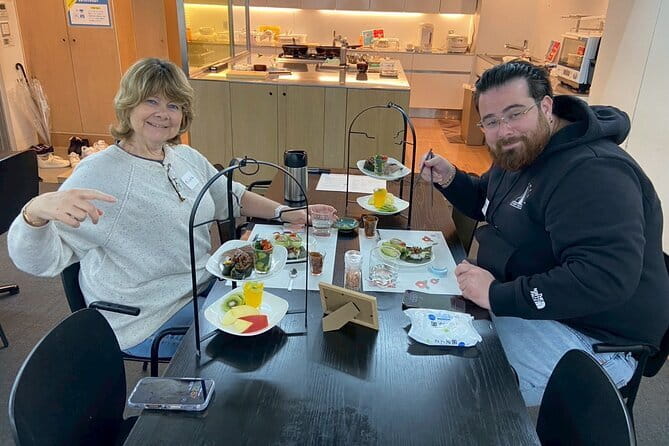
The class is designed so the learning ends with eating. You get lunch included, and the experience is structured to let you relax and enjoy your creations at the end.
That is a major value point because you are not paying for a lesson only. You are paying for a full experience: instruction, ingredients, and a meal. If you’ve ever done a cooking class where you make food you barely taste, this format is the opposite. You get to judge the final flavor and texture for real.
It also helps with learning transfer. When you eat your own sushi, you understand what you did well. You can remember it later when you try to replicate it at home.
Price and Value: Is $104.51 a Smart Deal?
At about $104.51 per person for roughly 1.5 hours, this is not the cheapest activity in Tokyo. But it is also not trying to be. The value comes from several bundled elements:
- Small group instruction (max six)
- Premium Wagyu used in the lesson
- Ingredients and equipment provided, which saves time and cost
- Lunch included
- Later-downloadable photos added to the package
If you compare this to buying ingredients and trying to learn sushi technique from scratch, the lesson part becomes the main cost. And sushi technique is one of those topics where better guidance can save you from wasted materials and frustrating attempts.
Also, the class starts at 12:00 pm and runs to about 1:30 pm, which makes it a clean block in your day. For many people, fitting in a cooking class that doubles as lunch is the best way to manage time and budget in a city where dining can add up fast.
One more thing: it often gets booked around a month ahead on average, so if this is on your list, I would not wait too long.
Logistics That Affect Your Day (Without the Headache)
This is a near-public-transport meeting setup. No hotel pickup is included, so you will want to plan your own route to the meeting point.
The activity ends back at the meeting point, which is helpful because you do not end up with a complicated return plan. And because it uses a mobile ticket, you should be ready to show it on your phone at check-in.
Timing is also straightforward. It starts at 12:00 pm, so you should treat it like a lunch-focused event rather than an evening plan.
Who Should Book This Wagyu Sushi Class
I think this experience fits best if you want:
- A hands-on sushi class with a meat-based twist
- A small group setting where you can get help
- Clear instruction in English
- A sushi-making session that includes lunch and photos
It is also a good match for people who already like sushi but want a fresh angle. Learning nigiri, gunkan maki, and temaki with Wagyu is a fun way to build skills you can reuse.
If you are vegan or vegetarian, skip this one. The class does not list vegan or vegetarian options.
Should You Book It?
Book it if you want a short, skill-focused cooking class where the ingredient is premium and the teaching is friendly. The combination of small group guidance, Wagyu, and the chance to eat what you make is a strong package for the price.
Skip it if you cannot do meat-based cooking, or if you strongly prefer seafood-only sushi lessons. Also, since there’s no hotel pickup, make sure the public-transport route works for your schedule that day.
If you like sushi enough to learn technique, this is the kind of Tokyo experience that makes the food feel personal, not just something you buy and move on from.
FAQ
How long is the Hands On Wagyu Sushi Making Experience?
It lasts about 1 hour 30 minutes.
What time does the class start?
The start time is 12:00 pm.
Where is it located?
It takes place in Tokyo, Japan, and it ends back at the meeting point.
How much does it cost?
The price is $104.51 per person.
How many people are in the group?
There is a maximum of 6 travelers per class.
Is lunch included?
Yes, lunch is included.
Are vegan or vegetarian options available?
No. Vegan and vegetarian options are not available.
Do I get photos?
Yes. Later-downloadable photographs are included during the experience.
What is the cancellation policy?
You can cancel for free up to 24 hours before the experience’s start time for a full refund. If you cancel less than 24 hours before, the amount paid is not refunded.
More Tour Reviews in Tokyo



Fresh reviews from around Tokyo






Tokyo, compared.
 ★ 5.0Mt Fuji and Hakone 1-Day Bus Tour Return by Bullet TrainFrom $16326,383 reviews
 ★ 5.01-Day Tokyo Bus TourFrom $12914,250 reviews
 ★ 4.6teamLab Planets TOKYO Digital Art Museum Entry TicketFrom $259,779 reviews
 ★ 4.0Mt Fuji & Hakone Cruise, Drum Show Bullet Train 1 Day from TokyoFrom $1497,413 reviews
 ★ 5.0Shinjuku Food Tour (13 Dishes at 4 Local Eateries)From $866,603 reviews
 ★ 4.4Tokyo Mt Fuji 5th St & Hakone Cruise Bus Tour w/Bullet TrainFrom $1545,024 reviews
 ★ 5.0Flagship 2-Hours Official Street Go-Kart Tour – Tokyo Bay ShopFrom $644,974 reviews
 ★ 4.5From Tokyo: Mount Fuji Full-Day Sightseeing TripFrom $684,970 reviews