
Reviewed · TOKYO
Hand-carved stamps made with craftsmen in Asakusa, Tokyo
Your name becomes a stamp.
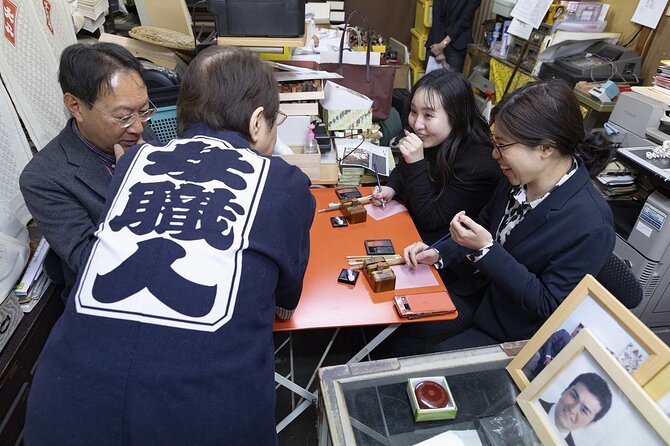
In Asakusa, you’ll carve a hanko in a real workshop setting with one-on-one guidance from a local artisan. This is interesting because you’re not just watching a demo; you’re making a personal seal in about 90–120 minutes, using natural wood such as sakura or sansho. The keep-sake factor is real: you leave with your finished seal, not a photo and a vague memory.
I also like that the craft lesson comes with context—techniques and tradition are explained in a way that actually helps you carve. There is one drawback to think about: if you pick a very complex design, it may be harder to finish on time, so you’ll want to choose something bold and readable.
In This Review
- Key things to know before you book
- Carving Your Hanko in Asakusa’s crafts workshop
- What you’ll make: wood type, size, and design limits
- The 90–120 minute hands-on session (what happens at the workshop)
- The cultural part: technique plus the story behind the craft
- Getting ink on paper: stamping and taking your hanko home
- Price and value: is $93.33 per person fair?
- Who this workshop is best for (and who should think twice)
- Practical tips so your carving goes smoothly
- Should you book this hanko workshop?
- FAQ
- How long is the hanko carving workshop?
- Is this a private tour or a group class?
- What materials and tools are provided?
- Can I carve any design I want?
- Do I need prior carving experience?
- Where does the workshop take place?
- What should I bring and what about the restroom?
Key things to know before you book
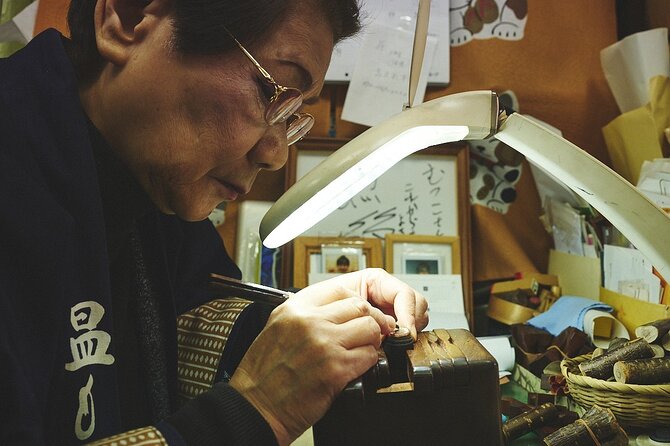
- Private workshop with your group only so you get steady attention while carving
- Natural wood twigs (often sakura or sansho) sized around 10 cm, so the texture matters
- English interpreter included for hands-on instruction, not just a translation headset
- Vermilion inkpad is provided so you can test your stamp right after carving
- Designs with lots of tiny details may be tough within the 90–120 minute window
- No toilet on-site, but there’s a public restroom a one-minute walk away
Before you commit, see how this one stacks up against a few Tokyo favourites:
- Mt Fuji and Hakone 1-Day Bus Tour Return by Bullet Train★ 5.0 · 26,383 reviews
- 1-Day Tokyo Bus Tour★ 5.0 · 14,250 reviews
- Tokyo: teamLab Planets TOKYO Digital Art Museum Entry Ticket★ 4.6 · 9,779 reviews
Carving Your Hanko in Asakusa’s crafts workshop
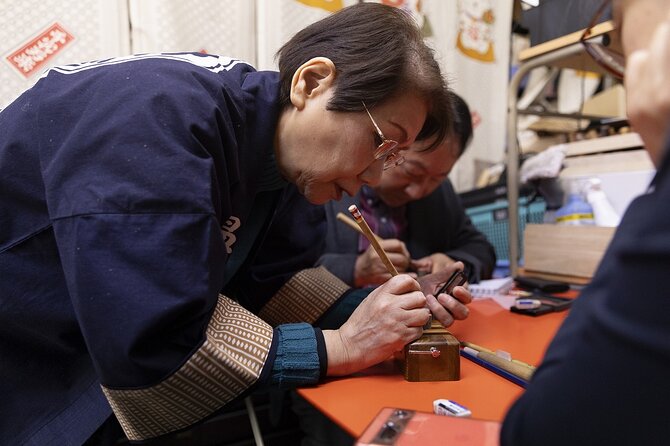
Asakusa is the right place for this kind of experience. You’re in Tokyo, but the feeling here is more workshop than showroom. The meeting spot is at 伊藤印房 (I tō Inbō), Senzoku, Taito City, and that location matters because it anchors you in the everyday rhythm of a working craft shop.
This is a private experience, meaning it’s not a crowded class. You’ll work through your design with an English interpreter present, plus tools and materials provided. The result is that the lesson stays practical: if your cut isn’t clean or your carving depth is off, you can get corrections while it’s still easy to fix.
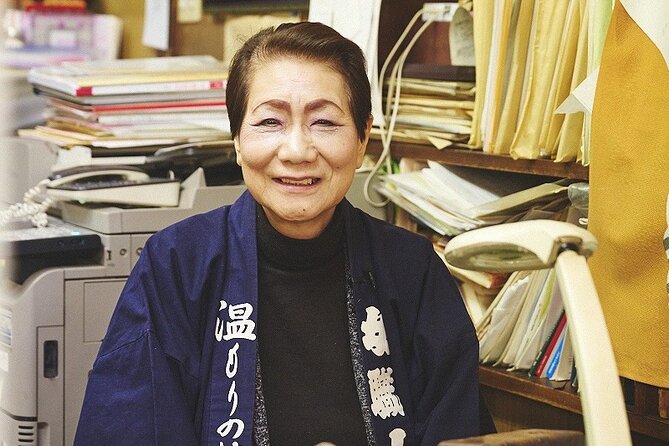
One of the most praised parts is the human side. The workshop host shares an inspiring personal story, including that the artisan was one of the first female hanko craftsmen. That kind of background doesn’t replace the technique lesson, but it gives it weight. You’re carving more than a souvenir.
What you’ll make: wood type, size, and design limits
Let’s talk specifics, because hanko carving is simple in concept and picky in execution.
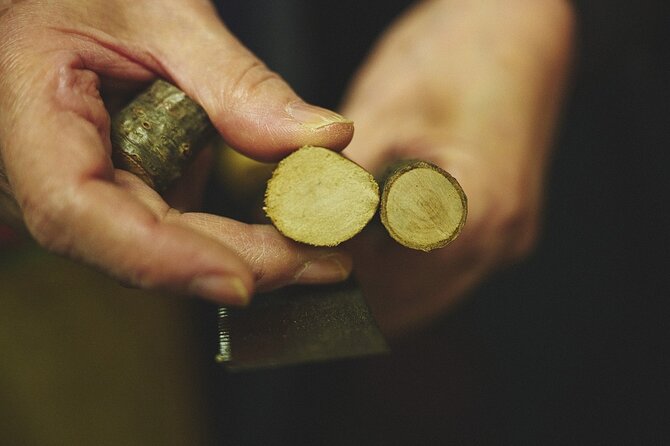
You’ll carve a stamp seal roughly 10 centimeters long from natural wood—the material is small twigs, commonly listed as sakura or sansho. The wood type can affect how your lines feel under the tool, so expect the carving to be hands-on rather than “just trace and go.”
Your pattern is up to you, but here’s the key planning point: complex patterns can be higher difficulty and may not be feasible within the allotted time. That doesn’t mean you can’t make something artistic. It means you should think in terms of stamp readability:
- Choose clear, bold shapes
- Avoid tiny, crowded details
- If you’re making a name, consider how your characters will translate into carved grooves
Carving a hanko is like making a tiny sculpture that also has to print cleanly. If you plan for that, you’ll enjoy the process more—and you’ll be happier with the final result.
The 90–120 minute hands-on session (what happens at the workshop)
Your experience runs about 90 to 120 minutes. It’s also flexible depending on the customer, so don’t schedule a super tight connection right after. This is not an airport-style sprint; you’re learning a technique and shaping your design with guidance.
Here’s the flow in plain terms:
1) You start at the shop in Taito (Asakusa area) and get set up.
You don’t need special prep. The only “bring this” item is optional: if you’re worried about carving debris, you can bring your own apron.
2) You choose your preferred design and work from guidance.
The artisan helps you translate your idea into something practical for carving. If you’re unsure, ask early. It’s much easier to adjust your design before you commit tool pressure.
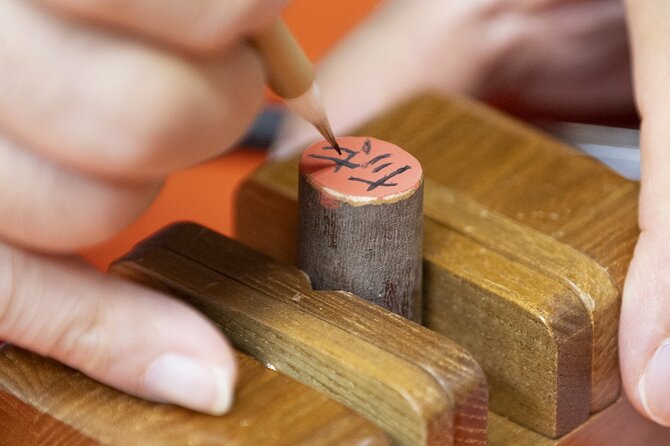
3) You carve into the wood using wooden carving tools.
Some hand skill is required for hand-carving, but you’re not left alone with a tool and a prayer. The guidance is thorough, and you can get help if your cuts aren’t coming out how you expected.
4) You finish your hanko seal and test it with the provided inkpad.
A vermilion inkpad is included. This is the moment where you can see whether your lines hold up as a stamp.
One more timing note: one earlier participant finished faster than the maximum estimate, so the time window is an estimate, not a promise. In practice, you should plan to use the full session for carving, testing, and small adjustments.
The cultural part: technique plus the story behind the craft
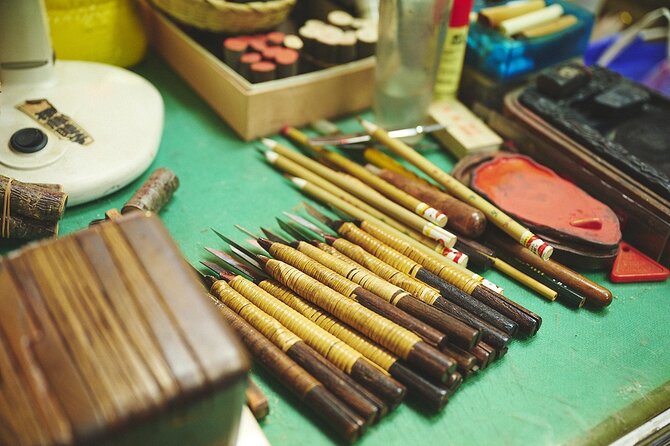
This workshop isn’t only about making something. It’s also about understanding why the craft is done the way it is.
You’ll learn the history and techniques behind hanko carving, explained by a local artisan. That matters because a name stamp can feel like a novelty until you understand it as a tradition built around precision: carved surfaces, clean edges, and the logic of how a stamp transfers ink.
The best version of this experience happens when the instruction becomes personal. You’re working one-on-one, with an interpreter, so questions land quickly. You’re not trying to decode a demonstration from across the room.
And because the host shares an inspirational story—being one of the first female hanko craftsmen—you get context for the craft’s continuity. You’ll likely come away with a better respect for the skill, not just a souvenir.





Getting ink on paper: stamping and taking your hanko home
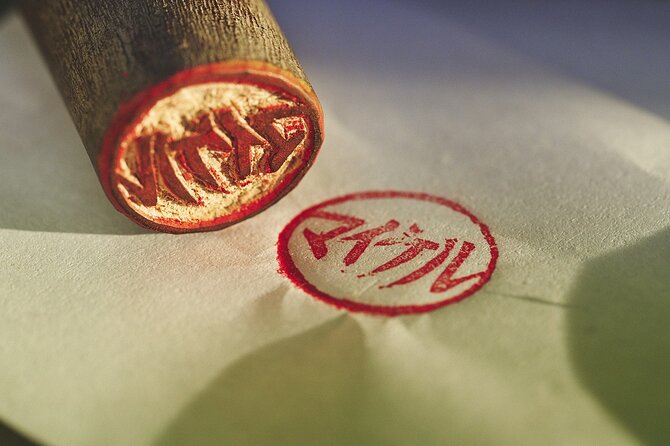
The included vermilion inkpad is a small detail that changes the whole value of the workshop. It lets you see your work immediately. Instead of wondering how your stamp will look later, you can test and adjust your expectations on the spot.
Then you take your carved hanko home. That’s the core reason this activity is worth it: your seal is personal, and it’s made from natural wood by your own hands with real instruction.
You’ll also notice that the workshop offers souvenirs, but they’re not included in the fee. That’s fine, because your handmade hanko is already the main payoff.
Price and value: is $93.33 per person fair?
At $93.33 per person, this isn’t the cheapest thing you can do in Tokyo. One review-style concern that comes up with similar workshops is that the experience can feel short if you’re expecting a long, classroom-style deep session.
So here’s how I’d judge the value, using only what’s included:
- You get tools and materials (natural wood)
- You get an English interpreter for hands-on help
- You get the hanko you carve as a take-home product
- You get the vermilion inkpad
- You get a private setting where guidance can actually improve your result
If you treat this as a hands-on craft session with a take-home outcome, the price starts to make sense. If you’re hoping for a long, slow cultural tour, you might feel the minutes pass quickly.
My advice: aim to choose a design you can realistically carve well in the time window. You’ll get a better result—and better perceived value—because you won’t rush through something too intricate.
Who this workshop is best for (and who should think twice)
This is one of those experiences that works best when you like doing rather than watching.
You’ll likely enjoy it if:
- You want a personal, practical souvenir (not just a printed postcard vibe)
- You like crafts where the result depends on attention and small corrections
- You’re comfortable asking questions when you’re unsure about technique
- You’re traveling as a couple, small group, or family with teens and up
It may be less satisfying if:
- You want a big sightseeing itinerary with multiple stops
- You’re chasing a long lecture or lots of downtime
- You want to carve an extremely detailed design that needs more time than you’ll have
Age-wise, participation is listed as over 10 years old. For kids under 10, separate confirmation is required. Also, most travelers can participate, but hand-carving does require some coordination.
Practical tips so your carving goes smoothly
A few small things can make your session easier.
Wear casual clothes. You’ll be working with tools and wood. Think “comfortable and ready for a craft table,” not “brand-new outfit.”
If you’re worried about mess, consider bringing your own apron. There isn’t any special prep required otherwise—items to bring are not listed as necessary.
Plan the restroom ahead of time. There’s no toilet on-site, but there is a public restroom about one minute walk from the experience location. That’s easy, but it’s still smart to handle it before you start carving.
Also, because this is a private tour, your group pace matters. The artisan will guide you, but if your design takes more time, your session can run closer to the top end of the 90–120 minutes.
Should you book this hanko workshop?
If you want a Tokyo souvenir that’s actually made by you, this is a strong choice. The best part is the combination: private guidance, a personal craft outcome, and a cultural story that helps you understand what you’re doing.
Book it if:
- You like hands-on activities and want a keepable product
- You’d rather make one meaningful item than do five quick stops
- You’re happy to choose a design that fits the time limit
Skip it if:
- You need a long, structured sightseeing day
- You’re determined to carve a very complex design with tons of tiny detail
- Your schedule is so tight that 90–120 minutes plus a brief start/end can’t fit
FAQ
How long is the hanko carving workshop?
The experience is listed as about 90 to 120 minutes, and the exact time can vary depending on the customer.
Is this a private tour or a group class?
It’s a private experience. Only your group participates.
What materials and tools are provided?
You’ll get tools for the experience, natural wood materials, and you also receive a vermilion inkpad. The hanko you create is included.
Can I carve any design I want?
You can create an original pattern with guidance, but complex patterns may be harder to finish within the allotted time.
Do I need prior carving experience?
Some skill is required for hand-carving, but the artisan provides thorough guidance and help when needed.
Where does the workshop take place?
You meet at 伊藤印房 in Taito City, Tokyo, in the Asakusa area (address: 伊藤印房1-chōme-19-4 Senzoku, Taito City, Tokyo 111-0031, Japan). The activity ends back at the meeting point.
What should I bring and what about the restroom?
No items are specifically required. Wear casual attire, and if you’re concerned about carving debris, you might bring your own apron. There is no toilet at the location, but a public restroom is about a one-minute walk away, so use it beforehand.
More Tour Reviews in Tokyo



Fresh reviews from around Tokyo






Tokyo, compared.
 ★ 5.0Mt Fuji and Hakone 1-Day Bus Tour Return by Bullet TrainFrom $16326,383 reviews
 ★ 5.01-Day Tokyo Bus TourFrom $12914,250 reviews
 ★ 4.6teamLab Planets TOKYO Digital Art Museum Entry TicketFrom $259,779 reviews
 ★ 4.0Mt Fuji & Hakone Cruise, Drum Show Bullet Train 1 Day from TokyoFrom $1497,413 reviews
 ★ 5.0Shinjuku Food Tour (13 Dishes at 4 Local Eateries)From $866,603 reviews
 ★ 4.4Tokyo Mt Fuji 5th St & Hakone Cruise Bus Tour w/Bullet TrainFrom $1545,024 reviews
 ★ 5.0Flagship 2-Hours Official Street Go-Kart Tour – Tokyo Bay ShopFrom $644,974 reviews
 ★ 4.5From Tokyo: Mount Fuji Full-Day Sightseeing TripFrom $684,970 reviews