
Reviewed · TOKYO
Golden Gai Hidden Eats A Personalized Shinjuku Food Tour By Guide
Shinjuku tastes better with a guide. You get a small-group walk through Shinjuku alleyways and nightlife lanes, then you’re guided into 3 to 4 restaurants where the guide handles the ordering and the pace. It’s a fun way to learn the area while you eat, not just wander.
Two things I like a lot: the route mixes neon chaos with real stops like Hanazono Shrine, and the food plan is built around an all-you-can style spread that can include sushi, seafood, and Japanese wagyu, plus local desserts. One watch-out: a past booking mentioned a lack of dish explanations and disappointing sushi quality, so I’d come ready to ask questions and check what you’re ordering as you go.
In This Review
- Key Highlights You Should Know
- Shinjuku After Dark, With a Route That Actually Helps
- Price and Logistics: Is $195 Good Value?
- Meeting at Shinjuku Station (and Why This Matters for a 4-Hour Tour)
- Kabukicho District: Neon Energy, Hostess Streets, and a Useful First Realignment
- Godzilla Road & Head: Photos Now, Memories Later
- Don Quijote Shinjuku: The Mega-Store Detour That Helps You Navigate Tokyo
- Shinjuku Golden Gai: Tiny Doors, Old-School Bar Lanes
- Hanazono Shrine: A Calm Pause in the Middle of High-Rise Noise
- Omoide Yokocho: Where the Food Comes Fast and the Alley Has Personality
- What You Actually Eat (and How the Guide Affects Your Meal)
- Small Group Size: The Hidden Advantage for Food Tours
- Who This Tour Suits (and Who Might Prefer DIY)
- Should You Book This Shinjuku Food Tour?
- FAQ
- What is the price of the Shinjuku food tour?
- How long does the tour last?
- How many restaurants and what’s included in the meals?
- Are alcoholic drinks included?
- Where does the tour start and end?
- Is there a dress code?
- What are the age requirements?
- What is the cancellation policy?
Key Highlights You Should Know
- A true food-focused walk: you’re not sightseeing first and eating later
- Small group size (max 10): easier conversation and more tailored pacing
- Neighborhood mix that makes sense: Kabukicho, Golden Gai, Omoide Yokocho, shrine time, then back to food
- Photo moments built in: Godzilla Road & Head is an obvious camera stop, plus pictures after the tour
- Soft drinks and water included: you can keep moving without constantly buying bottles
- Alcohol not included: good for controlling your budget and keeping your plan simple
Before you commit, see how this one stacks up against a few Tokyo favourites:
- Mt Fuji and Hakone 1-Day Bus Tour Return by Bullet Train★ 5.0 · 26,383 reviews
- 1-Day Tokyo Bus Tour★ 5.0 · 14,250 reviews
- Tokyo: teamLab Planets TOKYO Digital Art Museum Entry Ticket★ 4.6 · 9,779 reviews
Shinjuku After Dark, With a Route That Actually Helps
Shinjuku is one of Tokyo’s most confusing zones for first-timers. You’ll see electric signs, a maze of streets, and blocks that feel totally different block-to-block. This tour helps because it gives you a clear sequence, so you’re not choosing where to eat while jet-lagged and hungry.
What makes this experience work is the combo of walking orientation and food timing. You start in Kabukicho, then you move toward small-bar lanes and old-school dining alleys. Along the way you hit familiar photo points like Godzilla Road & Head and the massive Don Quijote area, which are handy landmarks when you’re trying to navigate later on your own.
Another plus: the tour is designed for you to taste “Shinjuku” rather than just eat one iconic dish. The plan centers on restaurant stops where you can go through a spread that includes sushi and other seafood, and it’s also positioned around Japanese wagyu. Even if you’re not a hardcore meat eater, it gives you range.
Price and Logistics: Is $195 Good Value?
At $195 per person for about 4 hours, you’re paying for three things: a guide, multiple restaurant stops, and organized tastes (not just one meal). You’re also not paying separate entry fees for the sight stops, since the itinerary sights are listed as free.
Here’s the practical “value math” from a traveler point of view:
- You get 3 to 4 restaurants in a single afternoon window.
- Soft drinks and water are included, plus local desserts.
- You don’t have to hunt for places that take walk-ins, understand menus, or translate ordering in a hurry.
That said, this isn’t a budget tour. If you already know where you want to eat and you plan to drink alcohol, DIY can be cheaper. The price also doesn’t include alcohol, and there’s no hotel pickup/drop-off. So you’ll need to get yourself to the start point and stay self-sufficient with transportation once you finish.
Meeting at Shinjuku Station (and Why This Matters for a 4-Hour Tour)
Your tour starts back at Shinjuku Station 3-chōme-38-1, and it ends there again. That’s a big deal in Shinjuku, because the station area is huge. If you can find the meeting point once, you’ll be able to repeat it later.
The tour uses a mobile ticket, and confirmation happens at booking. There’s also a maximum of 10 travelers, which keeps the walking manageable and makes restaurant ordering less chaotic.
One more practical detail: minimum age is 18. Children can join only if they’re accompanied by an adult. You’ll want to plan for a steady walk that includes time outdoors at multiple nightlife-adjacent streets.
Kabukicho District: Neon Energy, Hostess Streets, and a Useful First Realignment
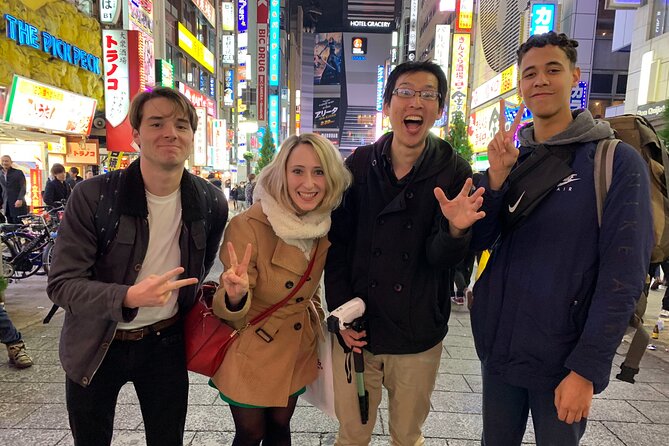
The first stop is Kabukicho, Shinjuku’s best-known nightlife district. This is where the area feels the most “Tokyo” and the most overwhelming at the same time. The streets are busy and noticeably different from calmer neighborhoods, with a lot of nightlife cues all around.
Why this makes sense on a food tour: you get the orientation early. After you’re dropped into Kabukicho with a plan, you learn how to read the streets—what’s a shortcut, what’s just a photogenic detour, and where the food lanes actually sit.
Time on this stop is about 45 minutes, and admission is free. This is enough time to see it, soak up the atmosphere, and still keep the day moving toward the eating portion.
Possible drawback: Kabukicho can feel intense if you’re not used to late-night crowds. If you’re sensitive to loud signage or packed sidewalks, keep your pace steady and stay focused on your guide and the next meeting point.





Godzilla Road & Head: Photos Now, Memories Later
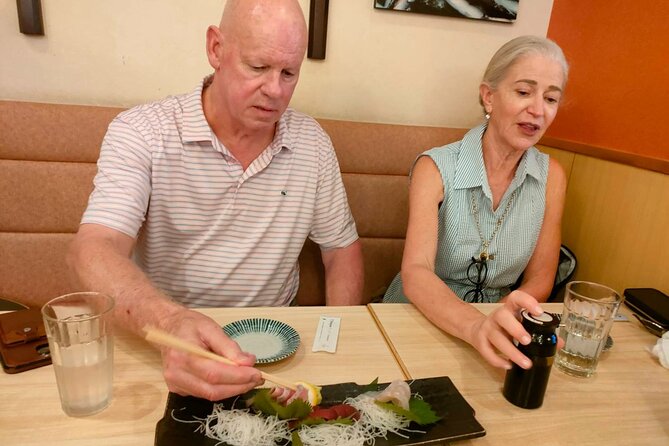
Next you stop at Godzilla Road & Head. This is a straightforward photo moment, but it’s also a great “orientation marker.” If you’re trying to picture where everything sits, Godzilla is an easy reference point.
This stop is listed at about 45 minutes with free admission. That’s longer than you’d expect for just a statue, which suggests you’ll have time to take photos and settle into the walk without rushing. If you want a clean shot without blocking people, this is also the kind of stop where timing matters.
Don Quijote Shinjuku: The Mega-Store Detour That Helps You Navigate Tokyo
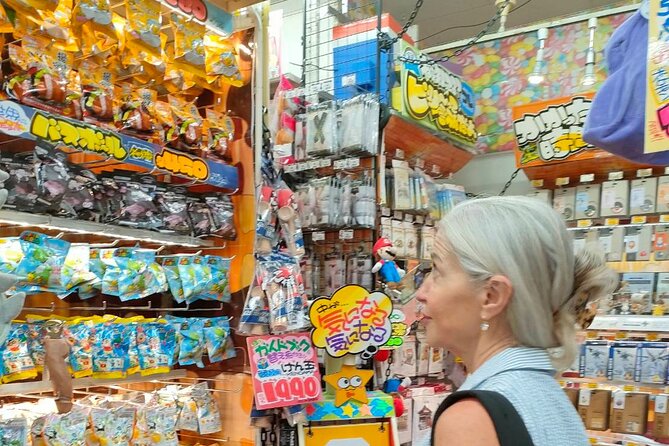
Then you roll through Don Quijote Shinjuku, a convenience-store-style department megastore selling groceries, toys, footwear, and other daily items. For a food tour, this stop might seem random at first. But it’s useful.
Why? Because you learn a real-life reference point. Don Quijote is one of those places you can use later if you need last-minute snacks, small gifts, or basic travel items. Also, it’s a relief break in a day full of walking.
Time is about 30 minutes, free entry. Bring a little patience: this store is busy by nature. Think of it as a reset before the more intimate lanes come up.
Shinjuku Golden Gai: Tiny Doors, Old-School Bar Lanes
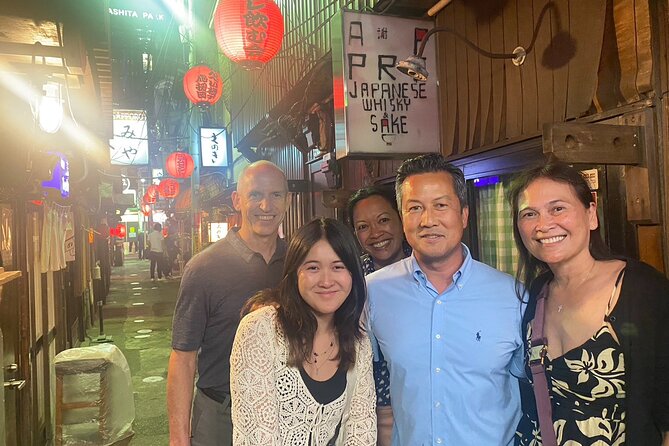
Now you reach Shinjuku Golden Gai, one of the area’s most character-heavy zones. The big idea here is scale: many of the storefronts and bars are small, with limited capacity. That’s why Golden Gai feels like an “inside” neighborhood once you’re walking through it.
This stop is about 30 minutes and admission is free. You’ll be looking at older shops and bars, and you’ll get a sense of why people talk about this place for its atmosphere. It’s not about finding one big venue; it’s about seeing how the neighborhood is built.
Practical tip: keep an eye on your footing. The sidewalks in these lanes can be uneven, and you’ll likely be walking in tighter corridors than elsewhere. If you want great photos, step aside gently and let people pass.
Hanazono Shrine: A Calm Pause in the Middle of High-Rise Noise
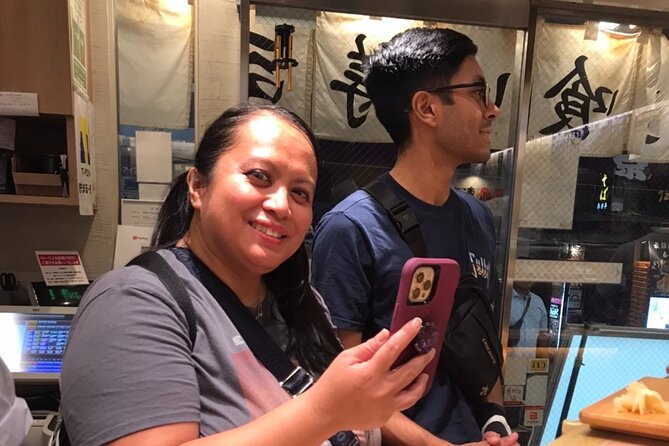
Right after Golden Gai, you visit Hanazono Shrine. This is one of those spots that gives you contrast: Shinjuku’s high-rise density and nightlife energy, followed by a sacred, older Shinto space.
The shrine is said to have been founded before Tokugawa Ieyasu established the Edo Shogunate in 1603. It’s also set up for seasonal festivals across the year, and the grounds include a main hall plus smaller shrines and gates.
Time here is about 30 minutes, free to enter. This pause helps the tour feel balanced. You’re not only walking from one loud place to another; you get a chance to slow down, reset your head, and appreciate that Shinjuku isn’t just nightlife.
A consideration: if you’re expecting a long, quiet temple visit, this won’t be that. It’s a short stop, enough for context and atmosphere, then you’re back to eating.
Omoide Yokocho: Where the Food Comes Fast and the Alley Has Personality
Finally, you hit Omoide Yokocho, a lane of little bars where locals eat and drink while the chefs prepare food. This is where the tour earns its “food tour” label in a big way.
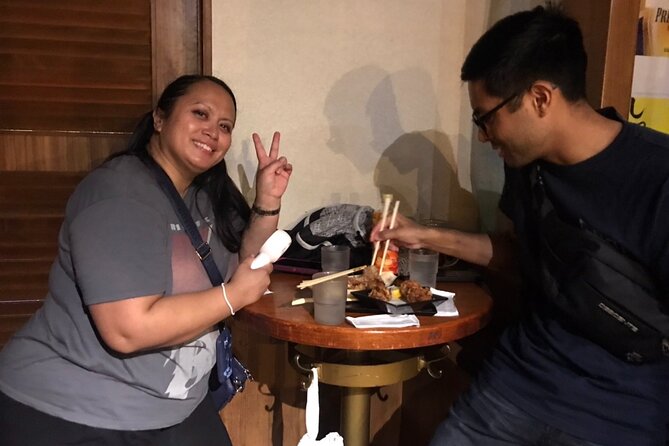
Time is about 30 minutes, free to enter, but the experience hinges on eating. The plan includes restaurant stops where the guide picks dishes, and Omoide Yokocho is the kind of place that fits the vibe: short seats, quick action from the kitchen, and a lively atmosphere.
The tour description also notes that chefs may give Japanese jokes while they work. That matters because it changes the tone from “sit quietly and eat” to “watch the process and feel included.” You’re more likely to relax and go with the flow.
One thing to remember: a previous booking criticized a lack of dish explanations and disappointing sushi quality. That’s not something you can fully control, but you can help your experience. If you want to understand what you’re eating, ask your guide to explain each dish as it arrives, and ask what makes it special.
What You Actually Eat (and How the Guide Affects Your Meal)
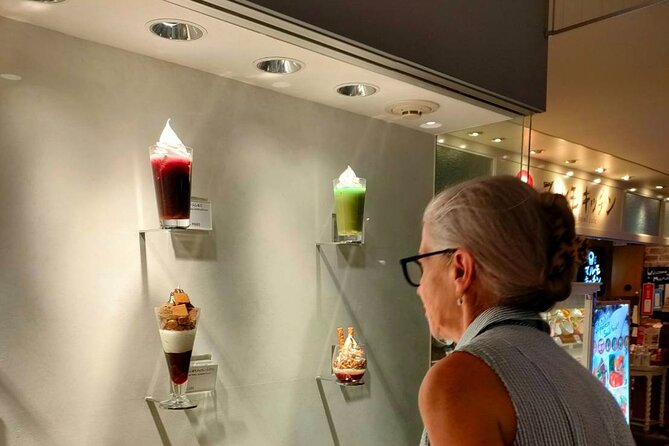
The tour is structured around different local dishes selected by a master guide, with 3 to 4 restaurants total. You’ll also get soft drinks and water, plus local desserts. Alcohol is available for purchase, but it’s not included.
So you’re not doing the hardest part: choosing what to order. In Shinjuku, that can be a real headache, especially if you don’t know the menu rhythm or you’re not confident with ordering.
This is where the “personalized” part can show up in a good way. A strong guide doesn’t just bring you to places. They adjust the flow based on what you like, how hungry you are, and whether you want more seafood, more meat, or just a mix.
If you end up with a guide who doesn’t explain dishes much, you’ll feel less connection to what you’re eating. That’s why it helps to be proactive: ask what each item is and how it’s typically eaten (for example, whether it’s served with a specific sauce style). Small questions can turn “I’m eating” into “I’m learning.”
Small Group Size: The Hidden Advantage for Food Tours
A maximum of 10 travelers might not sound like much, but it changes the experience. Restaurants in the Golden Gai and Omoide Yokocho zones can be tight. With fewer people, ordering tends to feel smoother, and it’s easier to keep a conversation going with your guide.
It also makes meeting points less stressful. Shinjuku is crowded. When you’re in a smaller group, you’re less likely to get separated or left behind.
And because the tour includes pictures after the tour, a smaller group helps the guide manage photo moments without turning the walk into a chaotic production.
Who This Tour Suits (and Who Might Prefer DIY)
This tour is a strong fit if you want:
- A guided way to get your bearings fast in Shinjuku’s nightlife districts
- A structured chance to sample a spread centered on sushi and seafood, with the possibility of Japanese wagyu
- An experience where the guide handles restaurant choice, so you can focus on eating and learning
You might prefer a DIY approach if:
- You already have a short list of specific restaurants and you don’t want to follow a set route
- You’re extremely sensitive to crowd energy in Kabukicho
- You want to drink alcohol heavily, since alcohol is not included and you’ll likely pay more on top
Should You Book This Shinjuku Food Tour?
I’d book it if you’re the type of traveler who likes organized eating and you want to understand Shinjuku beyond the first neon street you stumble onto. The price starts to make sense when you factor in 3 to 4 restaurants, guide-driven ordering, included soft drinks/water, and dessert, all within about 4 hours.
I’d hesitate only if you’re very picky about sushi quality or you hate not knowing exactly what’s coming. If that’s you, send a message in advance to ask how the guide handles dish explanations and how the meal is structured. Then, during the tour, ask questions the moment food arrives.
If you show up hungry, curious, and ready to ask for details, this is the kind of Shinjuku afternoon that turns into a story you’ll keep telling.
FAQ
What is the price of the Shinjuku food tour?
The tour costs $195.00 per person.
How long does the tour last?
The duration is about 4 hours.
How many restaurants and what’s included in the meals?
The tour includes 3 to 4 restaurants. Soft drinks and water are included, along with local desserts, and the guide selects different local dishes for you.
Are alcoholic drinks included?
No. Alcoholic drinks are not included, though they may be available to purchase.
Where does the tour start and end?
It starts at Shinjuku Station 3-chōme-38-1, Shinjuku, Shinjuku City, Tokyo, and ends back at the same meeting point.
Is there a dress code?
No dress code is required.
What are the age requirements?
The minimum age is 18. Children must be accompanied by an adult.
What is the cancellation policy?
Cancellation is free up to 24 hours in advance for a full refund. If you cancel less than 24 hours before the start time, the amount paid is not refunded.
More Tour Reviews in Tokyo



Fresh reviews from around Tokyo






Tokyo, compared.
 ★ 5.0Mt Fuji and Hakone 1-Day Bus Tour Return by Bullet TrainFrom $16326,383 reviews
 ★ 5.01-Day Tokyo Bus TourFrom $12914,250 reviews
 ★ 4.6teamLab Planets TOKYO Digital Art Museum Entry TicketFrom $259,779 reviews
 ★ 4.0Mt Fuji & Hakone Cruise, Drum Show Bullet Train 1 Day from TokyoFrom $1497,413 reviews
 ★ 5.0Shinjuku Food Tour (13 Dishes at 4 Local Eateries)From $866,603 reviews
 ★ 4.4Tokyo Mt Fuji 5th St & Hakone Cruise Bus Tour w/Bullet TrainFrom $1545,024 reviews
 ★ 5.0Flagship 2-Hours Official Street Go-Kart Tour – Tokyo Bay ShopFrom $644,974 reviews
 ★ 4.5From Tokyo: Mount Fuji Full-Day Sightseeing TripFrom $684,970 reviews