
Reviewed · TOKYO
Furoshiki Cloth Wrapping
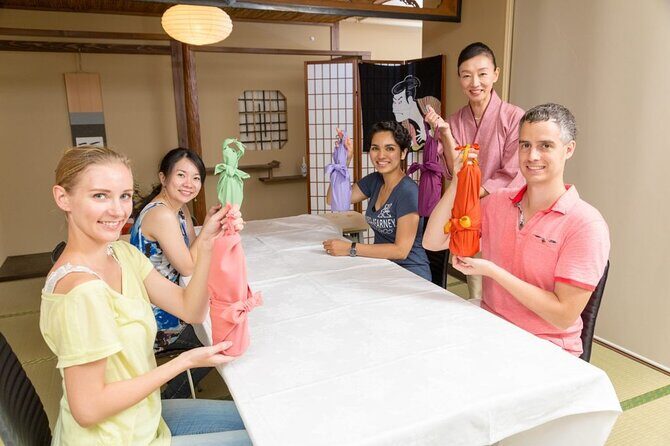
A gift wrap lesson that actually sticks. This hands-on Tokyo workshop teaches furoshiki cloth wrapping with an eco-minded twist, starting from the basics and building up to more useful, practical methods.
Two things I really like: you learn seven different techniques in one focused session, and you leave with your own furoshiki cloth to practice at home. There’s also plenty of culture woven in—history, purpose, and why this craft still matters in Japan today.
One possible drawback: it’s mostly hands-on studio time, and no food or drinks are included, so you’ll want to plan your timing around a meal before or after.
In This Review
- Key highlights you’ll care about
- Kicking off in Minato: your workshop base in Tokyo
- What furoshiki actually teaches you (and why that’s useful)
- Step-by-step: how the 7 techniques build your skills
- Making real things: bags, covers, hats, and accessories
- The take-home furoshiki keepsake (and how to get value from it)
- Instructor-led learning: friendly, knowledgeable instruction that sticks
- Price and value: is $77.26 worth it?
- Where it fits in your Tokyo plan
- Practical takeaways you’ll use after the workshop
- Should you book this furoshiki workshop?
- FAQ
- How long is the furoshiki cloth wrapping workshop?
- Do I get to take a furoshiki cloth home?
- How many wrapping techniques do you learn?
- Where does the workshop start and end?
- Is transportation or food included?
- What’s the group size limit?
Key highlights you’ll care about
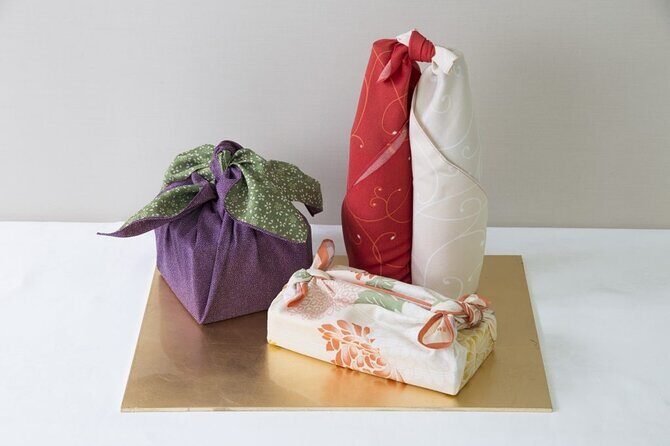
- Seven techniques taught in a single 1.5-hour workshop, from basic folds to advanced wraps
- You take home a souvenir furoshiki, so you can practice immediately after your class
- Practical makes: bags, covers, and even wearable-style cloth accessories
- Eco significance explained—why cloth wrapping is still a smart, low-waste habit
- Nationally accredited instructor plus a small group size (max 28)
Before you commit, see how this one stacks up against a few Tokyo favourites:
- Mt Fuji and Hakone 1-Day Bus Tour Return by Bullet Train★ 5.0 · 26,383 reviews
- 1-Day Tokyo Bus Tour★ 5.0 · 14,250 reviews
- Tokyo: teamLab Planets TOKYO Digital Art Museum Entry Ticket★ 4.6 · 9,779 reviews
Kicking off in Minato: your workshop base in Tokyo
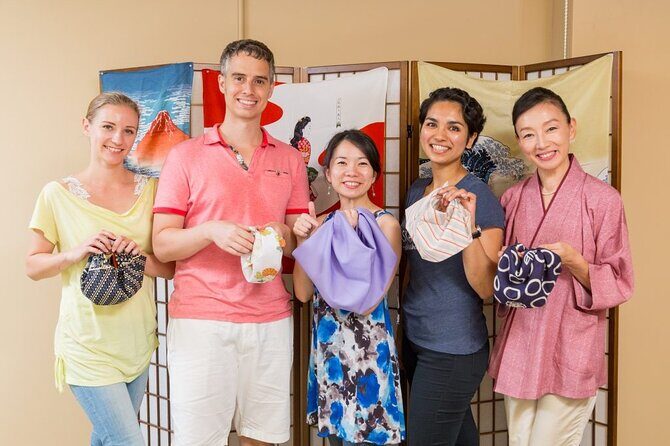
The class meets at Kikai Shinkō Kaikan, 3-chōme-5-8 Shibakōen, Minato City, Tokyo (105-0011). That location matters because it keeps your day simple: you start there and the activity ends back at the meeting point.
This is not a “see it from a bus window” kind of experience. You’re in a room with an instructor and you’ll be working with cloth right away, which is exactly why a compact 1 hour 30 minutes works so well. It also fits travelers who want a creative activity without committing a whole afternoon.
One more practical note: it runs near public transportation. For Tokyo, that’s a big deal—getting in and out cleanly helps you enjoy the class instead of rushing to catch trains.
What furoshiki actually teaches you (and why that’s useful)
Furoshiki is cloth wrapping, but it’s also a mindset. The workshop frames it as a practical craft with an eco-friendly heart: you learn ways to wrap and carry items using reusable fabric rather than disposable packaging.
The “why” is as important as the “how.” You’ll get insight into Japanese culture and history through what you make—plus stories about the craft’s modern-day eco significance in Japan. That context turns the workshop from a simple hobby session into something you can use in real life.
And here’s the good part: once you understand the knot logic and folding principles, you can adapt. You’re not stuck with one look or one gift style. You learn techniques that can handle different shapes—flat items, awkward corners, even things you want to carry.
Step-by-step: how the 7 techniques build your skills
The workshop is structured so you don’t feel lost halfway through. You start with basic folds and knots, then move toward more advanced wraps.
You can think of it like climbing steps:
- First, you learn the foundation (folds you can repeat and knots you can trust).
- Then you apply those fundamentals to different “problems” cloth solves—wrapping gifts, covering items, and making carry or accessory shapes.
- By the end, the techniques feel less like tricks and more like tools.
The key promise here is Master 7 wrapping techniques in one workshop. That’s not just a count for marketing—it’s a strong way to make your class feel worth the time. A lot of short workshops teach one method well. This one gives you a small toolbox, so even if you forget one wrap later, you’ll still have multiple options.
Making real things: bags, covers, hats, and accessories
The workshop focuses on what you can actually do with furoshiki, not just show-and-tell samples. As the class progresses, you’ll learn wraps you can use for:
- gift wrapping
- carrying items
- wearable-style cloth accessories
The program specifically mentions making bags, hats, and covers (along with other practical wraps). That’s a smart approach because it keeps the cloth from staying purely decorative. Once you’ve seen how fabric can become structure, you’ll start looking at your own home differently—like, where could a reusable wrap solve a recurring packaging problem?
A bonus from the way the class is taught: it’s easy to participate at different skill levels. Most travelers can take part, and the format is beginner-friendly because you begin with basics. If you’re coming in with zero craft experience, you still have a clear path.





The take-home furoshiki keepsake (and how to get value from it)
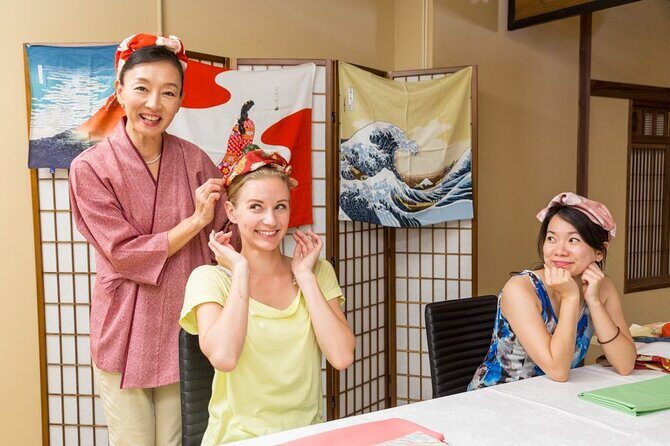
One of the most satisfying parts is that you receive your own furoshiki cloth to keep. That means you’re not just learning something for a single hour and then leaving with photos. You can practice at home and repeat the wraps until they feel natural.
This keeps the workshop from becoming a one-time memory. It becomes a skill you can keep using when you need it—especially for birthdays, small gifts, or occasions where you want something more thoughtful than store-bought wrapping.
If you learn best by repetition, take this part seriously. A cloth wrap gets easier with hands-on practice. Even a few tries at home can turn a frustrating knot into a quick, confident motion.
Instructor-led learning: friendly, knowledgeable instruction that sticks
The class is taught by a nationally accredited furoshiki instructor. Instruction quality matters a lot in crafts, because good teaching prevents bad habits—like knots that loosen or folds that never sit right.
From what you’d likely want to hear before booking, the instruction style is friendly and supportive. People often walk away feeling they actually learned multiple useful methods, not just watched someone demonstrate. That’s exactly what you want in a small workshop.
Also, group size is capped at 28. That’s big enough to have energy, but small enough to expect actual guidance when you’re working through knots and folds.
Price and value: is $77.26 worth it?
At $77.26 per person, this workshop isn’t a “cheap impulse activity,” but it also isn’t priced like a high-end private lesson. The value comes from what you get: seven techniques, a take-home cloth keepsake, and instruction from an accredited instructor.
It’s worth thinking of this like a mini skills course rather than a craft demo. If you compare the cost to buying multiple types of wrapping paper, gift bags, or decorative packaging over time, the math gets interesting—because furoshiki can replace that clutter with reusable cloth.
Two other value signals help:
- Group discounts are listed as a feature, so booking with friends or family could reduce per-person cost.
- You receive a mobile ticket, which is convenient in a city where you might already be juggling plans.
One more consideration: the workshop is about 1 hour 30 minutes. That’s ideal if you want an engaging activity without losing half a day, but it also means you’ll want to pay attention early—since the pace is designed to cover all seven techniques.
Where it fits in your Tokyo plan
This is a great choice if you want a calmer, hands-on Tokyo experience away from the usual attractions. It works especially well as:
- a break day between more intense sightseeing
- a creative activity with teens or adults who like doing rather than watching
- a souvenir that isn’t just a random item from a shop
If you’re traveling with a younger person, furoshiki can be surprisingly fun because the results are immediate. You’ll make things while you learn, and the knots give the activity a satisfying challenge. It’s also a craft you can carry home mentally—even if you don’t master every wrap immediately.
For timing, I’d schedule it when you’re not rushing. You’ll want to arrive with enough calm to focus on the instructor’s steps, not your next train connection.
Practical takeaways you’ll use after the workshop
Here’s what tends to make furoshiki stick as a real habit:
- You learn how to secure cloth so it doesn’t feel like it will slip.
- You get multiple wrap styles, so you’re not stuck with one solution.
- You leave with your own cloth, which lowers the barrier to practicing at home.
And because the class includes discussion about eco significance in Japan, you won’t just treat it like a novelty. You’ll understand why cloth wrapping is still popular—how it fits modern life as a reusable alternative.
That combination—skills plus context—is why the workshop earns strong ratings.
Should you book this furoshiki workshop?
Book it if you want a hands-on cultural craft that actually teaches you usable techniques. You’ll likely appreciate it most if you:
- enjoy learning a new skill with clear steps
- want a take-home keepsake you can practice
- like eco-minded ideas that aren’t just abstract
Skip it (or at least reconsider) if you’re looking for a sightseeing-heavy tour or you dislike structured workshops. Also, plan your day so you’re not hungry during the session since food and beverages aren’t included.
If you like the sound of learning multiple wraps in one go—and leaving with cloth you can use right away—this is a solid pick.
FAQ
How long is the furoshiki cloth wrapping workshop?
The workshop lasts about 1 hour 30 minutes.
Do I get to take a furoshiki cloth home?
Yes. You receive a souvenir furoshiki cloth to practice with after the class.
How many wrapping techniques do you learn?
You learn seven different furoshiki techniques during the workshop.
Where does the workshop start and end?
It starts at Kikai Shinkō Kaikan in Minato City, Tokyo, and ends back at the same meeting point.
Is transportation or food included?
Transportation to the venue is not included, and no food or beverages are included.
What’s the group size limit?
The maximum group size is 28 travelers.
More Tour Reviews in Tokyo



Fresh reviews from around Tokyo






Tokyo, compared.
 ★ 5.0Mt Fuji and Hakone 1-Day Bus Tour Return by Bullet TrainFrom $16326,383 reviews
 ★ 5.01-Day Tokyo Bus TourFrom $12914,250 reviews
 ★ 4.6teamLab Planets TOKYO Digital Art Museum Entry TicketFrom $259,779 reviews
 ★ 4.0Mt Fuji & Hakone Cruise, Drum Show Bullet Train 1 Day from TokyoFrom $1497,413 reviews
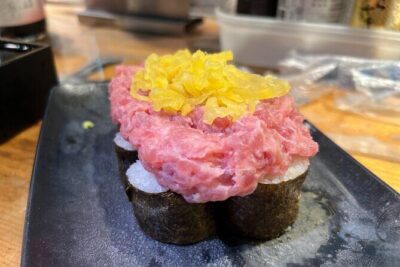 ★ 5.0Shinjuku Food Tour (13 Dishes at 4 Local Eateries)From $866,603 reviews
 ★ 4.4Tokyo Mt Fuji 5th St & Hakone Cruise Bus Tour w/Bullet TrainFrom $1545,024 reviews
 ★ 5.0Flagship 2-Hours Official Street Go-Kart Tour – Tokyo Bay ShopFrom $644,974 reviews
 ★ 4.5From Tokyo: Mount Fuji Full-Day Sightseeing TripFrom $684,970 reviews