
Reviewed · TOKYO
Full Day Tokyo Private Tour by Luxury Vehicle
One-day Tokyo without the transit stress. This private, luxury-vehicle tour is built for an efficient hits-and-stories day, with hotel pickup and drop-off and in-car Wi-Fi so you can stay connected while you crisscross the city.
I especially like the private hotel pickup and drop-off and the Wi-Fi on board, which make the day feel smooth from minute one. You also get a smart mix of classic sights and modern Tokyo energy, with time to explore independently at each stop.
The only real caution: the schedule is packed, so you’ll get “see it, walk it, snack it” time more than slow, deep exploring. If you want long museum-style visits or lots of unplanned wandering, you may feel a bit rushed.
In This Review
- Key things to know before you go
- Luxury van Tokyo: what this day actually feels like
- The value math (and why it can still make sense)
- Pickup, van comfort, and staying in control
- Meeting points and timing in real traffic
- Stop 1: Senso-ji Temple and Nakamise street energy
- What to do with your time
- The possible drawback
- Stop 2: Akihabara for electronics, anime, and Tokyo weirdness
- How to make the most of Akihabara
- Potential drawback
- Stop 3: Tsukiji outer market street food without the old market drama
- What to expect (and what to prepare for)
- Why this stop works in a private day
- Stop 4: Imperial Palace outer gardens area (short but scenic)
- How to use 30 minutes well
- Possible drawback
- Stop 5: Meiji Jingu Shrine for forest calm
- What makes it special here
- Quick practical tip
- Stop 6: Takeshita Street in Harajuku for candy-colored Tokyo
- How to enjoy it without wasting time
- Possible drawback
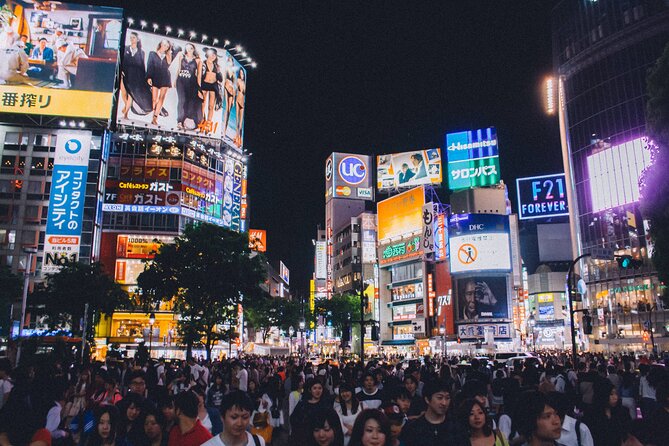
- Stop 7: Shibuya Crossing for the Tokyo icon photo moment
- What 30 minutes buys you
- The main consideration
- How guides make the day work (not just the route)
- Tailoring that actually matters
- Price, group size, and the best fit for your trip style
- Quick heads-up on tickets and extra fees
- Should you book this private Tokyo highlights tour?
- FAQ
- How long is the Full Day Tokyo Private Tour?
- How many people can be in the group?
- What’s included in the price?
- Do I need to pay for admissions during the tour?
- Is there a walking tour guide included?
- Does the tour offer pickup from your hotel?
- Can the itinerary be adjusted for my preferences?
- Is this a private tour or shared tour?
- Is it easy to communicate and stay connected during the ride?
- Can I get a refund if I cancel?
Key things to know before you go
- Door-to-door pickup keeps logistics off your brain, especially in a big-city maze
- Wi-Fi in the van helps you map, message, and plan your next move
- Independent time at each stop means you’re not stuck waiting in a big group line forever
- A flexible route lets your guide adjust around your interests and timing
- A strong first-visit mix balances temples, shopping, history viewpoints, and Tokyo street culture
Before you commit, see how this one stacks up against a few Tokyo favourites:
- Mt Fuji and Hakone 1-Day Bus Tour Return by Bullet Train★ 5.0 · 26,383 reviews
- 1-Day Tokyo Bus Tour★ 5.0 · 14,250 reviews
- Tokyo: teamLab Planets TOKYO Digital Art Museum Entry Ticket★ 4.6 · 9,779 reviews
Luxury van Tokyo: what this day actually feels like
Tokyo can be a lot. Not because it’s unfriendly, but because it’s efficient, crowded, and huge. This tour is designed to protect your energy. You’re not hopping trains, hauling luggage, and guessing which exit you need. Instead, you get picked up, dropped off close to sights, and given enough time at each area to enjoy it on your terms.
The luxury part isn’t about fancy speeches. It’s the practical stuff: a comfortable private vehicle, bottled water, and the simple relief of not navigating rush-hour transfers. One clear pattern from past guests is that the guides focus on smooth logistics—prompt pickup, clear meeting instructions, and rides ready when traffic slows things down.
The value math (and why it can still make sense)
At $495.39 per group (up to 6), this is not the “cheap Tokyo” option. But it can be good value when you compare it to a stack of taxis plus your time wasted getting around.
If you fill the full group of 6, you’re roughly at about $83 per person for a full day of door-to-door transport. That’s where it can start to compete with the real cost of private taxis, especially if you want to visit multiple far-apart neighborhoods in one day.
This is also a value play if your group includes:
- Families with teens who want big sights without splitting up
- People with limited mobility who need less walking between areas
- Travelers who want their first Tokyo day to feel organized, not chaotic
Pickup, van comfort, and staying in control
Your day starts with hotel pickup and ends with hotel drop-off. That matters more than it sounds. Tokyo is full of tiny streets, complex station layouts, and sudden detours. Door-to-door means you can arrive at each stop with the right amount of time, instead of using up your sightseeing hours just getting oriented.
You’ll also have Wi-Fi access in the vehicle, plus bottled water. Small comforts like this add up on a long day—especially when you’re switching between temples, shopping streets, and iconic photo spots.
Meeting points and timing in real traffic
Tokyo traffic can be unpredictable, but the guides behind this tour seem to handle it well. Past guests describe the experience as professional and organized, with rides ready upon return and guidance on where to meet.
Practical advice from the way this is run:
- Wear comfortable shoes, because you’ll still walk at each stop
- Bring light layers. You’ll move between busy outdoor streets and quieter indoor-or-garden spaces
- If you have a lunch appointment or a hard time window, tell your guide early. The route is set up to adapt around requirements.





Stop 1: Senso-ji Temple and Nakamise street energy
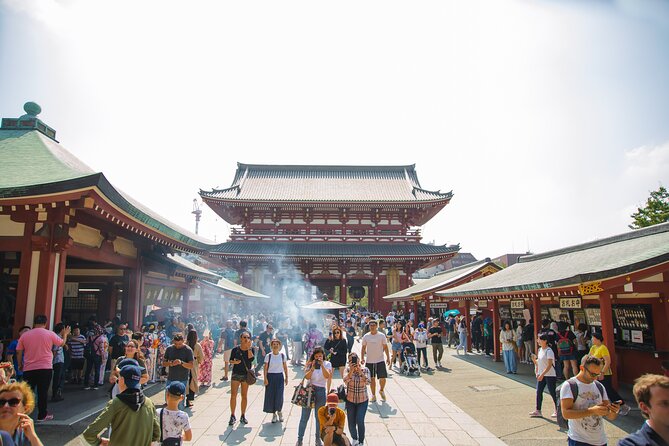
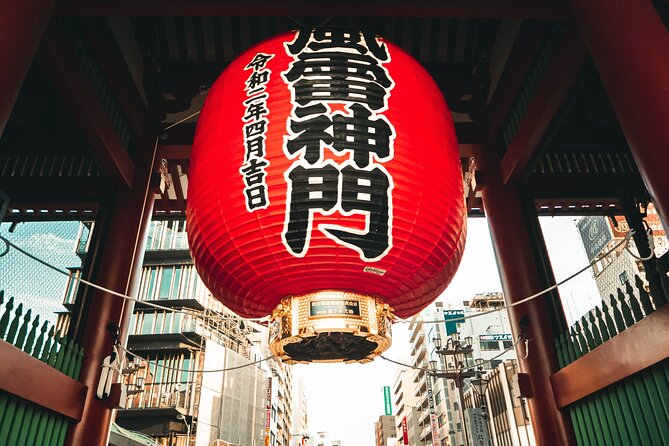
Your first major stop is Senso-ji Temple (with about 1 hour 30 minutes on site). It’s Tokyo’s classic entry point: the oldest Buddhist temple in the city, surrounded by narrow streets and shopping arcades.
This is where Tokyo’s old-meets-now energy clicks. On one side you have the religious space and the temple approach. On the other, you’ve got hands-on crafts, snack stalls, and that “everyone is here” atmosphere.
What to do with your time
With 1.5 hours, you can usually do a loop:
- Walk the temple approach slowly enough to actually look
- Browse the nearby shopping arcades without feeling like you’re sprinting
- Grab an early snack so your next stops don’t feel like starvation bingo
The possible drawback
The downside of starting here is crowds. Even with a private day, you’re still in one of Tokyo’s most popular temple zones. If you hate crowds, go with a flexible mindset: think of it as controlled chaos that makes the photos and atmosphere worth it.
Stop 2: Akihabara for electronics, anime, and Tokyo weirdness
Next is Akihabara (about 1 hour 30 minutes). This is Tokyo in a different mode—electronics shops, anime stores, game centers, and quirky themed cafés.
Akihabara is fun because it’s not just one “thing.” You’re basically wandering through overlapping subcultures. If your group includes different interests—tech, gaming, character culture—this is one of the easiest areas to keep everyone happy in a single stop.
How to make the most of Akihabara
Since you have limited time, I’d treat it like a choose-your-own-adventure:
- Pick one or two streets to focus on rather than trying to see everything
- If your group includes fans of anime or retro games, set a quick meeting point inside the main area so you don’t waste time searching later
- Don’t underestimate how fast 90 minutes disappears in multi-floor electronics stores
Potential drawback
Akihabara can feel intense if you’re not into shopping or themed storefronts. If that sounds like your group, you can use the vehicle’s flexibility to spend a bit more time nearby shopping streets or pivot toward another area your guide recommends, as long as the schedule allows.
Stop 3: Tsukiji outer market street food without the old market drama
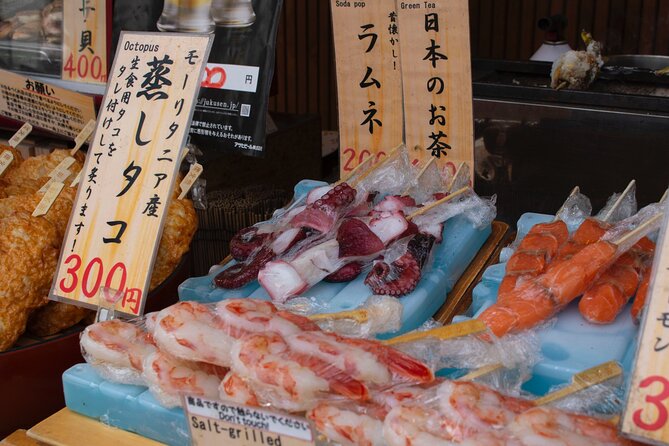
You’ll then head to Tsukiji Fish Market, but the emphasis here is the “outer” market area (about 1 hour 30 minutes). The old wholesale market is no longer what it once was, but the outer area is still a magnet for small restaurants and street-food style eating.
This is one of the best stops for travelers who want Tokyo flavor without a museum ticket. You can graze: seafood choices, wagyu options, seasonal fruits, and lots of snack-size surprises.
What to expect (and what to prepare for)
- Expect crowds, especially around peak hours
- Bring cash if you prefer it, since street-style buying can vary by stall
- If you’re picky, choose a couple of items you want and skip trying to sample everything
Why this stop works in a private day
On public transport, Tsukiji can turn into “how many transfers to get here” and “where do we meet later.” In a private setup, your guide handles the movement and you get to focus on food and walking.
Stop 4: Imperial Palace outer gardens area (short but scenic)
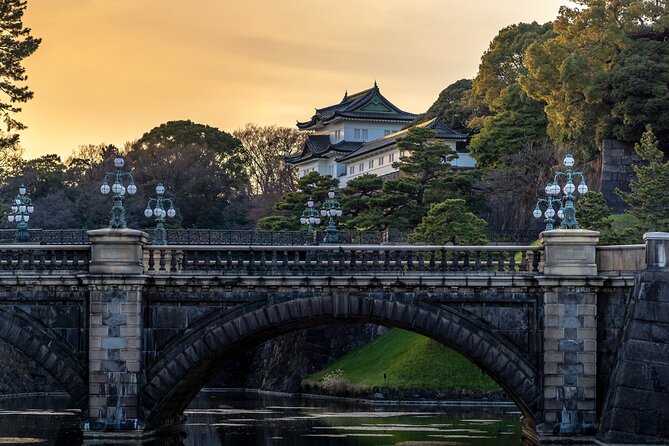
Next is the Imperial Palace area, mostly via the outer gardens drive-by viewpoint, with about 30 minutes. The palace residence is purposefully hidden from view, so you won’t be looking at the buildings themselves. But you do get the feel of a major historical site from the surrounding grounds.
How to use 30 minutes well
In a short window, this stop is best as:
- A quick reset between food and shopping stops
- A photo-and-stroll break, if timing allows
- A “Tokyo history context” moment that helps the day feel more than just shopping and selfies
Possible drawback
If you want a longer look, 30 minutes can feel too brief. But as a connector between neighborhoods, it works. It gives you the landmark moment without eating the whole day.
Stop 5: Meiji Jingu Shrine for forest calm
Then you get a big mood change at Meiji Jingu Shrine (about 1 hour 30 minutes). Yes, it’s another shrine, but this one is surrounded by a huge green space—over 100,000 trees across about 170 acres.
This is the day’s calm zone. After busier districts, you move into quieter paths where the air feels different and the soundscape drops.
What makes it special here
A shrine visit in a city can be overrun. At Meiji Jingu, the forest scale helps. Even with crowds, it tends to feel more spacious than typical inner-city shrines.
Quick practical tip
Give yourself a few minutes before you start walking in any direction. Let the space sink in and then pick a route. This helps you avoid the “we rushed through the big gate, now what” feeling.
Stop 6: Takeshita Street in Harajuku for candy-colored Tokyo
Your next stop is Takeshita Street (about 1 hour 30 minutes). This is Harajuku street culture: fashion, street snacks, and all the high-attention energy people associate with Tokyo teen-style trends.
Crepes often steal the spotlight, and you’ll also see popular street treats like strawberries and candy apples. It’s also become known for animal café culture, which may be a draw if that’s your thing.
How to enjoy it without wasting time
Takeshita Street can get crowded fast. I’d suggest:
- Do the snacks first, so you’re not stuck in line and missing the rest
- Walk one loop slowly. Then decide if you want a second pass or a quick detour to side streets
- Use your private guide’s drop-off so you can re-find the van quickly later
Possible drawback
It’s fun, but it’s also chaotic. If your group prefers calm sightseeing, you might spend this time focusing on food and quick browsing rather than chasing every storefront.
Stop 7: Shibuya Crossing for the Tokyo icon photo moment
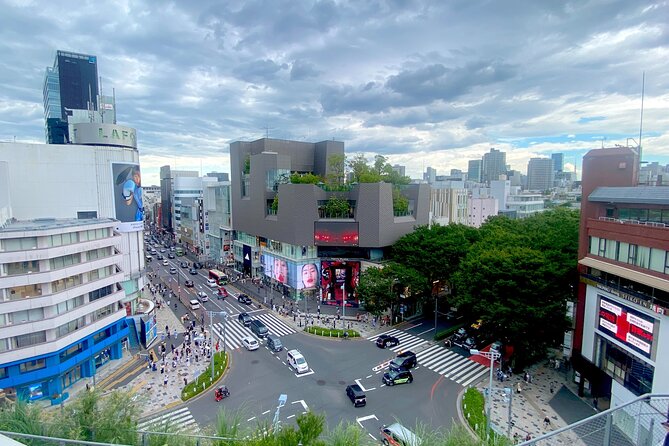
Finally, you hit Shibuya Crossing (about 30 minutes). This is one of those places you understand immediately, even if you’ve never been. It’s become iconic thanks to film and pop culture, and the crossing itself delivers.
What 30 minutes buys you
Enough time to:
- Get your photos
- Cross once, if you want the full experience
- Watch the flow of people without feeling trapped
The main consideration
Like it or hate it, Shibuya’s the real deal in crowd volume. If you don’t enjoy dense foot traffic, keep expectations simple: this is a quick icon stop, not a long hang.
How guides make the day work (not just the route)
One of the best parts of this tour is how guides handle the “human” side. Several past groups specifically praised their driver’s and guide’s communication, their clarity on where to meet, and the way they explained what you were seeing.
You’ll see names like Rich, Jordan, Khalid, and Caleb pop up in guests’ stories. The common thread: they are friendly, attentive, and able to answer lots of questions about Japanese culture and daily life. Some also described the guide as speaking both English and Japanese.
That matters because a private day can turn into just transportation if the guide is quiet. Here, guests highlight that stories and practical tips are part of the experience, and that the day can be tailored.
Tailoring that actually matters
The itinerary can be adapted based on your requirements. In real terms, that often means:
- Adjusting timing around a lunch plan
- Swapping or adding a quick viewpoint if it fits the flow
- Taking into account your group’s pace
One practical benefit: if you have limited mobility or need special handling, past guests mentioned thoughtful support, including bringing a wheelchair. That’s not a guarantee for every day, but it’s a strong sign that your guide will take practical needs seriously when possible.
Price, group size, and the best fit for your trip style
This tour is priced per group, up to 6 people. That’s a key detail. If you travel as a pair or small family, it’s still doable, but the per-person cost rises.
Where I think it shines:
- First-time Tokyo visitors who want a “great hits” day
- Families who need a plan that stays comfortable
- People who hate the stress of transfers and prefer door-to-door convenience
- Groups mixing ages and interests (temples plus shopping streets plus street food)
Where it might not be your best match:
- If you want a totally unstructured day with no fixed stops
- If you prefer deep museum time over multiple quick landmark visits
- If you’re confident navigating Tokyo transit and already planned a self-guided route
Quick heads-up on tickets and extra fees
Most of the listed highlights are presented as free admission stops in the flow of the day. That keeps your spending predictable.
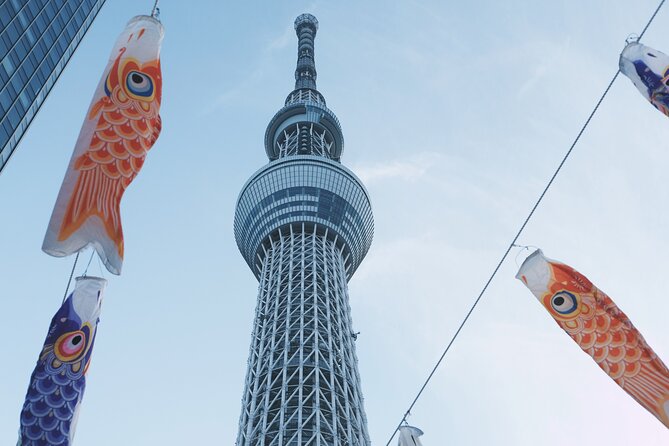
However, the tour doesn’t bundle every possible attraction fee. For example, Tokyo Skytree entrance is listed as not included, with a stated price of ¥3,000 per person if you choose to go. If you’re thinking about adding anything like that, ask your guide during the planning so you can decide what’s worth it.
Should you book this private Tokyo highlights tour?
Book it if you want your first Tokyo day to feel organized, comfortable, and story-rich. The combination of hotel pickup/drop-off, private transport, onboard Wi-Fi, and a route that balances temples, shopping, food, and the Shibuya icon is a strong formula for value—especially if you can fill a group or you’re traveling with people who don’t want to deal with transit stress.
Skip it or consider a lighter version if you know you want long, slow time in fewer places. This day is built to cover a lot, and that’s the trade-off.
FAQ
How long is the Full Day Tokyo Private Tour?
It runs about 7 to 9 hours.
How many people can be in the group?
The tour is priced per group and can accommodate up to 6 people.
What’s included in the price?
Private transportation, Wi-Fi on board, bottled water, and hotel pick up/drop off are included.
Do I need to pay for admissions during the tour?
Entrance fees are not generally included. The specific stops listed on the route indicate free admission, but add-ons like Tokyo Skytree have a fee and are not included.
Is there a walking tour guide included?
A walking tour guide may be included with a surcharge, depending on availability.
Does the tour offer pickup from your hotel?
Yes, hotel pickup and drop-off are offered.
Can the itinerary be adjusted for my preferences?
Yes, the itinerary can be adapted based on your requirements.
Is this a private tour or shared tour?
It’s private. Only your group participates.
Is it easy to communicate and stay connected during the ride?
Yes. The vehicle has Wi-Fi access, and guests have praised clear communication and instructions.
Can I get a refund if I cancel?
Free cancellation is available up to 24 hours in advance for a full refund.
More Tour Reviews in Tokyo



Fresh reviews from around Tokyo






Tokyo, compared.
 ★ 5.0Mt Fuji and Hakone 1-Day Bus Tour Return by Bullet TrainFrom $16326,383 reviews
 ★ 5.01-Day Tokyo Bus TourFrom $12914,250 reviews
 ★ 4.6teamLab Planets TOKYO Digital Art Museum Entry TicketFrom $259,779 reviews
 ★ 4.0Mt Fuji & Hakone Cruise, Drum Show Bullet Train 1 Day from TokyoFrom $1497,413 reviews
 ★ 5.0Shinjuku Food Tour (13 Dishes at 4 Local Eateries)From $866,603 reviews
 ★ 4.4Tokyo Mt Fuji 5th St & Hakone Cruise Bus Tour w/Bullet TrainFrom $1545,024 reviews
 ★ 5.0Flagship 2-Hours Official Street Go-Kart Tour – Tokyo Bay ShopFrom $644,974 reviews
 ★ 4.5From Tokyo: Mount Fuji Full-Day Sightseeing TripFrom $684,970 reviews