
Reviewed · TOKYO
From Tokyo: Mount Fuji Full Day Private Tour (Customizable)
Fuji days are all about the light and the angles. This one is interesting because you get a custom private route with a real driver-guide, so you can chase the best views without dealing with buses and transfers. I particularly like the photo-and-timing support (plus on-car Wi‑Fi and drinks), and I also like that the day can flex if visibility is bad. One consideration: you’ll be spending time at higher elevation, and this tour isn’t suitable for people who get altitude sickness.
The structure is simple: get picked up in Tokyo, hit the classic Fuji viewpoints, pause for the lakeside experience, then add Oshino Hakkai and shrines, with Hakone optional if timing and weather work. You’ll also get a clear sense of what to do at each stop thanks to safety guidance and walking-style guidance built into the day.
For the price, it works best when you’re traveling in a group of up to six. You’re paying for comfort, route control, and a driver who can reroute when the road slows down. That also means it’s not the cheapest option if you’re traveling solo, since it’s priced per group.
In This Review
- Key things that make this Fuji day different
- Why a private Mount Fuji day beats a DIY scramble
- Getting from Tokyo: pickup zones, vehicle comfort, and pacing
- The Fuji viewpoint loop: Arakurayama Sengen Park and Chureito Pagoda
- Mt. Fuji 5th Station: the high-altitude pause (and why it matters)
- Lake Kawaguchi: choose your pace with boat or ropeway
- Oshino Hakkai: traditional village time without the stress
- Oishi Park and Kitaguchi-hongu Fuji Sengen Shrine: photos plus quiet moments
- Lunch: a real break (with vegetarian and kid-friendly options)
- Optional Hakone: when you want more than Fuji
- Gotemba Premium Outlets: useful as a bonus, not the whole day
- What you’re really paying for: value and trade-offs
- How to plan your day for Fuji: weather, photos, and what to pack
- Who this private Mount Fuji tour fits best
- Should you book this Mount Fuji private day tour?
- FAQ
- How long is the Mount Fuji private tour from Tokyo?
- What’s the price and group size?
- What’s included in the tour price?
- Are meals and attraction entrance fees included?
- Can I customize the itinerary for Hakone?
- Is pickup available from airports or ports?
- Is this tour suitable for altitude sickness?
Key things that make this Fuji day different
- Door-to-door Tokyo pickup in a climate-controlled private vehicle, with waiting time if you run late
- English-speaking driver support plus practical on-the-road help for timing, photos, and weather
- Fuji classics in one day: Arakurayama Sengen Park, Chureito Pagoda, and Mt. Fuji 5th Station
- Lake Kawaguchi options like boat or ropeway, so you can choose the experience that fits your mood
- Oshino Hakkai + Oishi Park + shrine stops for cultural texture beyond the postcard views
- Optional Hakone route (Ropeway, Lake Ashi, Owakudani, Hakone Shrine) when conditions allow
Before you commit, see how this one stacks up against a few Tokyo favourites:
- Mt Fuji and Hakone 1-Day Bus Tour Return by Bullet Train★ 5.0 · 26,383 reviews
- 1-Day Tokyo Bus Tour★ 5.0 · 14,250 reviews
- Tokyo: teamLab Planets TOKYO Digital Art Museum Entry Ticket★ 4.6 · 9,779 reviews
Why a private Mount Fuji day beats a DIY scramble
Mount Fuji looks great from Tokyo. The hard part is getting there on time, finding parking, and then moving efficiently between viewpoints. A private setup fixes most of that.
You start with a driver who handles the driving, tolls, and parking. That means you can focus on the real goal: getting your photos, taking your walks, and not losing half a day to logistics.
The other big win is flexibility. Fuji visibility can change fast, and road conditions can shift. Your driver is set up to adjust the route and help you land at the best-feeling spots during the day, including when visibility is limited.
Getting from Tokyo: pickup zones, vehicle comfort, and pacing
This tour is built around easy pickup and drop-off. You can choose pickup options across Tokyo’s 23 wards, including areas like Shinjuku, Shibuya, Minato, Shinagawa, Yokohama, and parts of Saitama and Chiba. The vehicle drops you back anywhere in Tokyo at the end.
You’ll travel in a Toyota Vellfire, Crown, or Land Cruiser type of vehicle depending on what’s available for your party. Either way, think “comfortable, climate-controlled, and calm,” especially on a long day with mountain roads.
The day is about 11 hours total, including travel time. That’s a realistic window for hitting Fuji viewpoints and lakeside spots without feeling like you’re sprinting the whole time.
One practical detail I love: you’re not stuck offline. There’s onboard Wi‑Fi, so you can quickly check maps, translations, or just send a photo while the car is moving between stops.
The Fuji viewpoint loop: Arakurayama Sengen Park and Chureito Pagoda
The day starts with Fuji’s most famous framed view. First up is Arakurayama Sengen Park, where you’ll do a walk and photo stop. This area is popular because the viewpoint gives you a clean, dramatic look toward the mountain.
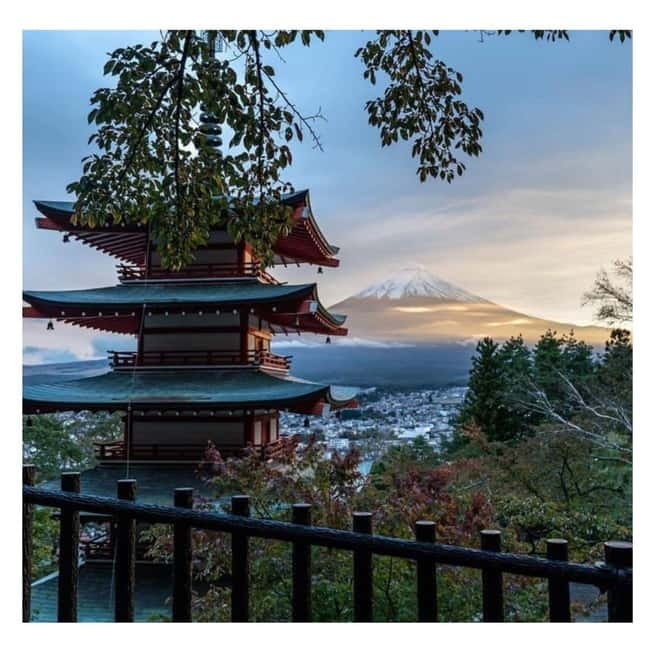
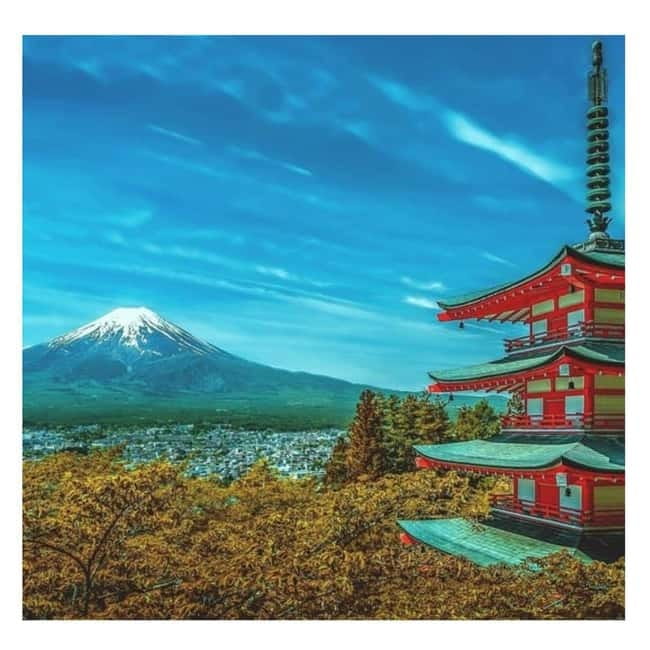
Next is Chureito Pagoda, another classic photo stop. The pagoda-with-Fuji framing is exactly the kind of composition people chase, and the stop is built for you to walk a bit, settle your photos, and take in the area without feeling rushed.
At both stops, expect safety guidance and an easy flow. That matters if your group includes older folks, kids, or anyone who prefers not to sprint between crowded spots.
What I’d tell you to do here: treat these as your “get the shots” block. Even if the weather isn’t perfect yet, you can still build a set of photos with different angles and distances.
Mt. Fuji 5th Station: the high-altitude pause (and why it matters)
Then you climb into the core Fuji moment: Mt. Fuji 5th Station. You’ll have time for a viewpoint visit and a walk.
This is where the day becomes more than just scenic stops. At 5th Station you’re closer to the mountain’s scale, and you can feel how the environment changes with elevation. The air is cooler, views feel more direct, and the slopes look much steeper.
It’s also the part where you need to pay attention to your body. If you’re prone to altitude sickness, don’t plan on pushing through it—this tour is explicitly not suitable for that.
If you’re okay with altitude, come prepared with warm layers. Even in warmer months, temperatures can swing quickly at higher spots. Comfortable shoes are a must.





Lake Kawaguchi: choose your pace with boat or ropeway
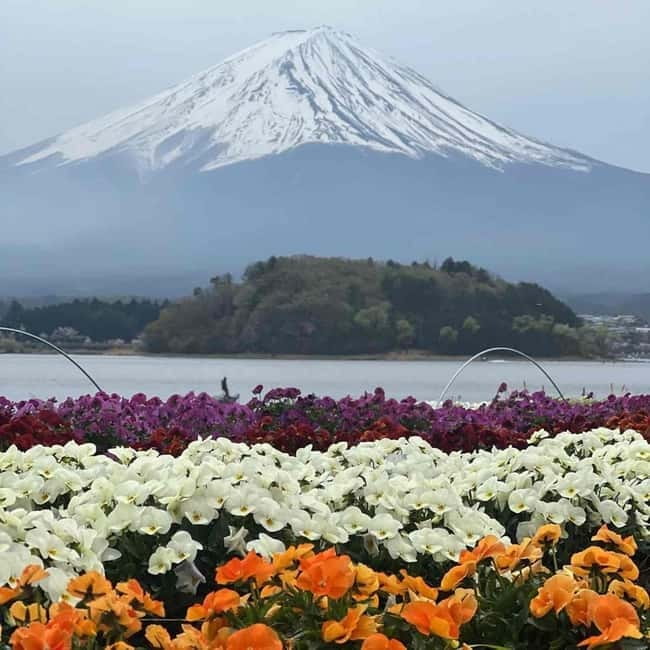
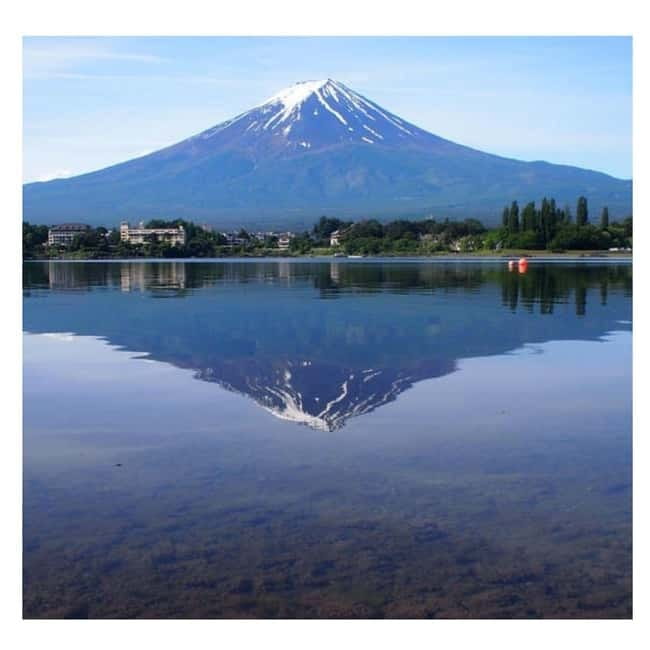
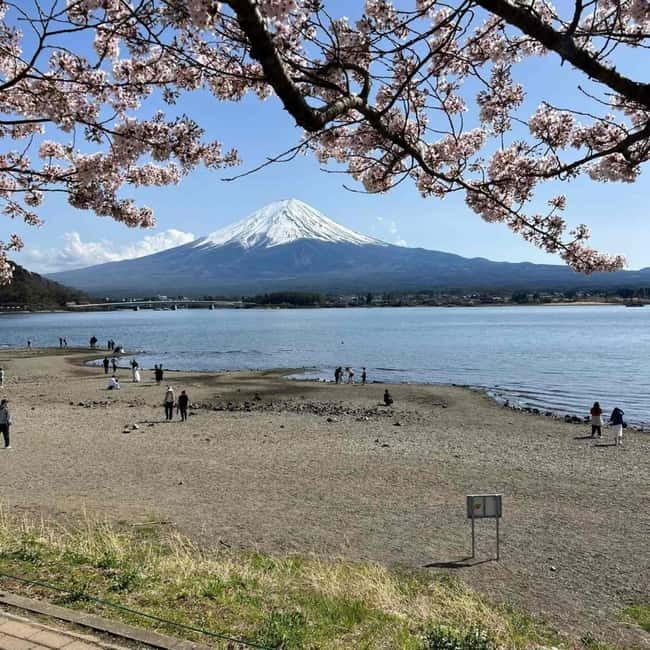
After the viewpoints, you shift to a slower rhythm at Lake Kawaguchi. This stop is special because it changes Fuji into something calmer—reflections, shoreline views, and a “breathe for a bit” feeling after the mountain station.
You’ll have options here:
- A speedboat ride
- A ropeway glide
- Or a cruise boat across the lake
If you like movement and photo angles, ropeway or the boat options can give you shots you can’t get from land. If you’re traveling with kids or older family, choosing the most comfortable option may matter more than maximizing thrill.
I like that your driver frames this choice so it matches timing and conditions. If fog or clouds roll in, you may want a mode that improves your sightline from different elevations.
Oshino Hakkai: traditional village time without the stress
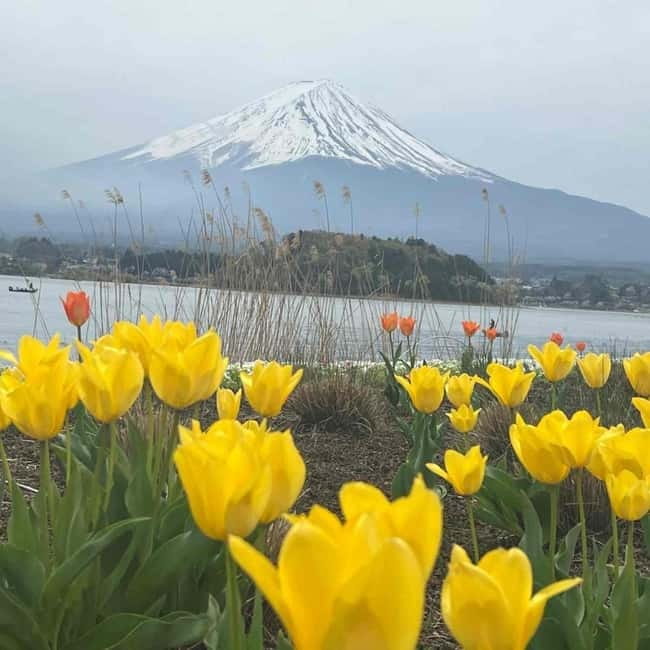
Next is Oshino Hakkai, a traditional village visit. This area is known for its historic feel and for giving you a glimpse into how people lived around the Fuji region’s water sources.
The stop includes a guided-style experience and time for photos and sightseeing. It’s long enough to slow down and actually enjoy the atmosphere rather than just passing through.
If Fuji views are inconsistent that day, Oshino Hakkai becomes your “don’t leave empty-handed” plan. Even when the mountain hides behind clouds, a place with character still gives you something to take home.
Oishi Park and Kitaguchi-hongu Fuji Sengen Shrine: photos plus quiet moments
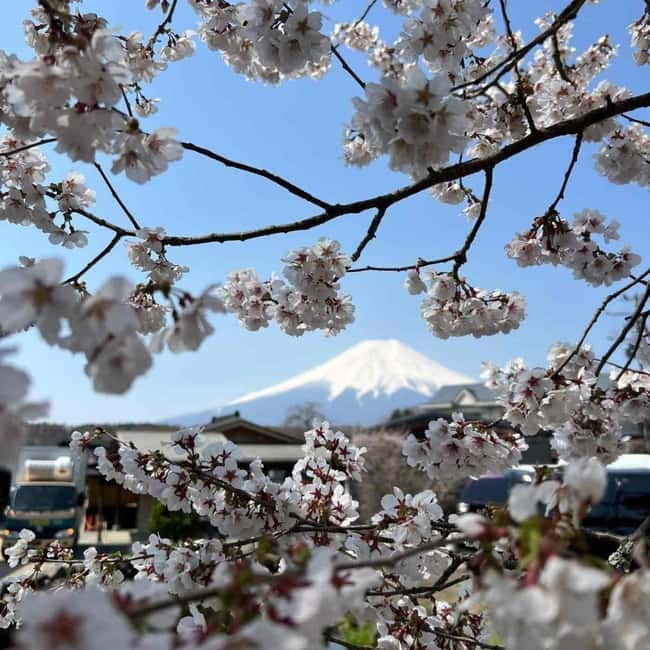
You continue to Oishi Park, another viewpoint-style stop with a flower park feel and an ice cream pause. It’s a nice change of pace, and it’s the kind of place where you can get softer, more human-scale photos after the big mountain shots.
Then you visit Kitaguchi-hongu Fuji Sengen Shrine. This is a shrine stop with photo time, shopping time, and walking. You’ll also get a safety briefing as part of the structured flow.
I like shrine stops on a Fuji day because they add context. You stop treating Fuji like a photo backdrop and start seeing it as part of belief and local life.
Also, your driver can help you navigate what to do at each stop and where it’s worth spending your time. That’s where a good guide matters.
In the past, guides such as Waqas Ahmad and Sarfraz have been praised for finding strong viewpoints even when visibility wasn’t ideal, and for making the car ride comfortable and friendly. The point for you: the driver’s job isn’t only to drive; it’s to keep the day working, even when conditions don’t.
Lunch: a real break (with vegetarian and kid-friendly options)
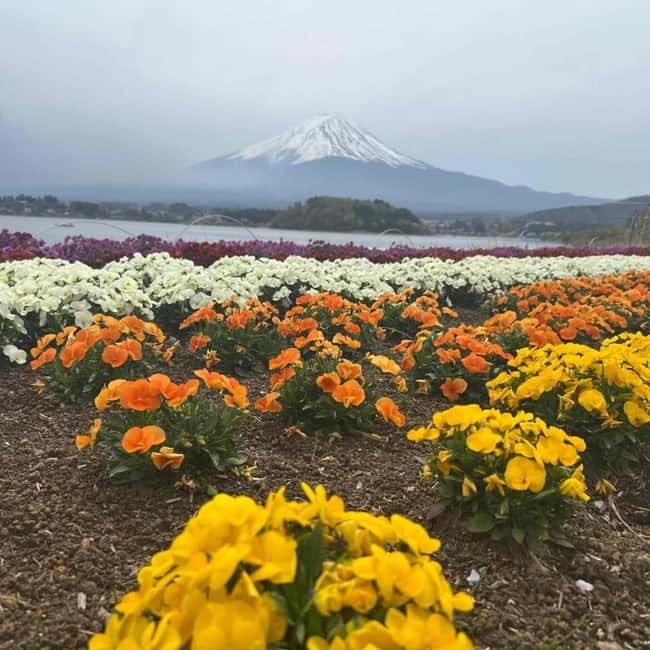
Lunch is built in as a 30-minute break at a local restaurant. The key detail is that there are vegetarian and kid-friendly choices available.
That’s not just a checkbox. On a long Fuji day, you’ll be happier with a meal plan that doesn’t force your group to split up or compromise. Thirty minutes is short, so I suggest you choose quickly when you arrive and keep your energy for the next walk.
No meal is included in the price, so you’ll pay for lunch separately. Entrance fees to attractions are also not included.
Optional Hakone: when you want more than Fuji
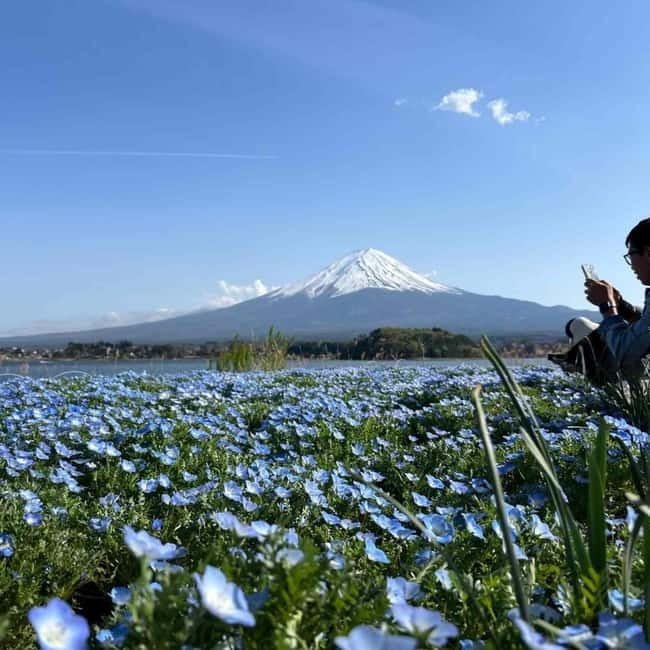
You can add Hakone spots if timing and weather allow. This is where the day can evolve from a straightforward Fuji loop into a broader “mountains plus lakes plus views” experience.
Common add-ons include:
- Hakone Ropeway
- Hakone Shrine
- Lake Ashinoko
- Owakudani Valley
- The Hakone Shrine area again as a photo stop within the Hakone routing
You’ll also see Hakone Ropeway listed as an added 1-hour style segment, along with lake and valley options.
Here’s how to think about it: Fuji is the star, but Hakone adds texture. You get more viewpoints, a volcanic valley stop at Owakudani, and another lake perspective around Lake Ashi.
The trade-off is time. Hakone can be a lot of moving parts, so if you’re traveling with limited mobility or if Fuji visibility is strong that day, you might prefer keeping Hakone light—or skipping it entirely.
Gotemba Premium Outlets: useful as a bonus, not the whole day
At the end of the day block, the route may include Gotemba Premium Outlets for shopping. There’s about an hour there, plus an extra car time segment in the schedule.
This stop is worth it if you want something concrete to do when the shopping mood hits, or if your group has different energy levels. It’s not necessary for a classic Fuji-only day.
If you’d rather keep the focus strictly on scenic stops, treat this as optional bonus time rather than the core reason to book.
What you’re really paying for: value and trade-offs
The price is $353 per group (up to 6) for an 11-hour private day. That means the value depends on how you split the cost.
For a couple, it can feel pricey compared to train-based options. For a family or group of four to six, it starts to look more like a fair trade: you’re paying for a private vehicle, English-speaking support, tolls, parking, fuel, Wi‑Fi, and beverages.
Included comforts also matter more than people expect:
- Complimentary tea, coffee, and bottled water
- A private, climate-controlled vehicle
- Toll fees, fuel, and parking handled
- Photography and videography assistance
- Skip-the-ticket-line for relevant entry points
Your biggest out-of-pocket items are meals and attraction entrance fees.
I also appreciate the “extra hour of service” angle. When you have a long day, a little buffer can be the difference between feeling rushed and feeling in control.
How to plan your day for Fuji: weather, photos, and what to pack
Mount Fuji days can swing from clear to cloudy. Even when visibility isn’t great, a good driver can still find angles that feel worthwhile, and you can still build a photo set.
Here’s what I’d pack based on the tour’s own prep list:
- Comfortable shoes
- Warm clothing (high elevation gets cool)
- Hat, sunscreen, and a camera
- Layers you can remove if the day warms up
Also, remember the walking rhythm. Several stops include walking and viewpoint time, so pick shoes that handle uneven ground and steps.
Rules are straightforward: no smoking, no alcohol or drugs, and no fire-related behavior. Keep it simple and follow the local vibe.
Who this private Mount Fuji tour fits best
This is ideal if you want a stress-free Fuji day with a private vehicle and someone handling timing, weather considerations, and photo support.
It’s also a good match for:
- Families who need a calmer schedule and vegetarian-friendly lunch options
- Couples who want comfort and scenic stops without navigating transit
- Small groups who want to share the cost and keep the itinerary flexible
If you’re set on doing only Fuji and you love trains and walking for budget reasons, you could DIY. But if your priority is ease, comfort, and a driver who can adapt, this is the setup built for you.
Should you book this Mount Fuji private day tour?
Book it if you want a straightforward way to hit the major Fuji icons—Arakurayama Sengen Park, Chureito Pagoda, Mt. Fuji 5th Station, Lake Kawaguchi, Oshino Hakkai, plus shrine and park stops—without spending your day figuring out transport and parking.
Don’t book it if altitude is a concern for you, or if you’re traveling solo and want the lowest possible price. In those cases, the private cost can outweigh the convenience.
If your group is up to six, you’ll likely feel like you got your money’s worth: private comfort, real photo help, and a route that can flex when the weather doesn’t cooperate.
FAQ
How long is the Mount Fuji private tour from Tokyo?
It runs about 11 hours, including travel time.
What’s the price and group size?
It’s $353 per group, up to 6 people.
What’s included in the tour price?
You get an English-speaking chauffeur, private hotel/accommodation pickup and drop-off, fuel and parking costs, toll fees, complimentary tea/coffee/bottled water, and onboard Wi‑Fi. The tour also includes help with photography and videography, plus safety guidance during stops.
Are meals and attraction entrance fees included?
No. Meals and entrance fees are not included.
Can I customize the itinerary for Hakone?
Yes. You can add Hakone options such as Hakone Ropeway, Owakudani Valley, Lake Ashinoko, and Hakone Shrine depending on timing and weather.
Is pickup available from airports or ports?
No. Pickup is available from accommodations within Tokyo’s 23 Wards, but not from airports or ports.
Is this tour suitable for altitude sickness?
No. It is not suitable for people with altitude sickness.
More Tour Reviews in Tokyo



Fresh reviews from around Tokyo






Tokyo, compared.
 ★ 5.0Mt Fuji and Hakone 1-Day Bus Tour Return by Bullet TrainFrom $16326,383 reviews
 ★ 5.01-Day Tokyo Bus TourFrom $12914,250 reviews
 ★ 4.6teamLab Planets TOKYO Digital Art Museum Entry TicketFrom $259,779 reviews
 ★ 4.0Mt Fuji & Hakone Cruise, Drum Show Bullet Train 1 Day from TokyoFrom $1497,413 reviews
 ★ 5.0Shinjuku Food Tour (13 Dishes at 4 Local Eateries)From $866,603 reviews
 ★ 4.4Tokyo Mt Fuji 5th St & Hakone Cruise Bus Tour w/Bullet TrainFrom $1545,024 reviews
 ★ 5.0Flagship 2-Hours Official Street Go-Kart Tour – Tokyo Bay ShopFrom $644,974 reviews
 ★ 4.5From Tokyo: Mount Fuji Full-Day Sightseeing TripFrom $684,970 reviews