
Reviewed · TOKYO
From Tokyo: Hiroshima and Miyajima Day Trip by Bullet Train
Two places. One unforgettable day.
This trip pairs two very different sides of western Japan: respectful remembrance at Hiroshima Peace Memorial Park and the calm, photogenic beauty of Miyajima’s floating torii at Itsukushima Shrine. I like the way it’s organized around a live guide, so the story connects as you move from site to site, instead of you just following signs.
I also like the pacing on Miyajima. You get real time to wander the island streets, spot the deer, and snack on local favorites like oysters and momiji manju. One drawback to plan for: the day is long (often 8–16 hours), and the walking is described as moderate—so bring shoes you can handle.
In This Review
- Key moments you’ll remember
- Shinkansen from Tokyo: the time-saving spine of the day
- Getting to Miyajima: ferry views and an easy on-ramp
- Itsukushima Shrine and the floating torii gate
- Miyajima’s streets, deer encounters, and snack time
- Hiroshima Peace Memorial Park: seeing with context
- The day’s timing: where the schedule can feel tight
- Value check: what you’re really paying for
- Who this tour fits best
- Should you book this Tokyo to Hiroshima and Miyajima day trip?
- FAQ
- How long is the Hiroshima and Miyajima day trip?
- Do I get round-trip Shinkansen from Tokyo?
- How do I get to Miyajima?
- Is Itsukushima Shrine included?
- Is there a guided component at Hiroshima Peace Memorial Park?
- What languages is the guide available in?
- Are meals included?
- What should I bring?
- Are ferries affected by weather?
- Is the tour wheelchair accessible?
Key moments you’ll remember
- Atomic Bomb Dome + Peace Memorial Park in a guided, reflective format
- Itsukushima Shrine admission included and a guided visit to start in the right place
- Ferry time to Miyajima plus the chance to see the torii gate during high tide visuals
- Miyajima free time (100 minutes) for streets, historic spots, deer, and snacks
- Bilingual live guide (English/Spanish) who can switch smoothly
- A full-day loop with Shinkansen, coach transfers, and ferries built in
Before you commit, see how this one stacks up against a few Tokyo favourites:
- Mt Fuji and Hakone 1-Day Bus Tour Return by Bullet Train★ 5.0 · 26,383 reviews
- 1-Day Tokyo Bus Tour★ 5.0 · 14,250 reviews
- Tokyo: teamLab Planets TOKYO Digital Art Museum Entry Ticket★ 4.6 · 9,779 reviews
Shinkansen from Tokyo: the time-saving spine of the day
If you select the Tokyo option, your day starts with a round-trip Shinkansen—about 4 hours each way. That matters because Hiroshima and Miyajima are not close by train-only, and you’d lose a big chunk of daylight if you tried to wing it on your own.
Once you reach Hiroshima, you’ll switch to coach for the connections, then keep moving via ferry to Miyajima. It’s efficient, but it also means you’ll spend parts of the day seated—so think of it as a structured sightseeing day, not a slow wander.
The day runs about 8–16 hours depending on your starting time and route choice. You’ll want to treat it like an all-day commitment: plan for an early start, expect some tight transitions, and keep your essentials easy to reach.
Getting to Miyajima: ferry views and an easy on-ramp
From Hiroshima you head to the coast, take a 30-minute ferry to Miyajima, and later return by ferry as well. The ferry rides are short enough to keep the schedule moving, but they still give you that mental shift from city to island.
On Miyajima, the walking is described as moderate, so the route works well if you’re comfortable covering a few blocks at a time. You’ll get dropped into the main area where the shrine and historic streets are the focus, which helps if you don’t want to spend your limited free time figuring out transit.
Weather matters here. The information notes the ferry schedule may change due to weather, so if skies turn nasty, don’t assume your timing will be identical to the plan. Bring an umbrella or raincoat, and keep your camera ready—just be mindful in memorial areas later in the day.
Itsukushima Shrine and the floating torii gate
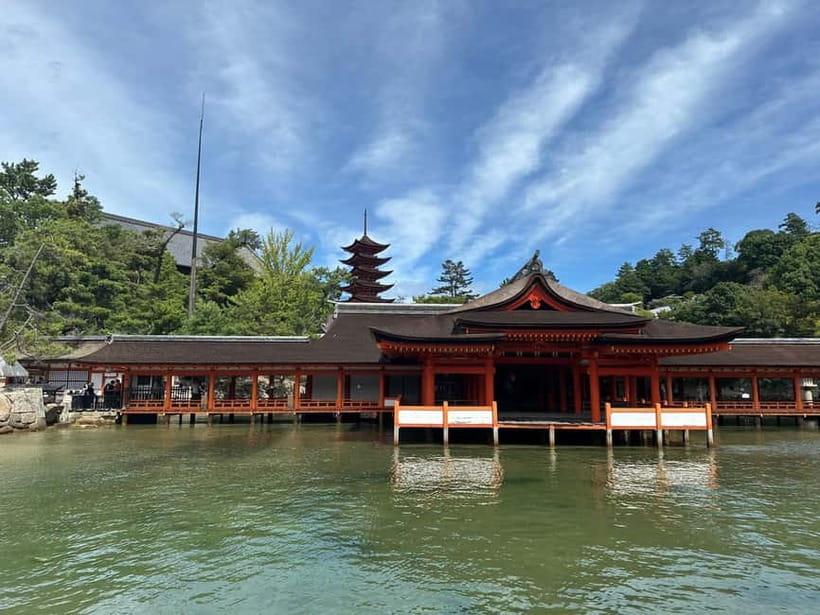
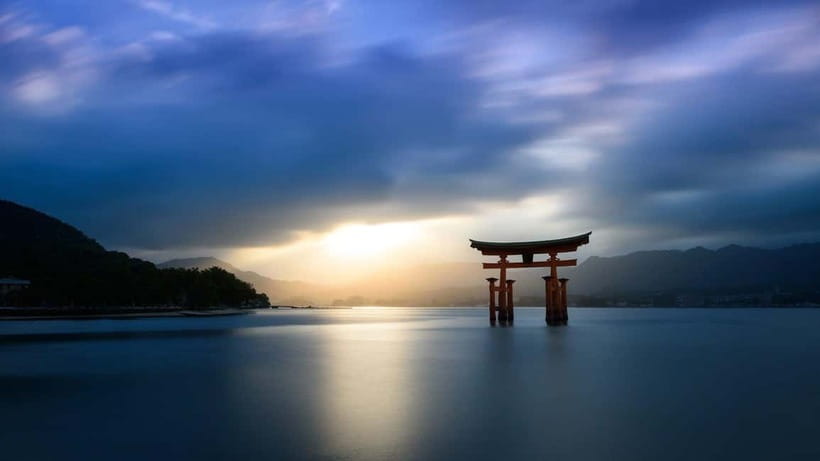
Itsukushima Shrine is the headline on Miyajima, and this tour gives it a guided start. You’ll have about 30 minutes for the shrine visit with admission included, plus a guide to explain what you’re seeing.
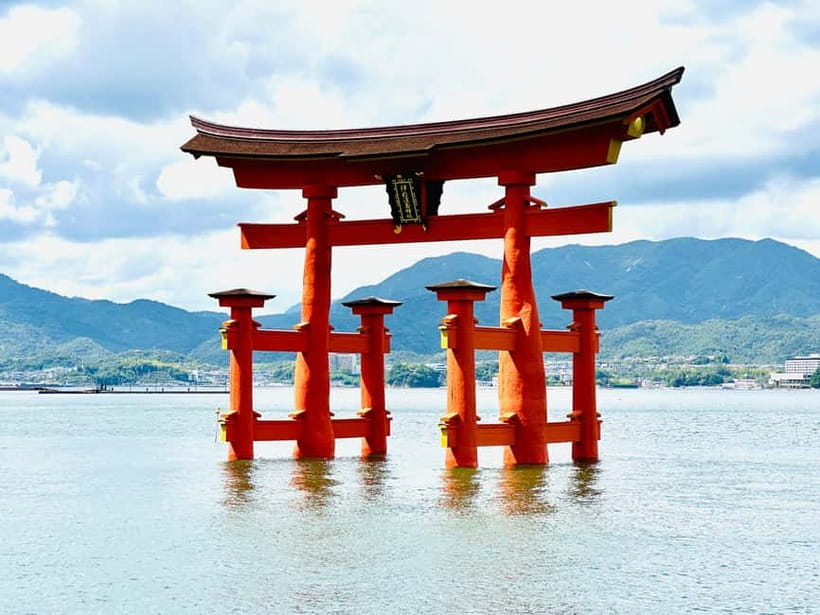
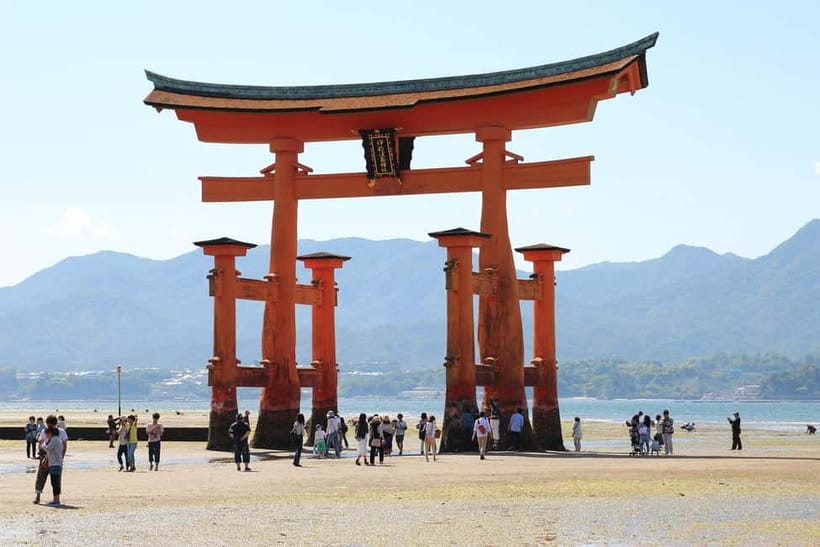
The big photo moment is the iconic torii gate that appears to rise from the water during high tide. You’re not guaranteed a specific tide moment, but the tour is built around this landmark for a reason: it’s one of Japan’s most recognizable visual scenes, and it’s easiest to appreciate when you’re not rushing.
This is also a UNESCO World Heritage Site, which adds another layer of value. With a guide, you tend to notice the details that most first-time visitors miss—how the structures relate to the shoreline, and why the shrine location matters beyond the postcard.
Tip: wear shoes that don’t slip on wet stone paths. Shrine approaches can get slick, and you’ll want sure footing so you can slow down and enjoy the views without worrying about balance.
Miyajima’s streets, deer encounters, and snack time
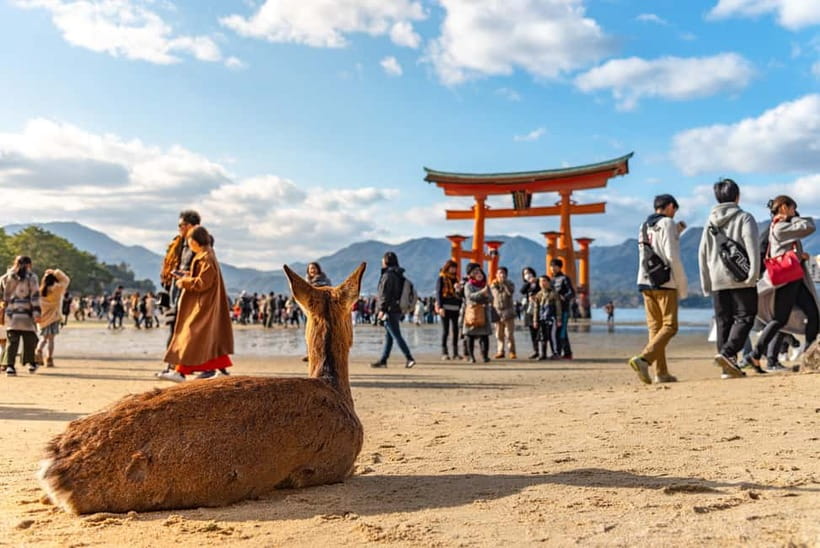
After the shrine visit, you get 100 minutes of free time to explore. This is where the island earns its charm: you can stroll the charming streets, look for historic temples, and slow your pace just enough to feel like you escaped the city.
The deer are part of the atmosphere. The tour description notes they roam freely, and that’s exactly what makes Miyajima feel different—animal sightings happen naturally as you walk, not as a separate “attraction.”
Now for the best kind of downtime: food. You’ll have time to try local Miyajima oysters and momiji manju, the maple-leaf shaped pastries. Even if you don’t eat everything, you’ll at least have the chance to pick something you can carry and enjoy while you keep moving.
One practical note: 100 minutes goes fast once you stop for snacks and photos. If you have one “must-do” (like a specific pastry or a favorite viewpoint), decide early so you don’t spend all your time drifting.
Also, because you’re later heading back to Hiroshima for a serious stop, keep your priorities straight. It’s better to eat lightly and comfortably than to feel sluggish when it’s time for the Peace Memorial area.





Hiroshima Peace Memorial Park: seeing with context
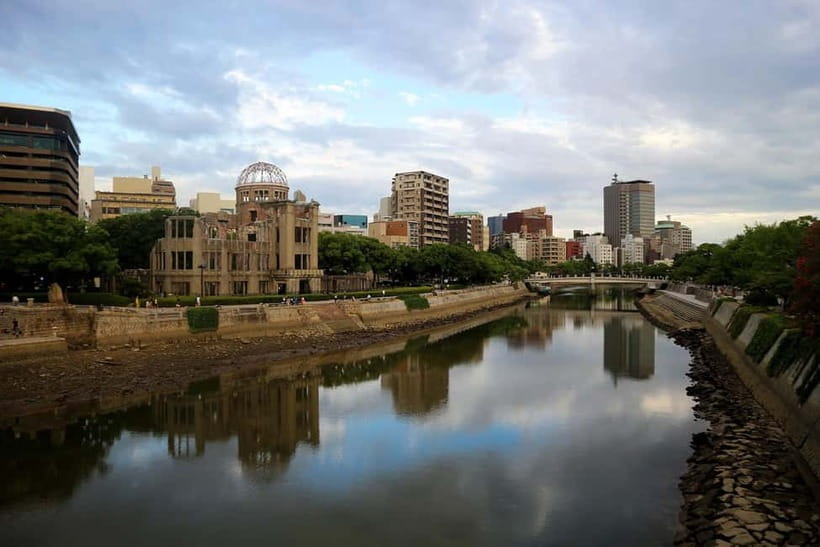
This is the part of the day that asks for your full attention. In Hiroshima Peace Memorial Park, you’ll have a guided tour plus free time of about 2 hours afterward, giving you a chance to absorb the place without being rushed.
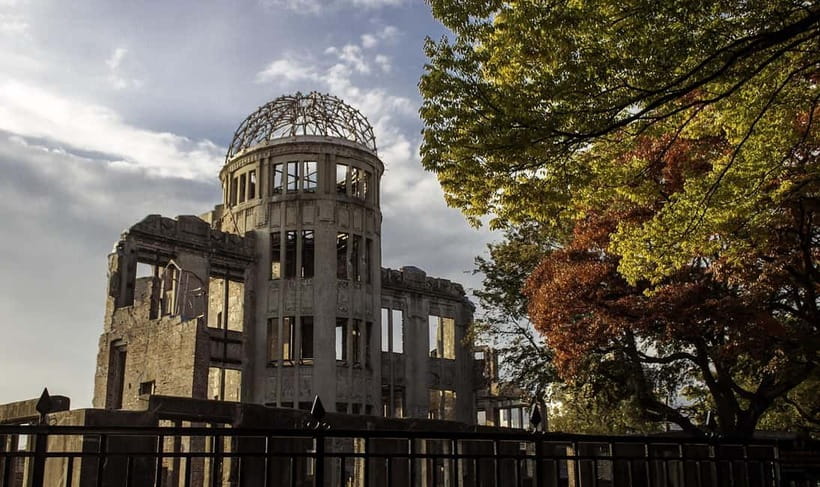
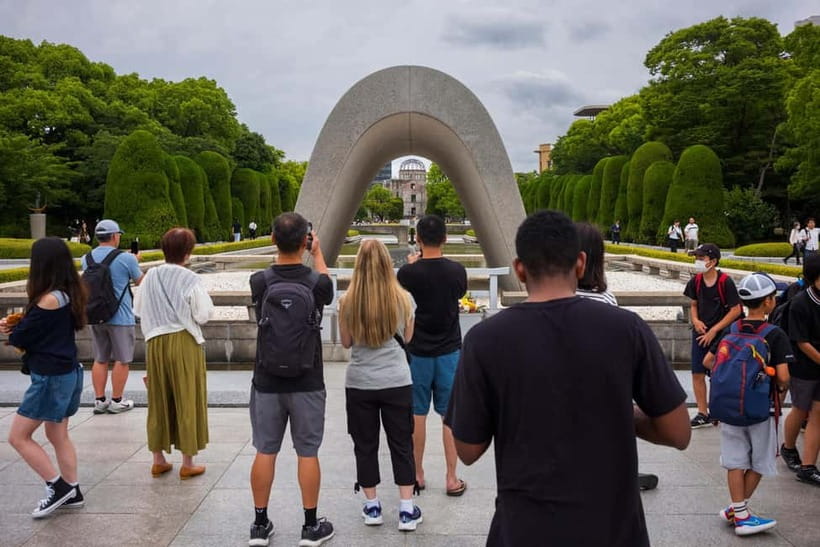
The tour specifically highlights the Peace Memorial and the Atomic Bomb Dome, along with other monuments dedicated to victims of the 1945 bombing. Walking through the site can feel heavy, even if you’ve read about it before. That’s why having a guide matters—someone helps you understand what you’re looking at and why it’s preserved.
Photography is allowed, but the instruction is clear: be respectful in memorial areas. That’s good advice for your own experience too. If you treat it like a sightseeing set, you miss the point. If you treat it like a place of remembrance, the details land differently.
Plan to give yourself time to stand, read, and watch people moving. The 2-hour free period is useful because it lets you return to the parts that moved you most, instead of trying to take everything in during a short guided sprint.
The day’s timing: where the schedule can feel tight
This tour is built as a full loop with train, coach, ferry, ferry, then train again. That structure is efficient, but it does create a few pressure points you should prepare for.
You’ll have coach segments (around 50 minutes early on, then 1 hour and 40 minutes later) between the train station and key sights. Those transfers aren’t usually the problem. The problem is when you combine transfers with weather delays or the urge to linger.
Also keep in mind the order of the day. You’ll be on Miyajima and snacking first, then you’ll shift into the reflective Hiroshima sites. If you get tired, the park portion is where fatigue can make you skip reading and thinking. I’d rather you arrive mentally ready.
What to bring helps more than you’d think:
- Comfortable walking shoes
- Water (especially if the day is warm)
- A hat and sunscreen
- A camera, plus extra batteries if you like lots of photos
- An umbrella or raincoat if weather turns
This isn’t a sit-on-a-bus-and-drift tour. It’s active enough that your choices during free time can affect the rest of the day.
Value check: what you’re really paying for
At about $104 per person, this is a mid-range day trip for a reason. You’re not just paying for admission at a shrine—you’re paying for the heavy lift: Shinkansen transport from Tokyo, ferry transfers, coach connections, and a live guide in English and Spanish.
If you were to piece this together yourself, the biggest cost isn’t only money. It’s time and stress: train timing, where the ferry leaves from, and how to connect it all so you still have enough time to see the key sights. This tour bundles those pieces into a single plan.
The included items also matter:
- Round-trip Shinkansen from Tokyo if you pick that option
- Ferry ride to Miyajima
- Admission to Itsukushima Shrine
Meals aren’t included, so you’re still responsible for lunch/snacks. But that can be a plus: Miyajima’s food is part of the experience, and free time lets you choose what fits your tastes.
Is it worth it? For most people who want both Hiroshima’s memorial sites and Miyajima’s iconic scenery in one day, yes—especially if you want the guide to handle the explanations so you can focus on seeing. If you prefer slower travel and long independent exploration, you may find the time compressed.
Who this tour fits best
This works well if you want:
- A guided explanation for Hiroshima’s major sites
- A structure that makes Miyajima easy even with limited time
- Iconic highlights, including the Atomic Bomb Dome and the floating torii look
It’s less ideal if you:
- Need wheelchair-friendly routing (the tour notes it’s not suitable for wheelchair users)
- Want a mostly leisurely day with lots of breathing room
- Get overwhelmed by long transit days
It also helps if you travel with a flexible mindset. Weather can affect ferries, and the day is long enough that comfort matters more than squeezing in extra stops.
One more human note from recent experience: the guide named Alex has been praised for switching between English and Spanish smoothly. That’s a real advantage when you’re trying to absorb serious history and still keep up with details.
Should you book this Tokyo to Hiroshima and Miyajima day trip?
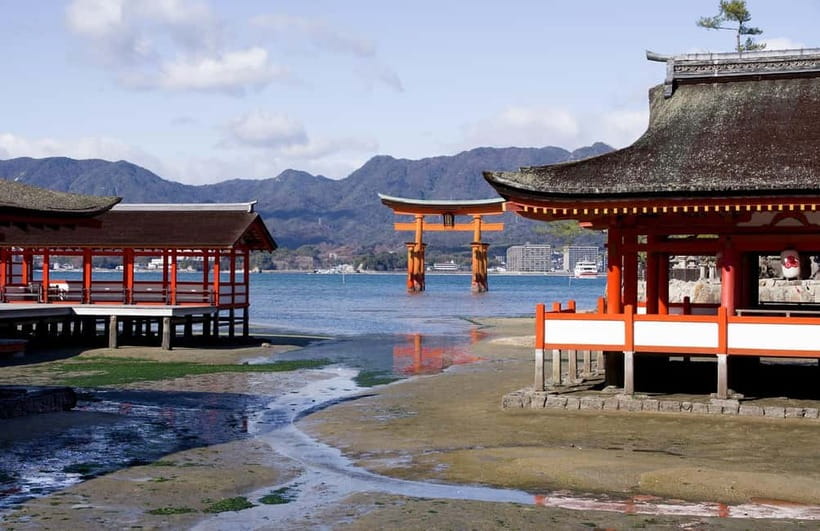
I’d book it if your priority is a high-impact day where the big sights are covered with live guidance and you don’t want to do logistics juggling. The mix of Hiroshima remembrance and Miyajima’s shrine-and-streets atmosphere is exactly the kind of pairing that’s hard to replicate smoothly on your own.
I wouldn’t book it if you’re sensitive to long days, limited free time, or you know you’ll struggle with moderate walking. In that case, consider slowing down and splitting Hiroshima and Miyajima into separate outings.
If you do book: choose comfortable shoes, carry water, and be ready to shift your mood from fun island wandering to quiet memorial reflection. That contrast is the point.
FAQ
How long is the Hiroshima and Miyajima day trip?
The duration is listed as 8 to 16 hours, depending on the starting time and route option you select.
Do I get round-trip Shinkansen from Tokyo?
If you select the option that includes it, you get round-trip high-speed bullet train from Tokyo (with about 4 hours by train each way).
How do I get to Miyajima?
You take a ferry from Hiroshima to Miyajima, and you also return by ferry after your time on the island.
Is Itsukushima Shrine included?
Yes. Itsukushima Shrine admission is included, and you’ll also have a guided visit there.
Is there a guided component at Hiroshima Peace Memorial Park?
Yes. You’ll have a guided tour at Hiroshima Peace Memorial Park, plus free time afterward.
What languages is the guide available in?
The live tour guide is available in English and Spanish.
Are meals included?
No. Meals are not included.
What should I bring?
Bring comfortable shoes, a hat, a camera, sunscreen, and water.
Are ferries affected by weather?
Yes. The ferry schedule to Miyajima may change due to weather conditions.
Is the tour wheelchair accessible?
No. The tour is not suitable for wheelchair users.
If you want, tell me which pickup start you’re considering (Shinagawa Station vs Hiroshima Station) and your travel month—I can help you pick the smartest timing for seeing the shrine and planning your day without stress.
More Tour Reviews in Tokyo



Fresh reviews from around Tokyo






Tokyo, compared.
 ★ 5.0Mt Fuji and Hakone 1-Day Bus Tour Return by Bullet TrainFrom $16326,383 reviews
 ★ 5.01-Day Tokyo Bus TourFrom $12914,250 reviews
 ★ 4.6teamLab Planets TOKYO Digital Art Museum Entry TicketFrom $259,779 reviews
 ★ 4.0Mt Fuji & Hakone Cruise, Drum Show Bullet Train 1 Day from TokyoFrom $1497,413 reviews
 ★ 5.0Shinjuku Food Tour (13 Dishes at 4 Local Eateries)From $866,603 reviews
 ★ 4.4Tokyo Mt Fuji 5th St & Hakone Cruise Bus Tour w/Bullet TrainFrom $1545,024 reviews
 ★ 5.0Flagship 2-Hours Official Street Go-Kart Tour – Tokyo Bay ShopFrom $644,974 reviews
 ★ 4.5From Tokyo: Mount Fuji Full-Day Sightseeing TripFrom $684,970 reviews