
Reviewed · ASAKUSA TOURS
Flavors of Asakusa Food & Traditions with a Friendly Guide
Tokyo smells like snacks and incense.
This 4-hour walk through Asakusa hits two big wins for me: you get real street-food tastings and you also see major sights with a guide who keeps things moving and meaningful. Still, there’s one heads-up: it’s a lot of short stops in a compact area, so if you want slow wandering with lots of free time, you may feel slightly time-boxed.
What I like most is the mix of “look” and “taste.” You’re not only passing famous spots like Sensō-ji and nearby shrines; you’re also guided through the shopping streets where the food culture lives. And yes, you’ll end with that big-picture Tokyo moment tied to the Skytree-style observation view described for this experience, so it won’t be all noodle-level close-ups.
In This Review
- Why This Asakusa Food Tour Works (and Who It Suits)
- Key Highlights You’ll Actually Care About
- Start Smart: Asakusa Culture Tourist Information Center
- Kaminarimondori and Nakamise: Where Snacks Become a Plan
- Kaminarimondori Shopping Street
- Nakamise Shopping Street: Street Food You Can Taste
- Sensō-ji Temple: The Big, Colorful Anchor Stop
- Asakusa Shrine Area: More Than Just One Temple
- Rokku Yumemachi Theatre: A Different Side of Asakusa
- Hoppy Street: Street Culture With Optional Drinks
- The Observation View: Skytree-Scale Perspective for the Grand Finale
- Price and Value: Is $167.40 Worth It?
- Guide Factor: Why Friendly Names Matter Here
- What You’ll See, Taste, and Feel at Each Step
- Quick Tips Before You Go
- Should You Book This Asakusa Food Tour?
- FAQ
- How long is the tour?
- What’s included in the price?
- Are alcoholic drinks included?
- Where does the tour start?
- What size group is this tour?
- Can I get a full refund if I cancel?
Why This Asakusa Food Tour Works (and Who It Suits)
If you’re visiting Tokyo for the first time, Asakusa can be a little overwhelming. This tour is built to fix that fast: you start with a place designed for helping visitors, then you move through the classic souvenir streets and temple area with just enough structure to keep you from missing the good stuff.
The group size stays small (up to 10), which matters more than it sounds. In a tight area with lots of stops, you’ll have a better chance to ask questions, compare what you’re eating, and keep the pace from turning into a shuffle.
Key Highlights You’ll Actually Care About
- Free start-point help in multiple languages at the Asakusa Culture Tourist Information Center, plus free Wi‑Fi
- 4 to 5 food stops in Asakusa so you can taste a range without turning the walk into a full meal
- Sensō-ji plus additional shrine time, not just one quick temple photo
- A shopping-street route built around Nakamise and Kaminarimondori, where the snacks and souvenirs overlap
- An observation-deck style Tokyo view tied to the Skytree experience, with big 360-degree perspective
Start Smart: Asakusa Culture Tourist Information Center
You begin at the Asakusa Culture Tourist Information Center, and that’s a surprisingly smart move. It’s the kind of place where you can get oriented before you get swept up by crowds, incense, and snack lines.
Here’s what you can expect in practical terms:
- Tourism guidance in Japanese, English, Chinese, and Korean
- Free Wi‑Fi, which is useful the moment you want to check train connections, map your next bite, or translate what’s on display
- A chance to confirm you’re headed in the right direction before the tour moves into the old-street maze
This first stop also sets the tone: you’re not just sightseeing. You’re learning how to navigate Asakusa like a visitor who knows what to look for.
Kaminarimondori and Nakamise: Where Snacks Become a Plan
From the tourist center, you head into the souvenir street zone. Two of the route’s street legs matter for different reasons.
Kaminarimondori Shopping Street
This is one of the older, longer souvenir streets in the area. What makes it worthwhile on a guided tour is simple: a guide can steer you away from the “only for postcards” stuff and toward stalls where you’ll actually want to sample what’s being sold.
You’ll also get a sense of the street’s rhythm. That helps later when you’re photographing, comparing treats, and trying to figure out what you want without feeling rushed.
Nakamise Shopping Street: Street Food You Can Taste
Nakamise Shopping Street is where the tour shifts from browsing into eating. This is the heart of the street-food experience, with snack stops built in so you can try several items rather than buying random things and hoping they’re great.
Based on the tour description and what the tour is designed around, you can expect Japanese street-food snacks and sweets. Think items like dango and daifuku that are common “try it now” treats in this part of Asakusa.
A small practical tip: plan to walk with your hands slightly free. Even with a few tastings, you’ll likely end up carrying wrappers, napkins, and photos-in-progress.
Sensō-ji Temple: The Big, Colorful Anchor Stop
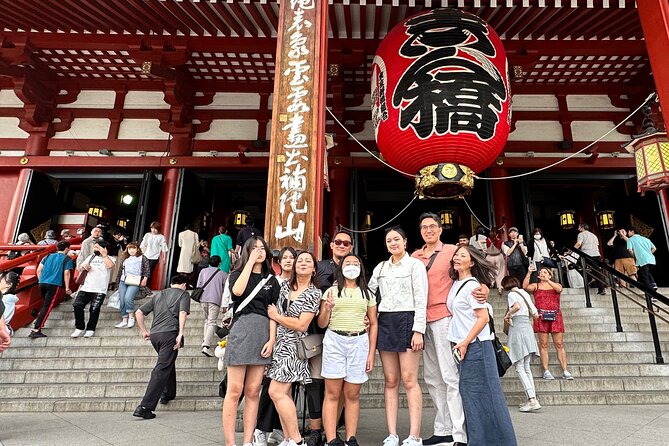
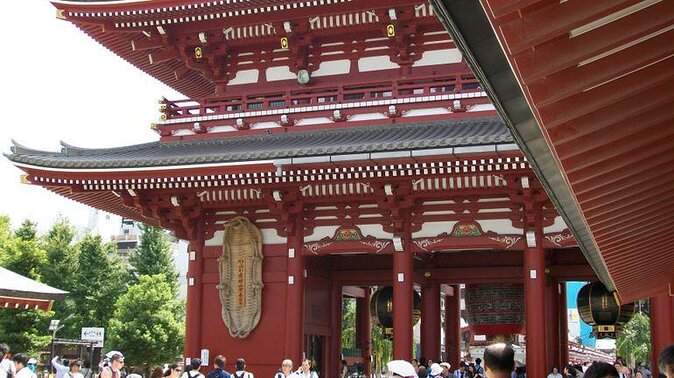
Then comes the main event: Sensō-ji Temple. This is described as an ancient Buddhist temple and one of Tokyo’s most visited sightseeing spots. Translation: the area is famous for a reason, and the crowds are real.
What a guide adds here isn’t just pointing you toward the best angles. It’s keeping the focus on what you’re actually seeing. You’ll get context tied to the route so the temple isn’t just a backdrop for pictures.
The “watch it happen” value of this stop is huge:
- You get to experience a major religious site in the middle of a shopping-and-street-food scene
- You’ll understand how the streets connect to the temple culture, instead of treating it like two separate areas
One drawback to consider: since it’s a top sight, you may not get the quiet, slow-tempo feeling. You’re still going to see and learn, but the atmosphere is lively.
Asakusa Shrine Area: More Than Just One Temple
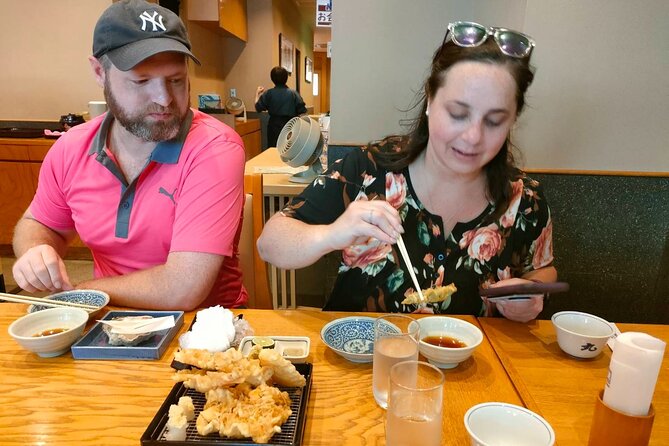
After Sensō-ji, the route includes Asakusa Shrine and additional shrines beyond the single biggest temple landmark. This is a valuable choice because it gives you variety in a short time.
What you’ll gain from the shrine portion:
- More visual variety than repeating the same kind of scene
- A better sense that Asakusa’s spiritual atmosphere isn’t limited to one location
- A guided route that saves you from wandering until you happen to find something worth your time
This is also a good moment for quieter photos and pause time, compared with the busiest shopping street sections.
Rokku Yumemachi Theatre: A Different Side of Asakusa
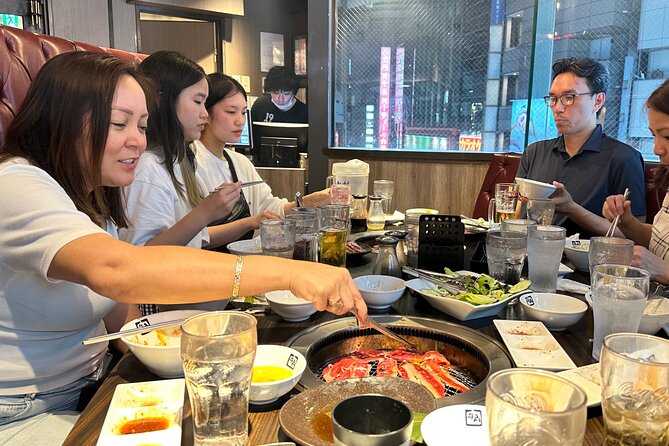
Most people think Asakusa is only temples and snacks. This stop nudges you toward the area’s entertainment and local history angle.
You’ll visit Asakusa Rokku Yumemachi Theatre, connected to Rokku Broadway (the Sixth District). The tour description notes this theater district was once filled with theaters and amusement facilities and says Rokku’s history starts in 1884. You’ll also hear how that past shaped the district identity.
Why it works on a food tour: it prevents the experience from turning into a single-theme blur. You get food culture plus a sense of how the neighborhood entertained people long before today’s crowds.
Practical consideration: if you’re mainly chasing the most famous sights and food, this stop may feel less urgent than Sensō-ji. But it’s exactly the kind of contrast that makes the day memorable.
Hoppy Street: Street Culture With Optional Drinks
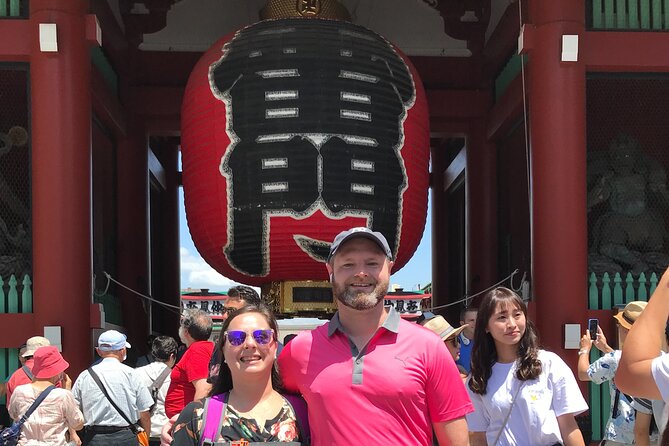
Next up: Hoppy Street. This is one of those Asakusa streets that signals “this is where locals and visitors go for drinks,” even if you’re not doing an alcohol-heavy day.
Here’s what’s supported by the tour details:
- Alcoholic drinks are not included, but you can purchase them there if you want
- Your tour includes 2 soft drinks and water, which keeps the tastings comfortable if you’re not planning to drink
So if you’re sensitive to alcohol or you just want to keep energy steady for walking, you’re covered. You can treat Hoppy Street as a cultural stop—watch how the street works, see the vibe, and keep your day practical.
The Observation View: Skytree-Scale Perspective for the Grand Finale
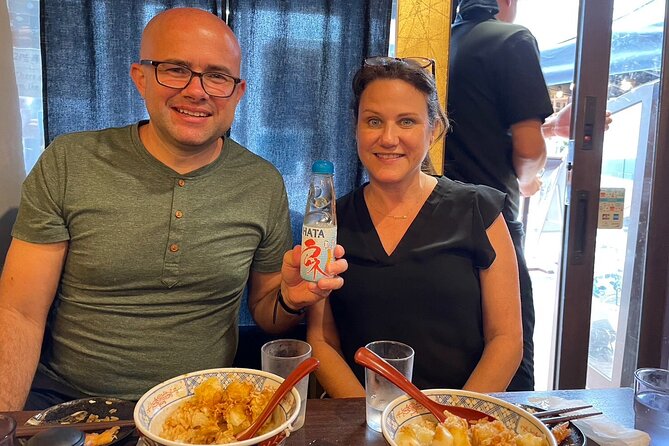
The tour experience description calls out Tokyo Skytree as an epic moment, noting it’s the tallest in the world at 634 meters and offering a 360-degree view.
Even if you’re not making it a full day trip to Skytree itself, the point of including an observation-deck style view is clear: you need a skyline moment after hours of close-up streets.
This is where the mental model snaps into place. You’ll be able to understand Tokyo’s size and density in a way that street-level walking can’t show you. It’s the “step back” payoff, and it’s great for photos that aren’t just straight-on temple shots.
Price and Value: Is $167.40 Worth It?
At $167.40 per person for about 4 hours with a local guide, the value depends on what you want to trade for your time.
Here’s what you’re getting that usually costs extra if you DIY:
- A guided walking route through major Asakusa spots (not just self-guided roaming)
- Snacks and desserts, plus 4 to 5 food stops
- 2 soft drinks and water
- A route that includes key cultural stops: Sensō-ji, shrine area, Asakusa Rokku Yumemachi Theatre, and Hoppy Street
If you were doing this alone, you’d still spend money on snacks, but you’d likely miss the “why this matters” context. You’d also spend time figuring out what to try and where to go next. This tour handles that for you.
One more reason the price feels fair: the group max is 10 travelers. Smaller groups can mean a smoother guide experience and less waiting around.
Guide Factor: Why Friendly Names Matter Here
The tour’s standout theme is the guide experience. In the provided feedback, the guide is called out by name: Chisato (often shortened to Chi). The praise focuses on being friendly and knowledgeable, and on sharing a lot of helpful detail during the route.
That matters because a food tour lives or dies on timing and guidance. A good guide helps you:
- choose tastings that make sense together
- understand what you’re looking at on the temple and shrine stops
- keep you moving without turning it into a race
What You’ll See, Taste, and Feel at Each Step
Here’s the flow in plain language:
- You start with orientation help and free Wi‑Fi
- You walk classic souvenir streets where snacks are part of the shopping
- You spend real time at Sensō-ji and then branch out to Asakusa Shrine
- You add a theater district stop so it’s not only temples and food
- You finish with a Skytree-style observation view to zoom out and reconnect the day
And along the way, you’ll sample street treats instead of gambling on one “big purchase” you later regret.
Quick Tips Before You Go
- Wear shoes you can keep on for a few hours of walking. This is a walking tour.
- If you care about photos, keep your snack items in mind. Some stalls pack tightly, and you’ll want to eat quickly so you can keep moving.
- If you want drinks later at Hoppy Street, remember alcohol isn’t included—soft drinks and water are part of the tour.
Should You Book This Asakusa Food Tour?
I think you should book if you want an easy way to experience Asakusa without planning every step. It’s especially good if you’re a first-timer who likes structure, short guided explanations, and tasting multiple snack types in one morning/afternoon block.
I’d skip or reconsider if you want:
- lots of solo free time with long breaks
- a very slow, unstructured walk
- a tour that focuses mainly on one site with minimal street-food emphasis
If you fall in the sweet spot—temples plus street snacks plus a skyline finale—this is a strong match, and the guide-driven approach is the glue that holds it together.
FAQ
How long is the tour?
It runs for about 4 hours.
What’s included in the price?
The tour includes snacks and desserts, a 4-hour walking tour with a local guide, experience local markets in Asakusa, 4 to 5 food stops in Asakusa, and 2 soft drinks and water.
Are alcoholic drinks included?
No. Alcoholic drinks are available to purchase, but they are not included.
Where does the tour start?
The meeting point is the Asakusa Culture Tourist Information Center at 2-chōme-18-9 Kaminarimon, Taito City, Tokyo 111-0034, Japan.
What size group is this tour?
The maximum group size is 10 travelers.
Can I get a full refund if I cancel?
Yes. You can cancel up to 24 hours in advance for a full refund.
Asakusa Tours, compared.
 ★ 4.8Japanese Dance Cabaret Theater Asakusa-Kaguwa TicketFrom $492,270 reviews
 ★ 4.7Meiji Shrine, Asakusa, Skytree Bus Tour and CruiseFrom $1221,986 reviews
 ★ 4.8Asakusa Walking Tour with Sensoji Temple VisitFrom $221,583 reviews
 ★ 5.0Tokyo Asakusa Rickshaw TourFrom $421,375 reviews
 ★ 4.5Tokyo Panoramic 1 Day: Meiji Shrine, Asakusa, Odaiba and SKYTREE®From $851,222 reviews
 ★ 4.8Samurai Ninja Museum Asakusa: Samurai Sword Lesson & TourFrom $63306 reviews
Asakusa Sightseeing Tour by RickshawFrom $35195 reviews
Asakusa Kimono Dressing and Matcha ExperienceFrom $56173 reviews
★ 4.8Samurai Ninja Museum Asakusa: Samurai Sword Lesson & TourFrom $63306 reviews
Asakusa Sightseeing Tour by RickshawFrom $35195 reviews
Asakusa Kimono Dressing and Matcha ExperienceFrom $56173 reviews
Browse the lists this tour appears in