
Reviewed · TOKYO
Explore Local Tokyo: Buddhism & Shinto
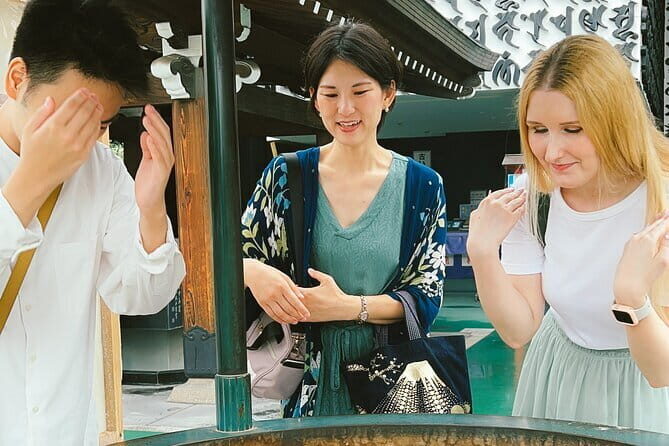
Tokyo has quiet corners most miss. This small-group tour takes you into Monzennakacho/Shitamachi in East Tokyo, where Buddhism and Shinto aren’t just sights on a map—they’re part of daily life. You’ll visit major landmarks like Fudo-son Temple and Tomioka Hachimangu Shrine, plus there’s an opportunity to watch a fire ceremony at a local Buddhist temple.
I especially like the way Manami, your guide, explains the traditions in plain language and then connects them to what you’re seeing on the street. Two big wins for me are the small group size (max six, so questions are easy) and the focus on manners and local context, not just photos.
One possible drawback: this is a walking experience in a more residential neighborhood, so you’ll want to wear comfortable shoes and plan for a bit of street time in between stops—less “tour-bus convenient,” more “slow down and look.”
In This Review
- Key highlights worth your attention
- Monzennakacho and Shitamachi: Tokyo’s quieter, older feeling
- Manami’s guided pace: small group, big context, clear manners
- Cafe orientation: water channels and Edokko pride before you step inside
- Fudo-son Temple and Buddhist daily ritual: what you’ll learn for real life
- Tomioka Hachimangu Shrine: Shinto cues you’ll recognize on your next trip
- Fire ceremony chance, price, and whether it’s worth your time
- Should you book this Buddhism and Shinto tour?
- FAQ
- How long is the Explore Local Tokyo: Buddhism & Shinto tour?
- What’s the group size?
- Where does the tour start and end?
- What’s included in the tour price?
- Do you visit specific temples and shrines?
- Is it okay if I don’t bring temple offering coins?
- Can I cancel for a full refund?
Key highlights worth your attention
- Monzennakacho/Shitamachi: East Tokyo culture beyond the usual bullet-train loop
- Max 6 travelers with lots of back-and-forth with your guide
- Buddhist daily ritual visit included, not just sightseeing
- Fire ceremony chance at a local temple, depending on timing
- Stops include Fudo-son Temple and Tomioka Hachimangu Shrine
- Cafe intro first, so you understand what you’re looking at while you walk
Before you commit, see how this one stacks up against a few Tokyo favourites:
- Mt Fuji and Hakone 1-Day Bus Tour Return by Bullet Train★ 5.0 · 26,383 reviews
- 1-Day Tokyo Bus Tour★ 5.0 · 14,250 reviews
- Tokyo: teamLab Planets TOKYO Digital Art Museum Entry Ticket★ 4.6 · 9,779 reviews
Monzennakacho and Shitamachi: Tokyo’s quieter, older feeling
Most Tokyo itineraries sprint through the famous neighborhoods. This one slows you down in Monzennakacho, an area locals connect with Shitamachi—the eastern Tokyo zone tied to the delta land between two big rivers. It’s the kind of place where you notice the shape of daily life: small streets, local routines, and places of worship that feel woven into the neighborhood.
A key part of the appeal is identity. You’ll hear how people in this area describe themselves as Edokko—people who say they were not posh or wealthy, but who built Edo’s foundation and supported its prosperity for centuries. That framing matters because it changes how you see temples and shrines. Instead of treating them as stand-alone monuments, you start to view them as community anchors.
Now, a note for expectations: this isn’t designed to “check off” every famous temple in Tokyo. It’s more selective and story-driven. If you’re the type who wants big, postcard-scale crowds and landmark density, you might find it calmer than you expected. If you want meaning—how traditions fit daily life—this neighborhood style is exactly the point.
Manami’s guided pace: small group, big context, clear manners
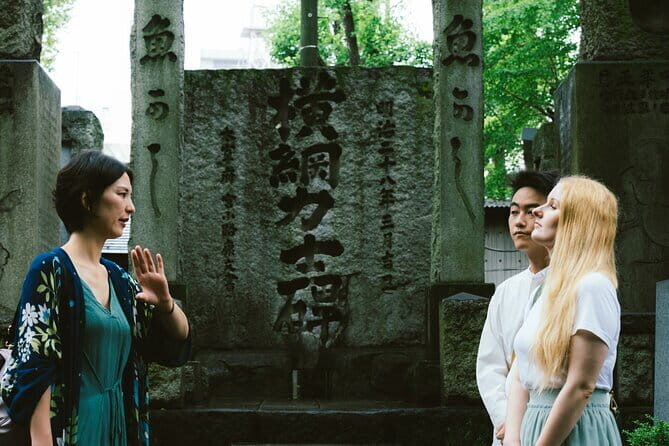
The magic here is the guide. The experience is led by Manami, and the vibe matches what you’d hope for from a guide who loves her city: she’s patient, and she doesn’t just toss facts at you. She’s also known for having deep academic grounding (including a PhD), which shows up in how she explains Buddhism and Shinto practices without making it feel like a lecture.
With a maximum of six travelers, you don’t get lost in a crowd. You can ask quick questions as they come up—especially the kind of questions people usually feel too shy to ask alone. That’s a real advantage when you’re visiting religious sites where etiquette matters. The tour is specifically built around manners and how to understand what you’re seeing, so you can participate respectfully rather than just watch.
Timing is also part of the design. Expect about 1 to 2 hours. That’s short enough to be doable on a busy day, yet long enough for the guide to give you context before each stop. If you tend to rush through Tokyo, you’ll likely appreciate this tighter structure and fewer interruptions.
Cafe orientation: water channels and Edokko pride before you step inside
You start with a short orientation at a cafe. The host gives a presentation to set the scene, and this is where the tour becomes more than a route. You’ll learn about the water channels and how the area’s geography helped shape local life and the economy. You also get the local pride angle—how the environment helped create a community identity that people still carry.
This matters because Shitamachi isn’t just a name. It’s an “explaining lens” for why certain things were possible here and why people still talk about their roots. When you later see temple spaces and shrine grounds, you’re not just looking at architecture. You’re reading them as part of a long relationship between people, water, and daily survival in the Edo area.
Then the tour starts moving. Because you’ve already heard the background, you’re more likely to notice the small details that would otherwise blur together—where the site fits into the neighborhood fabric, why certain practices make sense, and how the guide links spiritual tradition to ordinary life.
Practical tip: since you begin with a cafe briefing, arrive with a little time buffer so you don’t feel rushed. A calm start helps you absorb the story, and that story makes the temple visits feel easier to understand while you’re there.
Fudo-son Temple and Buddhist daily ritual: what you’ll learn for real life
One of the core stops is Fudo-son Temple. You’ll get an insight into Buddhism as a living set of practices, not just a label on a building. The tour’s structure is built to help you understand different religions in Japan and the basic manners that go along with temple visits.
A highlight is the included free visit to a Buddhist daily ritual. That’s a big value point because it isn’t only observational. Even if you’re just watching respectfully, you’re seeing the rhythm of temple life rather than only the static “tourist version” of a site. Ritual timing also tends to make people behave differently than they do at shrines, so the experience helps you see contrasts clearly.
How to get the most out of this stop:
- Pay attention to what the guide says about appropriate behavior and observation.
- Don’t worry about needing a perfect understanding of every element. The tour is designed to give you enough context to make sense of what you’re witnessing.
- Slow down for a moment and let the space work on you. Temples often have a quieter pace than busy streets, and that shift is part of why these sites are meaningful.
Possible drawback: because you’re joining a ritual, your schedule is more “guided by the temple’s flow” than by your own pace. If you dislike waiting or prefer always-to-the-minute plans, mentally prepare for that.





Tomioka Hachimangu Shrine: Shinto cues you’ll recognize on your next trip
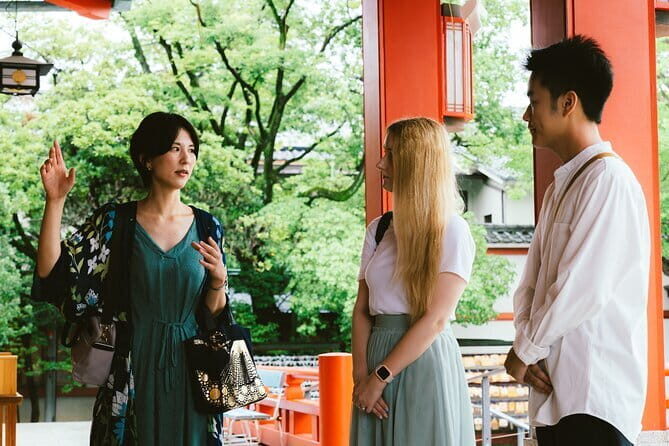
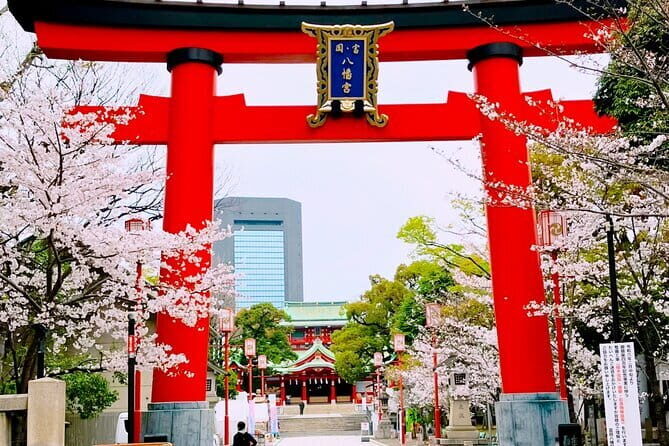
Next comes Tomioka Hachimangu Shrine. The Shinto side of the tour matters because you’re not just going to one kind of religious site—you’re comparing how traditions show up in daily public space.
On this stop, you’ll learn practical ways to understand Shintoism through what you see and how people behave there. The tour specifically includes guidance on manners, which is useful because shrines often come with different expectations than temples. You’ll be in a better position to interpret the mood of the place: where people pause, how they show respect, and what parts of the grounds carry meaning.
One helpful detail for your visit: the tour notes that you might encounter small coins for offerings, but this isn’t mandatory. You can go with the mindset of observation-first. If you want to participate in the offering custom, consider bringing a few small coins so you’re not scrambling at the last minute.
This shrine stop also has a “transferable value” angle. After you’ve seen how the guide explains Buddhism and Shinto side-by-side, later visits to other Japanese shrines and temples usually feel less confusing. Even when you’re in a new neighborhood, you know what questions to ask yourself: What’s the practice here? Who is it for? How do people show respect?
Fire ceremony chance, price, and whether it’s worth your time

The tour includes the opportunity to watch a fire ceremony at a local Buddhist temple. That’s one of the most memorable types of experiences you can have in Japan because it’s not just decorative. Fire ceremonies often bring energy and attention into the moment, and the guide’s context makes it easier to follow what’s happening and why it matters.
Because it’s described as an opportunity, not a guaranteed performance you can bank on, you should think of it as a bonus if timing aligns. Still, it’s listed as a key feature, which tells you the tour is organized with enough flexibility to let you see something special beyond the usual shrine-photos-and-go.
Now for the big question: $58.53 per person for about 1 to 2 hours and up to six travelers. Here’s how I’d judge value:
- You’re paying for a small-group guide with strong academic and local passion (Manami).
- You get an included visit tied to a Buddhist daily ritual.
- You visit multiple major sites in a single outing, including Fudo-son Temple and Tomioka Hachimangu Shrine.
- You’re not fighting Tokyo crowds to make sense of religious etiquette on your own.
If you enjoy guided interpretation—learning what you’re seeing and how to behave—this price can feel very reasonable. If you only want to self-walk and already know temple/shrine etiquette, you might find it pricier than a DIY stroll. But even then, the ritual inclusion and the fire ceremony opportunity are hard to replicate cheaply.
Who I’d recommend it for: first-timers who want a calmer East Tokyo day with religion context, and repeat Japan visitors who want a break from the usual top-ten list and want meaning behind the stops.
Should you book this Buddhism and Shinto tour?
If you want a small-group, story-led walk through Monzennakacho with Manami’s explanations and a chance to see something like a Buddhist daily ritual (plus possible fire ceremony), then yes, you should book it. It’s built for people who like learning how traditions work, not just collecting stamps in iconic neighborhoods.
If your travel style is purely photo-driven, and you hate any schedule flexibility at all, you might be happier doing a self-guided shrine/temple day. For most people, though, this is a smart use of time that adds real understanding to Tokyo’s spiritual side.
FAQ
How long is the Explore Local Tokyo: Buddhism & Shinto tour?
The tour is listed as about 1 to 2 hours (with an itinerary note of about 1 hour 40 minutes).
What’s the group size?
It’s a small group with a maximum of six travelers.
Where does the tour start and end?
It starts at Monzen-nakacho Station, and the activity ends back at the same meeting point.
What’s included in the tour price?
A free visit to a Buddhist daily ritual is included.
Do you visit specific temples and shrines?
Yes. The tour includes stops at Fudo-son Temple and Tomioka Hachimangu Shrine, and you may also have the chance to watch a fire ceremony at a local Buddhist temple.
Is it okay if I don’t bring temple offering coins?
Yes. Small coins for throwing into boxes are mentioned as not mandatory.
Can I cancel for a full refund?
Yes. Free cancellation is available up to 24 hours in advance for a full refund.
More Tour Reviews in Tokyo



Fresh reviews from around Tokyo






Tokyo, compared.
 ★ 5.0Mt Fuji and Hakone 1-Day Bus Tour Return by Bullet TrainFrom $16326,383 reviews
 ★ 5.01-Day Tokyo Bus TourFrom $12914,250 reviews
 ★ 4.6teamLab Planets TOKYO Digital Art Museum Entry TicketFrom $259,779 reviews
 ★ 4.0Mt Fuji & Hakone Cruise, Drum Show Bullet Train 1 Day from TokyoFrom $1497,413 reviews
 ★ 5.0Shinjuku Food Tour (13 Dishes at 4 Local Eateries)From $866,603 reviews
 ★ 4.4Tokyo Mt Fuji 5th St & Hakone Cruise Bus Tour w/Bullet TrainFrom $1545,024 reviews
 ★ 5.0Flagship 2-Hours Official Street Go-Kart Tour – Tokyo Bay ShopFrom $644,974 reviews
 ★ 4.5From Tokyo: Mount Fuji Full-Day Sightseeing TripFrom $684,970 reviews