
Reviewed · TOKYO
Experience the Taste of Old Tokyo in Backstreet Yanesen
Tokyo has a quieter side if you look.
This Yanesen tour lets you taste it through backstreet food stops, shrine pauses, and stories that connect what you eat to where you are. You start near Sendagi and spend the day moving through Yanaka and back, with tastings that go beyond the usual checklist, including onigiri, fresh unagi, retro kissaten coffee, nostalgic sweets, and sake.
I especially like the small-group feel (max 6 travelers), which keeps the pace human when you’re threading through narrow alleys. I also love that the experience is anchored in both food and place—guides such as Kan, Michelle, Diana, and Mairi are repeatedly praised for making the history practical, not academic.
One thing to consider: it’s a full ~6-hour walk, and the tour runs on good weather. If you’re hoping for a low-step, low-walking day, this is probably not the right fit.
In This Review
- Key highlights you’ll actually feel
- Yanesen after 10:00: what this old-Tokyo food walk is really about
- From Saint Marc Cafe in Sendagi to the Yanaka wrap-up
- Yanaka District: onigiri, unagi, sweets, and a kissaten pause
- Nezu Shrine: quiet history with 1900-year roots
- Nichika Shrine of Enju-ji Temple: 117 temples in Yanesen, 76 in Yanaka
- Sendagi: postwar streets, wooden houses, cemeteries, and the older pace
- Food and drinks: what you get, and how to plan your appetite
- Price and value: is $195 worth it in Tokyo?
- Practical tips that make the day smoother
- Should you book A Taste of Old Tokyo in Backstreet Yanesen?
- FAQ
- How long is the tour?
- How much does it cost?
- Where does the tour start and end?
- What time does the tour begin?
- What’s included in the price?
- Are there entry fees for the shrines or temples?
- Is alcohol included?
- How many people are in a group?
- Is this tour suitable for most travelers?
- What happens if weather is bad or I need to cancel?
Key highlights you’ll actually feel
- A compact group of 6 so you can stop often without the crowd chaos
- Real tasting variety, including onigiri, unagi, sweets, kissaten coffee, and sake
- Nezu Shrine context with origins said to reach 1900 years back
- Temple-town scale in Yanaka/Yanesen, with 117 temples in the area and 76 in Yanaka
- Drinks in a converted bathhouse, the kind of Tokyo detail you’d miss alone
Before you commit, see how this one stacks up against a few Tokyo favourites:
- Mt Fuji and Hakone 1-Day Bus Tour Return by Bullet Train★ 5.0 · 26,383 reviews
- 1-Day Tokyo Bus Tour★ 5.0 · 14,250 reviews
- Tokyo: teamLab Planets TOKYO Digital Art Museum Entry Ticket★ 4.6 · 9,779 reviews
Yanesen after 10:00: what this old-Tokyo food walk is really about
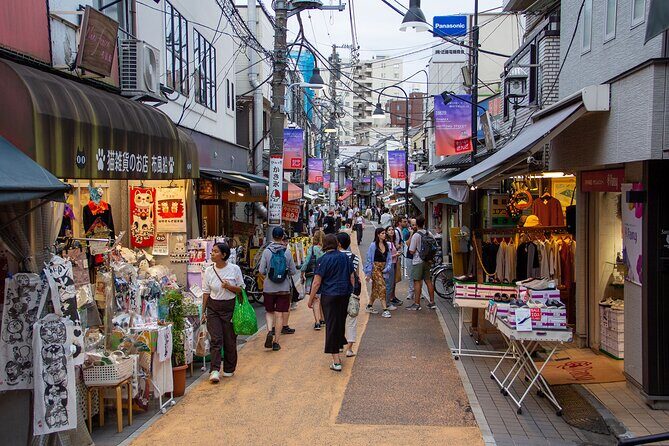
This tour is for people who like their Tokyo with a side of character. Not the bright, polished stuff. The neighborhoods where daily life still looks like it has wrinkles—temples, shrines, narrow lanes, wooden homes, and shops that feel old on purpose.
What makes it work is the pacing: you don’t just walk past sights and then grab food at the end. You snack and sip while you go, so the flavors make sense in your head as you turn corners. And because it’s a small group, your guide can adjust the rhythm when you hit the most interesting street corners.
Think of it as a guided “how Tokyo used to feel” lesson, but delivered through what people ate and drank every day. That’s why tastings like handmade onigiri and unagi land harder than a random restaurant stop.
From Saint Marc Cafe in Sendagi to the Yanaka wrap-up
You start at Saint Marc Cafe – Sendagi, near Sendagi Station, around 10:00 am. The meeting spot is easy enough to find using public transit, and the tour is designed for walking rather than car-hopping.
From there, your day centers on the historic trio of Yanaka, Nezu, and Sendagi. In practice, that means you’ll bounce between these neighborhoods’ different moods: Yanaka’s temple-town atmosphere, Nezu’s shrine gravity, and Sendagi’s postwar-preserved streets.
Your endpoint is Echigoya Honten in Yanaka. That matters because it means you’ll likely finish with your shoes a bit cooked and your head full of neighborhood details, not still trying to figure out where you are. If you like ending your day in a place you already explored, this setup helps.
One more practical note: the tour uses a mobile ticket, so keep your phone charged and ready.
Yanaka District: onigiri, unagi, sweets, and a kissaten pause
Yanaka is where the day starts to feel like old Tokyo theater—small storefronts, quiet side streets, and a sense that time isn’t rushing. You’ll spend about 3 hours here, and the tour leans into the food culture that fits this neighborhood: simple, comforting, and very local.
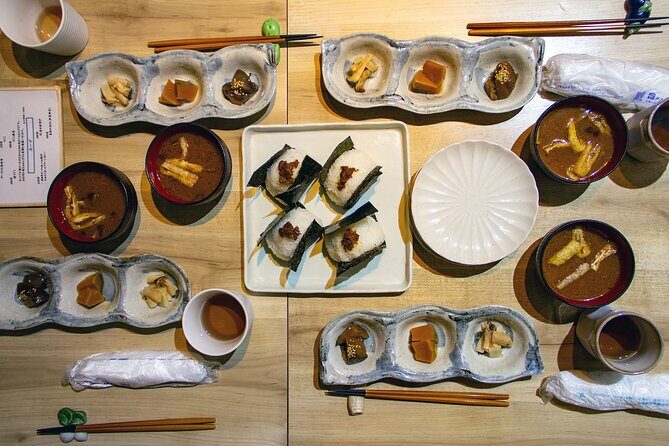
This is also where the main tastings show up. You can expect handmade onigiri, fresh unagi, nostalgic sweets, and retro kissaten coffee. These aren’t just random samplers. Onigiri and unagi fit the kind of daily eating rhythm you’d hear about in a city with dense neighborhood life.
One stop detail I love in particular is the chance to sip drinks in a converted bathhouse. It’s the kind of Tokyo trick that feels both practical and charming: reuse an old structure, keep the atmosphere, and give it a new purpose. If you like architecture and the way everyday buildings get second lives, you’ll feel it here.
Also keep your eyes open as you go. The route includes century-old shops, and that matters more than you might think. You’ll learn the neighborhood through storefront textures—signs, shop layouts, and what’s been around long enough to become part of the scenery.
Potential drawback in Yanaka: because this is the longest block of time, you’ll want comfortable shoes for steady walking. If you’re sensitive to long stretches, plan to pace yourself and take breaks when the guide offers them.
Nezu Shrine: quiet history with 1900-year roots
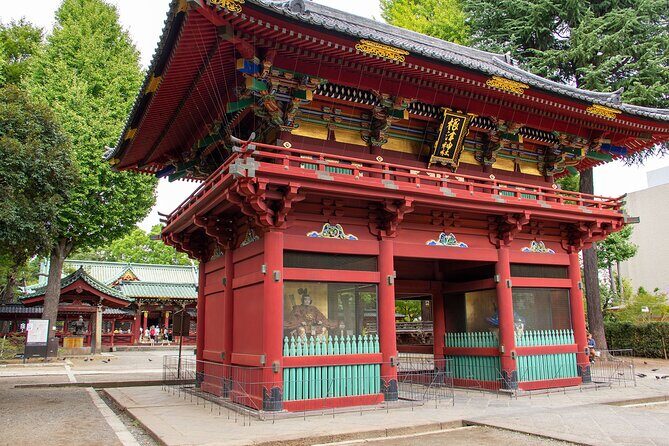
After Yanaka, you’ll spend about 30 minutes at Nezu Shrine. This isn’t a stop you rush through to tick a box. The point is to slow down and understand why shrines still shape street life, even when Tokyo around them modernizes.
Nezu Shrine is considered one of Japan’s oldest Shinto shrines. While the current main structures date to the early 18th century, the shrine’s origins are said to go back about 1900 years. That contrast is the story: places can change forms while keeping their role in the community.
I like short shrine stops like this on food tours because they reset your senses. You finish a tasting, catch your breath, and then you’re able to appreciate details you’d otherwise miss—stone paths, the feel of the grounds, and the way the neighborhood’s pace shifts.
If you’re the type who enjoys explanations that connect to real life, this is one of the better windows of the day. A good guide here can make you feel how people use sacred places as part of normal routines, not just for ceremonies.





Nichika Shrine of Enju-ji Temple: 117 temples in Yanesen, 76 in Yanaka
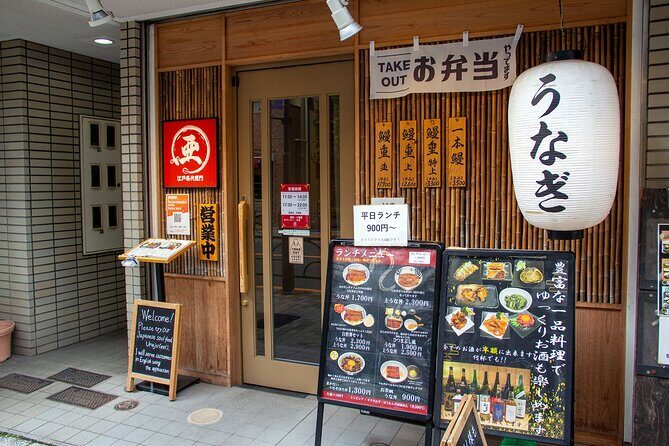
Next you’ll hit Nichika Shrine of Enju-ji Temple for about 30 minutes. This stop is tied to Yanaka’s identity as a temple town in the Edo period. And here’s a number that really puts things in perspective: in the Yanesen area, there are 117 temples, and 76 of those are in Yanaka.
That density can sound like trivia until you walk through the neighborhood. The streets start to make more sense when you realize you’re surrounded by places of worship, not occasional ones tucked away. It also helps you understand why the area feels calmer than many parts of Tokyo—when temples are everywhere, the neighborhood’s energy changes.
What you should look for is the rhythm of shrines and temples in a compact area. This is where the tour’s walking format shines. You see how religious spaces sit beside homes and shops, instead of feeling like distant attractions.
One small consideration: if you’re expecting only dramatic sightseeing, this stop may feel quieter. That’s the point. The value is in noticing the everyday presence of these places.
Sendagi: postwar streets, wooden houses, cemeteries, and the older pace
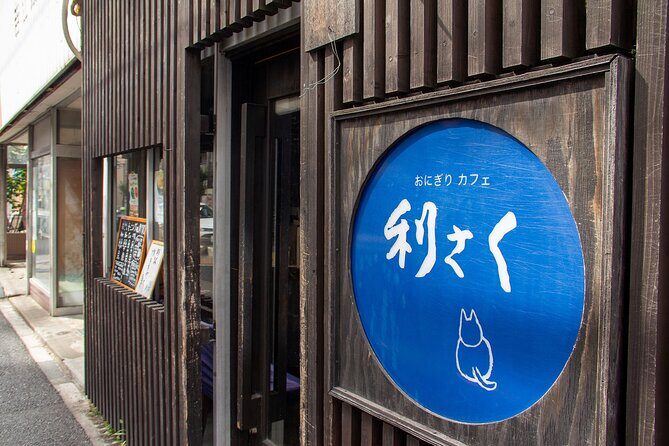
You spend about 2 hours in Sendagi, and this is where the tour’s “older rhythm” promise becomes visible. Sendagi is part of the Yanesen trio, and unlike much of Tokyo after WWII, the area preserved more of its atmosphere—temples and cemeteries, narrow alleys, and wooden townhouses.
If you’ve ever felt like Tokyo is either too fast or too uniform, Sendagi is the antidote. The pace feels slower because the streets are physically built for local movement, not wide, efficient grids designed for everyone at once.
This part of the day also helps you understand why the food tastes belong here. You’re not just sampling items in a vacuum. You’re walking through a neighborhood where daily life has more continuity, and you can feel it in the kind of shops you pass and how people move through the street.
End-of-tour energy check: by the time you reach Sendagi, you may be ready for your final snacks and sips to feel extra comforting. Plan to be present for the atmosphere, not just focused on the next bite.
Food and drinks: what you get, and how to plan your appetite
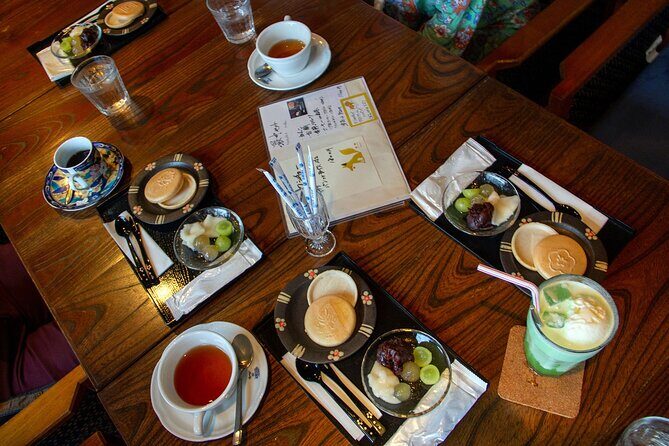
This is a food tour that treats food like a lens. You’re not only getting a meal; you’re getting multiple moments to taste and then connect them to place.
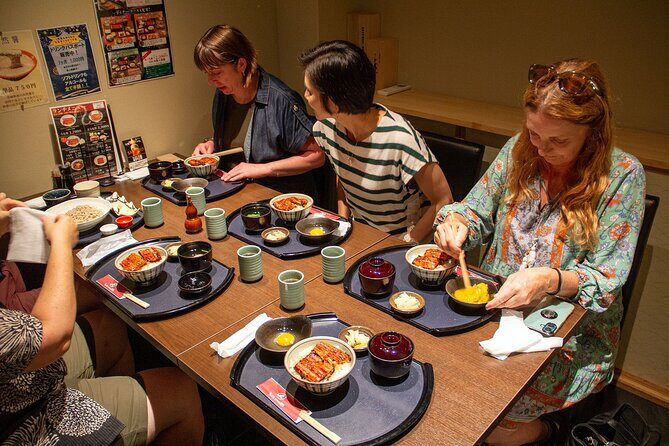
Included food and drink items are substantial: breakfast, lunch, snacks, coffee and/or tea, and alcoholic beverages. That’s a lot of calories and liquids for a single day, and it’s why the tour works well if you like structured eating rather than wandering and guessing.
You can expect sake as part of the tastings, alongside the other food highlights like onigiri, unagi, and sweets. There’s also coffee from the kissaten style you’ll see in older neighborhoods. The “retro coffee” part isn’t just about nostalgia—it’s about the social role of coffee shops in neighborhood culture.
If you drink alcohol, great. If you don’t, I’ll just say this: the tour includes it, so build your day around that reality. Bring a calm plan for hydration and pacing so you can enjoy the full walk without rushing the last hour.
Also, because admission to the shrine/temple stops is free, your money is going mainly to guiding time and the tastings. For a guided day with this quantity of food, that trade-off can be a good value.
Price and value: is $195 worth it in Tokyo?
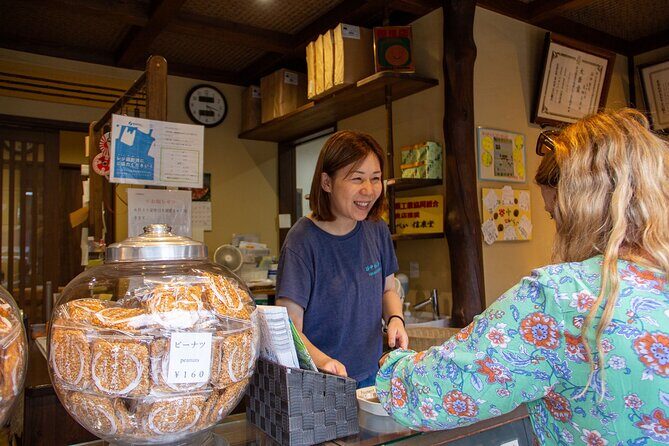
At $195 per person for about 6 hours, you’re paying for more than food. You’re paying for a local guide who strings together neighborhood history, multiple tastings, and access to places you’re unlikely to find on your own—like the converted bathhouse drink stop.
The included items help justify the total. You’re not just buying two snacks. You’re getting breakfast, lunch, snacks, coffee/tea, and alcoholic beverages. In Tokyo, those add up quickly, especially when you’re trying to do it in a guided, time-efficient way.
And the small group limit (max 6) matters. A larger group can turn a “food and history” walk into a long line. Here, the format supports frequent stops and a guide who can actually answer questions and keep you on track without feeling rushed.
So the real question isn’t only the price tag. It’s whether you’ll use the included tastings and the guide’s storytelling. If you’re food-motivated and you like learning through walking, $195 feels like a fair deal. If you only want one or two bites and prefer to explore without structure, you might want something lighter.
Practical tips that make the day smoother
First: bring comfortable walking shoes. This is a long stretch of walking, and Yanesen streets are full of turns.
Second: plan for weather. The tour requires good weather, so if forecasts look shaky, be ready with flexible expectations. The day is best when you can enjoy the alleyways and outdoor shrine areas without getting chilled or stuck.
Third: keep your phone charged. You’ll rely on a mobile ticket, and you’ll want navigation and quick photos (if that’s your thing).
Fourth: travel lightly. Because there are multiple stops and you’ll be inside and outside during tastings and shrine grounds, you don’t want bulky luggage slowing you down.
Fifth: if you care about guide style, this tour is led by different people in different runs. Names that show up in prior experiences include Kan, Michelle, Diana, and Mairi. If you’re going with kids, it’s worth noting that at least one guide (Mairi) has been called out as fun and effective for families.
Should you book A Taste of Old Tokyo in Backstreet Yanesen?
I’d book this if you want Tokyo that feels lived-in: Yanesen streets, temple-town context, and a guided tasting plan that doesn’t leave you guessing. The mix is practical—onigiri, unagi, sweets, kissaten coffee, sake, plus the shrine-and-temple stops that explain why the neighborhood still feels different.
It’s also a strong choice if you like small groups and you value pacing. With a max of 6 travelers, you’re more likely to feel like you’re walking with a thoughtful guide instead of following a hurried line.
Skip it if you hate long walking days or you need a trip that’s very low-impact. And if you’re expecting only big-ticket sightseeing, this is more about details—street-level history, food culture, and the texture of neighborhoods that survived modernization.
If your dream Tokyo day includes eating your way through the older parts of town while learning why they matter, this one fits.
FAQ
How long is the tour?
It’s about 6 hours (approx.).
How much does it cost?
The price is $195.00 per person.
Where does the tour start and end?
It starts at Saint Marc Cafe – Sendagi (Sendagi) and ends at Echigoya Honten in Yanaka.
What time does the tour begin?
The start time is 10:00 am.
What’s included in the price?
You get breakfast, lunch, snacks, coffee and/or tea, meals, and alcoholic beverages.
Are there entry fees for the shrines or temples?
No. The tour lists admission ticket free for the shrine and temple stops.
Is alcohol included?
Yes. Alcoholic beverages are included, and the tastings include sake.
How many people are in a group?
The tour has a maximum of 6 travelers.
Is this tour suitable for most travelers?
Yes. Most travelers can participate, and it’s near public transportation.
What happens if weather is bad or I need to cancel?
The tour requires good weather. If it’s canceled due to poor weather, you’ll be offered a different date or a full refund. There is free cancellation up to 24 hours before the experience start time for a full refund.
More Tour Reviews in Tokyo



Fresh reviews from around Tokyo






Tokyo, compared.
 ★ 5.0Mt Fuji and Hakone 1-Day Bus Tour Return by Bullet TrainFrom $16326,383 reviews
 ★ 5.01-Day Tokyo Bus TourFrom $12914,250 reviews
 ★ 4.6teamLab Planets TOKYO Digital Art Museum Entry TicketFrom $259,779 reviews
 ★ 4.0Mt Fuji & Hakone Cruise, Drum Show Bullet Train 1 Day from TokyoFrom $1497,413 reviews
 ★ 5.0Shinjuku Food Tour (13 Dishes at 4 Local Eateries)From $866,603 reviews
 ★ 4.4Tokyo Mt Fuji 5th St & Hakone Cruise Bus Tour w/Bullet TrainFrom $1545,024 reviews
 ★ 5.0Flagship 2-Hours Official Street Go-Kart Tour – Tokyo Bay ShopFrom $644,974 reviews
 ★ 4.5From Tokyo: Mount Fuji Full-Day Sightseeing TripFrom $684,970 reviews