
Reviewed · TOKYO
Exciting Hakone – One Day Tour from Tokyo
Hakone looks like a movie set, but it is real life. This one-day trip is built for people who want major sights without the headache of planning trains, passes, and timing. You’ll go from Tokyo to Hakone by rail, ride a mountain train, take ropeways over the volcanic zone, and finish with a boat cruise on Lake Ashi.
I especially like two parts: the stop at Owakudani for real volcanic scenery and the famous black egg experience, and the way the day is arranged to stack big views in a tight schedule. The one drawback is also part of the fun: weather can impact Mt. Fuji visibility and even shut down the ropeway/boat on forecast days, so you need flexibility.
In This Review
- Key Things to Know Before You Go
- Tokyo to Hakone: The One-Day Plan That Actually Works
- The 8:30 Hotel Pickup and the “Start Here” Comfort Factor
- Shinkansen to Odawara: Fast, Not Rushed
- Hakone Yumoto to Gora by Mountain Train: Countryside Time
- Ropeway to Owakudani: Volcanic Views and the Famous Black Eggs
- Lake Ashi by Ropeway and Boat Cruise: The Scenic Reset
- Returning to Tokyo: 4:30 pm Gets You Home Without Losing the Day
- Weather Reality: How to Think About Fuji, Ropeways, and the Boat
- Price and Value: What You’re Paying For (and What You Still Need)
- Guide Quality Is the Secret Sauce Here
- Who Should Book This Hakone One-Day Tour?
- Should You Book This One-Day Hakone Tour?
- FAQ
- What is the duration of the Hakone one-day tour from Tokyo?
- Does this tour include hotel pickup and drop-off?
- What transport will I use during the day?
- What extra costs should I expect to pay on the day?
- What happens if the ropeway or Lake Ashi cruise can’t operate?
- How big is the group for this private tour?
Key Things to Know Before You Go
- Hotel pickup and drop-off are included (Tokyo 23 wards), so you avoid the pre-trip scramble.
- Small private group size, up to 5 people, means less waiting and more guide attention.
- Owakudani’s volcanic pools and the walk time are a true centerpiece, not a quick photo stop.
- Multiple transport modes in one day: Shinkansen, mountain train, ropeways, boat, and a bus ride back.
- Mt. Fuji visibility varies by season, with much better odds in winter than summer.
- Forecast-driven reroutes can happen if ropeway or cruising is suspended.
Before you commit, see how this one stacks up against a few Tokyo favourites:
- Mt Fuji and Hakone 1-Day Bus Tour Return by Bullet Train★ 5.0 · 26,383 reviews
- 1-Day Tokyo Bus Tour★ 5.0 · 14,250 reviews
- Tokyo: teamLab Planets TOKYO Digital Art Museum Entry Ticket★ 4.6 · 9,779 reviews
Tokyo to Hakone: The One-Day Plan That Actually Works
This tour is a smart choice when you want Hakone’s highlights in a single day and you don’t want to spend your morning figuring out which ticket does what. You meet at 8:30 am and head out by train toward Hakone. It is a full day, about 10 hours, with a packed route that still leaves time to actually see things on the ground.
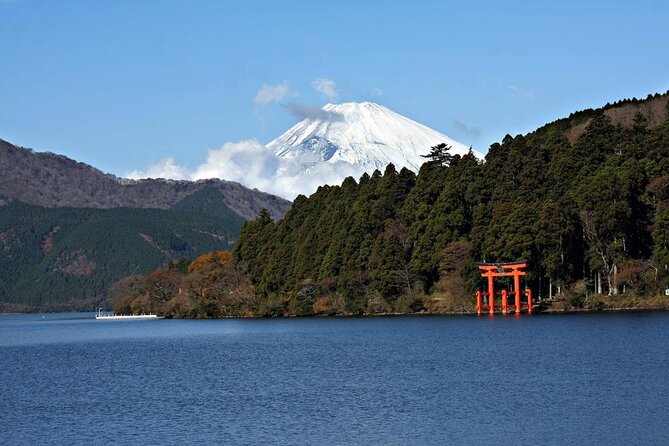
The big idea is simple: Hakone is spread out. Without a guide, you’d likely waste time stitching together the train, ropeways, boat, and return. With this setup, you get a guided itinerary that moves you through the best-known scenery: volcanic Owakudani, Lake Ashi views, and a shrine stop at an easy walking pace.
And yes, there’s plenty of transit variety. If you like traveling by rail and cableways, this day will feel like a greatest-hits playlist.
The 8:30 Hotel Pickup and the “Start Here” Comfort Factor
You do not have to negotiate Tokyo’s transit chaos before breakfast. Pickup is described as being from your hotel lobby in the Tokyo 23 wards, and the tour is structured around that clean start.
From there, the route moves you toward Tokyo or Shinagawa to catch the Shinkansen. This matters more than it sounds. If you are traveling in a group and you arrive late to the station, the whole day can wobble. Here, the schedule is set up so you can relax and follow the plan.
Also, you’ll have a professional guide throughout, so you’re not just riding. You get commentary while you move between regions.
Shinkansen to Odawara: Fast, Not Rushed
The Shinkansen leg runs at about 260 km/h, and it is noted as not being the fastest option. That detail is actually useful: it suggests the timetable is chosen for connections that fit the rest of the day, not just maximum speed.
You board around 9:26 am from Tokyo or Shinagawa to Odawara. Then you transfer to a train to Hakone Yumoto arriving at about 10:13 am.
Why I like this structure: it keeps the day moving but avoids the classic trap of “the fastest train, but no time to breathe.” You’re building toward the mountain part of the day, so arriving without stress helps you enjoy the views instead of just surviving the schedule.
Hakone Yumoto to Gora by Mountain Train: Countryside Time
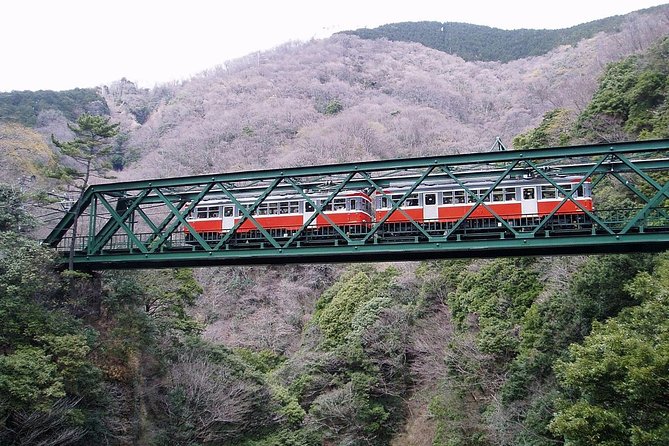
Once you reach Hakone Yumoto, the scenery starts changing right away. You take a mountain train from Hakone Yumoto to Gora, about 40 minutes through valleys.
This segment is more than a commute. It is your first real taste of the Hakone landscape rhythm. And seasonally, there’s a standout: from the middle of June to the middle of July, hydrangeas along the line are known to be beautiful.
Practical tip for this part of the day: if you care about views, treat this as your “look up and out the window” stretch. The train ride is one of the most natural-feeling moments in the schedule, especially compared with the fixed station-to-station hustle.





Ropeway to Owakudani: Volcanic Views and the Famous Black Eggs
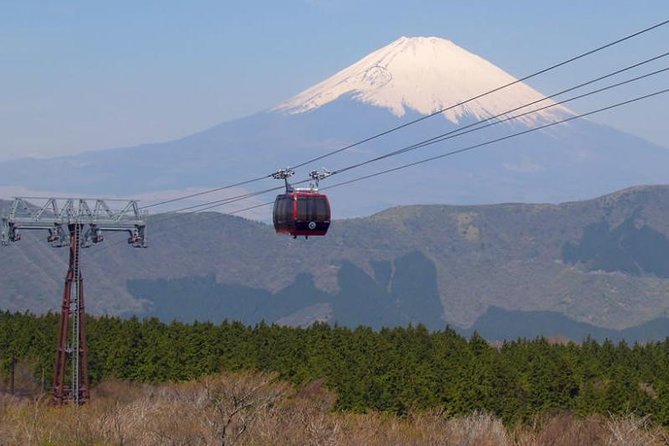
Next comes the headline act: Owakudani. You go from Gora to Owakudani by cable car and ropeway for about 20 minutes.
On a sunny day, you can often enjoy Mt. Fuji views from this ropeway area. That is the kind of payoff you can’t fully plan on, because visibility depends on conditions. The tour notes odds rise to around 80% in winter and drop to less than 30% in summer. So if Fuji is a top priority, timing matters.
Then you stroll Owakudani for about one hour. This is where the volcanic landscape is front and center: you see active volcanic features, and the area is famous for black eggs boiled in bubbling pools.
This hour is also a good pace check. You’re not rushed like a museum stop. You can pause for photos, walk the paths at a human rhythm, and take in the strange, dramatic heat-country atmosphere.
Lake Ashi by Ropeway and Boat Cruise: The Scenic Reset
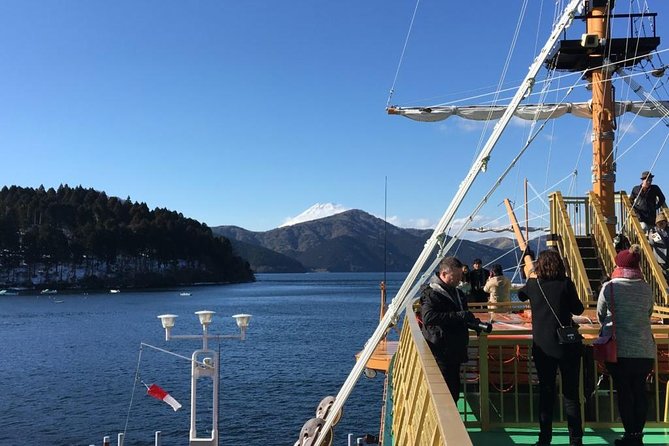
After Owakudani, it’s another ropeway ride down to Lake Ashi for about 20 minutes. This transition is a nice reset. The volcanic world gives way to a softer, water-and-mountain look.
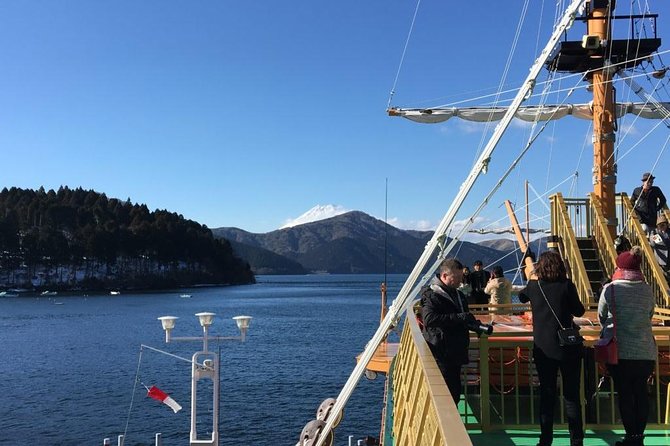
From there, you cruise on Lake Ashi for about 30 minutes. If you like a themed twist, the ride has been described as a pirate ship on the lake. Either way, it’s one of those segments where the guide commentary plus the moving scenery helps the time feel worthwhile.
After the boat, you stroll the Hakone shrine area. It’s a compact add-on compared with the rest of the day, but it gives you a break from transport time and adds a classic Hakone cultural stop to the mix.
One thing to keep in mind: if natural hazards like snow or strong winds show up in the forecast, the ropeway and the Lake Ashi cruise can be suspended or not run as scheduled. That risk is real in mountain regions, and this tour openly warns you about it.
Returning to Tokyo: 4:30 pm Gets You Home Without Losing the Day
The return is efficient. You take a bus from Lake Ashi to Odawara at about 4:30 pm, then catch the Shinkansen around 5:42 pm back to Tokyo or Shinagawa. You arrive at roughly 6:16 pm, then head back to your hotel.
What I like about ending this way is that the day doesn’t collapse into chaos at the end. You get a clear cut-off. Even with a busy itinerary, the timeline is designed to get you home before evening becomes a problem.
Weather Reality: How to Think About Fuji, Ropeways, and the Boat
Hakone is gorgeous, but it is also weather-controlled. The tour notes that Mt. Fuji viewing depends on season and that ropeway and cruising can stop when forecasts call for snow or strong winds.
This isn’t just “bad luck.” It is how mountain travel works. When conditions change, the guide has to adjust on the spot so you still experience the core of Hakone.
In past days, the guide has reportedly handled situations where the cable car and boat could not run, rearranging activities so the day remained enjoyable rather than turning into disappointment. That is exactly what you want in a guided format: someone who can flex the plan without leaving you stranded.
My advice: treat Mt. Fuji as a bonus, not a guarantee. If you plan emotionally for volcanic views and Lake Ashi scenery rather than only the idea of Fuji, you’ll have a better day when visibility is muted.
Price and Value: What You’re Paying For (and What You Still Need)
At $208.49 per person, this is not a budget day trip. But the cost makes sense when you compare it to the value of a guide-led, multi-transport route with pickup and drop-off.
What’s included:
- Professional guide
- Private tour (your group only)
- Hotel lobby meeting (Tokyo 23 wards)
- Pickup and drop-off are part of the “no transport to organize” promise
What’s not included:
- Shinkansen transportation cost (listed as a 2-way discount ticket): 6,560 JPY per person
- Hakone free pass: 6,000 JPY per person
- Admission fees
- Lunch
Here’s the practical way to look at it: you’re paying for the orchestration. You still budget for the main transport pass costs and meals, but you’re not paying to have someone simply hand you directions. You’re paying so the day runs in the correct order, with commentary and schedule logic.
Also, the tour’s small group size (maximum 5 people) helps value feel more direct. Even in a “private” model, very small groups can reduce waiting and make the guide’s time feel more personal.
Guide Quality Is the Secret Sauce Here
The strongest praise for this tour is the guides themselves. Names that have come up include Akira, Hideiki/Hideaki, and Yumiko (including Yumiko Sano).
What stands out is not just friendliness. It is the practical way guides handle logistics:
- helping you through the chain of trains and ropeways
- making sure you know what’s next
- adjusting plans when weather disrupts the schedule
- handling translation smoothly, including helping with ticket purchase steps when needed
If you care about getting from point A to point B without turning the trip into a stressful puzzle, this is a real advantage. In Hakone, tiny timing problems snowball fast. A capable guide keeps the day from getting messy.
Who Should Book This Hakone One-Day Tour?
This tour fits best if you:
- want a ready-made Hakone highlights checklist
- like rail travel and want to experience the day using several different transport modes
- prefer a small private group over larger bus tours
- would rather pay for guidance than spend your morning planning routes and passes
It might be less ideal if you:
- hate the idea of weather disrupting ropeways or the boat
- want a super slow pace with long independent wandering time
- are going only for one specific view (like guaranteed Mt. Fuji)
Also note: there is a moderate amount of walking. Bring comfortable shoes and keep your energy for the Owakudani hour and the shrine stroll.
Should You Book This One-Day Hakone Tour?
I’d book it if you want Hakone’s big experiences in a single day without DIY stress. The mix of Owakudani volcanic scenery, Lake Ashi boat time, and multiple transit types makes the itinerary feel full without being purely rushed.
I’d hesitate only if your whole trip depends on perfect conditions for Mt. Fuji or if you know you get cranky when plans must shift due to wind or snow. In that case, consider staying flexible or building in backup expectations.
For most people, the trade-off is worth it: you get a structured day, a helpful guide, and the kind of Hakone variety that is hard to recreate on your own in one afternoon.
FAQ
What is the duration of the Hakone one-day tour from Tokyo?
The tour runs about 10 hours.
Does this tour include hotel pickup and drop-off?
Yes. Hotel pickup and drop-off are included, and the meeting in the hotel lobby is specified for Tokyo 23 wards.
What transport will I use during the day?
You’ll use a Shinkansen bullet train, a train to Hakone Yumoto, a mountain train, a cable car/ropeway, a ropeway again, a cruise on Lake Ashi, and a bus for the return to Odawara.
What extra costs should I expect to pay on the day?
Shinkansen transportation is listed as 6,560 JPY per person for a 2-way discount ticket, and the Hakone free pass is listed as 6,000 JPY per person. Admission fees and lunch are not included.
What happens if the ropeway or Lake Ashi cruise can’t operate?
The ropeway and cruising at Lake Ashi can be suspended or unable to operate as scheduled if natural hazards like snow or strong winds are forecast.
How big is the group for this private tour?
It is a private tour with a maximum group size of 5 people. Only your group will participate.
More Tour Reviews in Tokyo



Fresh reviews from around Tokyo






Tokyo, compared.
 ★ 5.0Mt Fuji and Hakone 1-Day Bus Tour Return by Bullet TrainFrom $16326,383 reviews
 ★ 5.01-Day Tokyo Bus TourFrom $12914,250 reviews
 ★ 4.6teamLab Planets TOKYO Digital Art Museum Entry TicketFrom $259,779 reviews
 ★ 4.0Mt Fuji & Hakone Cruise, Drum Show Bullet Train 1 Day from TokyoFrom $1497,413 reviews
 ★ 5.0Shinjuku Food Tour (13 Dishes at 4 Local Eateries)From $866,603 reviews
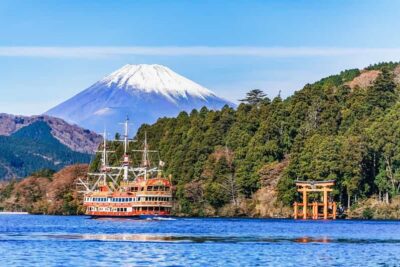 ★ 4.4Tokyo Mt Fuji 5th St & Hakone Cruise Bus Tour w/Bullet TrainFrom $1545,024 reviews
 ★ 5.0Flagship 2-Hours Official Street Go-Kart Tour – Tokyo Bay ShopFrom $644,974 reviews
 ★ 4.5From Tokyo: Mount Fuji Full-Day Sightseeing TripFrom $684,970 reviews