
Reviewed · TOKYO
Create Your Own Party Sushi Platter in Tokyo
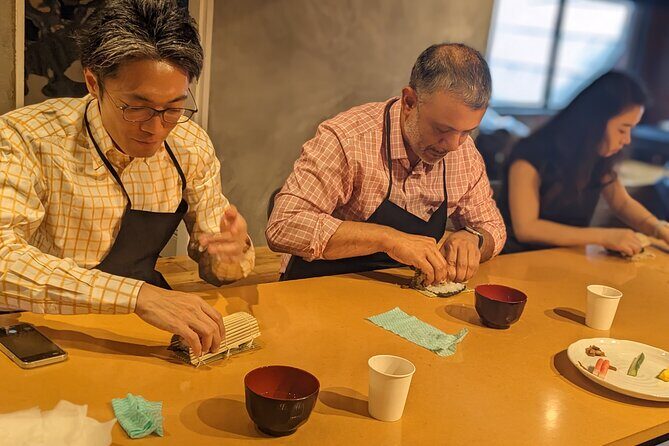
Sushi and teamwork. It is a short class, but it hits the fun part of Tokyo: hands-on food, very clear instruction, and results you can actually serve at a party. You’ll learn futomaki and temari sushi from scratch—two styles known for their party-friendly looks and celebratory feel in Japan.
I especially like that the class goes beyond sushi. You’ll also make Japanese home dishes like miso soup and tamagoyaki, so you leave with more than one trick. And because the teaching is in English with instructors working side by side, the pace feels friendly instead of stressful.
One thing to consider: this experience has a minimum group size (4 people per booking) and it is non-refundable. If your schedule is shaky, it is worth double-checking dates before you pay.
In This Review
- Quick Highlights
- Why Futomaki and Temari Sushi Feel Like Party Magic
- What You’ll Cook in This 2-Hour Class (Sushi Plus Home-Style Staples)
- The Learning Flow: How the Session Usually Runs
- Lunch Included Means You Actually Get to Taste the Results
- Price and Value: What $100.73 Really Buys You
- Group Size and Vibe: Built for Friends and Team Energy
- Skills You Can Reuse: What to Take Home Beyond the Meal
- Practical Tips Before You Go
- Who This Class Is Best For
- Should You Book This Sushi Platter Class?
- FAQ
- Where does the class start and end?
- What time does it start and how long does it last?
- What dishes will I learn to make?
- Is lunch included?
- Are instructors able to teach in English?
- What group size should I expect?
- Do I need private transportation?
- What is the cancellation policy?
Quick Highlights
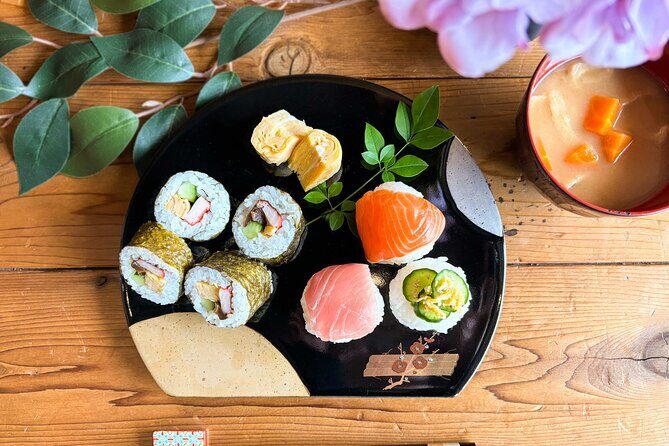
- Futomaki and temari, built from scratch (and made for sharing)
- English-speaking instructors working side by side with you
- Miso soup and tamagoyaki round out your Japanese home cooking skills
- Lunch included, so you get to eat what you make
- Small-to-medium group size with a max of 40 people
Before you commit, see how this one stacks up against a few Tokyo favourites:
- Mt Fuji and Hakone 1-Day Bus Tour Return by Bullet Train★ 5.0 · 26,383 reviews
- 1-Day Tokyo Bus Tour★ 5.0 · 14,250 reviews
- Tokyo: teamLab Planets TOKYO Digital Art Museum Entry Ticket★ 4.6 · 9,779 reviews
Why Futomaki and Temari Sushi Feel Like Party Magic
Sushi in Tokyo is not just about one roll. Futomaki is a thick roll topped with sushi rice and multiple ingredients, wrapped on nori. Temari-sushi is the opposite vibe: round bites of formed rice topped with sashimi and vegetables. Both have that clean, pretty look that makes them natural for gatherings.
What I like is the built-in logic: thick rolls and round rice bites are easier to plan for parties than a plate of random pieces. You can picture the platter. You can picture who gets what. And you get to understand how Japanese cooks think about presentation, not just flavor.
This class leans hard into that celebratory angle too. In Japan, futomaki and temari-sushi are commonly associated with happy occasions. That context matters because you’re not just learning recipes—you’re learning food culture.
What You’ll Cook in This 2-Hour Class (Sushi Plus Home-Style Staples)
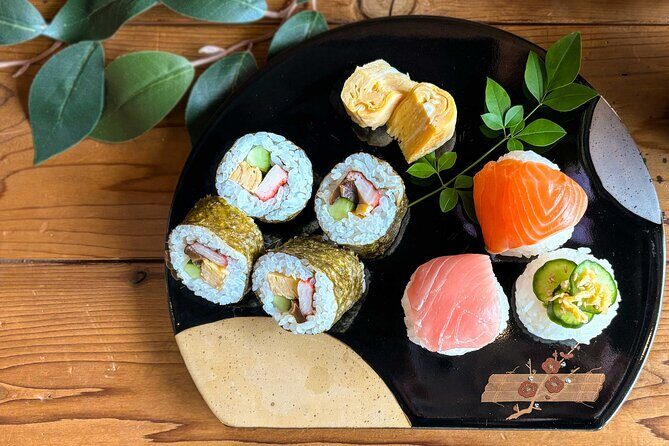
The core of the experience is futomaki and temari sushi, made from scratch. You start from the basics of each style and work through the steps with instructor help. Since you’re creating two different types, you get a broader view of how sushi can look and be assembled in very different ways.
Then you add two kitchen staples that many Japanese households know by heart:
- Miso soup: a simple comfort dish that shows up all over Japan.
- Tamagoyaki (Japanese rolled omelet): sweet-savory omelet with that signature rolled shape.
The payoff here is practical. If all you learn is a sushi roll, your cooking at home can feel limited. If you also learn miso soup and tamagoyaki, you can build a full, satisfying Japanese-style meal.
And because the lesson is designed for people to learn carefully, the instruction is paced so you can keep up. You’re not just watching someone else work.
The Learning Flow: How the Session Usually Runs
You’re starting in Minato City, Tokyo at 11:30 am, and the whole experience runs about 2 hours. You end back at the meeting point, so it stays easy to slot into your day without complicated logistics.
Inside the time window, expect a sequence like this: instruction first, hands-on practice next, then finishing and plating your food. Since the class includes sushi plus miso soup and tamagoyaki, you’ll likely rotate tasks so you get time with each dish type. The big benefit is that you get direct help while you’re doing the work, not after it’s all done.
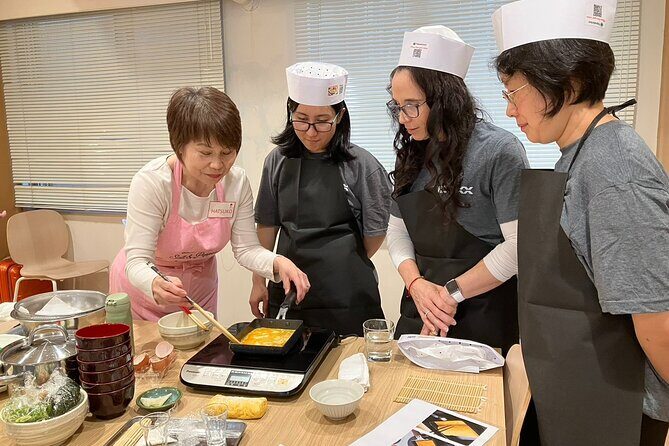
Also, the class is set up so English-speaking instructors support you side by side with chats and care. That matters more than people think. When you can ask small questions in plain English while your hands are actually moving, you learn faster and make fewer mistakes.
Lunch Included Means You Actually Get to Taste the Results
This isn’t one of those classes where you cook for show and then eat something else. Lunch is included, and the ingredients are included too. The whole point is that you learn how to make these items and then enjoy them.
That turns the class into a real meal experience, not a snack demo. You’ll likely eat the sushi you made and sit down with the broader dishes you prepared, like miso soup and tamagoyaki.
If you are traveling with friends, this part is extra satisfying. You don’t just trade photos—you trade opinions on what turned out best. And you leave with a platter idea for your next get-together.





Price and Value: What $100.73 Really Buys You
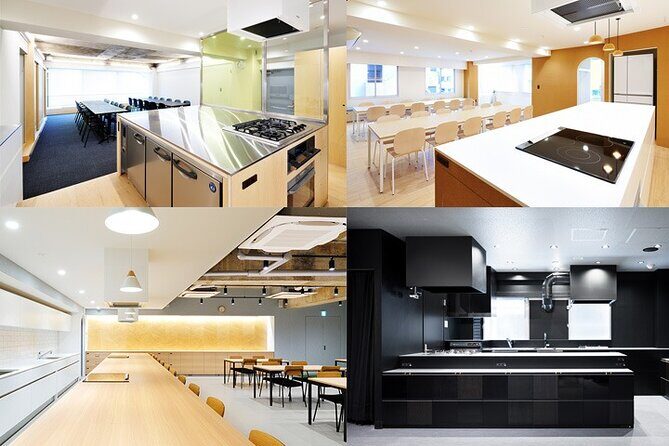
At $100.73 per person, the value depends on two things: you get hands-on instruction and you get to eat your own food. The cost also includes lunch, cooking experience, and ingredients.
In Tokyo, that combination is usually where cooking classes earn their keep. If you had to buy all the ingredients on your own and then pay for a teacher, the total adds up quickly. Here, the “teacher plus groceries plus your meal” package is the deal.
The one item not included is private transportation. That means you’ll want to plan how you’ll reach Minato City on your own. The good news is that because the meeting point is in Minato and you return there, you don’t need to coordinate a complex end-of-tour trip.
So if you want value in the real-world sense—money that turns into a meal and skills you can repeat later—this is strong.
Group Size and Vibe: Built for Friends and Team Energy
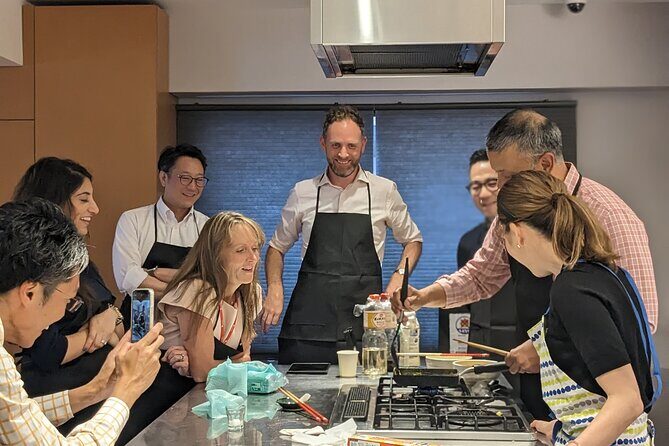
The class has a maximum of 40 people, and it requires a minimum of 4 people per booking. That tends to create a lively room without turning it into chaos.
The review summaries point to a key benefit: the class feels fun in a team-building way. People go in with friends, learn together, and end up eating lunch that they made themselves. That shared work—hands on, rolling and forming, then plating—naturally creates conversation.
Also, the instructors’ support style seems to matter. Several comments mention the facilitators being kind and making everyone happy. You can feel that difference when the teaching is side by side and in English. It lowers the fear factor for people who do not cook often.
Skills You Can Reuse: What to Take Home Beyond the Meal
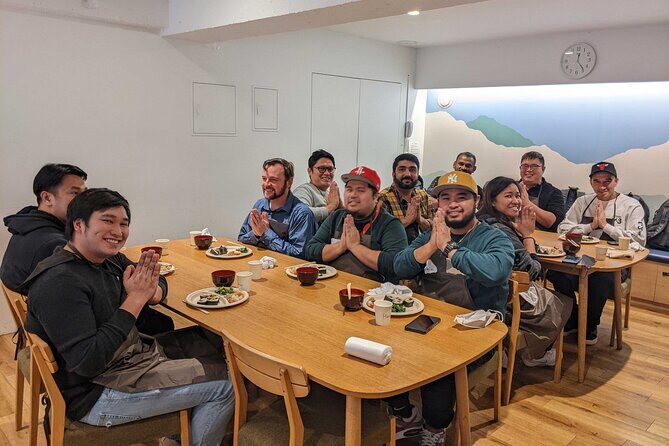
You’ll leave knowing how futomaki and temari sushi are built, not just how they taste. That makes a difference if you want to cook at home later.
Here is the useful takeaway I see from this kind of class structure:
- You understand the visual forms: thick roll versus formed rice bite.
- You learn the assembly idea: sushi is as much about arrangement as ingredients.
- You gain a Japanese home cooking baseline with miso soup and tamagoyaki.
Even if you never make a perfect restaurant-style platter again, you’ll still be able to put together something that looks intentional and tastes like the real thing.
And if you want to throw a sushi-themed party at home, this is exactly the kind of class that gives you a starting plan. Thick rolls and round bites are party-friendly because they are portionable and good-looking.
Practical Tips Before You Go
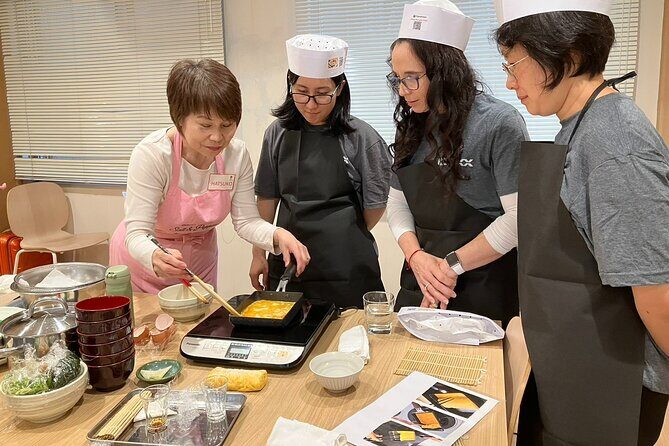
A few common-sense things will make your 2-hour session smoother:
- Wear clothes that feel fine if you get a little rice or sauce on them. Cooking classes are not lab coats.
- Come hungry. You’re paying for lunch that you make, not a tiny tasting.
- If you have any food restrictions, ask about ingredients in advance. The class includes ingredients, so it’s best to confirm what will be used.
- Bring a good attitude about hands-on work. Part of the charm is that it’s interactive, not spectator-only.
Who This Class Is Best For
This is a smart fit if you want:
- a social experience with friends
- an English-friendly cooking lesson
- sushi learning that starts from scratch
- a class that leads into a real lunch meal
It also works well for people who like Tokyo experiences that feel specific, not generic. This one is tied to Japanese home cooking and party foods, which makes it more memorable than a quick eat-and-leave stop.
If you enjoy making things with your hands, you’ll get extra value. And if you want something that feels authentic without requiring you to already know sushi technique, you’re in the right place.
Should You Book This Sushi Platter Class?
If you want a fun, hands-on Tokyo experience where you make futomaki, temari, and also Japanese comfort dishes like miso soup and tamagoyaki, I’d book it. The price makes sense because it includes lunch, ingredients, and real instruction, not just a demonstration.
I would only hesitate if your dates are fragile. The minimum group size means the class can be canceled if it does not meet demand, and it is non-refundable. If your schedule is stable, this is a high-likelihood win: you’ll leave with a filled stomach, new skills, and a sushi party plan you can actually use.
FAQ
Where does the class start and end?
The experience starts in Minato City, Tokyo, Japan, and it ends back at the meeting point.
What time does it start and how long does it last?
The start time is 11:30 am, and the duration is approximately 2 hours.
What dishes will I learn to make?
You will learn futomaki and temari sushi, plus Japanese home-style recipes like miso soup and tamagoyaki.
Is lunch included?
Yes. Lunch is included, along with the cooking experience and ingredients.
Are instructors able to teach in English?
Yes. The class uses English-speaking instructors who support you side by side.
What group size should I expect?
There is a minimum of 4 people per booking, and the experience has a maximum of 40 people.
Do I need private transportation?
Private transportation is not included, so you’ll need to arrange your own way to the meeting point.
What is the cancellation policy?
The experience is non-refundable and cannot be changed for any reason. If it’s canceled because the minimum number of people is not met, you’ll be offered a different date or a full refund.
More Tour Reviews in Tokyo



Fresh reviews from around Tokyo






Tokyo, compared.
 ★ 5.0Mt Fuji and Hakone 1-Day Bus Tour Return by Bullet TrainFrom $16326,383 reviews
 ★ 5.01-Day Tokyo Bus TourFrom $12914,250 reviews
 ★ 4.6teamLab Planets TOKYO Digital Art Museum Entry TicketFrom $259,779 reviews
 ★ 4.0Mt Fuji & Hakone Cruise, Drum Show Bullet Train 1 Day from TokyoFrom $1497,413 reviews
 ★ 5.0Shinjuku Food Tour (13 Dishes at 4 Local Eateries)From $866,603 reviews
 ★ 4.4Tokyo Mt Fuji 5th St & Hakone Cruise Bus Tour w/Bullet TrainFrom $1545,024 reviews
 ★ 5.0Flagship 2-Hours Official Street Go-Kart Tour – Tokyo Bay ShopFrom $644,974 reviews
 ★ 4.5From Tokyo: Mount Fuji Full-Day Sightseeing TripFrom $684,970 reviews