
Reviewed · TOKYO
Craft Your Own Elegant Handmade Chopsticks from Scratch
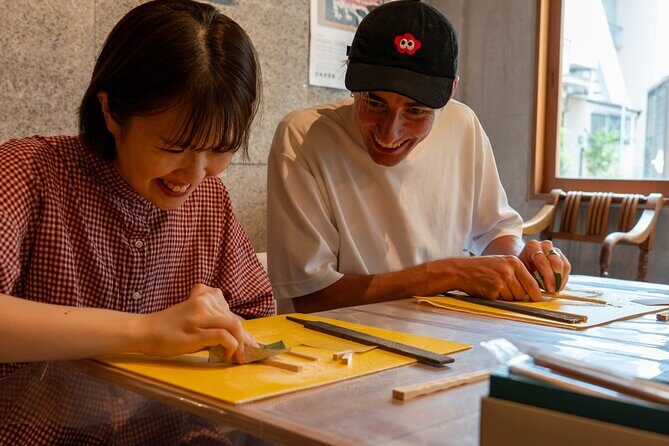
A quiet workshop and a seriously useful souvenir. This chopstick-making experience takes place in Sasazuka, Tokyo, just a short train ride from Shinjuku, where a craftsman guides you step by step. You’ll learn not only how to shape chopsticks, but also how Japanese chopsticks connect to different foods and everyday life.
I especially like the hands-on pace: you get time to shape, refine, and finish your pair so it matches how you eat. I also like the optional lacquer-coating segment, including a tour of a lacquer workshop that’s usually off-limits, so you see another layer of Japanese craft culture up close.
One drawback to consider: the lacquer part is optional, and the whole experience is about 2 hours total. If you’re short on time or tired after a day of sightseeing, you’ll want to choose your focus carefully.
In This Review
- Key Chopstick-Making Takeaways
- Handmade Chopsticks in a Quiet Sasazuka Workshop
- Getting There: Sasazuka Station to Kakehashi
- 55 Minutes of Carving: Shaping Chopsticks to Feel Right
- History and Food Logic: Why Chopsticks Aren’t One-Size-Fits-All
- Optional Lacquer Coating: A Rare Peek Behind the Scenes
- What You Take Home: Your Pair of Custom Chopsticks
- Price and Timing: Is $97.98 Good Value?
- Group Size and Guide Style: Small, Patient, and Supportive
- Who Should Book This Chopstick Workshop?
- Should You Book This Chopstick-Making Class?
- FAQ
- Where do I meet for the chopstick-making experience?
- How long does the experience take?
- What do I get to take home?
- Is the lacquer coating experience mandatory?
- Is there an English-speaking guide?
- How big is the group?
- Can I cancel for a full refund?
Key Chopstick-Making Takeaways
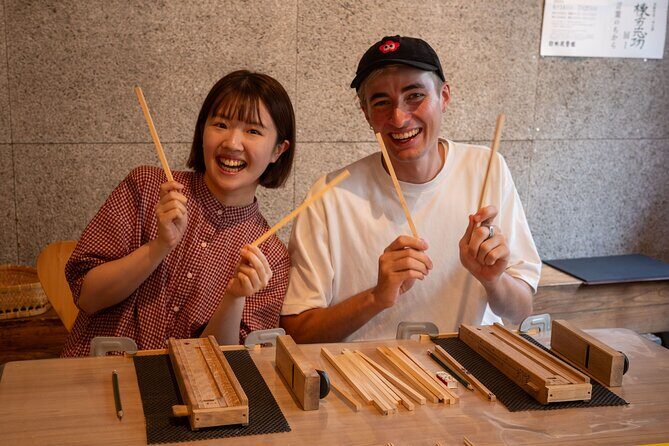
- Small-group instruction with a maximum of 6 travelers, so questions don’t get lost.
- Cypress/hinoki craftsmanship with a tailored finish using camellia oil.
- Creative control while still getting guided steps, so your chopsticks feel personal.
- History built into the process, including why different chopsticks suit different foods.
- Rare lacquer workshop access through an optional lacquer coating experience.
- A take-home keepsake: the chopsticks you make are yours to keep.
Before you commit, see how this one stacks up against a few Tokyo favourites:
- Mt Fuji and Hakone 1-Day Bus Tour Return by Bullet Train★ 5.0 · 26,383 reviews
- 1-Day Tokyo Bus Tour★ 5.0 · 14,250 reviews
- Tokyo: teamLab Planets TOKYO Digital Art Museum Entry Ticket★ 4.6 · 9,779 reviews
Handmade Chopsticks in a Quiet Sasazuka Workshop
Tokyo can feel loud. That’s why this kind of craft class hits differently. Instead of rushing through sights, you slow down in a workshop environment where the goal is right in front of you: carve, sand, and finish a pair of chopsticks.
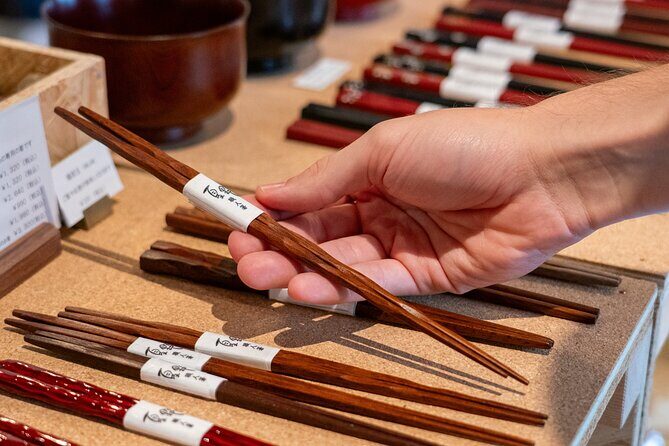
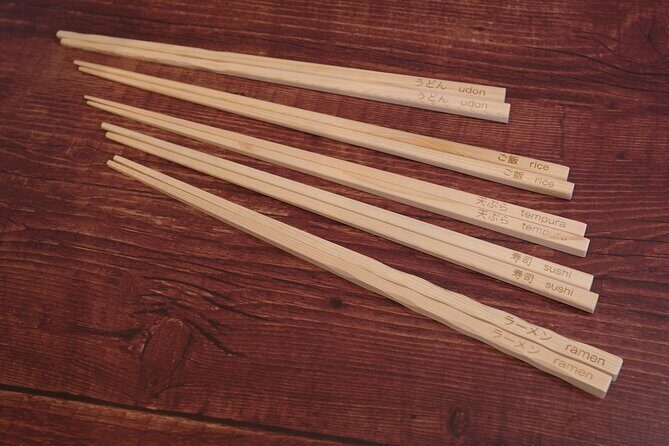
What makes it interesting is that it’s both a workshop and a shop. You don’t just learn theory on a worksheet; you can also see different types of chopsticks available, and you’ll hear how Japanese makers think about function for sushi, tempura, ramen, and more. The result is a class that teaches you to look at chopsticks as tools, not just utensils.
And yes, the souvenir is real. You end up with custom chopsticks you can use at home, not a postcard-sized token.
Getting There: Sasazuka Station to Kakehashi
You meet at Sasazuka Station, then you move to the store and workshop called Kakehashi with a guide (about 10 minutes). The location matters because Sasazuka is not the center of the tourist map, so the experience feels grounded in daily life rather than staged for visitors.
The workshop itself is described as being in a quiet neighborhood setting, which helps you focus. For many people, that alone is worth it: you’ll spend a chunk of your day not battling crowds, but learning a small, careful skill.
You’ll also want to plan for the schedule timing. The start time listed is 1:00 pm, and the whole experience runs about 2 hours (approx.). If you have dinner reservations later, plan on being done at the venue so you can get moving.
55 Minutes of Carving: Shaping Chopsticks to Feel Right
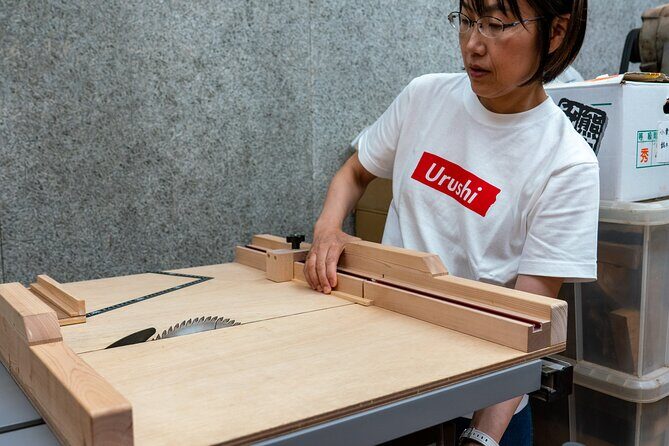
The core of the experience is carving your chopsticks from cypress wood (the highlights also mention hinoki). You’ll work with craftsmen’s tools and follow instruction in a steady sequence. The point isn’t speed; it’s control—making something smooth enough to use every day.
I like that the class treats your grip as part of the design. You’re guided to create chopstick shape with attention to how they’ll work for you, including refining the form with sandpaper. That’s a small detail, but it changes the whole value of the class. Most souvenirs don’t become part of your routine. Your chopsticks can.
You’ll also finish with camellia oil. That matters for two reasons: it’s part of the traditional process, and it helps your finished chopsticks feel ready to handle rather than raw and fragile.
Keep in mind this is still a workshop experience, so your hands will do the work. It’s not just watching someone else craft—so if you like practical activities, you’ll be in your element.
History and Food Logic: Why Chopsticks Aren’t One-Size-Fits-All
A good class teaches a skill. A great class teaches why the skill exists. This one does both.
You’ll learn background and history tied to chopsticks, and you’ll hear how many types of chopsticks exist in Japan. The experience connects those differences to the food they’re meant for—so sushi, tempura, and ramen aren’t random examples. It gives you a framework for understanding chopsticks as a tool category with design decisions behind it.
In the shop area, you can see different chopsticks on display, which makes the lesson easier to remember. Even if you don’t buy anything extra, seeing options helps you understand what you just learned: chopstick shape and grip are not just personal taste; they influence how you pick up food.
It’s also a helpful mindset shift if you’ve ever struggled with chopsticks. When you understand the design intent, you stop thinking it’s all technique and start noticing how the tool affects your success.





Optional Lacquer Coating: A Rare Peek Behind the Scenes
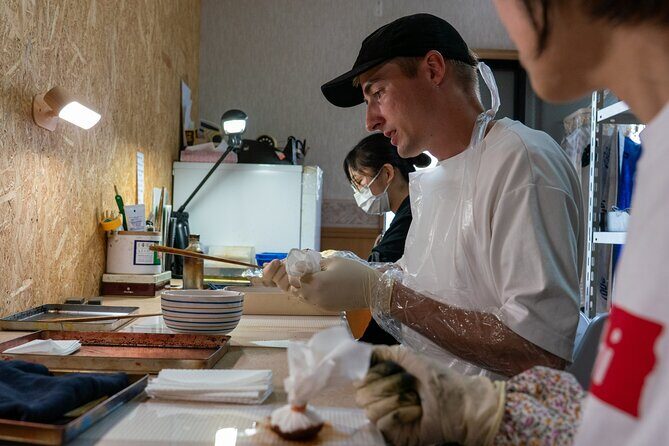
Then comes the optional segment: lacquer coating. If you choose it, you get more than a quick demo. The experience includes a tour of a lacquer workshop that’s normally off-limits, giving you a deeper look at lacquer culture.
This is the part that feels sensory. You’re in the workshop environment while craftsmen are working, and you’ll be able to experience the scent of lacquerware with your senses. That kind of detail sticks because it’s not something you can easily read in a guidebook.
Lacquer work also broadens the scope of what you thought the day would be. You start with chopsticks, but you end up understanding how lacquer crafts show up in shrines, temples, and daily life. It’s a satisfying “I didn’t expect that” payoff.
If you’re the type who loves craft processes—woods, finishes, how things are made—this lacquer option turns the class into something bigger than a one-off souvenir.
What You Take Home: Your Pair of Custom Chopsticks
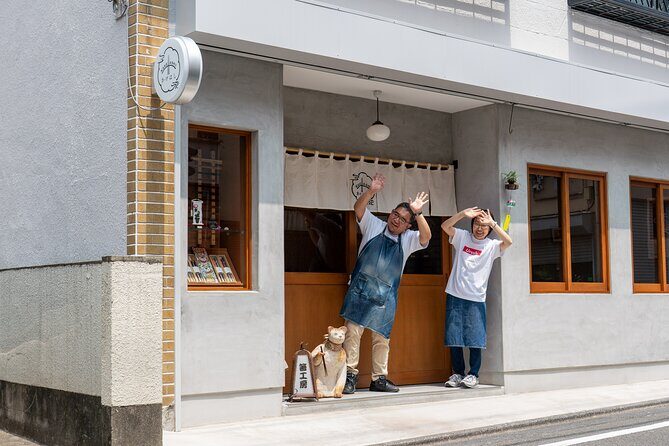
Included with the experience is your custom made chopsticks. That’s the centerpiece. The class is priced like a workshop, not like a museum ticket, and the take-home value is real.
Since your chopsticks are tailored to how you eat, they’re also more likely to get used after your trip. You’re not stuck with a gift you’ll feel guilty about unpacking. They can become your “Japan set” at home—especially nice if you’re cooking Japanese meals and want utensils that match the food style.
One small consideration: this is a workshop item made from wood and finished with oil. Treat them like the crafted objects they are. Don’t toss them into a drawer with metal tools. Give them some care, and they’ll last longer in everyday use.
Price and Timing: Is $97.98 Good Value?
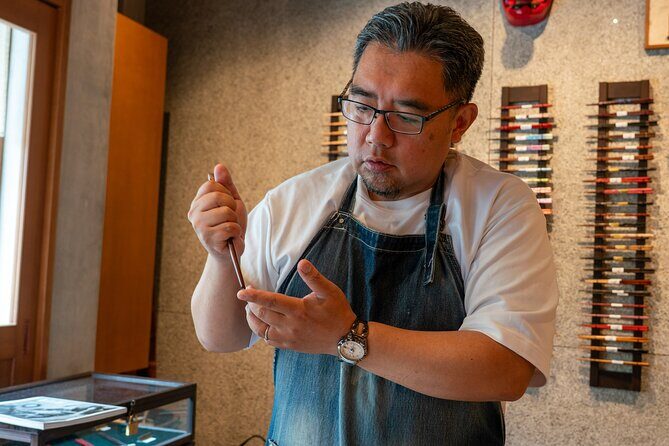
Let’s talk value plainly. At $97.98 per person, you’re paying for guided hands-on instruction, tools, materials, and the take-home chopsticks you create. You’re also paying for language support via an English-speaking guide, plus the option of a lacquer workshop visit if you choose that segment.
Does it compare to a standard “tour” activity? Not really. This isn’t sightseeing. It’s skill-building, and it ends with something you can physically use. For many people, that’s the whole point: the money becomes wood, finish, and a usable souvenir.
Group size helps justify the price too. With a maximum of 6 travelers, you’re less likely to feel like a number in a line. Small groups often lead to better feedback, and better feedback is what helps you actually get chopsticks you’ll enjoy using.
Timing matters as well. It’s about 2 hours, which is a good length for a craft class on a busy Tokyo schedule. You get a meaningful experience without losing an entire day.
Group Size and Guide Style: Small, Patient, and Supportive
The format is built for attention. The minimum is 2 travelers, and the maximum is 6, so you’ll usually have a calm, low-pressure setting. That matters in a craft workshop because the pace depends on your comfort and your hands.
A big advantage in your favor: there’s English-speaking support available. One guide name that comes up in the experience is Amy, and the translation support is described as making communication easy. That’s important because chopstick-making isn’t hard in the physical sense, but it is precise. Clear instructions make a huge difference.
Also, the instruction style is described as patient and supportive, with encouragement throughout. That kind of energy makes people more willing to try their own shape instead of playing it safe.
If you’ve ever worried you won’t be “good at crafts,” this is the kind of class where guidance helps you get to a finished result without needing prior skill.
Who Should Book This Chopstick Workshop?
This is a great fit if you like hands-on activities, small group formats, and practical souvenirs. You’ll probably enjoy it most if you care about Japanese craft culture and want to understand how everyday objects get designed for real use.
It’s also ideal if you’re traveling with someone who likes a shared activity. The setting is quiet and focused, so you can talk during breaks and bond over the process.
On the other hand, if you only want photos and quick checkmarks, a craft workshop might feel slower than you expect. The value is in making and learning, not in scanning for landmarks.
Should You Book This Chopstick-Making Class?
I’d book it if you want a Tokyo experience that gives you something tangible and teachable—chopsticks that match how you eat. The optional lacquer coating adds extra depth if you enjoy craft processes and rare access, and the small group size helps make the class feel personal without becoming chaotic.
I’d think twice if your schedule is tight or if you’d rather spend that time doing more standard sightseeing. Two hours is manageable, but it’s still time away from other plans—and lacquer is optional, so you should decide based on what you enjoy most: the woodworking craft, the finish, or the lacquer workshop access.
If you want one craft activity that feels authentic and useful for the long run, this is a strong bet.
FAQ
Where do I meet for the chopstick-making experience?
You meet at Sasazuka Station (address listed for Sasazuka, Shibuya, Tokyo). The experience ends back at the meeting point.
How long does the experience take?
The total duration is about 2 hours (approx.).
What do I get to take home?
You get to take home the custom made chopsticks you create during the workshop.
Is the lacquer coating experience mandatory?
No. Lacquer coating is optional and is offered as part of the session if you choose it, including a tour of a lacquer workshop that is normally off-limits.
Is there an English-speaking guide?
Yes. An English-speaking guide is available for greater accessibility.
How big is the group?
The experience runs with a maximum of 6 travelers and a minimum of 2.
Can I cancel for a full refund?
You can cancel for a full refund if you cancel at least 24 hours in advance of the experience start time.
More Tour Reviews in Tokyo



Fresh reviews from around Tokyo






Tokyo, compared.
 ★ 5.0Mt Fuji and Hakone 1-Day Bus Tour Return by Bullet TrainFrom $16326,383 reviews
 ★ 5.01-Day Tokyo Bus TourFrom $12914,250 reviews
 ★ 4.6teamLab Planets TOKYO Digital Art Museum Entry TicketFrom $259,779 reviews
 ★ 4.0Mt Fuji & Hakone Cruise, Drum Show Bullet Train 1 Day from TokyoFrom $1497,413 reviews
 ★ 5.0Shinjuku Food Tour (13 Dishes at 4 Local Eateries)From $866,603 reviews
 ★ 4.4Tokyo Mt Fuji 5th St & Hakone Cruise Bus Tour w/Bullet TrainFrom $1545,024 reviews
 ★ 5.0Flagship 2-Hours Official Street Go-Kart Tour – Tokyo Bay ShopFrom $644,974 reviews
 ★ 4.5From Tokyo: Mount Fuji Full-Day Sightseeing TripFrom $684,970 reviews