
Reviewed · TOKYO
Can Am Ryker Cruising in Asakusa Adventure
Tokyo on two wheels is a different world.
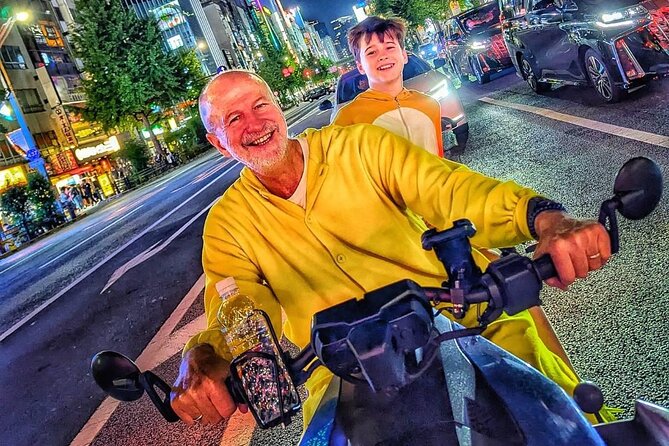
This Can-Am Ryker cruising adventure is built for people who want real sightseeing without the hassle of route planning. You meet your guide for a quick safety talk, hop on a 2-seater bike (driver and passenger), and then follow along as the city slides by. I love that the route hits both famous landmarks and everyday neighborhoods, and I also like that the pace stays manageable because you’re always guided and never stuck figuring out where to go next.
There is one important consideration: the driver needs an International Driving Permit (IDP) that’s valid under the 1949 Geneva Convention. The passenger is not the one with the IDP requirement, but you’ll want to confirm you’re set before arriving, since this is a ride-focused tour and check-in starts early.
In This Review
- Key Things You’ll Notice About This Asakusa Can-Am Tour
- Why a Can-Am 2-Seater Tour Works So Well in Asakusa
- Price and Value: What $228.94 Gets You (Up to 2)
- Getting Set Up: Check-In Timing, Mobile Ticket, and the IDP Rule
- Route Highlights: SkyTree Views and a Quick Look at Sumo District
- Akihabara and Ueno: Pop Culture Stops and Park-Quiet Contrasts
- Sensoji Temple from a Bike: Old Tokyo Without the Long Weave
- Nihonbashi and the Business District Contrast That Makes the Tour Feel Complete
- What the 1-Hour Timing Feels Like (and How to Get the Most Out of It)
- Small Group, Friendly Guidance: Names You Might Hear
- Who Should Book This Asakusa Can-Am Adventure
- Should You Book It From Asakusa or Skip?
- FAQ
- FAQ
- How long is the Can-Am bike tour in Asakusa?
- How many people can join this tour?
- What type of bike is used on the tour?
- Does only the driver need an International Driving Permit?
- Where do I meet for the tour?
- Where does the tour end?
- What are some of the stops on the route?
- Is a mobile ticket used?
- What if the weather is poor?
Key Things You’ll Notice About This Asakusa Can-Am Tour
- A guide-led ride that takes the stress out of navigation
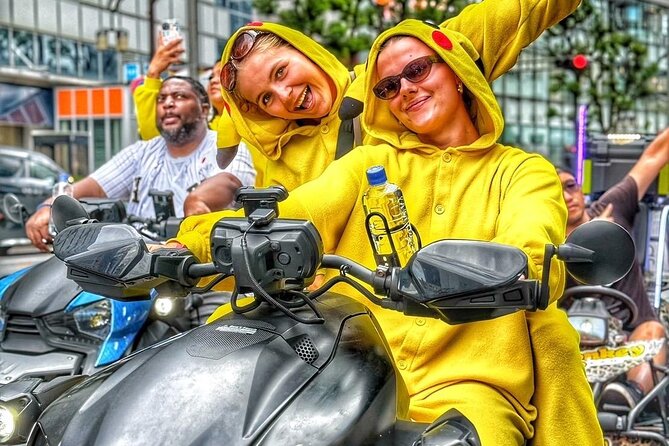
- 2-seater Can-Am Ryker setup (driver + passenger) for close-up city views
- SkyTree, Akihabara, Ueno, Sensoji, and Nihonbashi in one tight circuit
- Sumida City emphasis, with stops that feel local, not just postcard-tour
- Small group size with a max of 2 travelers
- Mobile ticket and a “meet and ride” flow that keeps things simple
Before you commit, see how this one stacks up against a few Tokyo favourites:
- Mt Fuji and Hakone 1-Day Bus Tour Return by Bullet Train★ 5.0 · 26,383 reviews
- 1-Day Tokyo Bus Tour★ 5.0 · 14,250 reviews
- Tokyo: teamLab Planets TOKYO Digital Art Museum Entry Ticket★ 4.6 · 9,779 reviews
Why a Can-Am 2-Seater Tour Works So Well in Asakusa
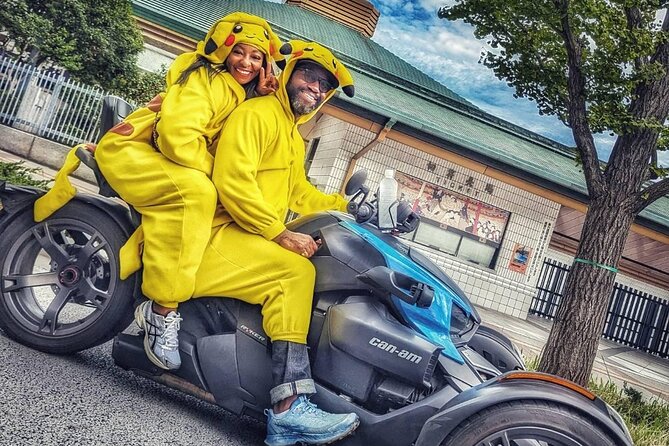
Asakusa is a great base for this kind of tour because the neighborhoods feel layered. You get classic Tokyo at street level, then you can roll into districts that look nothing like it. The Can-Am setup makes that contrast easy to experience. You’re not just looking at maps; you’re moving through the city in a way that naturally pulls your attention forward.
The big win here is that the guide does the steering of the plan. You’re not trying to read signs while keeping track of traffic. Instead, you follow the group. That matters in Tokyo, where getting from point A to point B can be straightforward but still mentally tiring. With a guide, you spend your energy on what you came for: the sights.
I also like that this tour is designed for short attention spans and time limits. In about 1 hour, you cover enough variety that you’ll feel like you did something memorable, not just a long wait punctuated by one photo stop. It’s a “hit the highlights and feel the city” format.
Price and Value: What $228.94 Gets You (Up to 2)
The price is listed as $228.94 per group for up to 2 people, and that’s actually the key to understanding value. This isn’t priced like a solo activity where you’re paying mostly for your own seat on a bus. You’re paying for the bike experience plus the guided route and the stops.
So the real question for you is: are you going with one other person? If yes, this can be a strong use of time because you’re turning two sightseeing itineraries into one shared ride. Even if you’re not splitting cost because you’re traveling solo, you’re still buying a one-hour “Tokyo from the inside” experience that’s hard to replicate on your own without figuring out equipment, routes, and logistics.
If you’re weighing it against doing everything by train, remember this: trains are efficient. They’re also slow when you’re trying to experience multiple districts fast. This tour trades some efficiency for atmosphere. You get movement, close-up street energy, and views you can’t fully recreate while standing still.
Getting Set Up: Check-In Timing, Mobile Ticket, and the IDP Rule
Plan on arriving early. The tour asks you to be there at least 20 minutes before your scheduled time for check-in and preparation. That’s not just a formality; it gives you time to understand the bike setup and get comfortable before you start riding.
You’ll also want to make sure your paperwork is correct for the bike. Here’s the rule that matters most: only the driver needs a valid International Driving Permit (IDP), and it needs to be valid based on the 1949 Geneva Convention. If you’re counting on riding as the passenger, you’re still part of the experience, but don’t assume that means no IDP is needed at all. Make sure the person driving has the right permit.
The tour uses a mobile ticket, and the meeting point is described as being near public transportation. That’s good news because you’re not hunting across Tokyo without a backup plan. You’ll meet at Monkey-kart Asakusa shop at 130-0003, Tokyo, Sumida City, Yokokawa, 4-chōme 9-9 (the Monkey-kart Asakusa location).
Route Highlights: SkyTree Views and a Quick Look at Sumo District
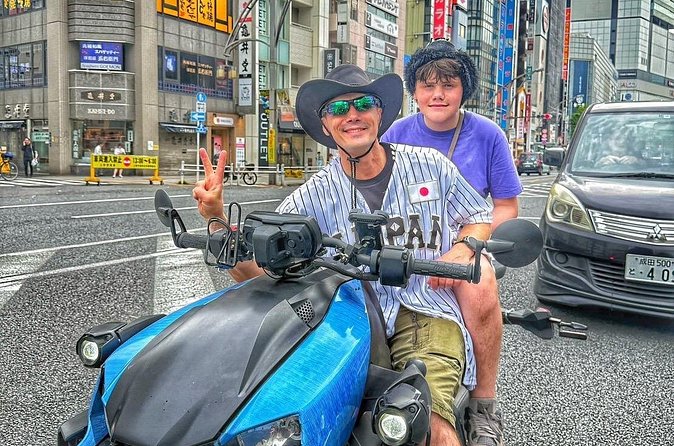
The ride starts with the kind of visual payoff that makes you want to keep looking forward. One of the first major takeaways is a chance to enjoy the view of Tokyo Sky Tree, the towering landmark with its distinctive design. Even if you’ve already seen SkyTree on a photo search, seeing it while moving matters. The perspective feels bigger, and it helps orient you in Tokyo fast.
From there, the tour continues with a stop that gives Tokyo a different flavor: a sumo district area. If you’re lucky, you may spot a sumo wrestler as you pass by the picturesque stadium. You shouldn’t plan your day around a guaranteed encounter, but it’s still a great inclusion because it points you toward a part of Tokyo culture that’s easy to miss if you only chase shopping streets and famous temples.
A practical note for this section: because this is a riding tour, your time at each viewpoint is limited. You’ll want to keep your camera ready but not frantic. Focus on getting one good shot, then enjoy watching the neighborhood flow by.





Akihabara and Ueno: Pop Culture Stops and Park-Quiet Contrasts
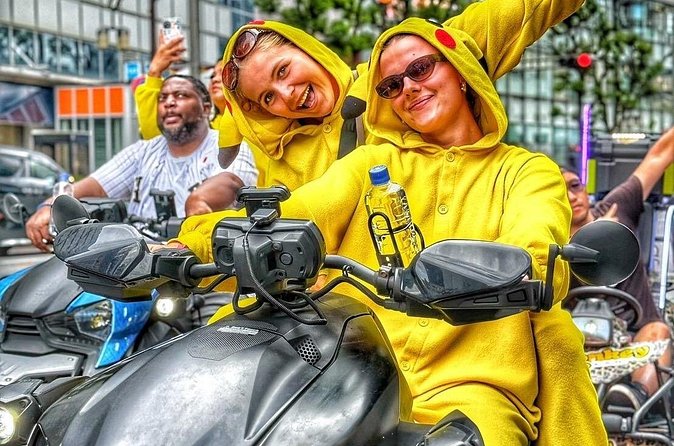
One of the most fun parts of this tour is the Akihabara portion. This is where the city leans into anime and manga icons, and where you can see cosplayers on sidewalks. It’s the kind of place where your eyes keep changing direction, even if you’ve already heard about it. Riding through it makes the whole subculture feel more present. You see more than one theme at once: storefront energy, people in costume, and the sense that this is a district with its own rules.
Not every stop feels loud though. Then you shift toward Ueno, which is described as having a uniquely Japanese atmosphere and big parks overflowing with nature. That contrast is smart. It prevents the tour from becoming one long “theme park of sights.” Instead, you get a change of mood. Parks tend to slow your senses down a bit, even when you’re moving by bike.
Possible drawback here: if you’re someone who likes to linger and walk around, this format will feel too fast for you. The upside is that you’ll cover variety without burning half your day. If you want deeper exploration, use the ride as a sampler, then go back later to the exact place that grabs you.
Sensoji Temple from a Bike: Old Tokyo Without the Long Weave
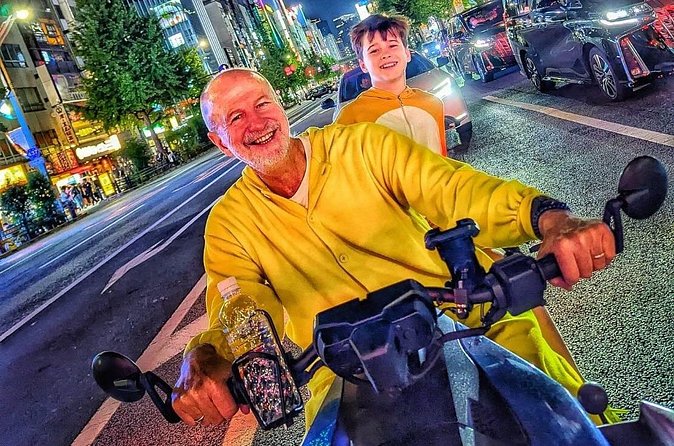
The most iconic landmark stop on the route is Sensoji Temple. You get it as a major payoff, and the idea is clear: its street scene gives you a real sense of old Tokyo. Even if you’re short on time in Asakusa, this kind of introduction helps you understand why so many people come back again and again.
The temple area is famous for being busy and visually intense, so seeing it from the perspective of a moving guided ride can actually help. You’re not immediately stuck in the thickest crowds trying to find your bearings. You get a first feel for where the energy comes from, then you can decide if you want to return for a deeper walk.
Quick advice: if temples and historic streets are your priority, plan a longer follow-up after the tour. The bike ride can show you the “what,” but it won’t replace slow browsing of the details.
Nihonbashi and the Business District Contrast That Makes the Tour Feel Complete
Not all Tokyo sightseeing needs to be temples and tech. The ride also reaches Nihonbashi, described as a commercial and cultural district centered on the area where many major company headquarters are located. What I like about including this kind of stop is that Tokyo stops being one single vibe.
You can also expect a contrast between historical and modern architecture. That’s one of the things that makes Tokyo feel like Tokyo: the past and present don’t sit politely apart. You see the layers when you move through the city rather than when you only visit museums or only ride one corridor.
There’s one more subtle benefit: stopping at a place like Nihonbashi near the end of the circuit helps you process what you saw. You’re no longer in “go-go-go mode” chasing the biggest headline attractions. You get to watch Tokyo’s daily machinery while still in sightseeing mode.
What the 1-Hour Timing Feels Like (and How to Get the Most Out of It)
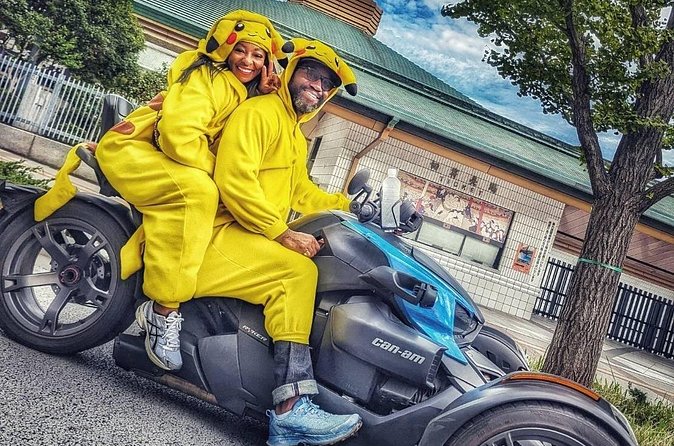
This is an approximate 1-hour tour, and it’s designed to be efficient. You won’t be doing long walks or long museum-style pauses. Instead, you’re getting a curated sweep: SkyTree, sumo district, Akihabara, Ueno, Sensoji, and Nihonbashi, all in one run.
So how do you get the most out of it?
- Go in with a photo list mindset: pick a couple of must-capture moments (SkyTree and Sensoji are natural choices) and let the rest be bonus.
- Keep your eyes up as well as on your phone. Riding encourages you to notice signs, street motion, and how people actually use each neighborhood.
- If you want to buy or browse in Akihabara or around temple streets, treat this as the first taste. Plan shopping or deeper walking on a separate block of time.
The guide-led flow also matters here. Since the guide handles navigation, the tour tends to feel smoother. The goal is to spend your time looking at Tokyo, not wrestling with directions.
Small Group, Friendly Guidance: Names You Might Hear
The tour is capped at a maximum of 2 travelers, which keeps things personal. With small groups, you can usually feel how much effort the staff puts into getting everyone set up and comfortable.
In past customer notes, guide and staff names like Reece, Adam, and Lewis show up as being friendly and helpful. That lines up with what you want from a ride tour: someone who keeps the safety briefing clear, answers questions without rushing, and then guides you in a way that feels confident.
If you’re the nervous type about riding, this kind of staff support matters. You’ll get a safety briefing first, and the guide leads so you’re not suddenly stuck trying to interpret your own route mid-ride.
Who Should Book This Asakusa Can-Am Adventure
This tour is a strong fit if you:
- Want a fun, high-energy way to see multiple Tokyo districts close together
- Like street-level sightseeing and want more atmosphere than train rides alone
- Travel with a partner or friend who’s willing to split the group cost (up to 2 people)
- Prefer guided convenience over self-planning
It’s probably not the best match if you want long stops, lots of walking, or detailed time in one neighborhood. This is designed as a ride-through with curated highlights, not a full-day deep exploration.
Also, make sure the IDP rule works for you. If you don’t have the driver’s permit requirements sorted, you’ll want to reconsider or plan accordingly.
Should You Book It From Asakusa or Skip?
If you’re deciding whether to book, I’d say this: book it if you want your Tokyo day to include movement, variety, and big-name sights without spending the whole time on logistics. The value is strongest when you’re going as a pair (up to 2 in the group), because the cost is set per group and the experience is built around sharing the bike and the route.
Skip it if you’re the type who needs long photo stops, deep museum time, or lots of free walking. Also skip it if you can’t meet the IDP requirement for the driver. The good news is that if your schedule is flexible, the tour notes that it requires good weather, and it offers an alternative date or a full refund if it gets canceled due to poor weather.
FAQ
FAQ
How long is the Can-Am bike tour in Asakusa?
It’s listed at about 1 hour (approx.).
How many people can join this tour?
This activity has a maximum of 2 travelers.
What type of bike is used on the tour?
The tour uses a 2-seater Can-Am bike with a driver and a passenger.
Does only the driver need an International Driving Permit?
Yes. Only the driver is required to have a valid IDP based on the 1949 Geneva Convention.
Where do I meet for the tour?
You meet at Monkey-kart Asakusa shop, 130-0003 Tokyo, Sumida City, Yokokawa, 4-chōme 9-9.
Where does the tour end?
The tour ends back at the meeting point.
What are some of the stops on the route?
You pass or stop for views around SkyTree, a sumo district area (with a chance to see a sumo wrestler), Akihabara, Ueno, Sensoji Temple, and Nihonbashi.
Is a mobile ticket used?
Yes, the tour includes a mobile ticket.
What if the weather is poor?
The experience requires good weather. If it’s canceled due to poor weather, you’ll be offered a different date or a full refund.
More Tour Reviews in Tokyo



Fresh reviews from around Tokyo






Tokyo, compared.
 ★ 5.0Mt Fuji and Hakone 1-Day Bus Tour Return by Bullet TrainFrom $16326,383 reviews
 ★ 5.01-Day Tokyo Bus TourFrom $12914,250 reviews
 ★ 4.6teamLab Planets TOKYO Digital Art Museum Entry TicketFrom $259,779 reviews
 ★ 4.0Mt Fuji & Hakone Cruise, Drum Show Bullet Train 1 Day from TokyoFrom $1497,413 reviews
 ★ 5.0Shinjuku Food Tour (13 Dishes at 4 Local Eateries)From $866,603 reviews
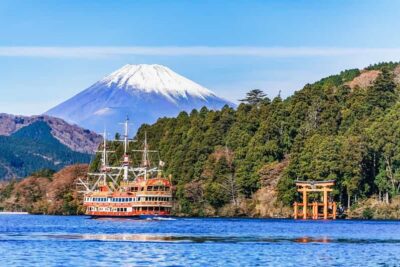 ★ 4.4Tokyo Mt Fuji 5th St & Hakone Cruise Bus Tour w/Bullet TrainFrom $1545,024 reviews
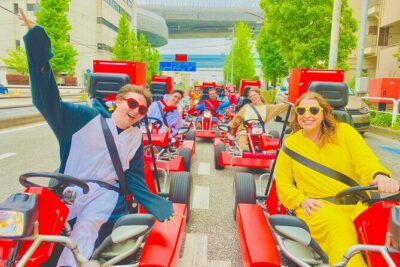 ★ 5.0Flagship 2-Hours Official Street Go-Kart Tour – Tokyo Bay ShopFrom $644,974 reviews
 ★ 4.5From Tokyo: Mount Fuji Full-Day Sightseeing TripFrom $684,970 reviews