
Tokyo by bike beats Tokyo on foot.
This guided ride is a smart way to see central Tokyo without getting stuck in train-and-tram mode. You meet your guide near Hikifune Station, get a helmet, and spend about 2.5 hours rolling through backstreets that feel more like real life than a sightseeing checklist. Then you’re free for the rest of the day to do your own thing.
My favorite part is the temple-to-Skytree variety packed into a short afternoon. You’ll hit Honryuin Matsuchiyama Shoden, Imado Shrine, and Senso-ji, then switch gears to craft candy at a classic Amezaiku workshop. The ride continues with river crossings and time cycling under Tokyo Skytree, all with a small group (max 6) and a pace set for you and your group.
One thing to watch is bike sizing and weather. The rental bikes are folding bikes suitable for heights 140–180 cm, and you should tell them if you’re over 180 cm. Also, the tour depends on good weather, so have a backup plan if conditions turn ugly.
In This Review
- Key highlights you’ll feel right away
- Why this central Tokyo ride feels more local than typical sightseeing
- Price, time, and what you’re really paying for
- Meeting at Hikifune: bikes, helmets, and the folding-bike reality
- Suida and Sumida River views: the ride’s scenic warm-up
- Honryuin Matsuchiyama Shoden and Imado Shrine: quieter stops with meaning
- Senso-ji Temple and the Amezaiku candy craft stop
- Crossing bridges, cycling under Tokyo Skytree, and Kyojima’s everyday lanes
- When this tour fits best (and when it may not)
- Should you book this Tokyo Backstreets Bike Tour?
- FAQ
- How long is the guided cycle tour?
- Where does the tour start and end?
- How do I find the meeting spot if I’m using trains?
- Are helmets provided?
- What kind of bikes are used, and who are they for?
- Can I request a tandem bike?
- How many people are in a group?
- Are there admission fees for the stops?
- Is there food during the tour?
- What if the weather is bad?
Key highlights you’ll feel right away
- Helmet provided, plus safety-first pacing: you’re set up to ride confidently even if you’re new to city cycling
- Small group size (up to 6): easier communication with your guide and more room for photos and short breaks
- River scenes in two stages: start along the Suida River, then later cross the Sumida River for bigger skyline views
- Classic stops that aren’t the loudest ones: Honryuin Matsuchiyama Shoden and Imado Shrine give you quieter moments around major landmarks
- Amezaiku candy craft stop: you can see traditional candy-making and bring something sweet into the day
- Tokyo Skytree time from street level: you get multiple looks as you cycle toward and around the landmark
Why this central Tokyo ride feels more local than typical sightseeing
Tokyo is amazing on foot, but bike adds something special: movement with context. You’ll be able to connect neighborhoods, not just monuments. The route is built around “everyday Tokyo” streets—narrow lanes, residential blocks, and the kind of corners you’d usually pass without noticing.
What makes this tour work is the balance between big-name sights and smaller detours. You won’t just see the usual faces of Senso-ji; you’ll also visit places that sit in the same spiritual orbit but feel quieter and more personal. Then the day pivots into sensory, hands-on Tokyo with an Amezaiku craft candy shop where you can watch candies being made.
And because the ride lasts about 2.5 hours, it doesn’t swallow your whole day. You get a focused slice of central Tokyo, then you can keep exploring afterward—food, shopping, museums, or wandering where your feet (or train card) take you.
Price, time, and what you’re really paying for
At $50.08 per person for roughly 2 hours 30 minutes, this tour is priced like a “bike + guide + multi-stop sights” experience. The value comes from the combo:
- Guided route through areas that are easy to get lost in if you’re on your own
- Bike rental using folding bikes (so you’re not stuck hunting for your own rental)
- Multiple free admission stops at the temples/shrine listed on the route
- A craft stop and chances to buy food, so you can fuel without turning the day into a hunt
Also, it’s booked about 36 days in advance on average, which is a sign this is a popular time-saver for people planning a tight itinerary. If you want this on your schedule, don’t wait for the last minute.
One more practical point: because the group is small, you can ask questions and get help with your ride rather than feeling like you’re herded through at speed.
Meeting at Hikifune: bikes, helmets, and the folding-bike reality
You’ll start and end near the same place—at the meeting point inside the shared office called シナプス (Synaps) in Higashimukōjima. The tour also notes that it’s easy to meet your guide around Hikifune Station, which is helpful if you’re arriving by train and want a familiar reference point.
You’ll be given a helmet, which is a big deal in Tokyo cycling. From the way the tour is designed, the ride is meant to feel manageable—not a fitness test.
The bikes are folding models with 14–20 inch sizing, set up for people about 140–180 cm tall. If you’re taller than 180 cm, tell the operator ahead of time so they can plan the right setup. If you want to ride a tandem, you need to request it at least 3 days before booking.
Finally, keep an eye on your timing. This is a short tour, so showing up late can cut into your sightseeing time (and you’ll want that time for photos near the river and Tokyo Skytree).
Suida and Sumida River views: the ride’s scenic warm-up
The day starts with cycling on the bank of the Suida River, which is especially known for sakura in spring. Even if you’re not in cherry-blossom season, river edges tend to give you a calmer rhythm than heavy shopping streets—less stop-and-go and more open sightlines.
Then later, you’ll switch to the broader, more dramatic river mood on the Sumida River. The route includes crossing a bridge on the Sumida, where you’ll get nice views and a good chance for photos without fighting crowds on foot. It’s one of those “so this is what Tokyo looks like from a little higher up” moments, even though you’re still moving at bike speed.
These river segments also do a practical job: they help you settle into the ride before you start stacking up temples and shrine time.
Honryuin Matsuchiyama Shoden and Imado Shrine: quieter stops with meaning
If you like spiritual Tokyo beyond the loud postcard angles, you’ll appreciate how the route frames the day.
At Honryuin Matsuchiyama Shoden, you’re visiting a temple area that’s part of Senso-ji, with roots dating back to 595. This stop leans into symbolism. The temple features images of a daikon (Japanese radish) and a pouch, tied to a theme about the mind and ignorance. It’s a short visit (about 20 minutes), but it’s the kind of stop that makes the larger Senso-ji complex feel less like a single location and more like a network of related places.
Next is Imado Shrine, founded 1063. This is one of those places people seek out as a power spot—especially for wishes around lovers or marriage partners. The time here is short (about 15 minutes), but it’s a meaningful reset between major landmarks. Even if your focus isn’t romance, it’s a good chance to slow down, look around, and take in shrine details that you’d miss if you only rushed from one highlight to another.
Practical tip: bring a little patience for these stops. Short guided visits work best when you’re willing to pause and look closely instead of trying to do everything fast.
Senso-ji Temple and the Amezaiku candy craft stop
Then you hit Senso-ji Temple itself. This is the big one. The route plan includes parking bikes near the temple and then strolling inside. Expect a more “main attraction” feel here, so the most enjoyable approach is to treat it like a guided walk rather than a checklist. You’ll be able to see more by foot in the temple grounds than you would trying to bike everywhere.
After that, the itinerary turns sweet—with Asakusa Amezaiku Ameshin, a traditional craft candy shop. This is the kind of stop that works in two ways: it breaks up the walking, and it gives you a real look at craft work. You’ll be able to see how the candies are made, and they’re known for being artistic, not just food-shaped.
If you’re thinking about snacks, this is a good moment to plan for it. The tour also mentions street-stall food along the way, so you can stay fueled without derailing your schedule. Just keep in mind you’ll likely be paying for what you buy, since the stops themselves are listed as free admission.
Crossing bridges, cycling under Tokyo Skytree, and Kyojima’s everyday lanes
Tokyo Skytree isn’t just something you look at from a distance. You’ll cycle under it, giving you a street-level viewpoint that feels different than photos taken from one fixed location. It’s also a practical photo moment. When the skies cooperate, the views from near the river and the area around Skytree can be dramatic without you having to wait in lines for a viewpoint.
After that, you’ll visit Kyojima Minami Park, described as an old-fashioned shopping area where you can see day-to-day Japanese life. This is one of the places that helps the day feel grounded. Instead of thinking of Tokyo as just temples and skyline, you get a glimpse of what regular shopping and local routines look like.
One more nice detail from the way the tour is run: the guide role is active, not passive. The guide is named Takeshi, and the overall vibe from the experience is that he focuses on safety and group flow while also stepping in for photos—especially for people riding solo. You shouldn’t count on every photo being taken, but you can reasonably expect photo stops to be part of the day.
When this tour fits best (and when it may not)
This tour is best if you want an afternoon that mixes major landmarks with quiet, lived-in streets—and you don’t want to spend all day organizing bike logistics.
It’s also a strong fit if you:
- want something around 2.5 hours that leaves your day open afterward
- like guided context at temples and shrines without being stuck in long museum-style pacing
- prefer gentle cycling over hardcore training rides
It may be less ideal if you:
- need a very tall bike and didn’t plan ahead for sizing beyond 180 cm
- are traveling during a period where weather is unreliable (the experience requires good weather)
- want lots of time inside temples for long, unhurried wandering (this is a short, stop-based route)
Should you book this Tokyo Backstreets Bike Tour?
I’d book it if your priority is practical Tokyo: a small-group bike ride that strings together river views, temple and shrine moments, and Tokyo Skytree time—all in a neat 2.5-hour block. The helmet and folding-bike setup help you show up and ride without stress, and the route design gives you that “I saw real neighborhoods” feeling.
You should think twice only if you’re uncomfortable cycling in city traffic or if your height falls outside the standard folding-bike range without advance arrangements. Weather is another factor: if conditions look rough, you may need to swap plans.
If you’re aiming for a good-value, high-satisfaction way to see central Tokyo beyond the busiest lanes, this is a solid call.
FAQ
How long is the guided cycle tour?
The tour runs for about 2 hours 30 minutes.
Where does the tour start and end?
The tour starts and ends back at the meeting point at the shared office (シナプス / Synaps) in Sumida City, Higashimukōjima.
How do I find the meeting spot if I’m using trains?
It’s noted that it’s easy to meet the guide around Hikifune Station.
Are helmets provided?
Yes. You’ll be provided with a helmet for safety.
What kind of bikes are used, and who are they for?
The bikes are folding bikes, suitable for people between 140 and 180 cm tall.
Can I request a tandem bike?
Yes, but you need to inform the operator at least 3 days before the day you booked.
How many people are in a group?
The tour has a maximum of 6 travelers.
Are there admission fees for the stops?
Admission tickets are listed as free for the temple/shrine stops included in the route.
Is there food during the tour?
The tour description says you’ll be taken to street stalls where you can buy authentic Japanese foods to keep you fueled.
What if the weather is bad?
The experience requires good weather. If it’s canceled due to poor weather, you’ll be offered a different date or a full refund.
Cycling Tours, compared.
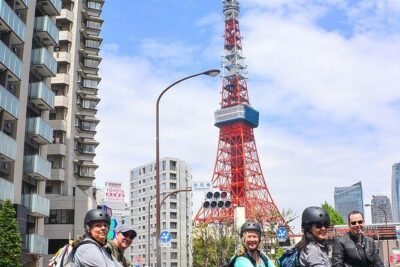 ★ 5.0Tokyo Guided Small-Group Biking TourFrom $1061,250 reviews
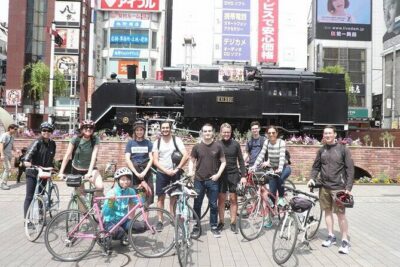 ★ 5.0Tokyo Great Cycling TourFrom $99811 reviews
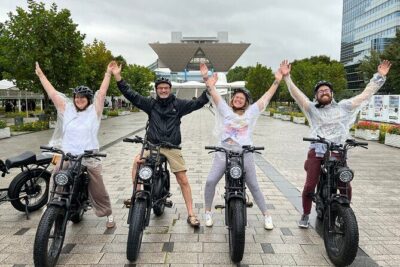 ★ 5.0Tokyo Top Highlights 3h Guided E-bike TourFrom $63714 reviews
3-Hour Bike or E-Bike City Highlights TourFrom $45435 reviews
★ 5.0Tokyo Top Highlights 3h Guided E-bike TourFrom $63714 reviews
3-Hour Bike or E-Bike City Highlights TourFrom $45435 reviews
 ★ 5.0Tokyo West-Side Cycling & Food TourFrom $99214 reviews
 ★ 5.03-Hour Bike/E-Bike Tour of the City’s HighlightsFrom $63209 reviews
 ★ 5.0Small Group Cycling Tour in TokyoFrom $66184 reviews
 ★ 5.03-Hour Tokyo Private E-Bike Tour Starting from Your HotelFrom $145117 reviews
Browse the lists this tour appears in