
Reviewed · MT FUJI DAY TRIPS
Mt Fuji Hakone/Enoshima Tour:Optional Ropeway/Lake Ashi Boat
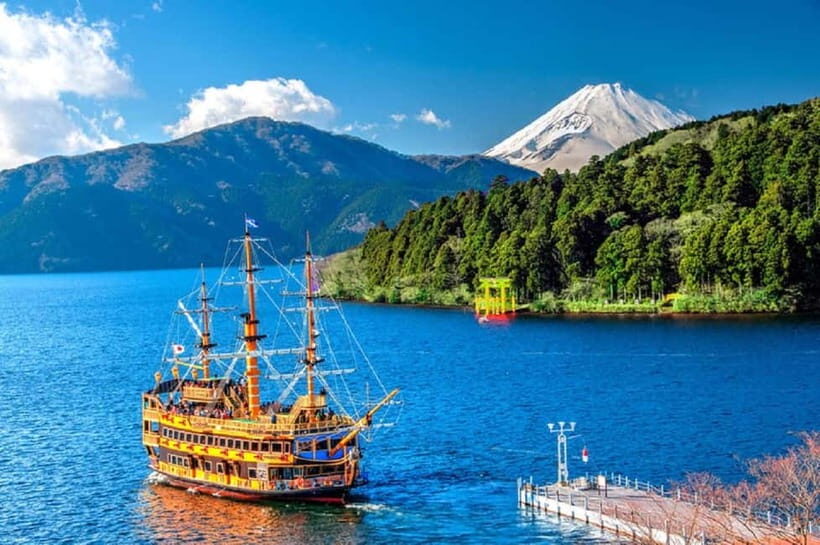
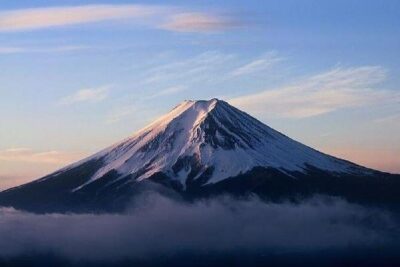
Fuji looks different from a boat.
This Mt. Fuji–Hakone/Enoshima day trip is built around big scenic icons in one long day: Lake Ashi with that postcard torii gate moment, plus Mt. Fuji views that can pop through clouds. It’s a smart way to see Hakone’s volcanic drama and Enoshima’s seaside shrine vibes without stitching together multiple trains on your own.
What I like most is the mix of wow-factor and “doable” stops. I especially enjoy the pirate ship cruise feeling like a mini storybook scene while you still get real panoramic lake views, and I love how the ropeway-to-Owakudani route turns the volcanic landscape into a hands-on experience (steam, sulfur, and the famous black eggs). One drawback: it’s a shared group day, so your exact pace depends on weather and traffic, and not every departure will feel equally guided.
In This Review
- Key moments that make this day trip worth it
- The big idea: two icons, two moods, one long day from Tokyo
- Timing reality check: how the day usually feels
- Hakone Shrine on Lake Ashi: your Fuji photo stop with a torii you’ll recognize
- Pirate-ship cruise on Lake Ashi: a themed ride that still earns its time
- Hakone Ropeway: how to get the best panoramas with minimal effort
- Owakudani: steam vents, sulfur air, and the black eggs legend
- Enoshima Island: the pace shift from volcanic drama to seaside walking
- Enoshima Shrine and Benzaiten Nakamise: tradition you can actually feel
- Your guide matters: why multilingual help can make or break the day
- Price and value: why $53 can be a smart deal if you want organization
- What to bring, and what to skip
- Who this trip suits best (and who should choose another option)
- Should you book this Mt. Fuji–Hakone/Enoshima tour with ropeway and cruise?
- FAQ
- How long is the Mt. Fuji Hakone/Enoshima tour?
- Where do we meet for the tour?
- What is included in the price?
- Is food included?
- Is Mt. Fuji guaranteed to be visible?
- What should I bring?
- Is there anything I’m not allowed to do?
- Do you have cash-free payment options?
- Is it okay for wheelchair users or pregnant women?
- What is the cancellation policy?
Key moments that make this day trip worth it
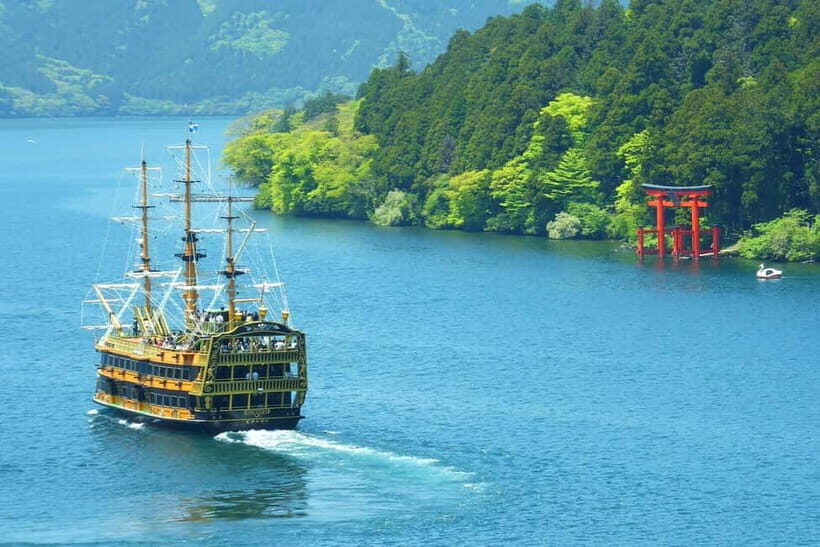
- A torii gate photo stop at Hakone Shrine with Lake Ashi as the mirror backdrop
- Hakone Pirate Ship on Lake Ashi for classic views from the water
- Hakone Ropeway over volcanic terrain for a bird’s-eye look at Fuji’s area
- Owakudani’s sulfur vents and the black egg tasting for a memorable food-and-legend stop
- Enoshima Island + Shrine for a cultural, relaxed change of pace
- Multilingual guides (English/Japanese/Chinese) who help the day run smoothly
The big idea: two icons, two moods, one long day from Tokyo
This tour is designed for people who want maximum “Japan highlights” without planning every connection. You get Hakone’s volcanic show and Enoshima’s coastal tradition in a single 10–11 hour run, starting from central Tokyo and traveling by coach with A/C.
What makes the day work is the way the stops are sequenced. You start with a Fuji-facing photo moment at Hakone Shrine, shift to lake views on a sightseeing cruise, then rise up for ropeway panoramas and the Owakudani steam vents. Only after that volcanic hit do you head to Enoshima—an island where shrine steps, lanterns, and shopping streets help you reset your energy before you return.
Two practical things to know up front:
First, Mt. Fuji visibility is weather-dependent. You can’t treat it like a guaranteed payoff. Still, even when Fuji hides, the lake and volcanic views often feel worth the trip.
Second, this is a shared group schedule. That’s good for value, but it means you’ll move as a group and lose a bit of flexibility.
Timing reality check: how the day usually feels
You’ll start with a coach ride of about 2.5 hours out of Tokyo. After that, the itinerary becomes a rhythm of short sightseeing blocks and a couple longer island chunks. Many stops are timed around photos and key viewpoints rather than long sit-down experiences.
Here’s the flow in plain terms:
- A Hakone Shrine photo stop (about 20 minutes) to grab the torii-over-water moment
- A Lake Ashi cruise (about 30 minutes) for views from the deck
- A ropeway ride (about 30 minutes) for high-level panoramas
- Owakudani (about 40 minutes) for steam vents and black egg tasting
- Enoshima Island (about 2 hours) with time to walk and explore
- Enoshima Shrine (Hetsunomiya) plus extra free time on the way back through the shopping street area
Return to Tokyo is generally late. If weather, traffic, or holiday congestion gets messy, your return time can slide later, and that may reduce how much time you spend at each place. That’s why I like to keep the rest of your evening light.
Hakone Shrine on Lake Ashi: your Fuji photo stop with a torii you’ll recognize
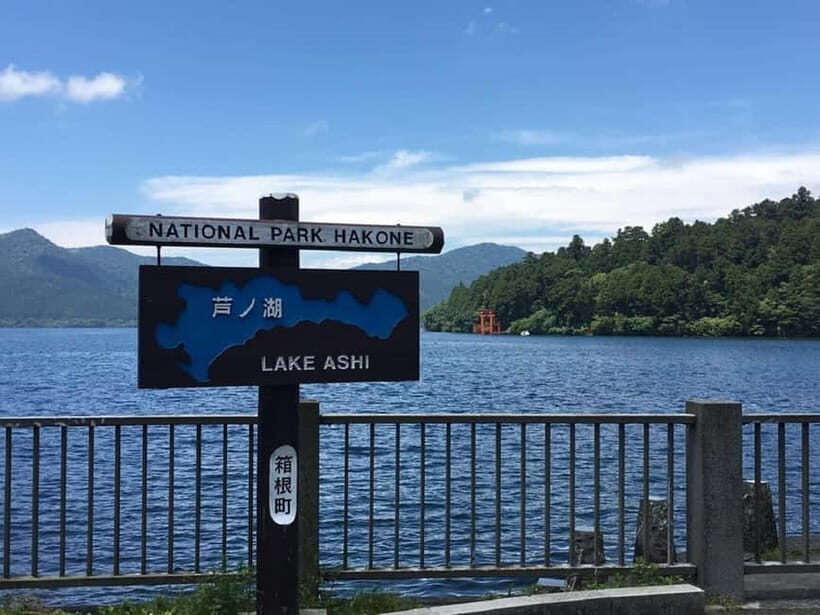
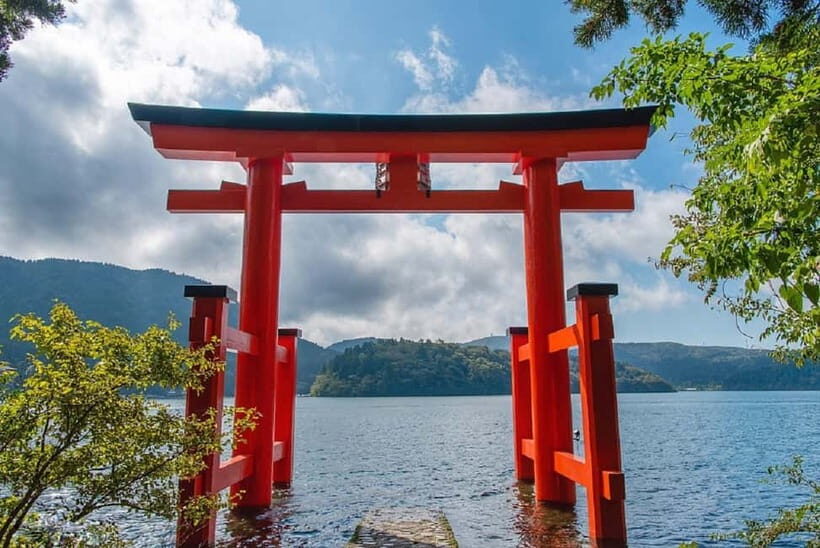
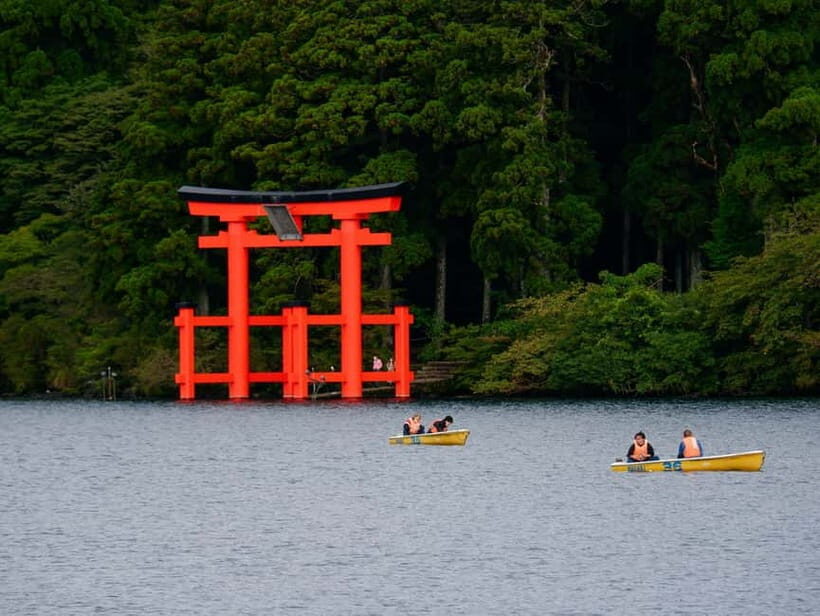
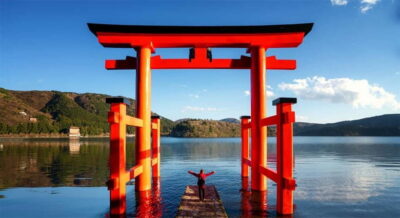
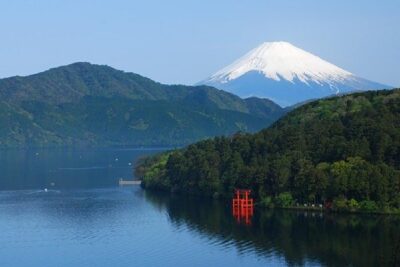
The best reason to start at Hakone Shrine is the setting. Lake Ashi is a volcanic lake, and the viewpoint here gives you that iconic scene where the red torii gate appears to float on the water. When the sky is clear, it can feel like the area was built purely for photos. When clouds roll in, the colors and the lake still deliver—just expect a more moody, less crisp Fuji silhouette.
You’re only there for about 20 minutes. That’s not long, so come with a simple plan:
- Arrive ready to move fast.
- Take a few shots from the main areas, then walk to any viewpoints that look slightly different rather than spending the whole stop in one spot.
One more practical note: camera timing matters because the boat and ropeway stops later can change your viewpoint on the lake. If you care about comparing angles, take your shrine photos early before you’re tired.
Pirate-ship cruise on Lake Ashi: a themed ride that still earns its time
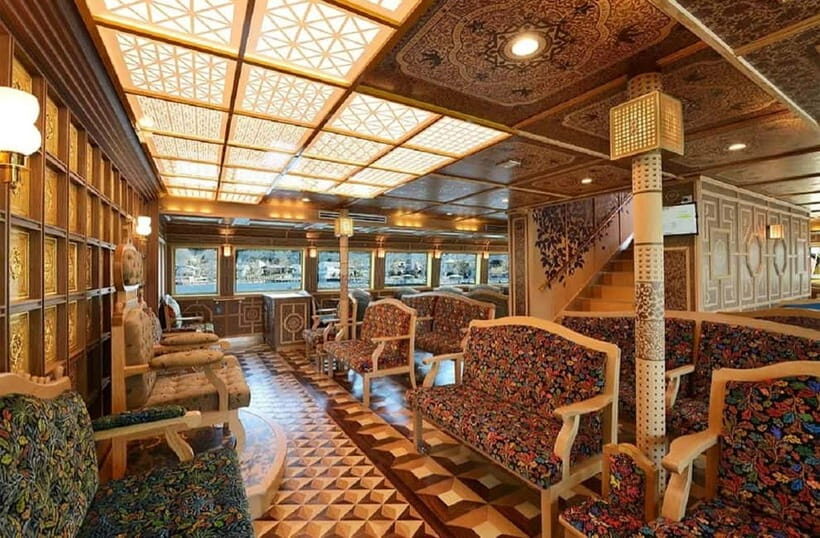
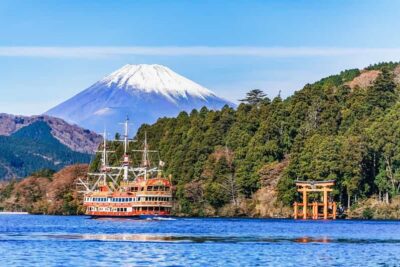
Then you board the Hakone Pirate Ship for a themed sightseeing cruise on Lake Ashi. The fantasy angle is part of the charm, but what you’ll actually remember is the open-deck sensation—cool breeze, moving water, and a long look across the lake.
The cruise lasts about 30 minutes. That’s a sweet spot: long enough to settle in, short enough that you don’t feel trapped once you’ve seen the main perspectives.
What I like here is the way the cruise connects the “you saw it in a photo” moment to “you’re actually there.” At the shrine, you’re looking at the lake from shore. On the cruise, you get that lake-as-a-stage feeling. Mt. Fuji’s shape (when visible) can appear more dramatic across the horizon, and the torii gate reflections often look different from the water than from the walkway.
Tip for your comfort: since it’s a shared-group day, you won’t control crowds like on a private boat. Go for a spot where you can see unobstructed for a few minutes, then shift if you need a better view.
Hakone Ropeway: how to get the best panoramas with minimal effort
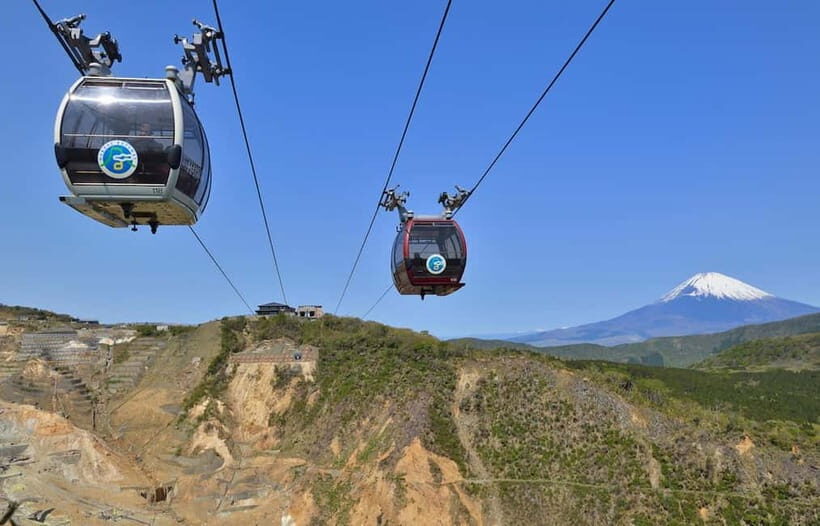
Next comes the Hakone Ropeway (about 30 minutes). This is the “stand back and look” part of the day. You’re going up over volcanic terrain, with views that tend to open wide—Lake Ashi in one direction, rugged volcanic scenery in another, and a chance of Fuji appearing between cloud layers.
The ropeway section matters because it changes your mental map. You stop thinking of Hakone as one road-trip area and start understanding it as a volcanic bowl with the lake inside. Even if Fuji is faint, the shapes of the valley and ridges still read well from above.
Also, plan for movement on and off the cable car. You’ll be in a group, so don’t count on long photo poses at every turn. Treat it like quick scenic work: watch for the best window of visibility, shoot fast, then let the views do their job.
Owakudani: steam vents, sulfur air, and the black eggs legend
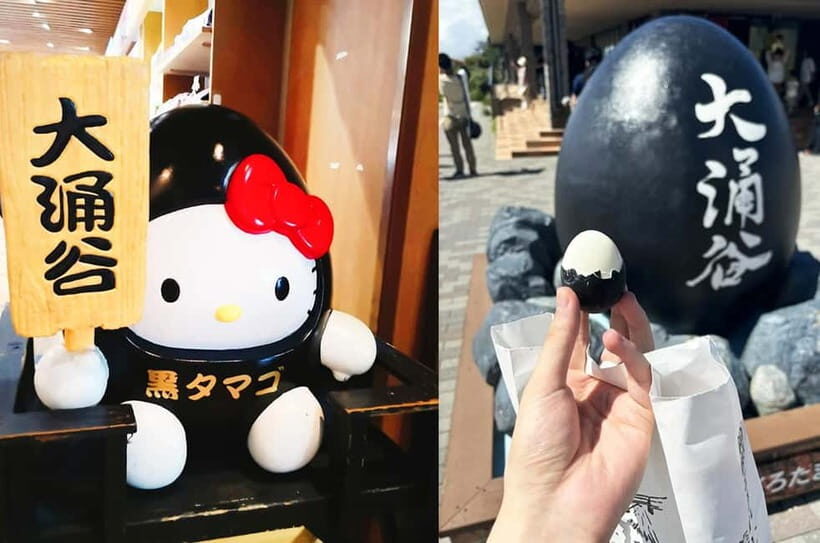
Owakudani is where the tour turns from scenic to truly odd-in-a-good-way. You’ll spend about 40 minutes in the volcanic valley, known for sulfur vents and steam. The air can feel mineral-heavy, and the whole place has that strong “active geology” energy.
Then there’s the black egg tradition. You can taste the famous black eggs, boiled in the hot spring area and believed to add longevity (the legend is commonly phrased as adding years). This is one of those food moments that’s less about Michelin-star flavor and more about participating in a cultural story.
Practical advice: bring your camera, but also accept that the air can be intense. Wear comfortable clothes and be ready for that warm, steamy valley feeling. If you’re sensitive to strong smells, stand back near the vent areas and enjoy the sights from slightly farther away.
Enoshima Island: the pace shift from volcanic drama to seaside walking
After Owakudani, the tone changes. Enoshima is a real cultural shift: you’re crossing over to an island with shrine history, walking paths, and food-and-souvenir streets.
You’ll have about 2 hours on Enoshima Island, plus additional time around the shrine area. This is one of the reasons the tour feels like good value—while Hakone takes you upward and outward (lake, ropeway, volcanic valley), Enoshima lets you slow down and wander.
A key part of Enoshima for most people is the main approach street, lined with small shops and snacks. You’ll run into a lot of seafood-focused smells and simple street treats as you walk. This time is also good for grabbing a bite because you’ve been busy with photo stops and rides earlier.
If you get tired, don’t fight it. Enoshima is built for casual pace. Use the walking routes to choose your mood: quick shrine viewing, longer shopping street browsing, or a mix.
Enoshima Shrine and Benzaiten Nakamise: tradition you can actually feel
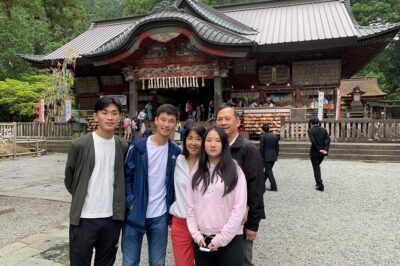
Your Enoshima block includes a visit to Enoshima Shrine (Hetsunomiya) and time near Benzaiten Nakamise Dori. This is the spiritual and cultural side of the island, dedicated to the sister goddesses of fortune (Benzaiten is part of what people associate with this area).
I like this stop because it grounds the day. You’ve spent hours in landscapes shaped by volcanoes and engineered viewpoints. Then you’re climbing through lantern-lit shrine areas where the mood is quieter and more focused.
The Nakamise street time is also useful. You don’t have to treat it like a museum. It’s more like a chance to taste and browse at your own speed, with local snacks and traditional souvenirs in easy reach.
One thing to watch: shoes. Enoshima involves walking. The tour recommends comfortable shoes for a reason.
Your guide matters: why multilingual help can make or break the day
This tour includes a live guide who speaks English, Japanese, and Chinese, plus a driver. In bigger groups, the guide typically handles the explanations while the driver handles routing.
That’s great because a well-run narration helps you connect the dots: why the lake looks the way it does, what the volcanic valley represents, and how Enoshima’s shrine setting fits the island’s legend-based identity.
One caution: in smaller group situations (under 13 people), the guide may also drive, which can mean simpler commentary and less time accompanying you inside attractions. If you love lots of on-the-ground explanation, plan your expectations around group size. And if you’re the type who really wants context, be extra alert at each stop so you catch the key points early.
Price and value: why $53 can be a smart deal if you want organization
At $53 per person, you’re paying for a whole-day package: transportation with A/C, parking and related road costs, and a multilingual guide and driver. Food and drinks aren’t included, so you’ll still budget for meals on your own.
Where the value shows is in the logistics. Hakone and Enoshima together are not the easiest pairing to do casually from Tokyo without thinking hard about routes, timing, and ticket purchases. This tour handles the movement, the main attractions, and the key scenic blocks in one managed day.
Also, you’re not just buying “a ride.” You’re getting multiple distinct experiences:
- a shrine photo setting on Lake Ashi
- a cruise across the lake
- a ropeway overhead
- the Owakudani volcanic valley and black egg moment
- a second cultural set on Enoshima Island and shrine grounds
That variety is hard to replicate cheaply if you’re piecing everything together.
What to bring, and what to skip
The tour’s “bring” list is simple for a reason: you’ll walk, stand, and move between areas. Bring:
- Comfortable shoes
- Camera
- Water
- Comfortable clothes for day heat or indoor AC breaks
A couple rules to remember:
- No smoking
- No food in the vehicle
Also bring some cash. Some places may not accept credit cards, and it’s annoying to find that out when you’re trying to buy a snack on the island.
Who this trip suits best (and who should choose another option)
This is a strong fit if you:
- want a day trip from Tokyo that hits multiple major sights
- care about iconic viewpoints like Lake Ashi + torii and the volcanic feel of Owakudani
- like organized pacing and don’t want to manage timed connections alone
It’s not a good match if you:
- need wheelchair access (this tour isn’t suitable for wheelchair users)
- are pregnant (also listed as not suitable)
- dislike shared-group schedules and want total control of timing
The Mt. Fuji factor is the only real gamble. You can’t force a clear view, so if Fuji visibility is your only goal, you’ll want a flexible mindset and open scheduling.
Should you book this Mt. Fuji–Hakone/Enoshima tour with ropeway and cruise?
I’d book it if you want an efficient, well-organized day that covers the headliners: Hakone Shrine torii on Lake Ashi, the pirate-ship cruise, the ropeway, Owakudani black eggs, and then a full Enoshima island-and-shrine experience.
I’d pause or look for a different format if you’re extremely sensitive to crowding, you hate group pacing, or you’re counting on a guaranteed, crystal-clear Fuji view. This is weather-dependent, and the day can run later on bad weather or holiday congestion.
Still, for the price and the number of distinct experiences, it’s an easy “yes” for most people who want Hakone and Enoshima in one clean package.
FAQ
How long is the Mt. Fuji Hakone/Enoshima tour?
It lasts about 10 to 11 hours, depending on the starting time you select.
Where do we meet for the tour?
The meeting point may vary depending on the option you book.
What is included in the price?
A vehicle with A/C, all taxes, parking fees, and gas fees, plus an English/Japanese/Chinese speaking tour guide and the driver.
Is food included?
No. Food and drinks are not included.
Is Mt. Fuji guaranteed to be visible?
No. Visibility of Mt. Fuji depends on the weather and cannot be guaranteed.
What should I bring?
Bring comfortable shoes, a camera, water, and comfortable clothes.
Is there anything I’m not allowed to do?
Smoking is not allowed, and food is not allowed in the vehicle.
Do you have cash-free payment options?
The tour advises bringing some cash, since certain locations may not accept credit cards.
Is it okay for wheelchair users or pregnant women?
No. The tour is not suitable for wheelchair users or pregnant women.
What is the cancellation policy?
You can cancel up to 24 hours in advance for a full refund.
More Tour Reviews in Fujikawaguchiko


Hakone, Three More Ways

The Fuji Shortlist: Other Days Out to the Mountain
Mt Fuji Day Trips, compared.
 ★ 4.0Mt Fuji & Hakone Cruise, Drum Show Bullet Train 1 Day from TokyoFrom $1497,413 reviews
 ★ 4.4Tokyo Mt Fuji 5th St & Hakone Cruise Bus Tour w/Bullet TrainFrom $1545,024 reviews
 ★ 4.5From Tokyo: Mount Fuji Full-Day Sightseeing TripFrom $684,970 reviews
 ★ 4.7Mt. Fuji Tour, Hakone Ropeway, Owakudani, Lake AshiFrom $544,002 reviews
 ★ 5.0Private Tour to Mt. Fuji and Hakone (Fully Licenced Operator)From $4971,910 reviews
 ★ 4.9Mount Fuji Full-Day Private Tour from Tokyo (Customizable)From $3931,470 reviews
 ★ 4.0Mt Fuji & Hakone Cruise, Drum Show Bus 1 Day from TokyoFrom $1221,287 reviews
 ★ 4.2From Tokyo: Mt. Fuji & Hakone Tour w/ Return by Bullet TrainFrom $1171,278 reviews
Browse the lists this tour appears in