
Reviewed · MT FUJI DAY TRIPS
Mount Fuji Full-Day Private Tour from Yokohama Customizable
One clear reason to go: you only have one day. This private Mount Fuji tour is built for tight schedules, with a driver who meets you near Yokohama Port and takes you through the Fuji Five Lakes area at a pace that can fit your timing. I like how it mixes famous photo spots with calmer, more cultural stops, so it feels like more than a checklist. The Chureito Pagoda view is the kind of scene that makes you stop walking and actually look.
Two things I really liked: you get an English-speaking driver who can explain what you’re seeing, and you also get help with real-world communication once you’re on the ground. In one review, the driver named Ryu was described as friendly, helpful, informative, and able to translate with locals when needed, which matters if you want the day to feel smooth. The other big win is that it’s private for your group (up to 5), so you’re not stuck waiting on strangers or rushed by a large bus schedule.
One possible drawback: this is a long day (about 10 hours) and the best Fuji views depend on weather. If clouds roll in, you may still enjoy the sights, but the iconic mountain photo you came for can be hit or miss, and you’ll want to stay flexible about timing and expectations.
In This Review
- Key highlights at a glance
- Why this Mount Fuji tour from Yokohama makes sense
- Price and what you’re actually paying for (about $480 per group)
- Pickup timing, meeting point, and how to plan your morning
- Chureito Pagoda: the iconic Fuji photo stop, with real limits
- Oshino Hakkai ponds: clear water scenery and a World Heritage vibe
- Kitaguchi Hongu Fuji Sengen Jinja: calm shrine time between photo stops
- Lake Kawaguchiko: where you decide how you want to spend your time
- Oishi Park: seasonal flowers and a simple ice cream win
- Saiko Iyashi no Sato Nemba: the reconstructed healing village feel
- How weather affects your day (and how to keep the disappointment low)
- Private guide experience: why the driver matters more than you think
- Who this tour is best for (and who might not need it)
- Should you book this private Mount Fuji day tour?
- FAQ
- What time does the tour start, and where do we meet?
- Is this a private tour?
- What’s included in the price?
- What’s not included?
- Do we get a ticket on our phone?
- How long is the tour?
- What happens if weather is poor for Mount Fuji?
Key highlights at a glance
- Private door-to-door pickup from the Port of Yokohama area, with an air-conditioned vehicle
- English-speaking driver who helps you navigate and understand what you’re seeing
- Chureito Pagoda for the classic pagoda-and-Fuji composition
- Oshino Hakkai ponds tied to the World Heritage setting and clear springwater scenery
- Lake Kawaguchiko time with options like boat views and ropeway access in the area
- Saiko Iyashi no Sato Nemba for the reconstructed traditional village stop on Lake Saiko
Why this Mount Fuji tour from Yokohama makes sense
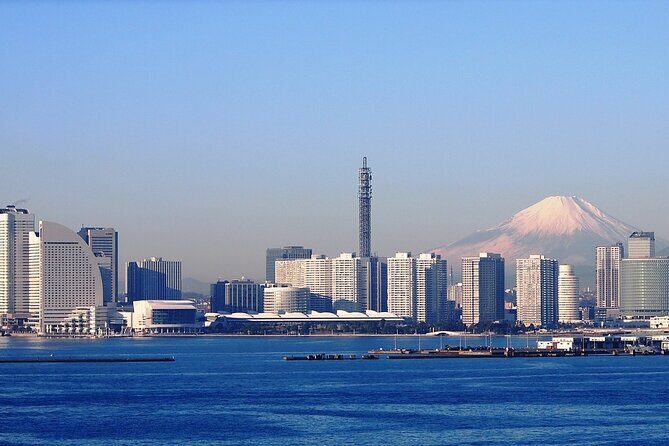
If you’re starting in Yokohama, you’re already in a great position to day-trip out without the stress of overnight logistics. This tour is built around that reality: you start early (8:00 am) and you’re back within a reasonable timeframe, so you can still enjoy the rest of your trip. It’s also customizable, which is important when your group has different comfort levels with walking, photo stops, and shopping breaks.
The big idea here is simple: you’ll visit multiple key Fuji-area sights in one shot, instead of spending your day figuring out trains, transfers, and which lake viewpoint to prioritize. For many first-timers, that alone is worth a lot. And because it’s private, you can shift your pace. You can slow down for photos when the sky cooperates, or move quicker through a stop if the line or conditions aren’t ideal.
Price and what you’re actually paying for (about $480 per group)
This tour costs $480 per group (up to 5 people). That sounds high if you’re comparing it to a cheap public-transport day. But with private tours, your money buys several practical things:
- You pay for time: a driver handles route planning and transport between stops.
- You pay for simplicity: no hunting for stations or figuring out which bus goes where.
- You pay for control: you choose how long you linger at views and how your day flows.
- You pay for communication help: the driver is English speaking and can translate when you need it.
If you have a small group, the cost per person drops fast. The sweet spot is 3–5 people who want the convenience of private transport but don’t want to charter a big van for just one or two travelers. If you’re traveling solo and you don’t mind trains, public transit can be cheaper—but it’s usually slower and more tiring.
Also, note what’s included versus not included. You’ll have private transportation, an English-speaking driver, and an air-conditioned vehicle. You’ll still budget extra for certain optional entries and meals—details below—so your final “all-in” cost will depend on how many paid attractions you choose.
Pickup timing, meeting point, and how to plan your morning
You meet at the Port of Yokohama area at 1 Chome Kaigandori, Naka Ward, Yokohama, Kanagawa 231-0002. The tour starts at 8:00 am, and pickup is offered around the port as well. That early start matters because Fuji views can change quickly over the day, and you’ll want daylight at the key viewpoints.
Plan like this: wear comfortable shoes, bring a light layer (mountain areas can feel cooler), and keep some flexibility in your head. A private driver can’t control clouds, but they can help you manage what you do with the time you’re given.
You’ll also get a mobile ticket, which is useful if you want fewer printed documents to manage in a busy port area.
Chureito Pagoda: the iconic Fuji photo stop, with real limits
The day kicks off at Chureito Pagoda in Fujiyoshida. This is one of those “postcard scenes” that works because the geometry and the framing feel intentional: the pagoda sits in view against Mount Fuji, and it turns ordinary walking paths into a photo mission.
What I like about this stop:
- It’s fast and focused, so it doesn’t hijack your whole day.
- It gives you a high-impact Fuji view early, when conditions can be better.
What to watch out for:
- Because it’s famous, you can encounter crowds. You don’t need to sprint for the best shot, but you should expect it to be busier than the shrines and lakeside villages later in the day.
If your goal is photos, the main strategy is patience. Wait for a break in the crowds or a change in light, and use the time to enjoy the view rather than just taking one frame.
Oshino Hakkai ponds: clear water scenery and a World Heritage vibe
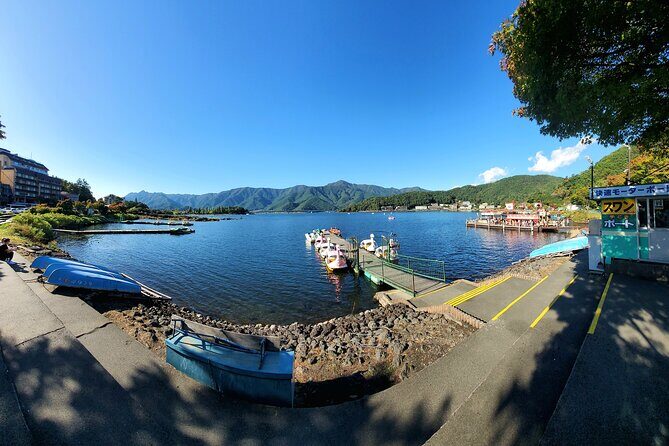
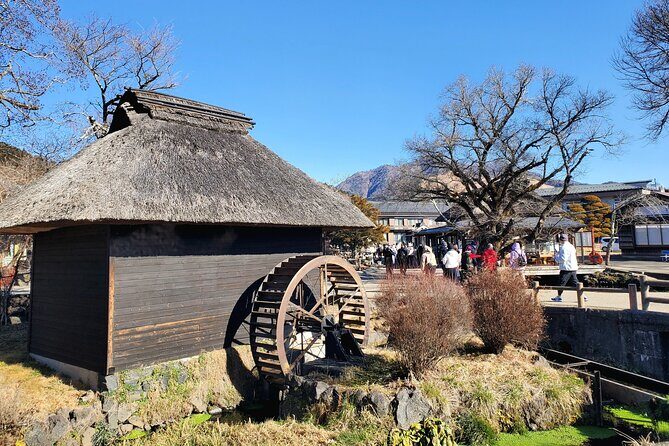
Next is Oshino Hakkai, known for eight clear ponds and a World Heritage context. It’s the kind of place where the details matter: the water looks different from pond to pond, and it’s set up to help you slow down and observe.
This stop is also great because it’s not only about views. Oshino Hakkai includes samurai houses and a museum, and you’ll have perspectives of Mount Fuji in the wider area.
Time on this stop is about 1 hour, with the option of an additional Oshino Hakkai Museum fee (300 yen per person). If you want the deeper context, the museum can add value. If you’d rather maximize lake or viewpoint time, you can still enjoy the ponds and surrounds without paying for the museum.
One practical tip: if you’re aiming for Fuji visibility, pay attention to the sky as you walk between ponds. Conditions can shift even within an hour.
Kitaguchi Hongu Fuji Sengen Jinja: calm shrine time between photo stops
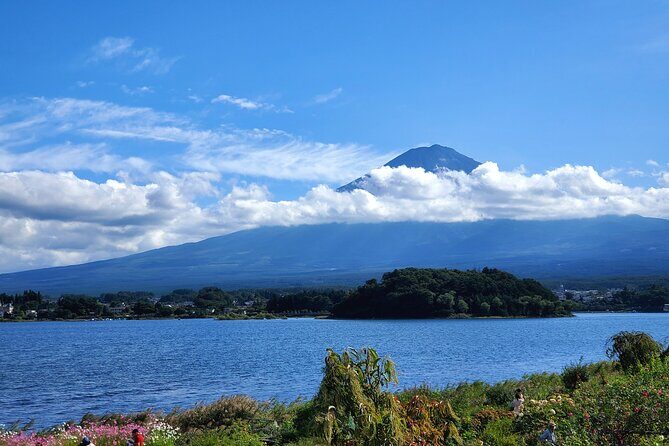
Then you head to Kitaguchi Hongu Fuji Sengen Jinja. This is a shorter stop (about 30 minutes), but it provides a nice reset. The shrine setting feels more grounded than the view-heavy points, and you’ll notice how the day shifts from “look at Fuji” to “experience the cultural place where people have honored Fuji for generations.”
Admission is free for this stop, so it’s a low-cost way to add variety. Look for moments where the path opens into a quieter pocket—shrines are often best when you stop rushing and let the atmosphere do the work.
For photographers, it’s also a useful change of pace. You’ll be able to switch from wide mountain compositions to more intimate temple details.
Lake Kawaguchiko: where you decide how you want to spend your time
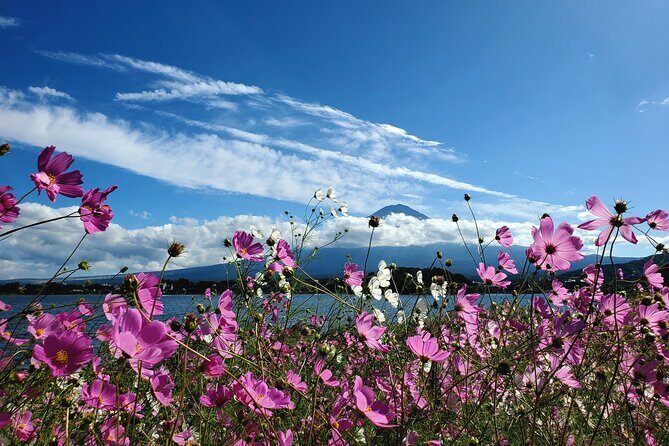
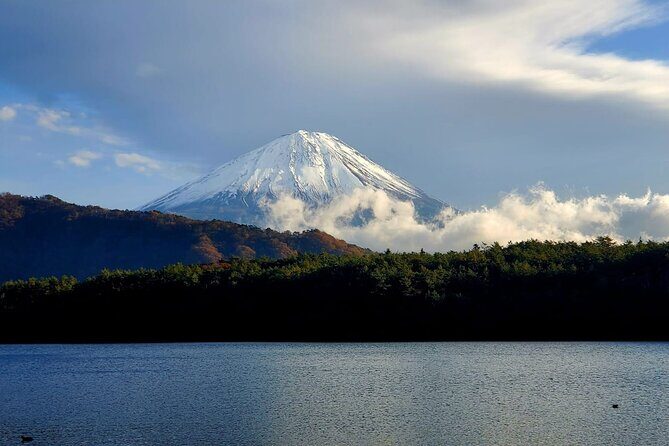
Lake Kawaguchiko is the second largest of the Fuji Five Lakes, and it’s built for visitors. There are lakeside hotels, camping, and activity options like excursion boats and ropeway facilities in the area. Your stop time here is about 1 hour, and admission is not included.
This is where the tour becomes flexible in a practical way. If you want the most classic water-and-mountain composition, ask your driver about which side or timing is likely to work best that day. If you’re more into motion and views from a boat, you might use some of your hour for a water experience—just remember that boats can take time to board and depart.
What I like about Kawaguchiko:
- You get a broad sense of the lake area, not just one viewpoint.
- It’s a good place to trade off between walking and letting the scenery come to you.
Potential drawback: with only 1 hour, you can’t do everything. Decide in advance what matters most: boat views, a viewpoint walk, or a quick scenic loop. Your driver can help you make the best call.
Oishi Park: seasonal flowers and a simple ice cream win
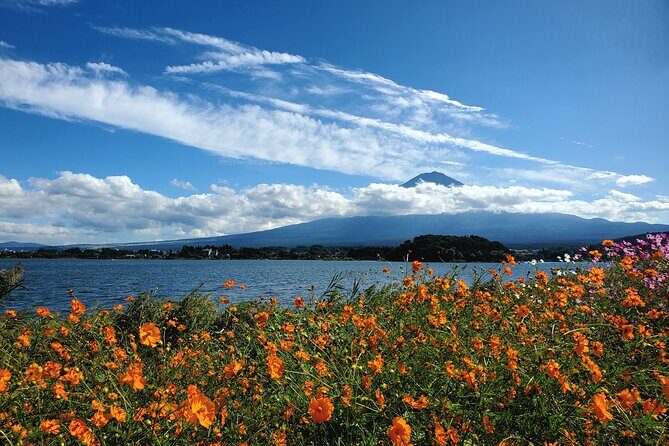
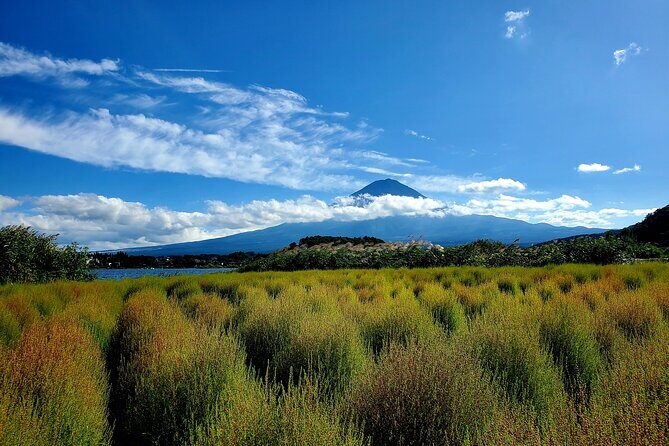
After the lake, the tour stops at Oishi Park, also part of the Kawaguchiko area. This is a 1 hour visit focused on magnificent views of Mount Fuji and seasonal flowers. The stop also includes a practical detail: you can enjoy ice cream in town, which is exactly the kind of small break that makes a long day feel easier.
This is another place where timing can change the quality of your photos. If the light is good and Fuji is visible, this stop becomes a highlight. If the sky is gray, you still get flowers and a pleasant stroll, and that matters because it keeps the day enjoyable rather than frustrating.
Saiko Iyashi no Sato Nemba: the reconstructed healing village feel
The final scenery stop is Saiko Iyashi no Sato Nemba, sometimes described as a healing village. It’s a traditional Japanese village on the shores of Lake Saiko, and it’s a reconstruction designed to preserve the look and feel of the original village.
You’ll spend about 45 minutes here, and the Yashi no Sato entrance fee is 500 yen (not included). If you’re someone who likes seeing how villages were arranged—houses, walkways, and the overall setting—this is a strong closing stop because it gives you context for the region beyond the mountain viewpoint.
What to keep in mind:
- This is more about atmosphere than maximum Fuji photography.
- With a short time window, focus on the village areas that give you the best sense of the layout and setting.
If the weather turns or clouds reduce visibility, this is a good stop to lean on. Even when Fuji is hidden, the village still provides something worth seeing.
How weather affects your day (and how to keep the disappointment low)
This experience is weather dependent, and that’s not a small detail. Mount Fuji can hide fast behind clouds or haze. The tour notes that it requires good weather, and if it’s canceled due to poor weather, you’ll be offered a different date or a full refund.
So here’s how you protect your enjoyment:
- Think of the tour as a mix of Fuji-area sights plus culture, not a single photo mission.
- Use the early stop at Chureito Pagoda and the viewpoint times at Kawaguchiko and Oishi Park as your “window” for the mountain.
- Keep your camera ready, but also keep your mind on the pond scenery, shrine atmosphere, and the village setting.
Even on less-than-perfect days, these places don’t become worthless—they just change from mountain-first to culture-first.
Private guide experience: why the driver matters more than you think
The included English-speaking driver can shape how the day feels. Even when the sights are fixed, understanding what you’re looking at changes your enjoyment. In one review, the driver Ryu stood out for being friendly, helpful, and informative, and for translating with locals when needed.
That matters if:
- You want to ask questions on the spot.
- You want simple explanations of what a pond, shrine, or village represents.
- You don’t want to rely on app translation while you’re trying to enjoy the moment.
Also, the air-conditioned vehicle helps on hot days and keeps the day comfortable when you’re moving between towns and lakes.
And because it’s private, you’re not stuck pacing someone else’s timeline. If your group needs a restroom break or wants to linger for one extra minute at a viewpoint, the driver can usually help you adjust within reason.
Who this tour is best for (and who might not need it)
I think this tour is a great match if you:
- Are staying around Yokohama and want a smooth one-day Fuji plan.
- Have a small group (up to 5) and want private comfort.
- Want classic sights plus cultural variety, without a ton of planning.
- Prefer an English-speaking guide to translate and explain, especially on a first trip to Japan.
It might be less ideal if you:
- Are traveling very budget-first and want the cheapest transport option.
- Love maximizing lots of stops and long walks for many hours. This day is focused and timed, not a slow wandering tour.
- Are the type who needs everything to be flexible minute-by-minute; weather visibility is outside everyone’s control.
Should you book this private Mount Fuji day tour?
I’d book it if you want a reliable, organized day that gives you several classic Fuji-area experiences without the stress of self-navigating from Yokohama. The best value is for groups of 3–5, because you turn that $480 group price into a practical per-person cost while still getting private transport, an English-speaking driver, and a plan that fits an early start.
I’d hesitate only if you’re traveling solo on a tight budget or if you already enjoy planning and navigating on your own. And if Fuji visibility is your absolute priority, remember the weather reality: you’re visiting a mountain region, so sometimes the sky decides for you.
If you book with the right mindset—views when they’re clear, culture and scenery when they’re not—this is the kind of day that feels both efficient and satisfying.
FAQ
What time does the tour start, and where do we meet?
The tour starts at 8:00 am and meets at the Port of Yokohama area: 1 Chome Kaigandori, Naka Ward, Yokohama, Kanagawa 231-0002, Japan.
Is this a private tour?
Yes. This is a private tour/activity, and only your group participates. The price is per group (up to 5).
What’s included in the price?
The tour includes an English-speaking driver, an air-conditioned vehicle, and private transportation.
What’s not included?
Lunch is not included. Also, Oshino Hakkai Museum (300 yen per person) and Saiko Iyashi no Sato Nemba entrance (500 yen) are not included.
Do we get a ticket on our phone?
Yes. The tour includes a mobile ticket.
How long is the tour?
The duration is about 10 hours.
What happens if weather is poor for Mount Fuji?
The experience requires good weather. If it’s canceled due to poor weather, you’ll be offered a different date or a full refund.
More Tour Reviews in Yokohama



Next Door in Yokohama
The Fuji Shortlist: Other Days Out to the Mountain
Mt Fuji Day Trips, compared.
 ★ 4.0Mt Fuji & Hakone Cruise, Drum Show Bullet Train 1 Day from TokyoFrom $1497,413 reviews
 ★ 4.4Tokyo Mt Fuji 5th St & Hakone Cruise Bus Tour w/Bullet TrainFrom $1545,024 reviews
 ★ 4.5From Tokyo: Mount Fuji Full-Day Sightseeing TripFrom $684,970 reviews
 ★ 4.7Mt. Fuji Tour, Hakone Ropeway, Owakudani, Lake AshiFrom $544,002 reviews
 ★ 5.0Private Tour to Mt. Fuji and Hakone (Fully Licenced Operator)From $4971,910 reviews
 ★ 4.9Mount Fuji Full-Day Private Tour from Tokyo (Customizable)From $3931,470 reviews
 ★ 4.0Mt Fuji & Hakone Cruise, Drum Show Bus 1 Day from TokyoFrom $1221,287 reviews
 ★ 4.2From Tokyo: Mt. Fuji & Hakone Tour w/ Return by Bullet TrainFrom $1171,278 reviews
Browse the lists this tour appears in