
Reviewed · SAITAMA PREFECTURE
Easy for everyone! Now you can play handmade mini shamisen and show off to everyone! Musical instruments, sweets and live music
This workshop turns Japanese music into something you can actually hold. You’ll craft a handmade mini shamisen, learn how to read a super simple score, then play together with your group, followed by a live shamisen performance with tea and sweets. Two things I really like are how beginner-friendly it is and how the class ends with you taking home what you built. One thing to consider: it’s tied to the weather and you’ll want to arrive on time so you don’t miss the making-and-playing flow.
The vibe is relaxed, too. You’ll work in a Japanese-style room at the teacher’s house, wearing a happi coat, getting a short explanation of the shamisen’s history and features, and then assembling and sounding it out right away. If you’re the type who enjoys hands-on culture over watching from the sidelines, this format is a great match. Small groups help—this experience caps at 4 travelers, so it’s not just you sitting in the back.
In This Review
- Key things to know before you go
- Why this mini shamisen workshop feels different in Tokorozawa
- The 2-hour flow: from happi coat to your first song
- 1) Arrive and get into the rhythm with a happi coat
- 2) A short shamisen primer: history and features, without overload
- 3) Assemble your mini shamisen kit (about 20 minutes)
- 4) Make your first sound immediately
- 5) Practice together with a simple score
- 6) Take a break, then enjoy live shamisen with tea sweets
- 7) Finish at the raised point and take it home
- Price and value: what $182 buys you (and what it doesn’t)
- Who this is best for (and who might want a backup plan)
- The human touch: patient teaching and real enthusiasm
- What to do before and after so you actually enjoy it
- Before
- After
- Tips to get the most out of your mini shamisen lesson
- Quick FAQ for your mini shamisen day
- FAQ
- Where does the workshop start?
- How long is the experience?
- What do I make and take home?
- Is it beginner-friendly?
- How many people are in a group?
- Is pickup available?
- What if the weather is bad?
- Should you book TOKYO SHAMI’s mini shamisen workshop?
Key things to know before you go
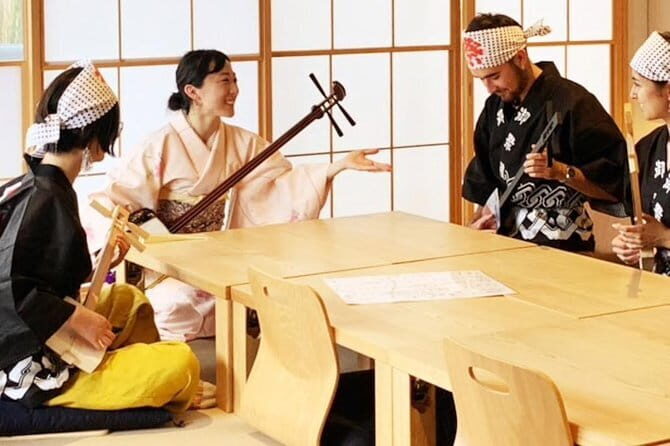
- You take the mini shamisen home so the workshop isn’t a one-off souvenir
- Happi coat + easy assembly makes the whole experience feel playful and low-stress
- Numbered guidance for finger placement helps you play without needing advanced music skills
- Live performance with tea sweets adds a proper ending, not just a lesson
- Small group size (max 4) means you’re more likely to get real attention
- Pickup offered can simplify the day if you’re staying nearby
Before you commit, see how this one stacks up against a few Saitama Prefecture favourites:
- Mt. Fuji and Hakone Private Tour with English Speaking Driver★ 5.0 · 22 reviews
- Ecotourism and Woodcraft with a Mountain Artist Near Tokyo★ 4.5 · 21 reviews
- Unique Brewery Tour and One-of-a-Kind Sake Tasting Near Tokyo★ 5.0 · 17 reviews
Why this mini shamisen workshop feels different in Tokorozawa
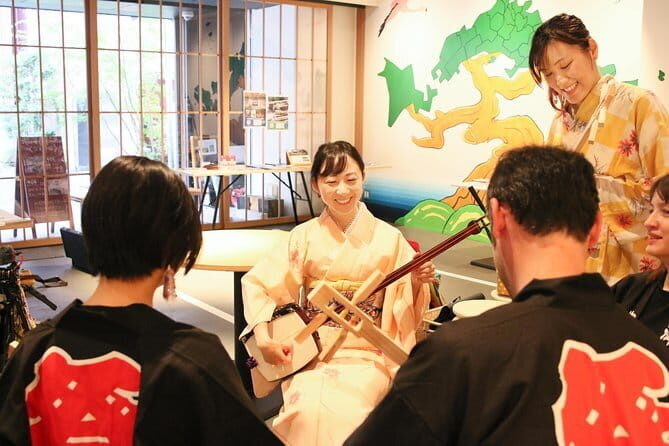
I love when a cultural experience lets you do something, not just look at it. This one is built around the shamisen—the three-stringed instrument that shows up across Japanese theater and folk traditions—yet it’s delivered in a way that’s approachable for first-timers. You’re not expected to show up already knowing the basics. You’re expected to build, try, and learn.
The workshop is designed to lower the usual “I’m not musical” barrier. You’ll start with a short history and explanation, then jump into assembling your introductory mini shamisen kit. After that, you play right away using a simplified sheet that includes numbers to guide where to hold. That’s a big deal, because it means you can participate even if reading music feels intimidating.
And yes, it’s in Saitama Prefecture, with the start point at Tokorozawa Station (Tokyo area for many visitors). If you want a Japan experience that doesn’t require a full day of moving around, this fits well.
The 2-hour flow: from happi coat to your first song
This is roughly a 2-hour experience, and the pacing is part of why it works. It’s not “sit, listen, maybe play later.” You’ll be assembling in the middle of the session and performing in the second half.
Here’s how the arc usually goes:
1) Arrive and get into the rhythm with a happi coat
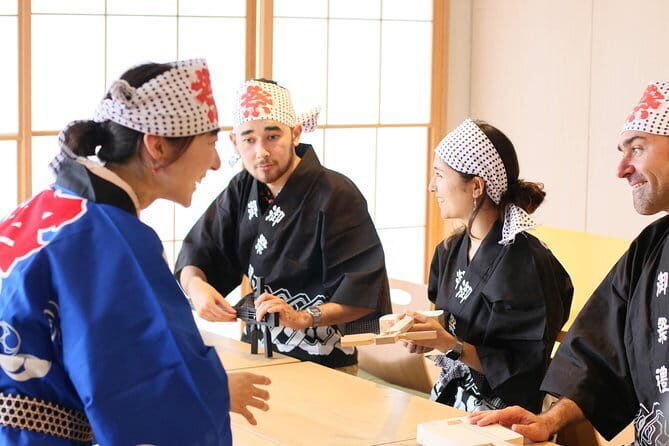
You begin by dressing for the moment. The workshop has you wear a happi coat and settle into the Japanese-style room where instruction happens. I like this detail because it helps shift your brain from tourist mode to participant mode. It’s also just fun.
This part won’t take long, but it sets a welcoming tone. Even if you’re traveling alone, you’re quickly in the same group “bubble” as everyone else.
2) A short shamisen primer: history and features, without overload
Next comes a brief explanation of the shamisen—its features and some background history. The key word here is brief. This isn’t a lecture marathon, and it’s not trying to make you a music scholar by the end.
What matters for you is that the explanation supports the practical steps. You’ll learn enough to understand what you’re holding and why it sounds the way it does. That’s what turns the later playing from random tapping into something you can follow.




3) Assemble your mini shamisen kit (about 20 minutes)
Then you assemble. The experience uses an introductory mini shamisen kit, with swatches and guidance on key parts (like the line). You’ll try it yourself rather than watching someone do it all.
The session is designed so it’s not complicated—people even around elementary-school age can build it. For adults, that’s reassuring. You don’t need patience for technical hobby work. You need attention for the few steps that matter.
This is also where you’ll feel the biggest “I made this” moment. You’re not just copying a preset souvenir. You’re building an instrument you’ll take home.
4) Make your first sound immediately
Right after assembly, you play. This is a beginner workshop, so the goal is participation, not perfection.
You’ll be taught how to read the music used in the class. The mini-shamisen set makes things easier by using numbers on the instrument/score so you can understand where to hold just by looking. That kind of visual guidance is exactly what helps you succeed quickly.
5) Practice together with a simple score
Then you practice as a group. The score used for the workshop is designed to be simple. It also helps that the mini shamisen is set up to guide you visually.
I like group practice because it removes pressure. You’re learning while listening to others, and you can match timing without feeling singled out. With a max of 4 travelers, it’s not a big performance room either—more like a friendly practice circle.
6) Take a break, then enjoy live shamisen with tea sweets
After practice, there’s a break. Then you’ll listen to a live shamisen performance, paired with tea sweets.
This part matters more than people expect. Without it, a hands-on class can end with “okay I played a little and now we’re done.” Here, you get the payoff: you hear the instrument in a more complete musical context. It also gives your hands a rest before the final wrap-up.
7) Finish at the raised point and take it home
At the end, you take home your handmade mini shamisen, plus the sheet music you practiced. That’s a smart touch. If you want to keep the experience alive after your trip, having the exact material you used makes practicing at home more realistic.
Show it off to family and friends, sure. But I think the bigger win is that you can keep learning without starting from scratch.
Price and value: what $182 buys you (and what it doesn’t)
The price is $182.09 per person, and the experience is often booked about 46 days in advance on average. For a 2-hour workshop, that can feel like a splurge—until you look at what’s included.
Here’s the value angle:
- You’re not paying only for instruction. You’re also paying for a handmade mini shamisen you take home.
- You get a structured class: explanation, assembly time (around 20 minutes), guided playing, and group practice.
- The session includes tea sweets and a live shamisen performance, so it’s also a small cultural evening.
What it doesn’t include (based on what’s provided) is anything like a full-day itinerary of multiple stops. This is a focused experience, not a broad sightseeing bundle. If you’re expecting a long program or a tour of multiple sites, you’ll feel like you got only part of a day.
But if your goal is a hands-on “I did this” memory with a real object to bring home, the price becomes easier to justify.
Who this is best for (and who might want a backup plan)
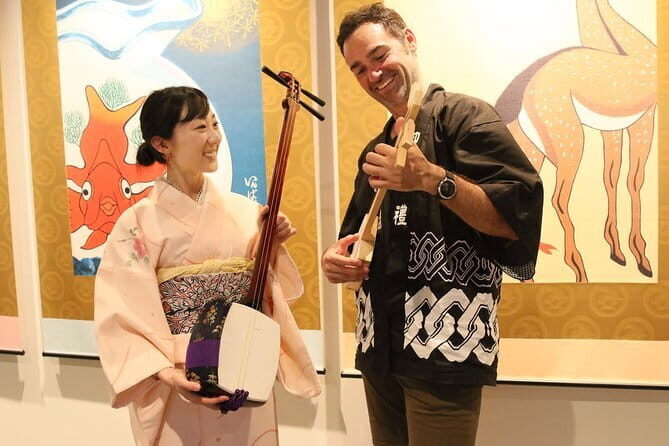
This workshop is designed to be easy for everyone. Most travelers can participate, and elementary school students or older are welcome. That tells you the organizers expect true beginners.
I think it’s especially good for:
- First-time visitors who want Japanese culture that’s active, not passive
- People who want a unique souvenir that’s not just edible or mass-produced
- Families who want a structured activity with a clear payoff
- Anyone interested in Japanese musical instruments but held back by the usual intimidation factor
A possible mismatch:
If you’re specifically hunting for deep technical mastery on day one, this likely won’t satisfy that goal. It’s built for quick learning, simple scores, and enjoyment.
And one more practical note: the experience requires good weather. That doesn’t mean you’ll be outside the whole time, but it does mean you should have flexibility in your schedule.
The human touch: patient teaching and real enthusiasm
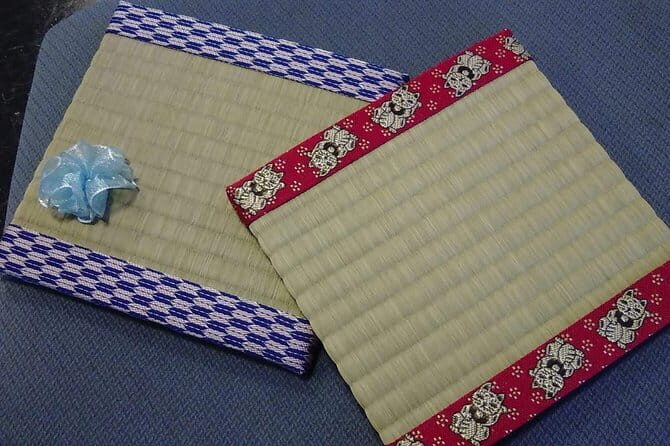
The reviews highlight something you can’t always guarantee in hands-on workshops: the teacher’s temperament. One write-up praised the instructor for being kind, patient, and passionate about music, and that same feedback pointed to a lot of explanation about the shamisen’s history.
In other words, you’re not thrown in and left to figure it out alone. You’re guided. And because the group size is small, it’s easier to ask questions and get help when you need it.
Also, it’s possible to meet international fellow participants. The workshop is described as a place that welcomes foreigners, so depending on timing, you might get a little cultural exchange going just through conversation.
What to do before and after so you actually enjoy it
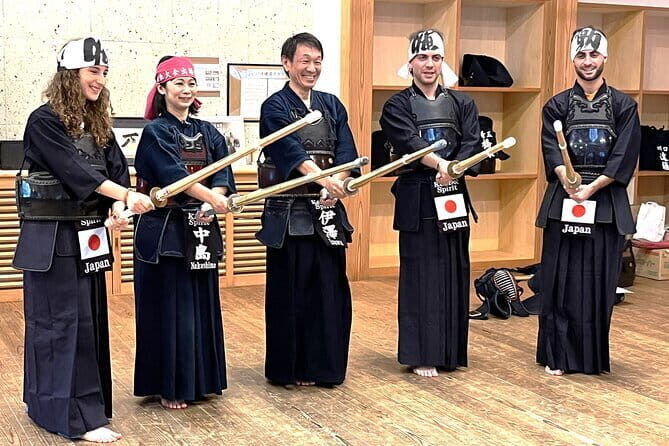
Before
- Dress for comfort. You’ll wear a happi coat, but you’ll still need normal clothes that are easy to move in.
- Don’t schedule this right after something exhausting. Two hours is short, but you’re doing hands-on assembly and learning to play.
- If you’re the kind of person who gets nervous trying new instruments, go anyway. The simplified score and numbered guidance are meant to keep you on track.
After
- Plan for travel with a small instrument. You’ll be taking home your handmade mini shamisen, so give yourself a little space for carrying it carefully.
- Keep your sheet music. It’s included, and it’s what turns the class into something you can revisit at home.
Tips to get the most out of your mini shamisen lesson
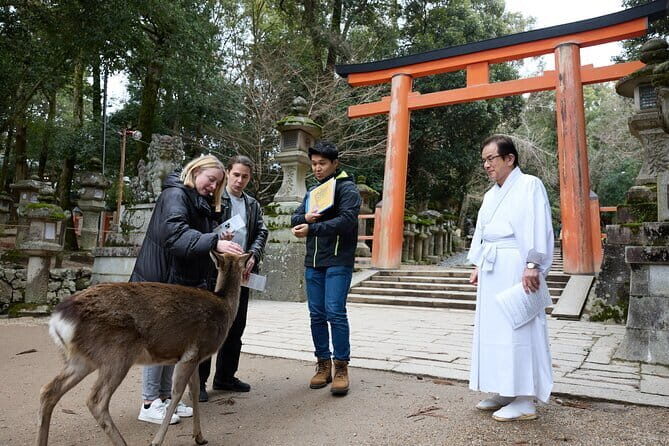
A few small choices can make the difference between “fun memory” and “I can keep playing.”
First, listen carefully during the explanation. The brief history and features section isn’t filler. It helps you understand what you’re doing when you start playing.
Second, focus on the numbers and finger guidance. The mini shamisen setup is made so you can follow along visually. If you ignore that support and try to force your own method, you’ll likely slow down.
Third, enjoy the group practice without overthinking it. This is the kind of class where you learn fastest by playing a little imperfectly on purpose.
And finally, don’t rush the live performance at the end. Even if you’re tired, take it in. It’s your chance to hear the instrument as more than a classroom project.
Quick FAQ for your mini shamisen day
FAQ
Where does the workshop start?
The workshop starts at Tokorozawa Station in Tokorozawa, Saitama, Japan, with the start time listed as 1:00 pm.
How long is the experience?
It lasts about 2 hours.
What do I make and take home?
You’ll handcraft a mini shamisen and take the instrument home. You can also take home the sheet music you practiced.
Is it beginner-friendly?
Yes. The experience is set up for beginners, and it’s described as easy for everyone, with participation for elementary school students or more.
How many people are in a group?
The maximum group size is 4 travelers.
Is pickup available?
Yes, pickup is offered.
What if the weather is bad?
The experience requires good weather. If it’s canceled due to poor weather, you’ll be offered a different date or a full refund.
Should you book TOKYO SHAMI’s mini shamisen workshop?
If you want a hands-on Japan experience where you leave with an instrument, I’d say book it. The combination of building your own handmade mini shamisen, getting guided help for playing right away, and ending with tea sweets plus a live shamisen performance is a rare mix of learning and payoff.
It’s also a strong choice when you’re tired of only sightseeing. This is the kind of activity that gives you a story you can’t replicate just by taking photos. And with a small group size, it stays friendly rather than crowded.
If you’re short on time and want many stops, this won’t replace a full day of touring. But if your priority is culture you can touch, play, and keep practicing after your trip, this is a very reasonable bet.
More Tour Reviews in Saitama Prefecture

Fresh reviews from around Saitama Prefecture

Saitama Prefecture, compared.
 ★ 5.0Mt. Fuji and Hakone Private Tour with English Speaking DriverFrom $54022 reviews
 ★ 4.5Ecotourism and Woodcraft with a Mountain Artist Near TokyoFrom $9321 reviews
 ★ 5.0Unique Brewery Tour and One-of-a-Kind Sake Tasting Near TokyoFrom $10017 reviews
 ★ 5.0Gyoda Tabi Shoes Cultural Walking TourFrom $457 reviews
 ★ 5.0Chichibu’s Weaving Story: A Journey of Tradition and FestivalFrom $1006 reviews
 ★ 5.0Let’s enjoy Japanese Festival Music- Chichibu Yatai BayashiFrom $265 reviews
★ 5.0Mt. Fuji and Hakone Private Tour with English Speaking DriverFrom $5404 reviews
★ 5.0Let’s enjoy Japanese Festival Music- Chichibu Yatai BayashiFrom $265 reviews
★ 5.0Mt. Fuji and Hakone Private Tour with English Speaking DriverFrom $5404 reviews
 ★ 5.0Cultural Sake Brewery Private Tour & Unlimited Tasting Near TokyoFrom $1054 reviews
Browse the lists this tour appears in