
Reviewed · GUIDED
Tokyo Baseball Experience Tour with Expert English-Speaking Guide
Baseball culture in Tokyo is different.
This tour gets you into the rhythm of Japanese baseball before the first pitch, with an expert English-speaking guide and a small group. I love that you do more than sit in the stands; you learn the chants and anthems so you can actually take part. I also like the audio headset setup, which makes the explanation easy to follow even in a busy stadium. One thing to consider: the experience is built around the game starting, so if you were hoping for a long pre-game hangout, the timing is tighter than some tours.
You meet at Meiji Jingu Baseball Stadium, then settle in while your guide explains what makes Japanese baseball tick and how it differs from MLB. If you’re a big baseball fan, this can feel like a shortcut to understanding the fan side of the sport. Just know there’s no food included, and you’ll want to plan around game-time and stadium purchases.
In This Review
- Key things to look for
- Where You Start: Meiji Jingu Baseball Stadium’s Game-Day Feel
- Pre-Game Coaching: How You Learn the Fan Side of Baseball
- The Main Event: Sitting Down for the Game
- Choosing Your Seat: S vs A vs B at Meiji Jingu Stadium
- The Stadium Experience: What You’ll Actually Hear and Do
- Timing and Expectations: When the Tour Ends and the Game Starts
- Food and Drinks: Plan on Buying What You Want
- Weather Reality: Open-Air Ballpark, Rain Rules Included
- Price and Value: Is $98 a Fair Deal?
- Who This Tour Fits Best (and Who Might Skip It)
- A Practical Reality Check Before You Book
- Should You Book the Tokyo Baseball Experience?
- FAQ
- FAQ
- How long is the Tokyo Baseball Experience tour?
- What is included in the price?
- Is food provided?
- Do I get to choose my seat?
- What if it rains?
- Where do I meet the guide?
- How large is the group?
- What is the cancellation policy?
- What if I arrive late?
Key things to look for
- Small group, big atmosphere: Limited to up to 12 people, with the tour requiring a minimum of 8 to run.
- English guide + headset: Clear commentary about Japanese baseball culture and how it compares to MLB.
- Chants and anthems practice: You’ll learn what to sing and when, then join the crowd.
- Ticket included for good sightlines: You’ll get an S, A, or B seat based on availability.
- Short tour window before first pitch: The guided portion ends when the game begins.
Where You Start: Meiji Jingu Baseball Stadium’s Game-Day Feel
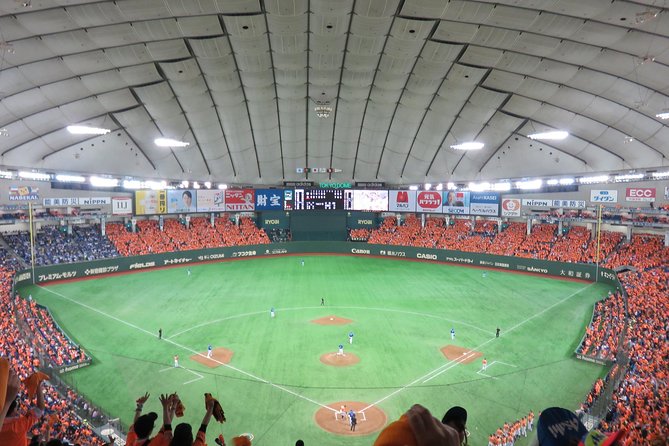
Meiji Jingu Baseball Stadium sits right in the Tokyo scene, and you’ll feel it the second you arrive. This is an open-air venue, so the stadium atmosphere depends a lot on weather, crowd energy, and the timing of the match. You’ll start right at the stadium address in Shinjuku City, which keeps things simple: no complex transfers, and you don’t have to coordinate extra stops.
What makes this start work well is that the experience is designed around the stadium itself. You’re not rushing to see a bunch of unrelated sights. Instead, you get a guided runway into the game, so you arrive with context already loaded in your head. If you’ve ever watched a baseball game in a country where you don’t speak the language, you know how much fan culture you miss. This tour tries to fix that fast.
Pre-Game Coaching: How You Learn the Fan Side of Baseball
The most useful part of the experience is the guided lead-in. Before the game begins, your English-speaking guide (a genuine expert and fan of Japanese baseball) explains what makes Japanese baseball feel special. Expect comparisons to MLB, but the focus is on how fans experience the sport in Japan—especially the soundscape.
You’ll also learn chants and anthems and then practice joining in. This is not just trivia. The point is to help you follow along with the crowd when the stadium turns loud. When you know the cues, you stop standing there like an audience member and start feeling like part of the moment. It’s a simple upgrade to your seat time.
I like that the guide’s explanations are supported by audio headsets. You don’t have to crane your neck toward a loud guide or try to catch words over the crowd. That matters because stadium noise can swallow spoken language in seconds.
The Main Event: Sitting Down for the Game
Once the game starts, the guided portion ends. The schedule is built this way because the game itself is the centerpiece—about three hours is typical, and the tour runs roughly 4 hours total. You’re essentially there for a guided pre-game briefing plus a full live match from your seat.
That setup has a benefit. You don’t spend the whole time in “tour mode.” You get real stadium time quickly, with the guide’s context paying off as the match unfolds. If you’re the type who learns best by watching, this works.
Also, because the group is small (up to 12), you’re not lost in a giant crowd of strangers. The guide can usually keep track of the group and the headset setup keeps communication practical.
Choosing Your Seat: S vs A vs B at Meiji Jingu Stadium
Your admission ticket is included, and your seat is booked as S, A, or B depending on availability. This is a key detail, because seat choice changes what you notice during play.
Here’s how the options are described:
- S Seats: Right behind the batter, in the heart of the action.
If you want the closest view of pitching and the batter’s zone, this is the one to aim for.
- A Seats: Behind first and third base with a good view of the full field and the bench.
This is often the best “overall” pick if you like watching strategy, baserunners, and the dugout.
- B Seats: Behind the foul pole, with a good view of outfielder play.
If you like tracking the ball in the air and seeing how outfielders play it, this works well.
One practical tip: don’t overthink it. You’re getting a game plus cultural context. Any of these seat categories gives you a real, engaged view. If you’re a pure outfield-tracking person, lean toward B. If you want the pitcher-batter rhythm up close, lean S.
The Stadium Experience: What You’ll Actually Hear and Do
This is where the tour earns its keep. Japanese baseball fan culture is loud and rhythmic, and it’s easy to feel like you’re missing the point if you don’t understand the chants and anthems. The guide’s job is to hand you the basics before you need them.
You’ll learn the timing and the idea behind the chants and songs, then join in with the crowd. That means when big moments hit—when the stadium shifts gears—you’re not guessing what everyone is reacting to.
I also like the “difference from MLB” angle, because it’s not just about rules. It’s about how the experience feels. Even if you already understand baseball, fan traditions and stadium routines are where countries show their personality.
Timing and Expectations: When the Tour Ends and the Game Starts
This tour is designed around one big transition: from guided learning to live match viewing. You’ll start at the stadium and spend the pre-game window learning what to listen for and when to participate. The game itself can last about three hours, and the tour ends when the game commences.
So if you’re the type who likes arriving early to wander the concourses, grab snacks, and settle in slowly, keep your expectations realistic. You’ll likely have time to settle, but the main guided push is meant to get you ready for the chants and anthems before play starts.
The good news is that the whole experience is pretty efficient. You’re paying for the “translator layer” between you and Japanese baseball fan culture, not for a long checklist of stops.
Food and Drinks: Plan on Buying What You Want
No meals come with the ticket. That part is simple: you’ll be buying snacks and drinks at the stands during the game. You can also find merchandise there.
This isn’t a dealbreaker, but it does affect your prep. Bring cash or a payment method you can use at the stadium, and don’t assume you’ll be able to eat comfortably right before the match without a bit of waiting. If you’re sensitive to stadium timing, eat earlier than you normally would and keep your snack purchases small and easy.
The upside: you get to choose what fits your tastes on the day, instead of being limited to a set menu you may not want.
Weather Reality: Open-Air Ballpark, Rain Rules Included
Meiji Jingu Stadium is open-air, so weather matters. Here’s what you should know before you plan your day:
- If there’s heavy rain on your tour date, the match will be canceled and you’ll receive a full refund.
- If it’s light rain, the match proceeds as scheduled.
- If the match is already ongoing and rain starts unexpectedly, no refund is provided.
This is the kind of rule that affects your mental math. If you’re traveling in a season with frequent sudden storms, you might want to build flexibility into your schedule and avoid stacking tight plans right after the game.
If rain happens, embrace it. Baseball games can still be fun in less-than-perfect weather, especially if you’re focused on the experience of the crowd and the game itself.
Price and Value: Is $98 a Fair Deal?
At $98 for about 4 hours, this isn’t a bargain ticket. But it’s also not just “pay for entry to a game.” You’re getting a few things bundled together that would cost time—and money—if you tried to DIY it.
You get:
- an English-speaking guide
- a baseball seat ticket (S/A/B) included
- audio headset
- service fee and tax included
- a mobile ticket for smoother access
The value depends on what you care about. If your goal is simply to watch baseball, you might be able to buy a ticket on your own. But if you want to understand the fan chants, the anthems, and the differences your guide highlights between Japanese baseball and MLB, the guide layer is what you’re really paying for.
For me, the tipping point is the pre-game preparation. Learning the chants before you’re sitting in the middle of a cheering crowd is one of those “small effort, big payoff” travel upgrades. It turns passive viewing into participation.
Who This Tour Fits Best (and Who Might Skip It)
This is a strong pick if you fit at least one of these:
- You’re a baseball fan, especially if you watch MLB and want the Japanese fan experience explained.
- You want a short, structured outing that’s easy to manage and doesn’t require complicated planning.
- You like authentic local culture, even if it’s loud, and you’re okay learning a few things before you settle in.
It may not be the best fit if:
- You need a long pre-game wandering time before sitting down.
- You’re only interested in food and drink, since the tour doesn’t provide it.
- You’re extremely sensitive to weather uncertainty, because the stadium is open-air and rain policies affect refunds.
The tour also says most travelers can participate, with no specific age requirement. Kids must be accompanied by an adult, which makes sense for a live event.
A Practical Reality Check Before You Book
Two details matter more than they look:
1) You must arrive early. Plan to get there at least 10 minutes before the meet-up time. If you’re late, the group may start without you. You’ll be given the tour guide’s phone number to coordinate meeting the group at the next point.
2) This is a join-in group. Maximum group size is up to 12, and the tour requires at least 8 bookings to operate. That keeps the experience intimate but also means it could cancel if there aren’t enough participants.
Also, confirmation happens within 48 hours of booking, subject to availability. So if you’re booking close to your travel dates, try not to wait until the last minute.
Should You Book the Tokyo Baseball Experience?
If you love baseball and want to understand the fan culture, I’d say yes. This tour gives you the missing layer that makes stadium time more fun: chants, anthems, and a clear guide-led explanation you can use immediately while watching.
If you’re on the fence, ask yourself one question: Do you want to just watch, or do you want to feel the crowd and know what’s going on? For the second option, this tour is a very practical way to spend about four hours in Tokyo.
FAQ
FAQ
How long is the Tokyo Baseball Experience tour?
It’s about 4 hours. The game itself can last around 3 hours, and the guided part ends when the game begins.
What is included in the price?
You get an English-speaking tour guide, a baseball seat ticket (S, A, or B seats depending on availability), an audio headset, and the service fee and tax.
Is food provided?
No. Food and drinks are not included, but snacks, drinks, and merchandise are available to buy at the stadium stands.
Do I get to choose my seat?
Seats are booked as S, A, or B based on availability. The descriptions are S behind the batter, A behind first and third base, and B behind the foul pole.
What if it rains?
With heavy rain, the match is canceled and you receive a full refund. With light rain, the match proceeds. If the match is ongoing and rain starts unexpectedly, no refund is provided.
Where do I meet the guide?
You meet at Meiji Jingu Baseball Stadium, 3-1 Kasumigaokamachi, Shinjuku City, Tokyo 160-0013, Japan. The tour ends back at the meeting point.
How large is the group?
It’s a join-in group with a maximum of 12 travelers, and it requires a minimum of 8 people to operate.
What is the cancellation policy?
The experience is non-refundable and cannot be changed for any reason. Cancellation fees apply depending on how close it is to the event time.
What if I arrive late?
Please arrive at least 10 minutes before the meet-up time. If you’re late, the tour may begin without you, and you can use the guide’s phone number to meet the group at the next location.
Guided, compared.
 ★ 5.0Tokyo 6hr Private Tour with Government-Licensed GuideFrom $1553,902 reviews
 ★ 4.9Shinjuku Local Bar and Izakaya Guided Walking TourFrom $341,794 reviews
 ★ 4.8Private City Highlights Tour with Local GuideFrom $1061,433 reviews
 ★ 4.9Tsukiji Fish Market Guided Walking TourFrom $221,397 reviews
 ★ 5.0Tokyo 4hr Private Tour with Government-Licensed GuideFrom $1091,394 reviews
 ★ 5.0Tokyo Guided Small-Group Biking TourFrom $1061,250 reviews
 ★ 4.6Samurai Ninja Museum Guided tour and ExperienceFrom $271,010 reviews
 ★ 5.0Tsukiji Fish Market Guided Tour and Sushi Making with Pro ChefFrom $104775 reviews