
Reviewed · YOKOHAMA TOURS
Night Walking Tour Yokohama, Walk and Discover with a Local
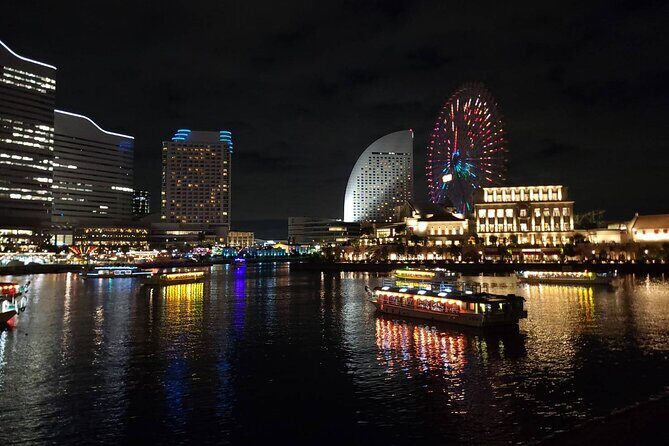
Yokohama looks different after dark. This nighttime stroll stitches together harbor views, neon skyline angles, and the energy of Chinatown into a route that makes the city easy to read in just 2 to 3 hours. You’ll hit modern landmarks, classic waterfront architecture, and photo stops planned for low-light magic.
I especially like the mix of “future” and “history” in one loop, with the waterfront pacing keeping it relaxed. I also like the guide team—Konan and Noah have a reputation for being patient, knowledgeable, and flexible, even adjusting the evening when fireworks popped up.
One thing to consider: the tour runs best in good weather, and it’s still a walking tour, so you’ll want to match your pace to the group.
In This Review
- Key highlights
- Why a 6:00 pm start makes sense in Yokohama
- Meeting point and timing: what 2 to 3 hours really feels like
- The route in order: from engineering details to Chinatown nights
- Starting impressions: engineering pride and city identity
- Landmark Tower: the skyline backdrop you can actually use
- Cosmo World Ferris wheel: playful light, easy snapshots
- Cup Noodles Museum area: instant food culture, viewed on the way
- Hammerhead: a quieter harbor pause
- Red Brick Warehouse: Meiji-era outside, modern culture inside
- Osanbashi terminal: big panoramic bay views
- Waterfront park: locals relaxing, you catching your breath
- Chinatown ending: your free time for street food and night markets
- How the local guides shape the value (Konan and Noah)
- Price and value: what you’re really paying for
- What to expect during the stops (and how to get the most out of them)
- Who should book this night walk
- Should you book Night Walking Tour Yokohama with Dango Tours?
- FAQ
- How long is the Yokohama Night Walking Tour?
- What time does the tour start?
- Where do I meet the guide?
- Where does the tour end?
- How big is the group?
- Is food included in the price?
- Are entrance fees included?
- Is a mobile ticket used?
- What accessibility or fitness level is it listed under?
- What if the weather is bad?
Key highlights
- Landmark Tower at night: dramatic skyline backdrop for quick, high-impact photos
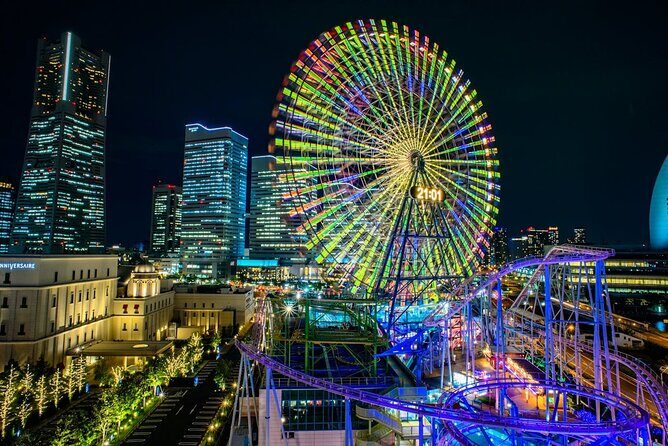
- Cosmo World Ferris wheel: a bright, playful snapshot stop
- Red Brick Warehouse: a Meiji-era exterior turned into a cultural hub by the water
- Osanbashi pier viewpoints: wide bay panoramas from a favorite waterfront terminal
- Chinatown after the walk: freedom to roam night markets and grab Chinese street food
Why a 6:00 pm start makes sense in Yokohama
This tour is built around the moment the city flips from day mode to night mode. At 6:00 pm, Yokohama is usually active, but not fully chaotic—perfect for seeing lights come on while the waterfront still feels calm. The whole idea is simple: you’ll walk a short arc across the city, then end where the atmosphere peaks.
The route also makes practical sense for first-timers. Instead of hopping randomly, you’ll follow a storyline: engineering and design first, then the skyline, then the bay, then the street-food side of Chinatown. That flow helps you understand Yokohama as more than a postcard port town.
And because the group is small (up to 12), you’re not forced into the slow-moving crowd shuffle. You can actually keep up with the conversation, ask questions, and get to photo spots before they get crowded.
Meeting point and timing: what 2 to 3 hours really feels like
The tour meets at 1-chōme-5-8 Minamisaiwai, Nishi Ward and ends in Yokohama Chinatown (Yamashitacho, Naka Ward). Start time is 6:00 pm, and the walk runs about 2 to 3 hours.
That timing matters. You’re not committing to a full evening, but you are getting enough time for multiple waterfront stops and several short landmark breaks. The stops aren’t long museum marathons either—most are quick photo and view moments. That keeps the pace moving while still giving you time to breathe when the harbor opens up.
You’ll also have a mobile ticket, so you can travel light. If you’re someone who hates printed vouchers and QR-card juggling, that’s a real plus.
The route in order: from engineering details to Chinatown nights
This walk isn’t just scenic. It’s structured around themes—modern design, city identity, bay views, and food culture. Here’s how the evening unfolds.
Starting impressions: engineering pride and city identity
You begin with a peek at Japan’s engineering pride, tied to Nissan’s innovation and automotive design history. Even if cars aren’t your hobby, this stop helps set context fast. It gives you a lens for Yokohama: a city that likes to tinker, build, and reinvent.
Then you move into an area where the surrounding cultural identity matters more than any single building. You’ll get a quick orientation about what to notice as you walk—how Yokohama tells its story through architecture and public spaces.
Landmark Tower: the skyline backdrop you can actually use
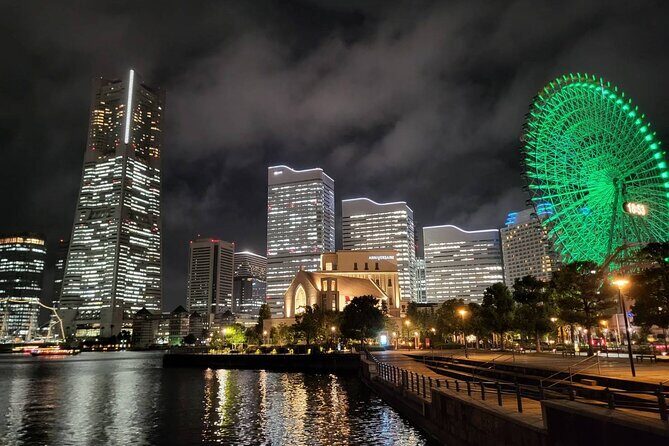
Next up is Landmark Tower, Japan’s second tallest building. You get about 5 minutes here—enough time to frame photos with the tower as your anchor.
The key value of this stop isn’t the time. It’s what the guide helps you see. At night, the skyline becomes a set of angles—lit edges, reflective surfaces, and the way the bay air softens the background. You’ll leave with pictures that feel like Yokohama, not just a generic big-city shot.
Cosmo World Ferris wheel: playful light, easy snapshots
After the tower, you hit Yokohama Cosmo World for another short, timed photo break. The main feature is the massive Ferris wheel, which is known for looking especially dramatic once night lighting kicks in.
This stop is ideal if you like your photos to have a “story prop.” A Ferris wheel says fun and romance without trying too hard. It also helps break the evening into sections, so the walk feels varied rather than repetitive.
Cup Noodles Museum area: instant food culture, viewed on the way
You then pass by the Cup Noodles Museum Yokohama area. This one is about the theme. The museum is connected to Japan’s famous instant noodles, and the stop is quick—about 2 minutes—more of a recognizable detour than a deep visit.
If you’re curious about how Japanese culture turns everyday life into pop icons, this moment works. You’re not stuck reading in front of a doorway. You’re just seeing the kind of creativity Japan is willing to build into a brand.
Hammerhead: a quieter harbor pause
At Yokohama Hammerhead, you get around 15 minutes—a longer break compared to the skyline stops. This spot is described as charming and a bit lesser-known, with time for rest and photos plus a surprise story from your guide.
I like this kind of mid-tour reset. It’s when the waterfront air catches up with you, and you get to slow down before the bigger, more iconic landmarks.
Red Brick Warehouse: Meiji-era outside, modern culture inside
Then it’s Yokohama Red Brick Warehouse. You’ll spend about 10 minutes here, focused on the exterior and the idea behind the building.
This is a Meiji-era warehouse that’s now used as a cultural hub, tying old trade-era Yokohama to the present-day art and events vibe. Even if you don’t go inside (entrance isn’t part of the included package), the outside is still worth your attention. The warm brick tones can look especially photogenic under night lighting and waterfront reflections.
Osanbashi terminal: big panoramic bay views
Next you reach Osanbashi Yokohama International Passenger Terminal. Expect about 10 minutes and a classic waterfront payoff: panoramic views over Yokohama Bay.
This is a stop you’ll appreciate whether you’re a couple photographer or a solo wanderer. Piers naturally create depth—water in the foreground, boats or buildings in the middle, and the city as a glowing horizon. It’s also one of those places where a short pause feels respectful, like you’re letting the harbor speak.
Waterfront park: locals relaxing, you catching your breath
After the terminal, you’ll stroll through a peaceful waterfront park area with views of ships. The point here is the contrast. You’ve seen big landmark lighting. Now you get a calmer pocket where locals relax and the city feels less performative.
This segment is a good time to ask your guide one or two targeted questions—what to try in Chinatown later, or what area you can walk on your own afterward.
Chinatown ending: your free time for street food and night markets
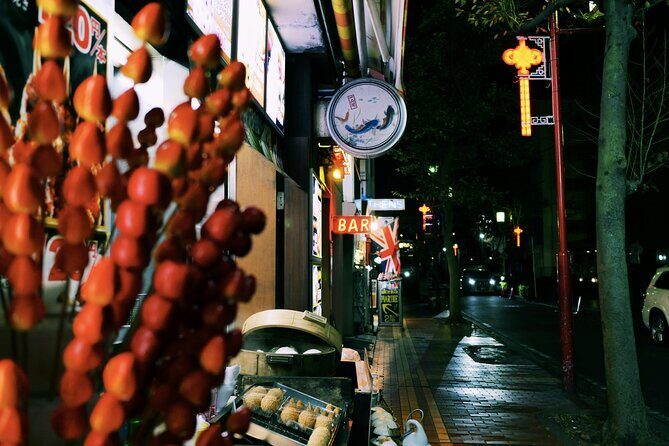
The walk ends in Japan’s largest Chinatown, at Yamashitacho. From there, you’re free to explore the night markets and choose your own pace.
This is where the tour’s promise pays off: you get local recommendations and then you can test them right in the real environment. You’ll be able to look for authentic Chinese street food like dumplings, buns, and sweets—and just wander with less structure and more curiosity.
If you want a plan, you can treat Chinatown like a buffet walk: pick one savory, one snack, and one sweet, then keep going until you find your favorites.
How the local guides shape the value (Konan and Noah)
A good walking tour lives or dies on the guide. Here, the big advantage is the human touch and adaptability.
Konan and Noah are described as patient, knowledgeable in the sense that they can explain what you’re seeing, and flexible when plans need adjusting. In one case, they even worked around late train timing and adjusted the route to include unexpected local fireworks. That kind of flexibility matters because night schedules rarely stay perfect.
You’ll also get clear meeting help. The guides use WhatsApp and send pictures showing where to meet. That reduces stress—especially helpful in Yokohama, where station exits can feel like a maze when you’re arriving for the first time.
Even the way the tour handles time slots signals good guiding. Short stops at Landmark Tower and Cosmo World work because you’re not stuck waiting around; you get timed photo opportunities and context, then you move on.
Price and value: what you’re really paying for
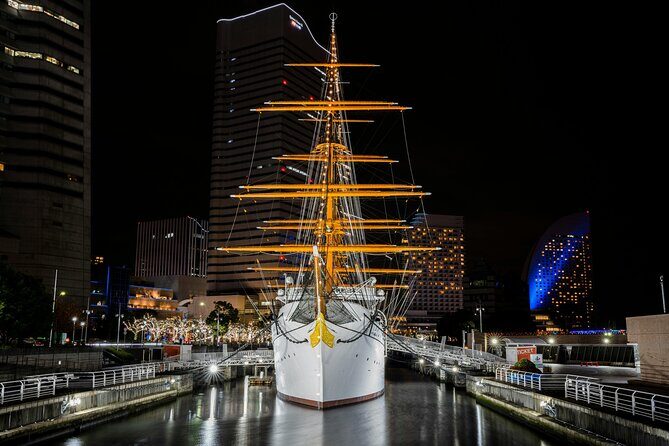
The price is $66.28 per person, and the tour runs 2 to 3 hours with a small group capped at 12. It’s also a mobile ticket experience, and the guide provides route planning plus recommendations for local food, bars, and attractions.
What you’re not paying for is admissions. Entrance tickets are not included for optional sites, and several stops explicitly note that admission isn’t part of the tour. Some stops are free to enjoy from the outside or as viewing areas, like the Hammerhead break and the Red Brick Warehouse exterior time. Chinatown is also yours to explore after the walk, so your spending is in your hands.
So the value question becomes: do you want a guide to connect dots across the skyline, bay, and food districts? If yes, this price starts to feel fair. You’re buying orientation, photo-stop planning, and local guidance during the hours when your own navigation would be slower and less fun.
If you prefer to plan every stop yourself and already know Yokohama well, you might feel the cost. But if you’re new to the city—or just want a smoother way to make a first night count—this is priced like a practical help.
What to expect during the stops (and how to get the most out of them)
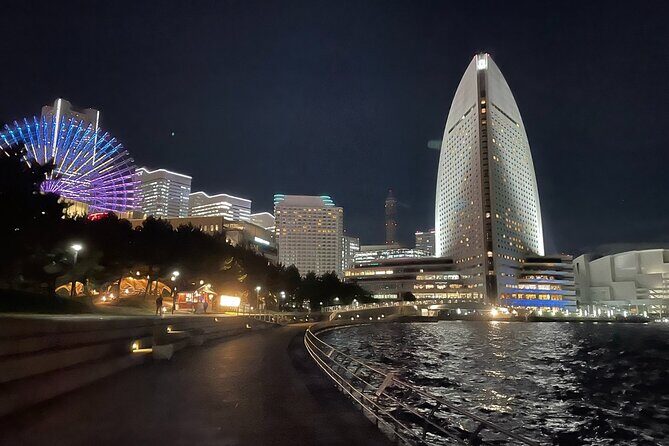
The itinerary is built on short bursts and purposeful pacing. Here’s how to think about each phase so you don’t feel rushed.
- At the skyline stops (Landmark Tower and Cosmo World), you’ll get quick photo windows. Show up ready to shoot, not wandering first.
- At the culture stops (Cup Noodles Museum area, Red Brick Warehouse), your benefit is the context. Look at what’s around the main object.
- At the harbor stops (Hammerhead, Osanbashi, the waterfront park), the value is the change in mood. Let the waterfront reset your brain before you go into Chinatown.
Also, remember that the tour includes photo stops. That means the guide is actively guiding you to angles and timing. If you’re the type who never asks for help with photos, I’d still recommend letting the guide direct you. Night light is fickle, and those “one-minute” angles can look best when someone points them out.
Who should book this night walk
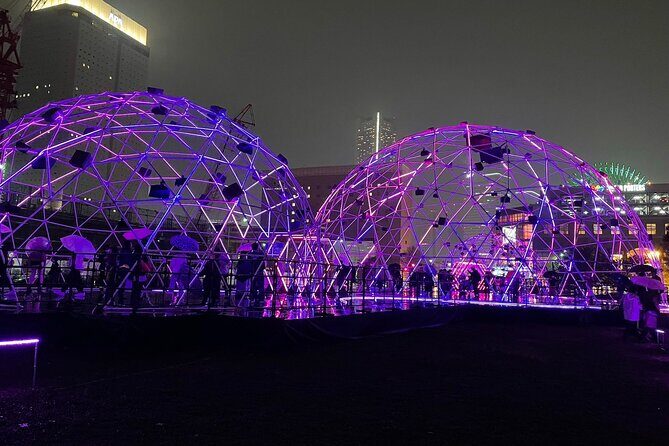
This tour fits best if you want:
- an efficient first-night Yokohama experience
- a mix of modern landmarks and waterfront icons
- a guided route that ends where you can eat and wander on your own
The tour is marked as having low fitness level, and it lists that people with mobility impairments can participate. Since it’s still a 2 to 3 hour walking experience, you’ll want to choose a pace that works for you and not treat it like a sprint.
If you’re traveling solo, the small group format can feel friendly without turning into a guided lecture. If you’re traveling as a couple, the harbor viewpoints and terminal panoramas are naturally photo-friendly.
Should you book Night Walking Tour Yokohama with Dango Tours?
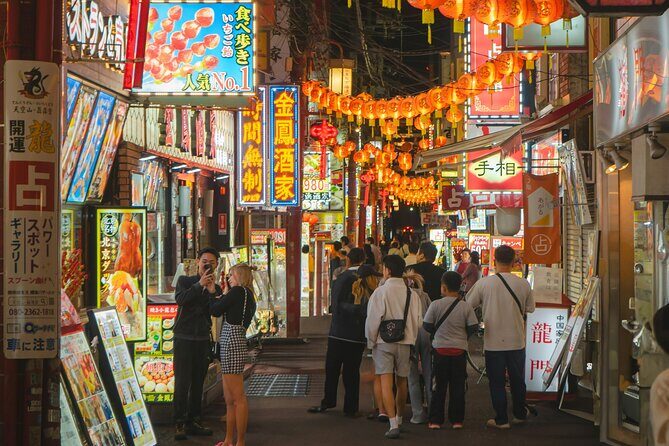
Book it if you want your Yokohama night to feel organized, scenic, and worth your limited time. The standout is the combination of multiple landmark photo stops, a smooth waterfront sequence, and an ending in Chinatown where your free time actually matters.
Skip it only if you dislike walking at night or you already have a detailed Yokohama route locked in and don’t need help connecting landmarks to stories. Also consider that the experience depends on good weather, so if your dates are stormy, you may need a backup plan.
If you do book, do two things: arrive a little early so the meeting feels easy, and go into Chinatown ready to choose food freely. That’s where the evening turns from sightseeing into real local fun.
FAQ
How long is the Yokohama Night Walking Tour?
It runs about 2 to 3 hours.
What time does the tour start?
The start time is 6:00 pm.
Where do I meet the guide?
The meeting point is 1-chōme-5-8 Minamisaiwai, Nishi Ward, Yokohama, Kanagawa 220-0005, Japan.
Where does the tour end?
The tour ends in Yokohama Chinatown at Yamashitacho, Naka Ward, Yokohama, Kanagawa 231-0023, Japan.
How big is the group?
The tour has a maximum of 12 travelers.
Is food included in the price?
No. Food and drinks purchased during the tour are not included.
Are entrance fees included?
Entrance fees to optional attractions are not included. Some stops are listed as free, while others note admission not included.
Is a mobile ticket used?
Yes, the tour uses a mobile ticket.
What accessibility or fitness level is it listed under?
Most travelers can participate, and it is listed under low fitness level. It also notes that people with mobility impairments can participate.
What if the weather is bad?
The tour requires good weather. If it’s canceled due to poor weather, you’ll be offered a different date or a full refund.
More Tours in Yokohama
More Tour Reviews in Yokohama
Next Door in Yokohama
Yokohama Tours, compared.
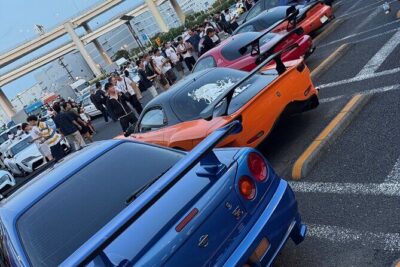 ★ 4.9EVO, WRX, Skyline – JDM Night Run to Daikoku Car MeetFrom $125478 reviews
Best Price Daikoku Parking Area JDM Car MeetFrom $76192 reviews
★ 4.9EVO, WRX, Skyline – JDM Night Run to Daikoku Car MeetFrom $125478 reviews
Best Price Daikoku Parking Area JDM Car MeetFrom $76192 reviews
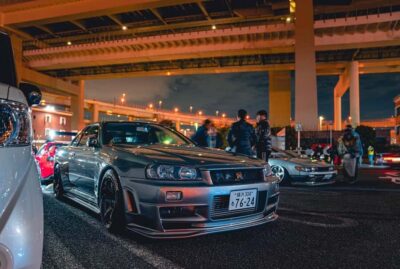 ★ 4.9Daikoku & Tokyo Private JDM Tour by 700HP R34 GT-RFrom $586101 reviews
 ★ 5.0Tokyo 8hr Private Tour with Licensed Guide from YokohamaFrom $20194 reviews
 ★ 5.0【Tokyo】JDM Daikoku Parking Area & Nissan Facility TourFrom $5587 reviews
 ★ 4.5Narita Airport: One Way Private Transfer to Tokyo|Yokohama HotelsFrom $7769 reviews
 ★ 5.0R34Skyline Daikoku PA Fast & Furious Private ExperienceFrom $10963 reviews
 ★ 5.0Shuttle Van Transfer, Yokohama(Port)⇒Tokyo, Narita, Haneda, TDRFrom $12263 reviews
Browse the lists this tour appears in