
Reviewed · KAWAGOE
Day Tour from Tokyo : Experience Kawagoe and Edo Japan
Edo Japan fits in a six-hour day. This Kawagoe day tour is interesting because it mixes Edo-era sights with real old-town walking, so the change of scenery feels immediate. I especially love the Edo Castle connection at Kitain Temple, where part of the temple’s main hall uses buildings from the original Edo Castle in Tokyo. I also love how Beth keeps things moving but still lets you breathe, with practical tips for food and pacing. One drawback to consider: food and drink are not included, so you’ll want to plan your lunch budget and eat when you get your free time.
You’ll start in Ikebukuro (meeting at 9am), ride out to Kawagoe, then spend the day bouncing between temples, shrines, and the Kurazukuri warehouse district. The big value is that key admission fees are covered, and you get a local English-speaking guide to connect what you’re seeing to what it meant in the Edo period.
In This Review
- Quick hits before you go
- Why Kawagoe feels like a mini Edo day trip from Tokyo
- Finding your guide at Ikebukuro (the part that matters)
- Kitain Temple: pagoda power and 540 Rakan statues
- Kurazukuri no Machinami: walking the clay-warehouse streets
- Hikawa Shrine: a short stop with a fun ritual break
- Kawagoe Castle Honmaru Palace remains: walking where power used to sit
- Second pass through the old town: shop smarter, not longer
- Price and value: what $135 really buys you
- Pacing, walking, and who this fits best
- Should you book this Kawagoe and Edo Japan day tour?
- FAQ
- How long is the Kawagoe and Edo Japan day tour?
- What is included in the tour price?
- Is lunch included?
- Where do I meet the guide in Tokyo?
- What stops are part of the day?
- Is the tour offered in English?
- Are trains or transport included before and after the tour?
- Who is the tour not suitable for?
- Is free cancellation available?
Quick hits before you go
- Kitain Temple’s famous pagoda link to the original Edo Castle buildings
- Kurazukuri no Machinami clay-warehouse streets for easy photos and shopping
- Hikawa Shrine fortune-fishing for a fun break during the walk
- Kawagoe Castle Honmaru Palace remains you can walk through plus a castle stamp
- Beth’s on-the-ground guidance that includes restaurant and transport suggestions
- Two old-town free-time windows so you can shop and snack without rushing
Before you commit, see how this one stacks up against a few Kawagoe favourites:
- Kawagoe Japanese Food Tour : Unagi Kaiseki and Sake near Tokyo★ 5.0 · 30 reviews
- Kawagoe Private Custom Tour with Local Guide★ 5.0 · 29 reviews
- Kawagoe 4hr Private Tour with Licensed Guide (Kawagoe Dep)★ 5.0 · 13 reviews
Why Kawagoe feels like a mini Edo day trip from Tokyo
Kawagoe is one of those places that’s close enough to treat as a day trip, yet different enough to feel like you left Tokyo behind. It’s in Saitama, and it’s about 30 minutes from Ikebukuro and around 1 hour from Shinjuku or Shibuya, depending on your route.
The tour is built to show you the Edo look and feel without turning it into a nonstop checklist. You get guided time at the big sites, then you get breathing space in the old town where the day becomes more about wandering and choosing what to snack on.
Finding your guide at Ikebukuro (the part that matters)
This starts at Ikebukuro Station at 9am, meeting inside the station outside the Tobu blue entrance gate. If you’re arriving early, use that time to locate the Tobu Line signs (TJ in a blue square) and work your way toward Central Gate 1.
Then, follow the route described to the JR green ticket gates and the blue Tobu entrance gate right in front of you. I like this kind of meeting point because it’s clear, and it helps you avoid that awkward late-start panic.
Kitain Temple: pagoda power and 540 Rakan statues
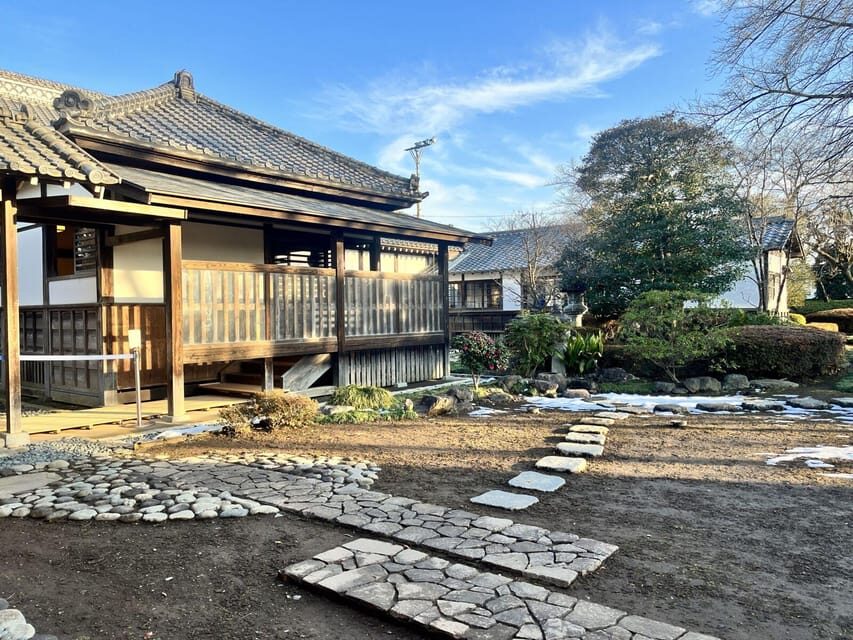
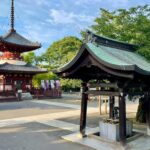
Your first major stop is Kawagoe Kita-in Temple (Kitain) for a guided visit and time for photos. This temple is famous for a pagoda tied to Edo Castle history, including part of its main hall being constructed from buildings from the original Edo Castle in Tokyo.
You’ll also see the temple’s 540 Rakan statues, which is the kind of detail that makes a temple visit feel more specific than a generic shrine-stop. The guided portion helps you understand what you’re looking at, and the extra free moments let you slow down on the grounds if you’re the type who wants to read signs and take photos properly.
Kurazukuri no Machinami: walking the clay-warehouse streets
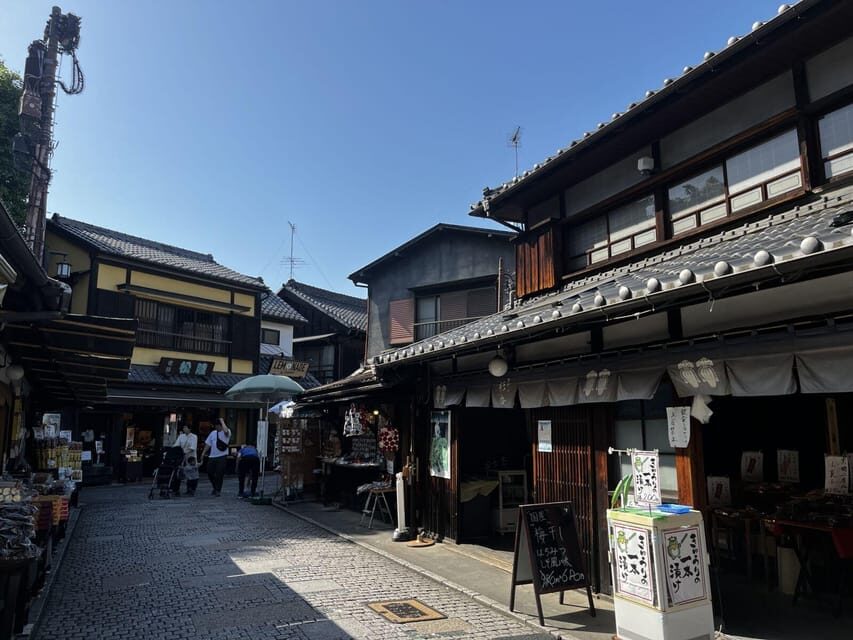
Next comes the Kurazukuri no Machinami warehouse district, where the streets feel like a preserved old-town set. This is where you’ll spend the longest chunk of time—first with guided context, then with a lunch break and free time.
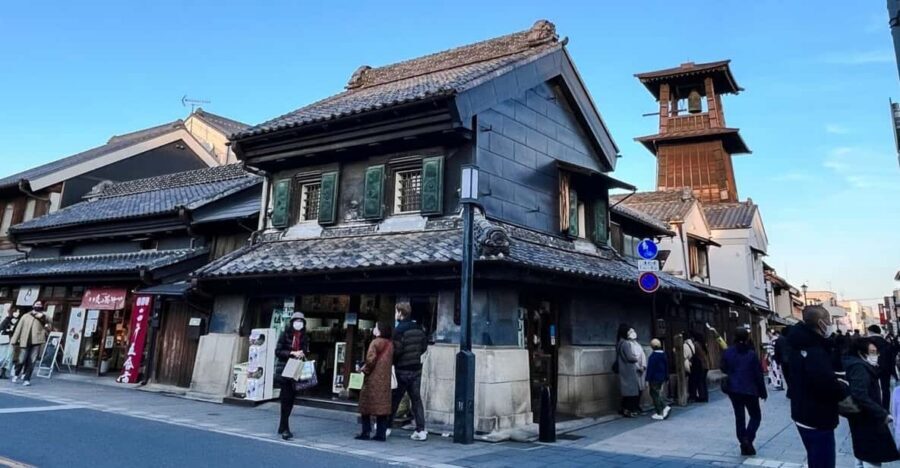
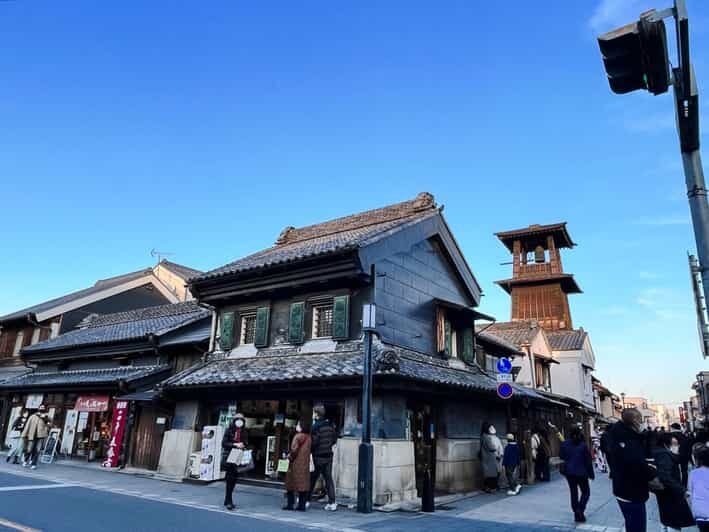
The guide walk focuses on the landmark cluster and the backstory, including the famous bell tower area and the look of the preserved Kurazukuri clay warehouses. There’s even an old sake brewery you can pass as part of the old-town experience, plus local shops and food stalls along the way.
This is also where you should lean into the food part of the day. Kawagoe is known for sweet potatoes, and the tour naturally pushes you toward trying things like sweet potato pie. I’d treat that as your “I’m not in Tokyo anymore” moment—small, local, and easy to fit into a walking day.


Hikawa Shrine: a short stop with a fun ritual break
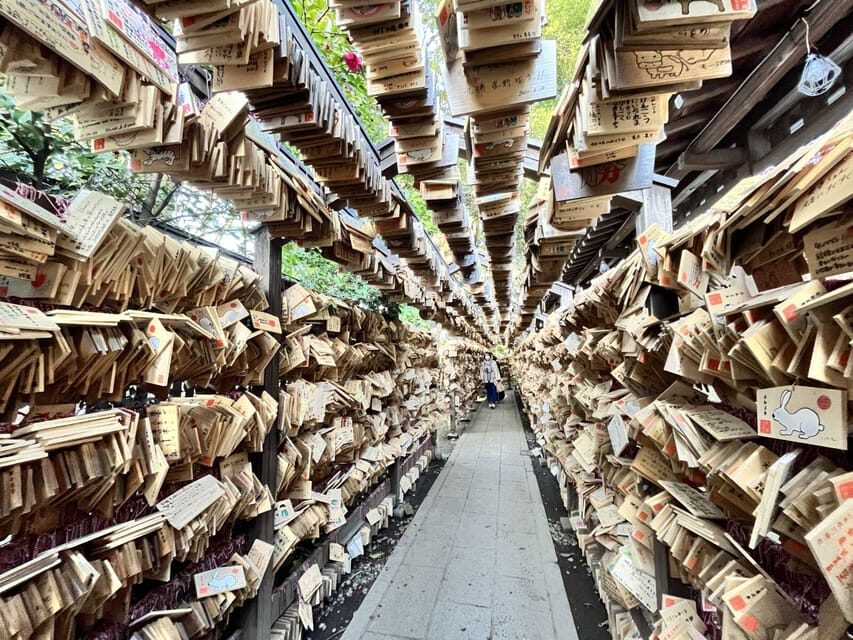
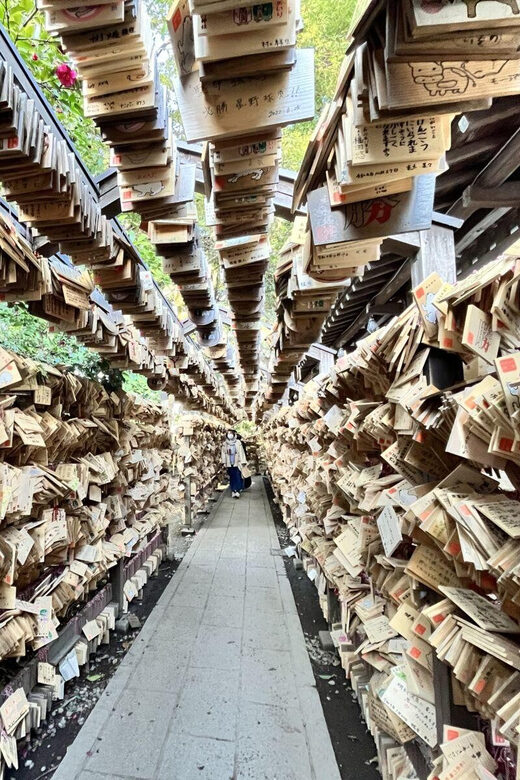
After lunch, you head to Kawagoe Hikawa Shrine for a guided visit. The headline here is the chance to try fortune-fishing—one of those simple activities that turns a shrine visit into something you’ll remember later.
The guided portion matters because it gives you the meaning behind the ritual, instead of just letting you do it like a photo prop. This stop is shorter than the old-town wandering, so it works as a reset: you get the cultural moment without losing the day to crowds.
Kawagoe Castle Honmaru Palace remains: walking where power used to sit
Your final big guided site is Kawagoe Castle Honmaru Palace remains. This is not a rebuilt theme park version; it’s a preserved set of remains where you can walk through the halls and rooms and imagine the Edo period power structure.
The tour highlights the Shogun-era atmosphere by focusing on the spaces where the shogun walked and operated, which helps you connect architecture to how people lived. There’s also a castle stamp available as a free souvenir, which is a nice incentive if you like collecting small, place-based items.
If you’re the type who gets more out of sites when someone points out what to notice, this is a good stop. The guided framing makes the remains feel like more than walls and flooring.
Second pass through the old town: shop smarter, not longer
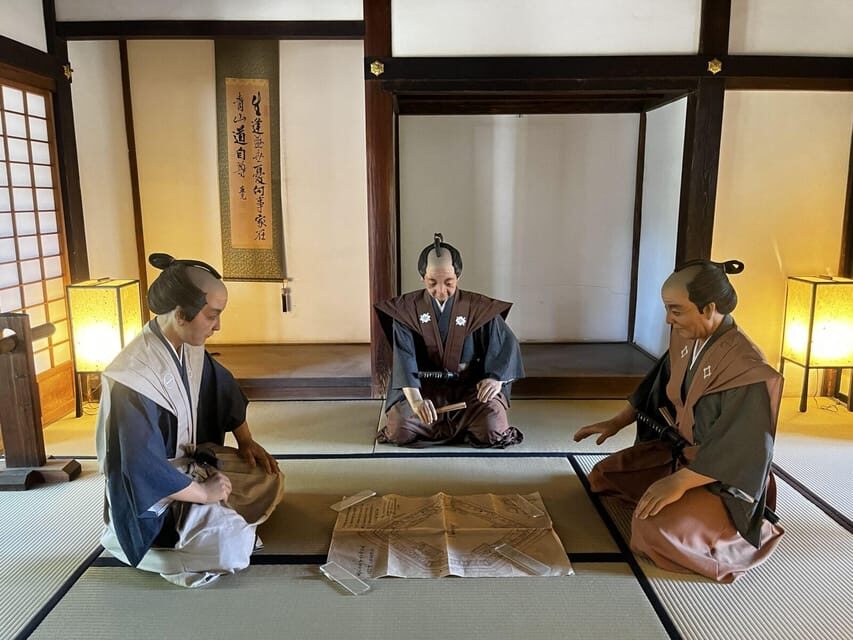
After the castle remains, you go back to Kurazukuri no Machinami again for guided time plus about an hour of free time. This two-part structure is smart because it keeps your day from feeling like one huge blur.
Use this last stretch for what you still want after seeing the main sights: extra photos, a browse through local crafts, or a second snack if you’re still hungry (sweet potato stuff tends to be hard to resist). If you missed anything earlier, this is where you can fix it without stress.
If you want to go beyond what the tour covers, you might also consider adding time for the Kawagoe City Museum or the Kawagoe Matsuri Museum on your own, since they’re called out as excellent options.
Price and value: what $135 really buys you
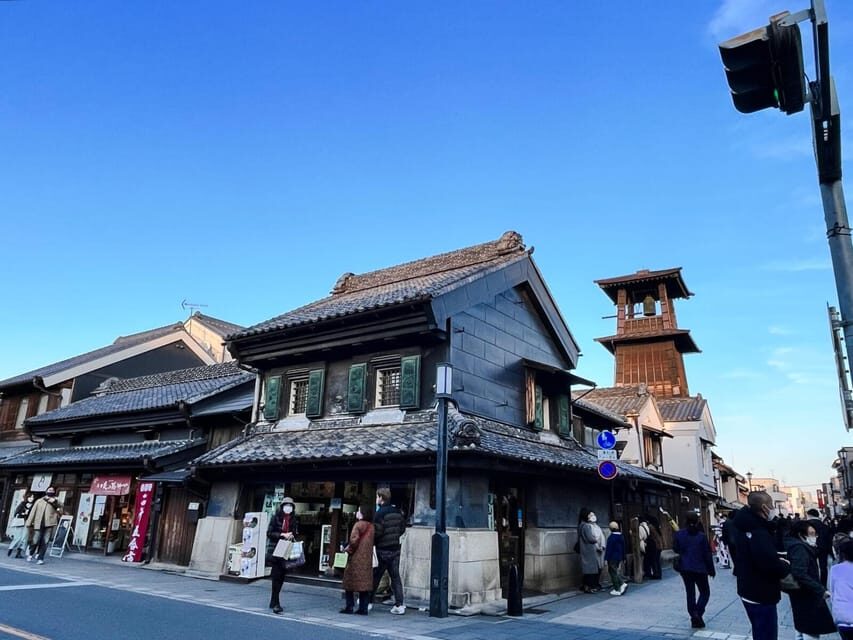
The price is $135 per person for a 6-hour, English-guided day trip. On paper, it’s not the cheapest way to day-trip from Tokyo, but the value is clear when you compare what’s included: admission fees for Kitain Temple and Honmaru Palace remains, plus a local English-speaking guide for the core guided segments.
What’s not included is equally important. Trains/transport before and after the tour aren’t included, and food and drink are not included. That means you should plan to spend on lunch in the old town and possibly snacks along the way.
In practical terms, this tour is a good value if you want:
- guided context (so the Edo details land),
- admission covered for the main paid sites,
- and time built in for food and shopping so you’re not rushing.
Pacing, walking, and who this fits best
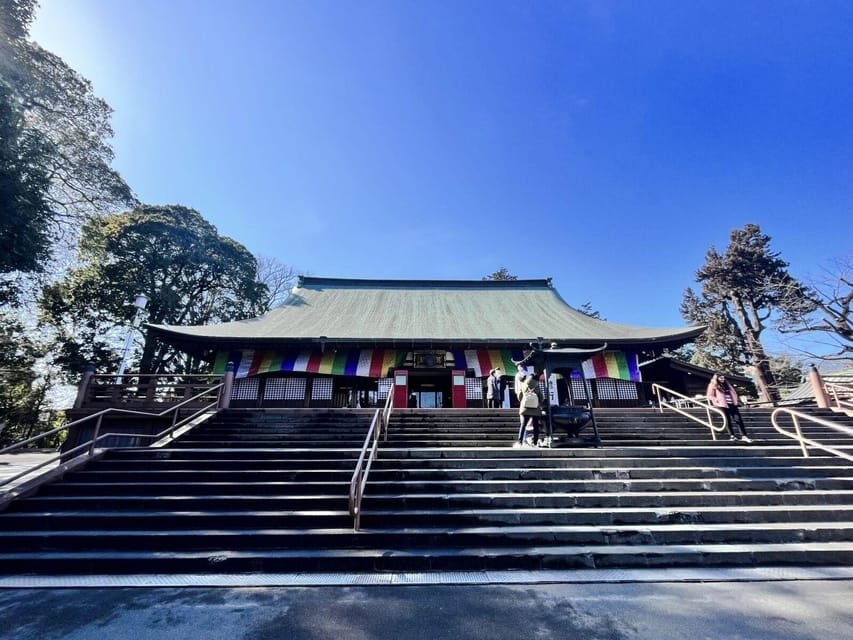
This is primarily a walking day, and it’s not designed for wheelchair users. It’s also listed as not suitable for people with mobility impairments, so if you need step-free options, you’ll want to look for a different format.
For everyone else, I think it’s a strong fit if you:
- like Edo-period themes and architecture,
- want a break from central Tokyo without losing the convenience of a day trip,
- and enjoy old-town wandering where you can choose what to eat.
The itinerary also gives you a good rhythm: big guided sites, then longer old-town free time. That keeps you from burning out before the castle remains.
Should you book this Kawagoe and Edo Japan day tour?
Book it if you want an easy, guided way to see Kawagoe’s Edo look—especially if you care about the meaningful specifics, like the Edo Castle building connection at Kitain Temple and the Honmaru remains experience. It’s also a solid choice if you like structure with breathing space, because you’re not stuck doing everything in one cramped, nonstop loop.
Skip it if you’re hoping for a food-inclusive package or if mobility limits mean you need less walking. And if you’re allergic to spending time in old-town streets, remember: that’s where the tour’s charm lives.
FAQ
How long is the Kawagoe and Edo Japan day tour?
The tour lasts 6 hours.
What is included in the tour price?
Admission fees are included for Kitain Temple and the Honmaru Castle remains, plus a local English-speaking guide.
Is lunch included?
No. Food and drink are not included, though the itinerary includes lunch time during the old town portion.
Where do I meet the guide in Tokyo?
Meet at 9am inside Ikebukuro Station outside the Tobu blue entrance gate.
What stops are part of the day?
You visit Kawagoe Kita-in Temple, the Kurazukuri no Machinami warehouse district, Kawagoe Hikawa Shrine, and the Kawagoe Castle Honmaru Palace remains.
Is the tour offered in English?
Yes. The tour guide speaks English.
Are trains or transport included before and after the tour?
No. Trains and transport before and after the tour are not included.
Who is the tour not suitable for?
It is not suitable for people with mobility impairments and for wheelchair users.
Is free cancellation available?
Yes. You can cancel up to 24 hours in advance for a full refund.
More Tours in Kawagoe
More Tour Reviews in Kawagoe
Fresh reviews from around Kawagoe

Kawagoe, compared.
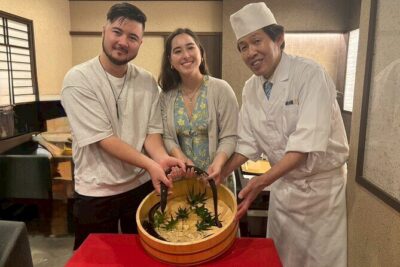 ★ 5.0Kawagoe Japanese Food Tour : Unagi Kaiseki and Sake near TokyoFrom $18130 reviews
Kawagoe Private Custom Tour with Local GuideFrom $9829 reviews
★ 5.0Kawagoe Japanese Food Tour : Unagi Kaiseki and Sake near TokyoFrom $18130 reviews
Kawagoe Private Custom Tour with Local GuideFrom $9829 reviews
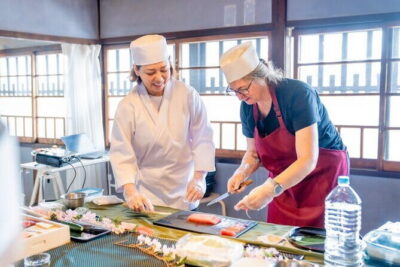 ★ 5.0Little EDO Sushi Making workshop in KawagoeFrom $8418 reviews
 ★ 5.0Kawagoe 4hr Private Tour with Licensed Guide (Kawagoe Dep)From $10713 reviews
 ★ 5.0Kawagoe:Family-Friendly Kimono & Yukata Experience at WARGOFrom $3111 reviews
 ★ 5.0Jizo Wood Carving Experience in KawagoeFrom $715 reviews
 ★ 5.0Historic Town of Kawagoe – Small town of Edo 3h Walking TourFrom $705 reviews
Browse the lists this tour appears in