
Reviewed · TOKYO
Tokyo:Luxury Sumo Show Experience & Japanese cuisine & Drink
A sumo show with dinner and real proximity. You’ll sit in a warm, premium room in Asakusa where the sumo ring sits right in the middle and the whole event runs with live bilingual commentary. I love the A5 wagyu sukiyaki bento plus chanko hot pot served during the action, and I also like how the show actually pulls you in with explanations, jokes, and a chance to get on the ring.
One thing to consider: this is entertainment by retired sumo wrestlers, not an early-morning active-stable training experience. If you’re chasing the day-to-day routine of an active stable, you’ll want a different kind of tour.
In This Review
- Key highlights worth knowing
- Where Asakusa Sumo Club Annex turns sumo into a close-night out
- Geisha dance first, then your bilingual crash course on sumo
- Dinner timing that actually fits the show: wagyu sukiyaki, chanko nabe, matcha
- Sumo bouts and training techniques up close (and what retired wrestlers change)
- The ring challenge: how to plan for a lottery moment
- Photos, souvenirs, and the VIP-style wrap-up
- Standard vs Business vs First Class: where the money actually goes
- If you want the core experience: Standard
- If you want more comfort and more food: Business
- If you want the full premium night: First Class
- Timing it around Asakusa: easy to pair with an evening stroll
- Who this Tokyo sumo show fits best (and who should look elsewhere)
- Should you book Asakusa Sumo Club Annex?
- FAQ
- What’s the duration of the Tokyo sumo show experience?
- What food is included during the show?
- Are drinks included?
- Can I participate in the ring challenge?
- Is there a geisha performance?
- What seating options are available?
- Is the meal vegetarian-friendly?
- Do you offer gluten-free or halal meals?
- Is the venue wheelchair accessible?
Key highlights worth knowing
- The ring is the centerpiece: set in the restaurant so you’re not watching from a distant stage.
- Bilingual English and Japanese commentary: explanations come as you watch, not after the fact.
- A5 wagyu sukiyaki + chanko nabe: you eat what the program is built around, not a random add-on.
- Geisha dance at the start: followed by a photo opportunity after the performance.
- A real ring challenge with lottery slots: limited spots, so it’s fun even if you don’t win the draw.
Where Asakusa Sumo Club Annex turns sumo into a close-night out
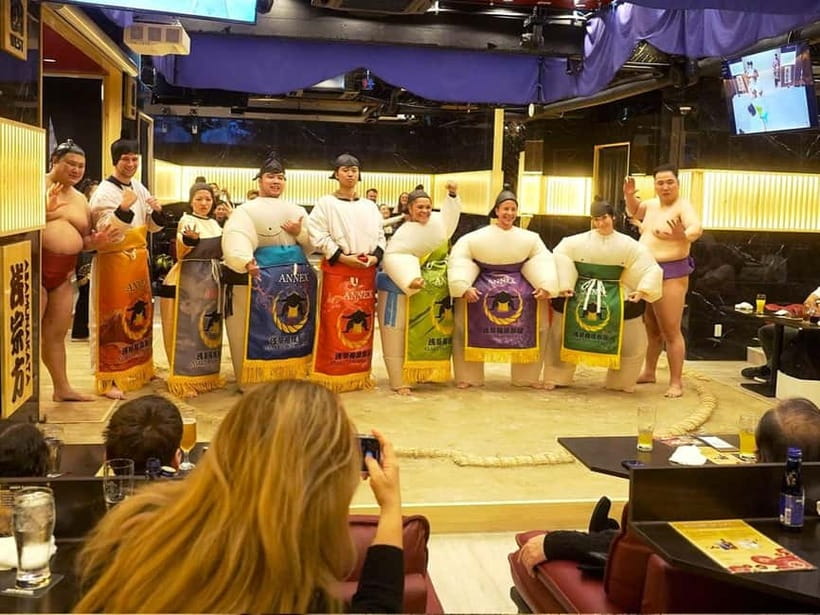
Asakusa Sumo Club Annex is a more private, premium branch of the well-known Asakusa Sumo Club. The vibe is friendly and relaxed, but it still feels “special.” You’re not shuffled through a big hall. Instead, you’re placed in a comfortable seating setup designed around the show, with the sumo ring placed right in the center of the restaurant.
That ring location is a big part of why this works for first-timers. Sumo can be hard to grasp from far away—positions, grip, and the little rituals are easier when you’re near enough to see what’s happening and why the wrestlers do it.
A couple practical notes you should plan around. The venue is not wheelchair accessible because there are stairs. And while it’s family-friendly, it’s still an evening-style entertainment program, not a quiet cultural lecture.
Geisha dance first, then your bilingual crash course on sumo
The show typically starts with a graceful geisha dance on stage. It’s not just a quick opener either. The dance sets the tone: refined, theatrical, and carefully paced for newcomers.
After that performance, you can take a photo with the geisha. That part matters if you want a Tokyo cultural moment that still feels light and tourist-friendly.
Then the bilingual storytelling starts in earnest. You’ll get live commentary in both English and Japanese throughout the program—covering sumo history, rules, and the rituals that often fly past people who only know a few basics. The MC energy gets specific praise in real feedback, including hosts named Luke and Go, with people calling out how helpful their English is.
You also get a sense of how sumo works beyond the final push. That’s the value here: you don’t just see wrestlers in action. You learn why the action looks the way it does.
Dinner timing that actually fits the show: wagyu sukiyaki, chanko nabe, matcha
Food isn’t a separate meal you squeeze in between events. Here, it’s part of the pacing of the night.
You can expect a meal built around:
- Japanese A5 rank wagyu sukiyaki bento
- chanko nabe hot pot (a classic sumo wrestler-style dish)
- matcha dessert
This is one of the most praised parts of the experience, and it’s easy to see why. The flavors match the “sport + tradition” theme. Chanko nabe also helps explain the sumo culture angle, since it’s strongly associated with training life. Even if you’re not a food snob, it’s satisfying and warming—especially if your Tokyo day has been a lot of walking.
Beverages run alongside the meal. The selection includes Japanese whiskey, draft beer, and soft drinks. The show setup also differs by seating tier, so read your category carefully:
- Standard: includes the sukiyaki bento, chanko hot pot, and one free drink
- Business: includes sukiyaki bento, tempura, chanko hot pot, and unlimited drinks
- First Class: includes sukiyaki bento, tempura, chanko hot pot, unlimited premium Yamazaki whisky, plus more extras
One small heads-up from feedback: a guest noted the food could have been hotter. That’s not the overall theme, but it’s worth keeping in mind if you’re picky about temperature.
Sumo bouts and training techniques up close (and what retired wrestlers change)
During the show, you’ll watch real training techniques and dynamic bouts performed by sumo wrestlers. The format is designed for entertainment, but it still respects the sport’s physicality.
The biggest reason retired wrestlers work well for this type of tour is pacing. You’re not thrown into a dense, serious training environment where you’d need deep familiarity just to follow. Instead, you get a guided experience: explanation, demonstration, then action.
That said, don’t expect an active stable day. The program explicitly differs from the serious early-morning training tours. If what you want is the sweat-and-routine side of sumo—what wrestlers do before the day starts—this isn’t that. Think of it as a guided, evening-friendly introduction where the sport is still front and center.
The ring challenge: how to plan for a lottery moment
One of the most fun parts is the chance to step into the ring for a friendly sumo challenge. This is for people who want a goofy memory and a quick taste of what sumo feels like on the feet.
Important detail: the number of challengers is limited per performance. If lots of people want in, final participants are chosen by drawing lots. So go in expecting it might be you—or it might not.
This is also where the experience earns its “must-do” reputation. Reviews repeatedly point out that kids and teens love it, and that staff help people through the moment so it doesn’t feel awkward. Even if you’re not chosen, you still get to watch the “how it works” explanation become real.
If you’re traveling as a couple or solo, it’s also a great social hook. You’ll likely notice other people cheering, and the MC usually keeps the mood light.
Photos, souvenirs, and the VIP-style wrap-up
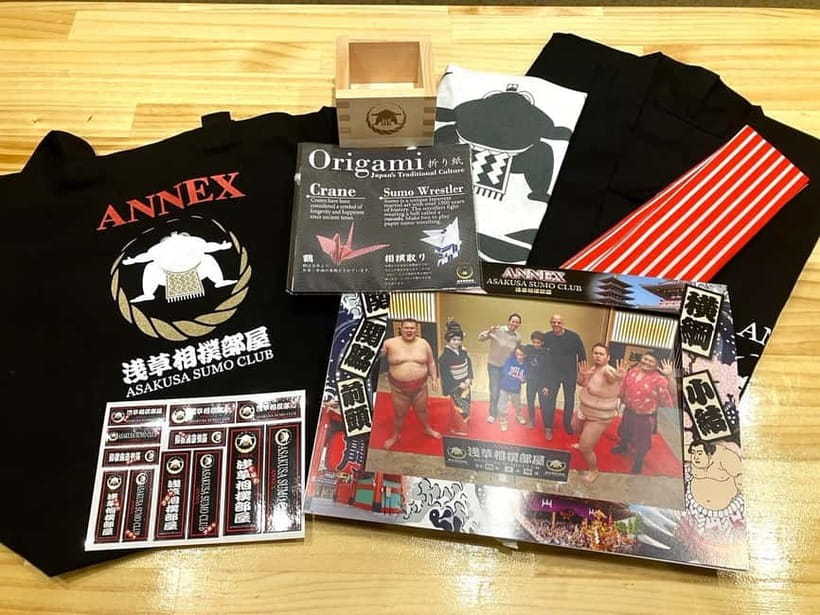
After the show, you’ll get a printed commemorative photo with the sumo wrestlers. On top of that, there are special souvenir gifts that vary by seating category.
Here’s how the souvenir value changes:
- First Class includes an exclusive souvenir set with a happi coat
- Standard and Business include special souvenir gifts tied to their category
Many people also mention the photo and filming support during the experience. If you want keepsakes beyond the printed photo, this is one of the best parts of the night, because it’s organized and easy.
Standard vs Business vs First Class: where the money actually goes
Pricing can feel steep for any Tokyo “show + dinner” package. The key is understanding what you’re paying for in this one.
You’re not just buying seats. You’re buying:
- a close view of the ring
- bilingual commentary throughout
- a full meal experience
- a drink plan that changes by category
- extra touches like tempura, premium whisky, and souvenir sets
Here’s the practical way I’d choose.
If you want the core experience: Standard
Pick Standard if you want the main event and food—sukiayaki bento, chanko hot pot, and a single included drink. It’s the best fit if you don’t drink much and you’re mostly there for the show, the geisha moment, and the sumo education.
If you want more comfort and more food: Business
Business adds tempura and switches you to unlimited drinks with sofa seating. If you like beer, soda, or you want refills without thinking about it, this is where the “value” often feels best.
If you want the full premium night: First Class
First Class gets you front-row sofa seating closest to the ring, unlimited premium Yamazaki whisky, plus the happi coat souvenir set. People call out that Business can be expensive, but First Class is usually the “go big” option if drinks and closeness matter to you.
The decision rule I’d use: if you’d buy multiple drinks anyway, and you want the strongest sightlines, First Class makes the most sense.
Timing it around Asakusa: easy to pair with an evening stroll
The meeting point is along Asakusa Kokusai Street, next to the Matsuya Restaurant. The show runs about 2 hours, so it’s a simple block in your evening plan.
One smart strategy is using the waiting time nearby. The area around Asakusa has small lanes and temple sights that feel great at night. A review mentions booking a later slot (around 8:30 pm on a weekday) and then checking out the temple at night and the tiny streets while you’re waiting.
If you’re doing temples and shopping earlier in the day, this can be a smooth second act—Japan culture in a tighter, warmer format.
Who this Tokyo sumo show fits best (and who should look elsewhere)
This experience fits best if you want:
- a first-time-friendly introduction to sumo rules and rituals
- live English support while you watch real bouts
- a dinner that’s meaningfully Japanese (not a generic restaurant meal)
- a fun interactive moment in the ring challenge
- photo and souvenir extras without hassle
It’s also good for families. Many comments highlight kids laughing, participating, and enjoying the show’s friendly tone.
It’s not a fit if you need wheelchair access (stairs). And it’s not the best choice if your dream is watching active stable training in a serious environment. This is a performance-style introduction, not a training morning.
Should you book Asakusa Sumo Club Annex?
If you’re deciding between “just watch sumo” and “learn what you’re seeing while eating well,” I’d book this. The blend of close-up sumo action, bilingual explanations, and the combo of A5 wagyu sukiyaki with chanko nabe makes it more than a simple ticket.
Choose it especially if you want:
- an evening plan in Asakusa that feels premium without being formal
- a sumo experience with hands-on fun (even if ring-challenge spots are chosen by lottery)
- a reliable set of photo keepsakes and souvenir gifts
Skip it if your priority is active-stable training or full wheelchair access. But if you want a fun, well-run Tokyo night that teaches you the sport quickly and feeds you properly, this one is a strong yes.
FAQ
What’s the duration of the Tokyo sumo show experience?
The experience runs for about 2 hours.
What food is included during the show?
You’ll get a sukiyaki bento made with Japanese A5 wagyu beef, chanko hot pot, and a matcha dessert. Tempura is added for Business and First Class seat categories.
Are drinks included?
Yes. Standard includes one free drink. Business and First Class offer unlimited drinks. First Class also includes unlimited premium Japanese whisky such as Yamazaki.
Can I participate in the ring challenge?
Yes. You can join the friendly sumo challenge, but the number of challengers is limited per performance and chosen by drawing lots.
Is there a geisha performance?
Yes. The show includes a geisha dance, and there is a photo opportunity with the geisha after the performance.
What seating options are available?
There are three categories: Standard (table seats), Business (sofa seats), and First Class (front row sofa seats). Each category changes what’s included and how close you are to the ring.
Is the meal vegetarian-friendly?
Vegetarian and vegan meals are available, but you must request them at least two days in advance. Vegetarian requests made on the day can’t be accommodated.
Do you offer gluten-free or halal meals?
No gluten-free or halal meals are listed as available. You can bring your own food if you need it.
Is the venue wheelchair accessible?
No. The restaurant is not wheelchair accessible due to stairs.
Tokyo, compared.
 ★ 5.0Mt Fuji and Hakone 1-Day Bus Tour Return by Bullet TrainFrom $16326,383 reviews
 ★ 5.01-Day Tokyo Bus TourFrom $12914,250 reviews
 ★ 4.6teamLab Planets TOKYO Digital Art Museum Entry TicketFrom $259,779 reviews
 ★ 4.0Mt Fuji & Hakone Cruise, Drum Show Bullet Train 1 Day from TokyoFrom $1497,413 reviews
 ★ 5.0Shinjuku Food Tour (13 Dishes at 4 Local Eateries)From $866,603 reviews
 ★ 4.4Tokyo Mt Fuji 5th St & Hakone Cruise Bus Tour w/Bullet TrainFrom $1545,024 reviews
 ★ 5.0Flagship 2-Hours Official Street Go-Kart Tour – Tokyo Bay ShopFrom $644,974 reviews
 ★ 4.5From Tokyo: Mount Fuji Full-Day Sightseeing TripFrom $684,970 reviews