
Reviewed · TOKYO
Tokyo Sumida Aquarium E-Ticket with Optional Tokyo Metro Pass
Penguins and jellyfish with zero fuss. I love the e-ticket approach because it fixes your entry to Tokyo’s Sumida Aquarium for your selected time slot, cutting down on uncertainty when you’re busy in Tokyo. I also love the aquarium’s big indoor wow tank, the 350-thousand-liter display where you can watch penguins and fur seals through clear glass.
You’ll also like how the visit is self-paced. There’s no set route to follow inside—once you’re in, you move around Tokyo Skytree Town’s aquarium at your own speed, with tanks for colorful fish, jellyfish, and coral reef-style exhibits.
One heads-up: the aquarium is a compact outing. If you’re expecting a huge day-long complex, plan for the 1 to 5 hour window and focus on hitting the main galleries well.
In This Review
- Quick take: what’s especially good here
- Sumida Aquarium in Tokyo Skytree Town: what you’re really signing up for
- What the timed e-ticket actually changes (and why it’s worth it)
- Inside the aquarium: penguins, fur seals, jellyfish, coral-style tanks
- The Aqua gallery: sea-life learning presented like art
- How long to plan: the 1 to 5 hour reality check
- Optional Tokyo Metro tickets: when the add-on helps
- Rules and limits that affect your visit (plan for them early)
- Price and value: is $25.45 a good deal?
- Who this suits best (and who should think twice)
- What to do on the day: a simple plan for a smooth visit
- Should you book this Tokyo Sumida Aquarium e-ticket with Metro options?
- FAQ
- What’s included with the standard package?
- Is the visit self-paced or does it follow a group route?
- How long should I plan for?
- Do I need to bring ID?
- Is re-entry allowed after I leave the aquarium?
- Can I bring outside food or drinks?
- Is photography allowed inside the aquarium?
- Is this experience refundable or changeable?
- What happens if the experience is canceled due to weather?
Quick take: what’s especially good here
- Timed entry e-ticket: choose a date and time slot, then go at your pace
- Skytree Town location: pair the aquarium with nearby sights and shopping in the same area
- Big indoor viewing tank: a massive 350-thousand-liter exhibit with clear sightlines
- Animal highlights: penguins and fur seals, plus jellyfish and colorful schools of fish
- Optional transport add-on: upgraded packages can include Tokyo Metro tickets
- Good for kids: small-and-focused layout works well for shorter attention spans
Sumida Aquarium in Tokyo Skytree Town: what you’re really signing up for
This is one of those tickets that’s mainly about making your day easier. Instead of figuring out queues, entrance timing, and on-the-spot ticket decisions, you secure admission up front and then you spend your energy on the aquarium itself.
Sumida Aquarium sits inside Tokyo Skytree Town, a modern complex built around one of Japan’s most famous landmarks. That matters because you’re not committing your whole day to a single far-flung attraction. You can treat the aquarium as the anchor, then build your day around it—nearby shopping, views from Skytree, or a snack stop—without a complicated travel shuffle.
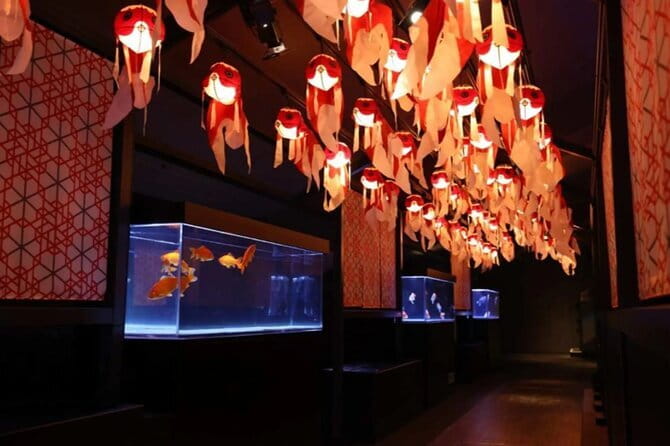
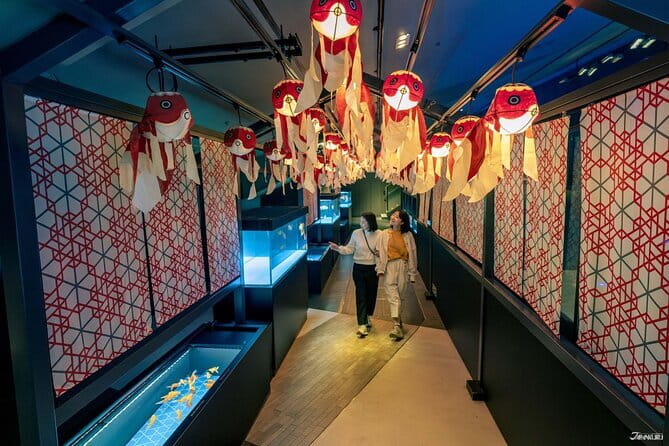
Inside, the aquarium is spread across two floors and focused on sea-life exhibits that move quickly from “pretty and colorful” to “wow, that’s a lot of water.” The experience is also designed for learning without feeling like a school field trip. You’ll find tanks arranged in a way that’s explained as an Aqua gallery with exhibits presented like paintings—an approach that helps the displays feel more like an art-and-science walk than a maze.
If you like animal viewing that’s clear and easy to understand, this setup fits well. If you want a sprawling aquarium with dozens of hours of branching routes, the duration window here tells you to manage expectations.
What the timed e-ticket actually changes (and why it’s worth it)
The headline feature is admission guaranteed for your selected date and time slot. In Tokyo, that can be the difference between a smooth plan and a stressful one. When your day includes train transfers, lines for popular sights, and the usual “where are we even standing?” moments, arriving with a timed entry is simply less mental work.
The ticket is offered as an e-ticket package, and the aquarium entry depends on identity checks. That means you should bring a valid photo ID/passport and be ready to show it at the entrance.
Here’s the practical payoff for you: you’re free to arrive, enter, and then explore at your own pace. There’s no need to follow a group through a fixed circuit. You can linger on the tanks that hook you—like the ones with jellyfish—and you can skip the parts that don’t hold your interest.
One more small rule that affects planning: there’s no re-entry allowed. So once you’re inside and you’re thinking about breaks, snacks, or photo stops outside the venue, decide ahead of time. Inside, you’re staying put until you’re done.
Inside the aquarium: penguins, fur seals, jellyfish, coral-style tanks
This is where your money goes. The aquarium highlights combine classic animal favorites with exhibits that feel designed for clear viewing.
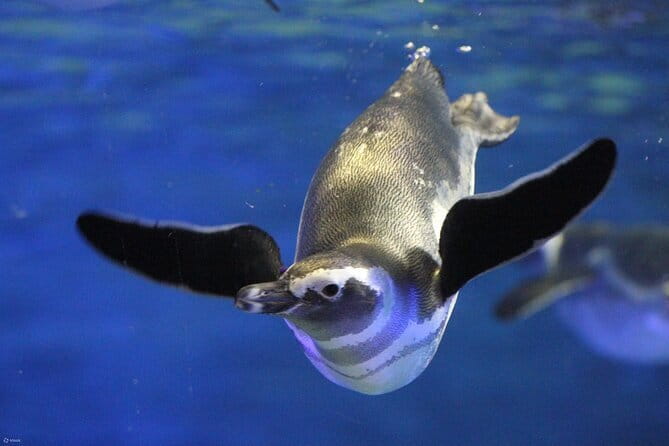
Penguins and fur seals are a major pull. The way the exhibits are set up makes these animals easy to watch without constant obstruction—especially in the aquarium’s standout display: the 350-thousand-liter open indoor tank. The glass is described as clear and not blocked by barriers, which is exactly what you want when you’re trying to understand how the animals move through the water.
You’ll also see:
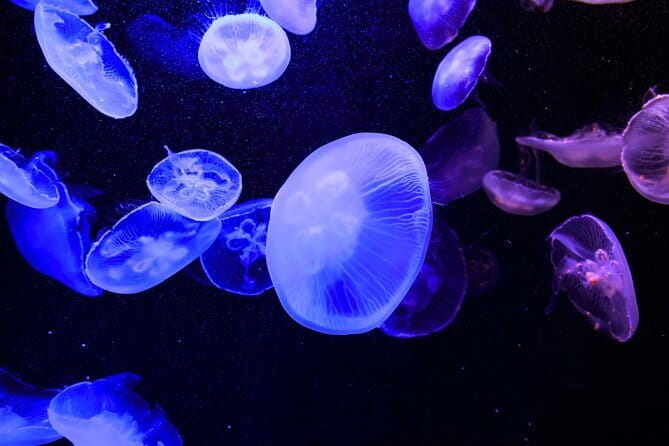
- Jellyfish floating in tanks that emphasize their slow, hypnotic motion
- Schools of colorful fish that move in patterns, which makes the viewing experience feel lively
- Coral reef-style exhibits, giving you a sense of habitat variety rather than only single-species tanks
The Kanto-region angle is interesting too. The aquarium is noted as the first in Kanto to use only artificial seawater. That’s not something you’ll watch happening in real time, but it adds context for why the exhibits can look consistent and stable across seasons.
If you’re visiting with kids, this mix works well because it gives you frequent “stop moments.” Penguins and seals for excitement, jellyfish for calm wow-factor, and fish/coral displays for color.
And photography is not allowed. That’s important for your pacing. Plan on using your eyes, not your camera, and don’t build your visit around trying to capture every tank perfectly.
The Aqua gallery: sea-life learning presented like art
One of the more distinctive descriptions of Sumida Aquarium is its Aqua gallery. Instead of reading long walls of text in a straight line, the tanks and learning elements are presented as if they were arranged like paintings in an art museum.
For you, that means you can move through the aquarium more naturally. You’ll likely spend time longer than you expected on the tanks that spark questions—what species you’re seeing, how they live, and what makes the aquarium’s environment different from the ocean you might imagine.
This “art museum” style matters because it changes how the information lands. It feels less like a checklist and more like a guided-looking experience where you decide what to focus on. If you’re the type who enjoys a little education without turning your trip into a lecture, you’ll probably appreciate this layout.
How long to plan: the 1 to 5 hour reality check

The duration range is listed as 1 to 5 hours. That spread isn’t random—it reflects how differently people tour aquariums.
If you’re traveling with kids or you mainly want the top animal highlights, aim closer to the shorter end. In a compact aquarium, once you’ve seen the main displays and lingered on penguins and jellyfish, you may be ready to move on sooner than you planned.
If you like to read, take your time, and revisit favorites, stretching toward mid to upper duration makes sense. The Aqua gallery and the large indoor tank are the kinds of exhibits where time can slip away because watching animal behavior always feels like it deserves a second look.
My practical suggestion: give yourself a solid block, but don’t overpack the schedule. A timed ticket reduces uncertainty, but it doesn’t stop you from getting caught watching seals glide or jellyfish drift.
Optional Tokyo Metro tickets: when the add-on helps
One reason packages exist here is simple: getting to Tokyo Skytree Town can be easy, but Tokyo public transport adds friction when you’re juggling transfers.
Upgraded packages may include Tokyo Metro tickets alongside your aquarium admission. If you already know you’ll be using the Metro a lot that day—or you just want to remove one decision from your planning—this add-on can be good value. You’re effectively reducing the mental load of figuring out transit options and buying something on the fly.
What I like about this option is that it respects how Tokyo days usually go: you’re moving between multiple stops. A Metro ticket can smooth the rhythm of your day so you spend less time buying fare and more time actually sightseeing.
That said, the standard option includes aquarium admission without any listed transport bundle. If you’re already set with transit passes or you’re starting your day very close by, the Metro add-on might not be necessary.
Rules and limits that affect your visit (plan for them early)
A few non-negotiables can change how you experience the day, so it’s smart to know them upfront.
- Bring photo ID/passport: you’ll need identity proof at the entrance
- No outside food or beverages and no luggage allowed: plan to eat outside the facility or within Tokyo Skytree Town’s food options before or after
- No re-entry allowed: once you go in, you stay until the end of your visit
- No photography allowed: don’t rely on getting photos to justify your time
- Children must be accompanied by an adult: keep that in mind if you’re traveling as a family
These are small rules, but they shape your pacing. For example, if you’re the kind of person who likes to pop out for a snack mid-visit, you’ll want to do that before you enter.
Price and value: is $25.45 a good deal?
At $25.45 per person, this ticket package is priced like a straightforward attraction admission with a planning benefit. You’re not paying for a guided tour, since the visit is at your own pace after entry.
So the value equation is about two things:
- Convenience of timed entry (your date and time slot are set)
- Access to a well-known aquarium in a prime area (Tokyo Skytree Town), plus a mix of major animal exhibits
Given the emphasis on penguins, fur seals, jellyfish, and the giant open indoor tank, you’re likely to feel satisfied if your goal is a focused aquarium experience rather than an all-day mega-complex.
The strongest value comes when you’re visiting Skytree Town anyway, because you avoid the “I came out here just for the ticket” feeling. If you’re already planning to spend time around Skytree, this works as an efficient anchor.
If you’re visiting Tokyo and your schedule is tight, the timed approach becomes even more valuable. It prevents the common travel pain point: wandering around until you guess when you can get in.
Who this suits best (and who should think twice)
This experience tends to click for:
- Families with kids who want a fun, easy outing with clear highlights like penguins and seals
- People who prefer self-guided time over structured group routes
- Anyone visiting Tokyo Skytree Town who wants a convenient second attraction in the same complex
- First-time aquarium visitors who want a mix of classic favorites and jellyfish displays
It may not be the best fit if you:
- Want a huge multi-hour aquarium with endless, branching exhibits
- Are strongly focused on taking lots of photos inside (since photography isn’t allowed)
- Need a flexible schedule with the ability to leave and re-enter later (because re-entry isn’t permitted)
What to do on the day: a simple plan for a smooth visit
If you want this day to feel calm, I’d build a lightweight routine around the timed entry.
First, arrive with a bit of buffer so the identity check and entrance process don’t throw off your mood. Then head straight to what you most care about—if penguins and seals are your priority, spend your early time there while your energy is highest.
After that, drift through jellyfish and fish sections at a pace that feels right. The aquarium’s “art gallery” style presentation makes it easy to slow down and read/explore without feeling trapped in a rigid loop.
Finally, don’t forget the big indoor tank. Even if you think you’ll be “done” early, it’s the kind of exhibit where you’ll likely want a second pass once you see how impressive the scale is.
Should you book this Tokyo Sumida Aquarium e-ticket with Metro options?
Yes, if you want a low-stress way to see a compact but high-impact aquarium in Tokyo Skytree Town—and you value timed entry. The mix of penguins, fur seals, jellyfish, coral-style exhibits, and the giant 350-thousand-liter tank makes this more than just a stop; it’s a focused highlight with an easy flow.
Choose the Metro add-on if you expect to use the Metro that day and you’d rather bundle transport than plan it separately. Choose the standard admission if you’re already set on transport or you’re starting near the venue.
Skip (or at least rethink) if you need a giant all-day aquarium, or if your plan relies on leaving and returning during the same visit window.
If your schedule can handle a 1 to 5 hour attraction, this is a solid, practical way to turn Skytree Town into one smooth, memorable outing.
FAQ
What’s included with the standard package?
The package includes an admission ticket to Tokyo’s Sumida Aquarium based on the selected grade.
Is the visit self-paced or does it follow a group route?
You explore at your own pace after admission. There’s no fixed route to follow.
How long should I plan for?
The experience duration is listed as 1 to 5 hours (approx.), depending on how much you want to linger.
Do I need to bring ID?
Yes. A valid photo ID/passport is required and must be displayed at the entrance.
Is re-entry allowed after I leave the aquarium?
No. No re-entry is allowed.
Can I bring outside food or drinks?
No. Outside food and beverages are not allowed, and luggage is also not allowed.
Is photography allowed inside the aquarium?
No. Photography is not allowed.
Is this experience refundable or changeable?
No. It’s listed as non-refundable and cannot be changed for any reason.
What happens if the experience is canceled due to weather?
If canceled due to poor weather, you’ll be offered a different date or a full refund.
Tokyo, compared.
 ★ 5.0Mt Fuji and Hakone 1-Day Bus Tour Return by Bullet TrainFrom $16326,383 reviews
 ★ 5.01-Day Tokyo Bus TourFrom $12914,250 reviews
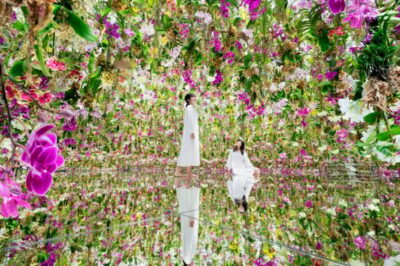 ★ 4.6teamLab Planets TOKYO Digital Art Museum Entry TicketFrom $259,779 reviews
 ★ 4.0Mt Fuji & Hakone Cruise, Drum Show Bullet Train 1 Day from TokyoFrom $1497,413 reviews
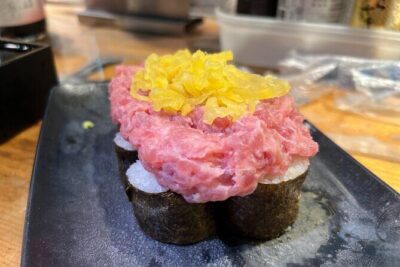 ★ 5.0Shinjuku Food Tour (13 Dishes at 4 Local Eateries)From $866,603 reviews
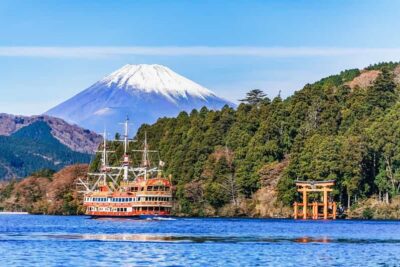 ★ 4.4Tokyo Mt Fuji 5th St & Hakone Cruise Bus Tour w/Bullet TrainFrom $1545,024 reviews
 ★ 5.0Flagship 2-Hours Official Street Go-Kart Tour – Tokyo Bay ShopFrom $644,974 reviews
 ★ 4.5From Tokyo: Mount Fuji Full-Day Sightseeing TripFrom $684,970 reviews