
Reviewed · TOKYO
Tokyo: Ramen Tasting Tour with 6 Mini Bowls of Ramen
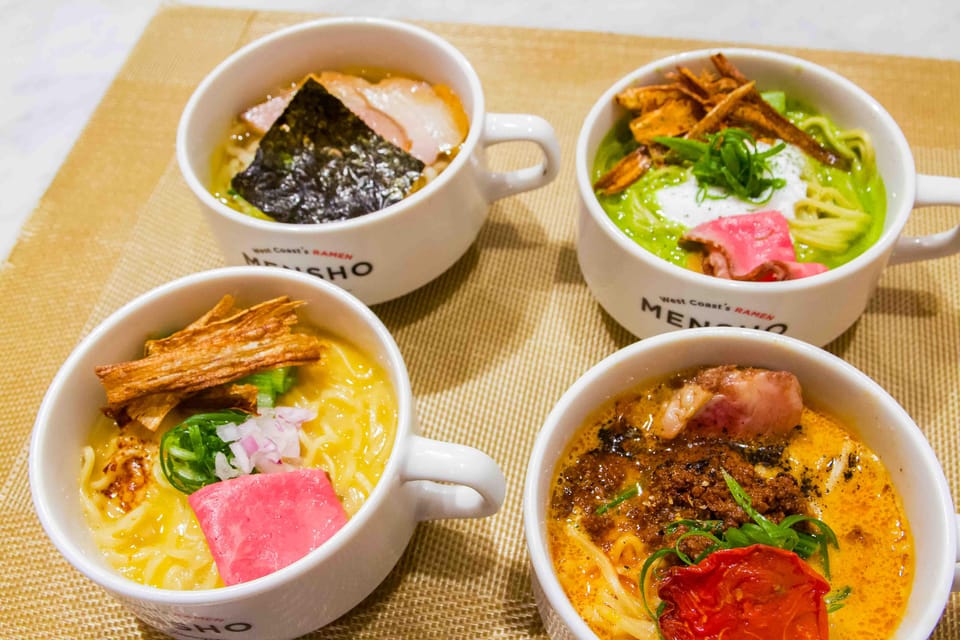
Ramen learning starts with tiny bowls. This 3-hour tour turns Tokyo into a tasting lab, with six quarter-size ramen bowls from 11–12 choices at three award-winning shops. You’ll also get guided explanations with handouts and visual aids, so you leave knowing what you just ate and why it tastes the way it does.
I especially like the variety: you’re not doing three repeats of the same broth. I also like that the guides, including Sahori and Bunga (plus Makayla and others), keep the experience interactive, answering questions as you go. The main drawback is simple: it’s about 3 km of walking, so it’s not ideal if your legs are already on vacation mode.
In This Review
- Key highlights to plan around
- Six quarter-size bowls that actually help you learn ramen
- What you learn: ramen origins, types, and preparation (with real Q&A)
- The walking reality: how 3 neighborhoods fit into 3 hours
- Shibuya route: Hokkaido classic, tonkotsu fusion, curry ramen
- Shinjuku route: Tokyo classic, modern tori paitan, and a fancier finish
- Ueno route: Kyushu classics, tsukemen dipping, and modern Tokyo
- Choosing your 6 bowls without overthinking
- Why the guide matters: English explanations, visual aids, and local routes
- The value question: $122 for ramen education and access
- Dietary note: ramen here isn’t vegan/vegetarian
- Who should book this ramen tour (and who should skip it)
- Should you book this ramen tasting tour?
- FAQ
- How many ramen bowls do I try?
- How do I choose which ramen to eat?
- How long is the tour?
- Is it only in one neighborhood?
- Where does the tour start and end?
- Is there a vegetarian or vegan option?
- How big is the group?
- Is there a lot of walking?
- What’s included in the price?
Key highlights to plan around
- Six mini bowls, chosen by you: pick your 6 from 11–12 options at the start of the tour
- Three ramen shops, three neighborhood routes: Shibuya, Shinjuku, or Ueno itineraries on different days
- Award-winning ramen styles: classic Hokkaido and Tokyo options, plus modern twists like tori paitan
- Learn as you eat: origins, types, and preparation explained with slides/handouts and iPad-style visuals
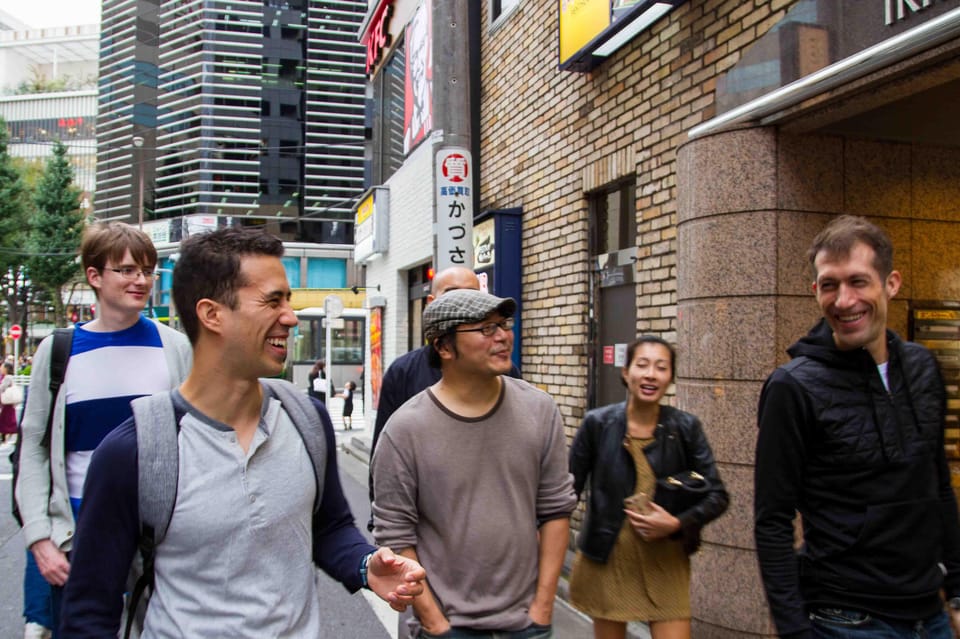
- Small group feel: limited to 8 participants, so questions don’t get lost
Six quarter-size bowls that actually help you learn ramen
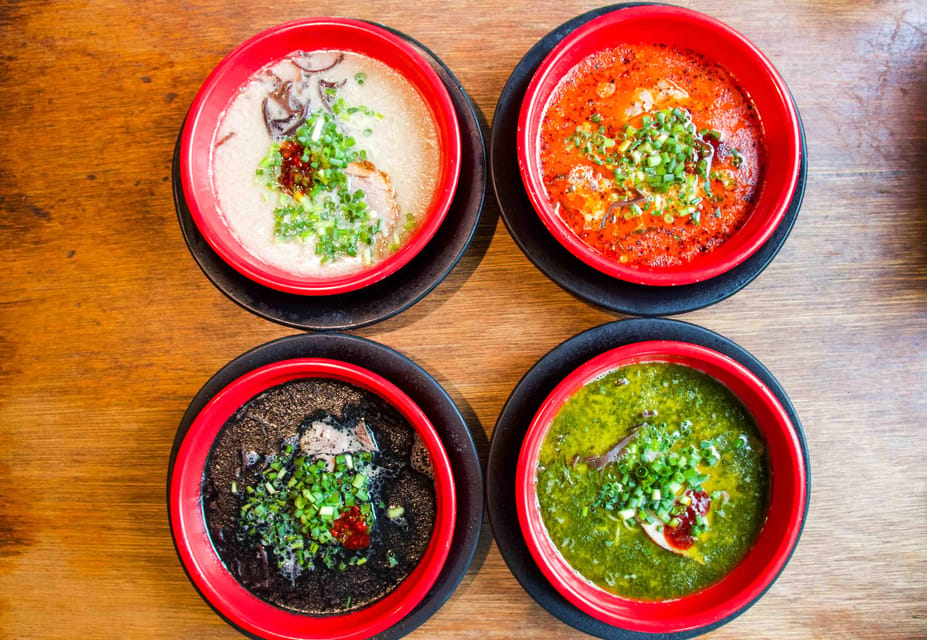
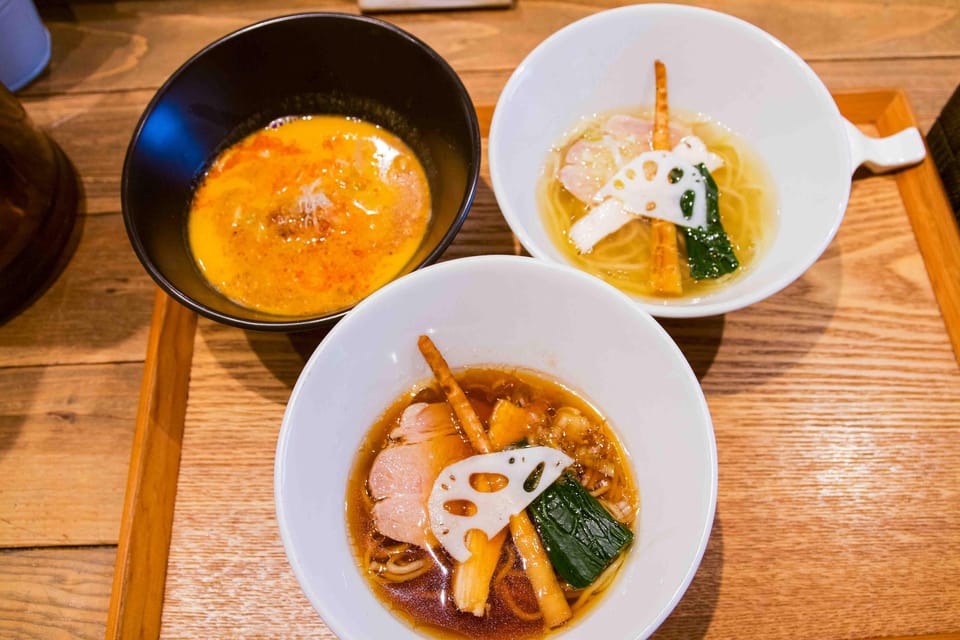
The heart of this tour is the mini-bowl format. You’re served six bowls that are about 1/4 the size of a full ramen bowl, and they’re only available on this tour. That matters more than it sounds. Full ramen portions can be a food coma trade. These mini bowls let you taste multiple broth families and noodle styles without needing a heroic “finish everything” mindset.
You also get to choose. Instead of being handed a fixed set, you pick your 6 from a menu of 11–12 ramen options. That’s a huge value lever for picky eaters and for people who like trying a plan, not a surprise. It also helps you build your own “ramen map” by comparing two similar styles side by side across stops, while still getting enough variety overall.
The tour also includes one beverage, which helps keep the pace smooth. You’ll be eating three times, with walking between. In a city where a lot of food experiences are either quick or long, this one hits a sweet spot: you get enough time to actually notice differences, not just chase refills.
What you learn: ramen origins, types, and preparation (with real Q&A)
Ramen is not just a bowl of noodles. This tour treats it like a culture you can taste. The guide’s job is to teach you ramen origins, the types of ramen, and how ramen is prepared—using colorful slides and handouts, and in many cases tablet-style visuals. You’ll see the logic behind the flavors as you’re eating, not after the fact.
The best part is that the explanation isn’t generic. Reviews consistently highlight guides who love ramen and explain it clearly in English. Guides named Sahori and Bunga are praised for answering questions, and people mention that the guide can also share practical tips about Japan beyond ramen. That turns the tour from a meal into a skill: you start recognizing categories when you see them on future menus.
Also, the group size (max 8) makes it easier to ask follow-ups. If you’re the type who wonders why one broth feels heavier or why a noodle type changes the whole bowl, you’ll likely get room to ask. And if you’re traveling with kids or teens, the tour seems to work well as an educational food stop, not just a sugar-and-sit routine.
The walking reality: how 3 neighborhoods fit into 3 hours
This is a short tour on paper—3 hours—but the experience is hands-on. You’ll walk roughly 3 km (1.86 miles) total. That’s not insane for many people, but it is steady. It also means you’ll want sensible shoes.
The route starts in Shibuya and ends in Ebisu (or in Shinjuku, depending on the day).** The neighborhoods are part of the point: you’re not only eating, you’re moving through Tokyo with the guide directing the plan. Several reviews mention that getting from ramen stop to ramen stop involves a mix of walking and subway links, depending on the day and logistics.
One more practical note: since you’re eating six times in a few hours, you’ll feel it. Many people recommend skipping lunch. Even with mini portions, by the last stop you’ll be satisfied, not hungry enough to order extra on top.
Shibuya route: Hokkaido classic, tonkotsu fusion, curry ramen
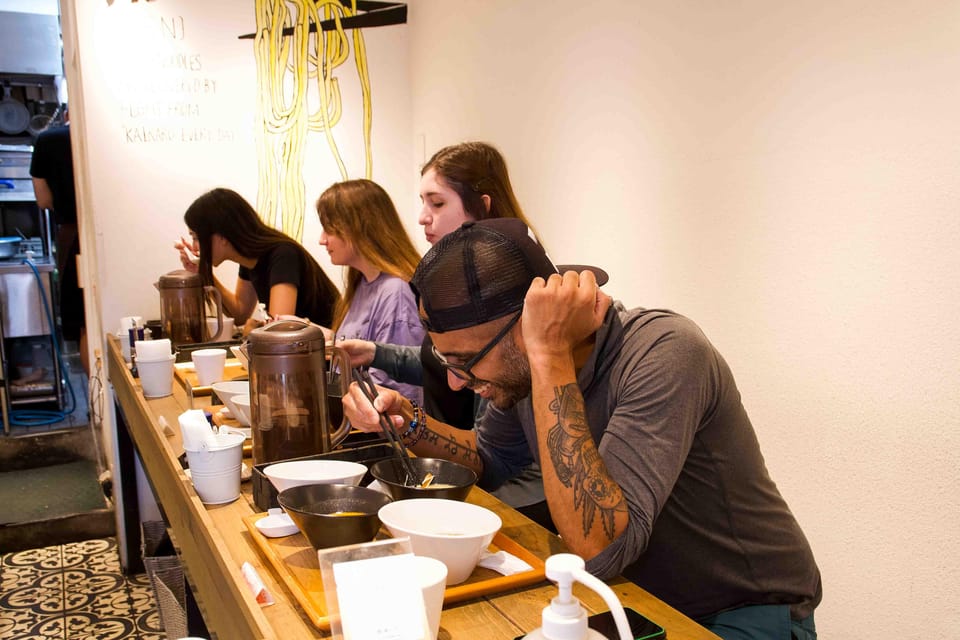
On days when you’re on the Shibuya route, you hit three shops with distinct directions. The lineup is:
- Shop 1: Classic Hokkaido ramen
- Shop 2: Fusion tonkotsu (pork bone) ramen
- Shop 3: Savory curry ramen
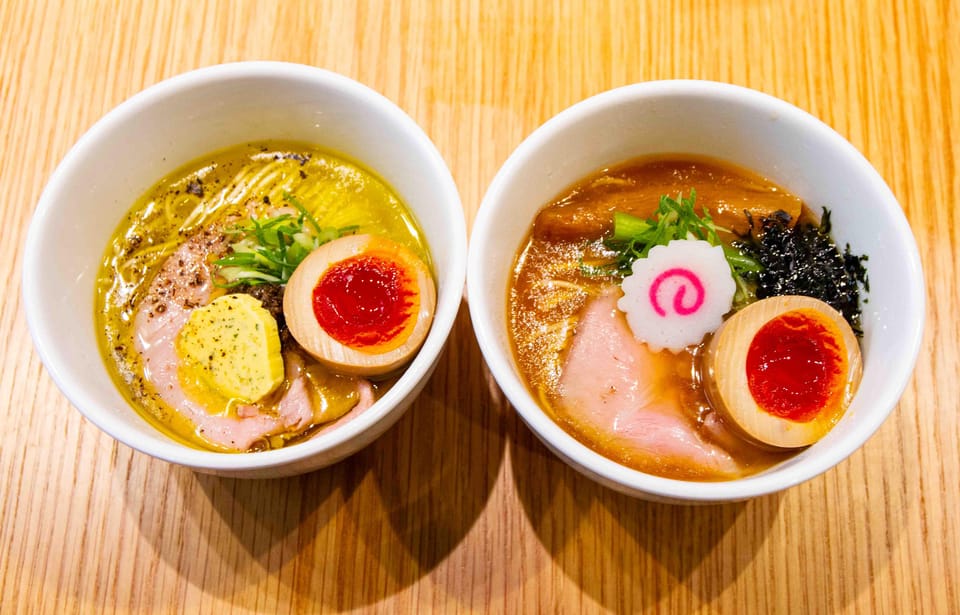
This route is a strong choice if you like contrast. Hokkaido classics give you a base to compare from, then you jump into tonkotsu territory—specifically framed as pork bone—followed by curry, which changes the flavor profile in a big way. Curry ramen can feel comforting and familiar while still being unmistakably different from the classic pork-bone style.
A drawback to consider: if you’re sensitive to heavier broths, tonkotsu and curry might both feel substantial in close succession. The mini-bowl format helps, but it doesn’t magically erase richness.
Shinjuku route: Tokyo classic, modern tori paitan, and a fancier finish
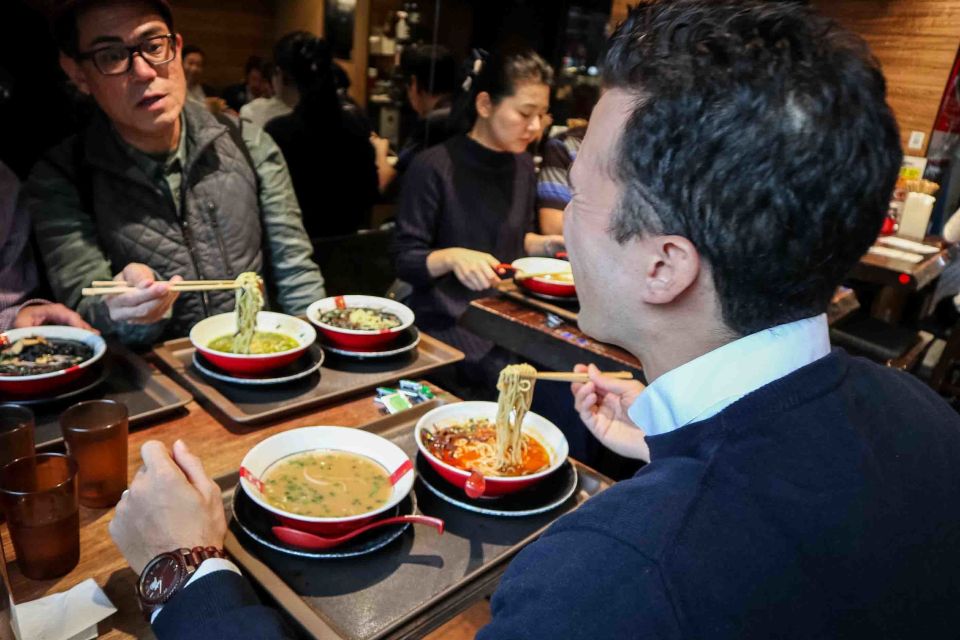
The Shinjuku route is built around a Tokyo-meets-modern idea. The lineup is:
- Shop 1: Classic Tokyo ramen
- Shop 2: Modern tori paitan (rich chicken ramen)
- Shop 3: Luxurious chicken or fish ramen
If you want the tour to teach you how ramen evolves without losing its roots, this is the route. You start with a Tokyo classic, then shift to tori paitan, which the tour frames as rich chicken ramen. The last stop goes “luxurious,” and it can be either chicken or fish ramen depending on the day’s selection.
This route is especially good for people who want variety that stays in the comfort zone. Chicken-based flavors often feel smoother than some heavier pork styles, and the final stop gives you a chance to compare chicken versus fish direction, even if you’re not sure which one you’ll get beforehand.
Ueno route: Kyushu classics, tsukemen dipping, and modern Tokyo
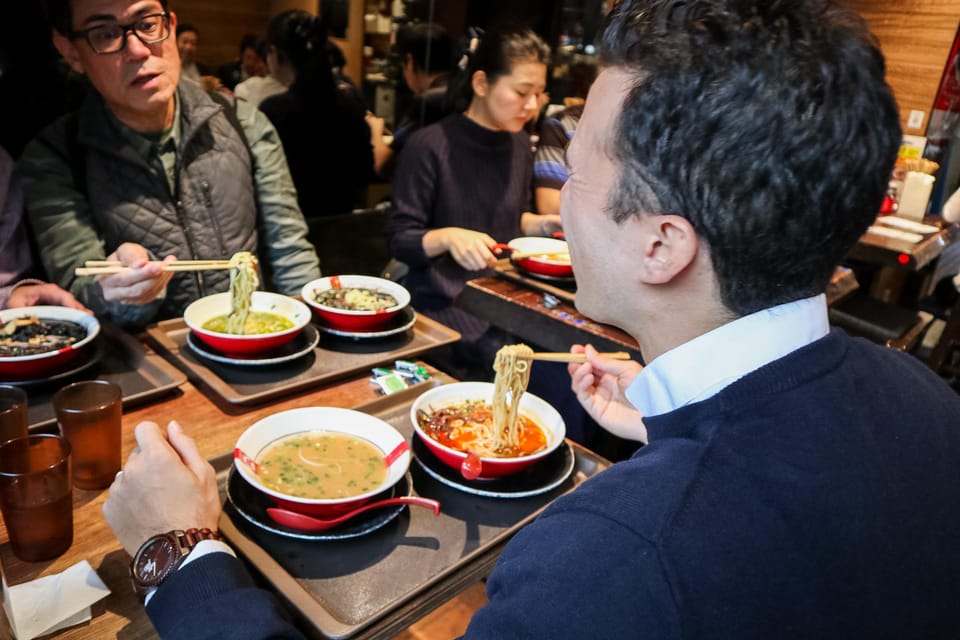
For the Ueno route, the three stops are:
- Shop 1: Classic Kyushu ramen
- Shop 2: Contemporary tsukemen (dipping) ramen
- Shop 3: Modern Tokyo ramen
This route stands out because it doesn’t only change broth. It changes the eating method. Tsukemen is dipping-style ramen, and that’s a real difference in texture and how the bowl “works.” If you’ve only ever had ramen in the standard soup format, this is one of the fastest ways to understand how presentation affects everything.
Kyushu classic to modern Tokyo gives you a clear before-and-after. And if you’re a noodle person—someone who notices mouthfeel, not just flavor—this route gives you a lot to compare without needing extra ordering.
Choosing your 6 bowls without overthinking
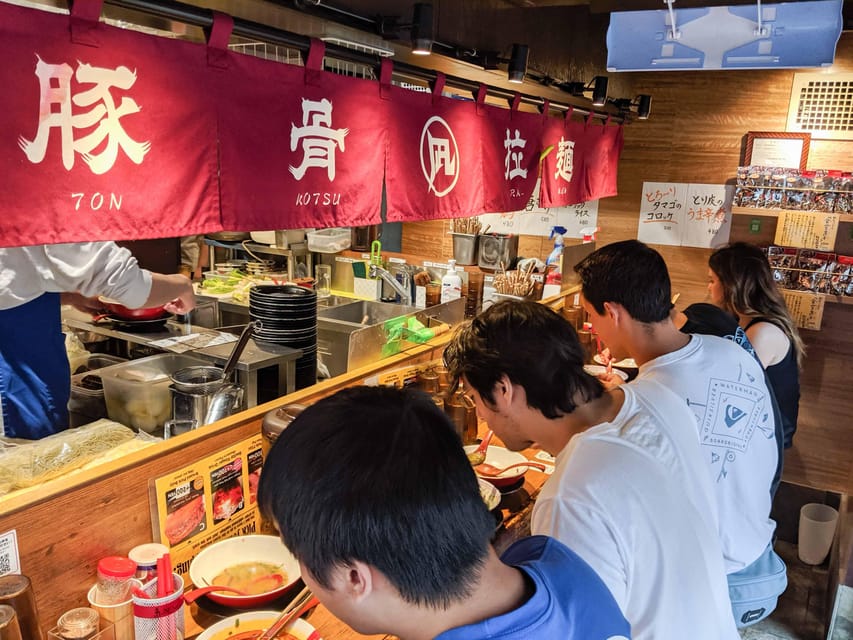
Since you pick your 6 from 11–12 options, your goal is not to be perfect. Your goal is to build useful comparisons.
Here’s a practical strategy I’d use:
- Pick at least one “anchor” bowl you already like. That keeps your palate steady.
- Choose one that’s clearly different in style—like curry, tsukemen, or tori paitan direction.
- Leave room for an “adventurous maybe” option. Reviews mention options like squid ink ramen and pesto, which tells me that the menu can include off-the-beaten-path picks.
Then, trust the mini-bowl pacing. By stop three, you’ll be able to tell what you truly enjoyed most, not just what you ate first.
If you’re unsure, ask the guide before the selections are finalized. Guides described in reviews like Sahori and Bunga are praised for making the differences easy to understand. That can turn selection time into part of the learning, not just a decision lottery.
Why the guide matters: English explanations, visual aids, and local routes
On any food tour, the guide is the difference between eating and understanding. This one heavily depends on the guide’s ability to explain ramen clearly, and reviews repeatedly point to that.
People praise guides such as Sahori for excellent English and a warm, engaging style. Bunga is described as knowledgeable and fun, with a ramen-first focus and an interest in sharing how ramen has evolved. Makayla (and others) are also mentioned for passion and for using visual tools like an iPad or tablet-style presentation to make history and categories easier to remember.
A few small, real-world strengths show up in the reviews:
- The guide helps you ask questions comfortably, even if you’re starting from zero.
- The tour can handle different group dynamics, including families.
- When weather hits hard, guides have arranged help—for example, a taxi step for the last stop during heavy rain in one reported case.
All of that adds up to a tour that feels guided, not just scheduled.
The value question: $122 for ramen education and access
Let’s talk price honestly. At $122 per person for about 3 hours, this is more than buying six bowls on your own. But you’re not paying just for noodles.
You’re paying for:
- Access to award-winning shops in a tight route
- A coordinated plan that makes it easy to compare ramen styles
- Six mini bowls that you might not be able to order as a group anywhere else
- An English-speaking guide who explains origins, types, and preparation with tools you can actually use later
- A small group experience limited to 8 people
So the real value test is this: do you care about learning? If you love ramen already and want to sharpen your taste, this tour can feel worth it quickly. If you just want a quick dinner, it probably feels pricey. The mini-bowl structure is the key. It lets you do a broad tasting without turning it into a full-day food hangover.
Dietary note: ramen here isn’t vegan/vegetarian
This tour serves ramen where the broths include chicken, pork, and fish. That’s an important filter. The tour notes that there’s a separate vegan/vegetarian ramen tasting tour, and that’s the right choice if you need plant-based options.
If you have allergies or dietary restrictions beyond vegetarian needs, you should confirm what’s in the broth with the operator before you go. The provided information only supports that this specific tour is not vegan/vegetarian because of the broth ingredients.
Who should book this ramen tour (and who should skip it)
This experience is a great fit if you:
- Love ramen and want to understand the differences between styles
- Want to try multiple broth directions without committing to full bowls
- Like small group tours where you can ask questions in English
- Are happy walking about 3 km over a few stops
It’s not the best fit if you:
- Have low fitness and don’t want steady walking
- Need vegan/vegetarian options on this exact itinerary
- Want a totally relaxed meal with minimal movement
Also, if you’re doing Tokyo for the first time, this tour can be a fun “food orientation” through recognizable neighborhoods like Shibuya and Shinjuku, plus other areas depending on the day.
Should you book this ramen tasting tour?
I’d book it if you’re serious about ramen and want more than tasting-for-tasting’s sake. The format—six mini bowls, your own selection from 11–12 options, and three distinct shops—turns eating into a clear comparison exercise. Then the guide makes it stick with ramen origins, types, and preparation explained in English using visual aids.
Skip it only if the walking distance is a dealbreaker for you, or if you need vegan/vegetarian choices, since this specific tour’s broths include chicken, pork, and fish.
If you can handle a focused 3-hour outing and you’re excited to become a more informed ramen chooser, this is one of the smartest food tours in Tokyo to prioritize.
FAQ
How many ramen bowls do I try?
You’ll try 6 mini bowls of ramen. Each mini bowl is about 1/4 the size of a full ramen bowl.
How do I choose which ramen to eat?
You choose your 6 ramen from a selection of 11–12 options. The exact choices can vary by tour.
How long is the tour?
The tour duration is 3 hours.
Is it only in one neighborhood?
No. The tour runs different routes depending on the day, including Shibuya, Shinjuku, and Ueno.
Where does the tour start and end?
The tour starts in Shibuya. It ends in Ebisu, or in Shinjuku depending on the day.
Is there a vegetarian or vegan option?
This tour’s ramen broths include chicken, pork, and fish. There is a separate vegan/vegetarian ramen tasting tour for plant-based needs.
How big is the group?
It’s a small group limited to 8 participants.
Is there a lot of walking?
Yes. Expect about 3 kilometers (1.86 miles) of walking, and it isn’t recommended for people with a low fitness level.
What’s included in the price?
Included are 6 mini bowls of ramen and 1 beverage. Train tickets, if required, are not included.
Tokyo, compared.
 ★ 5.0Mt Fuji and Hakone 1-Day Bus Tour Return by Bullet TrainFrom $16326,383 reviews
 ★ 5.01-Day Tokyo Bus TourFrom $12914,250 reviews
 ★ 4.6teamLab Planets TOKYO Digital Art Museum Entry TicketFrom $259,779 reviews
 ★ 4.0Mt Fuji & Hakone Cruise, Drum Show Bullet Train 1 Day from TokyoFrom $1497,413 reviews
 ★ 5.0Shinjuku Food Tour (13 Dishes at 4 Local Eateries)From $866,603 reviews
 ★ 4.4Tokyo Mt Fuji 5th St & Hakone Cruise Bus Tour w/Bullet TrainFrom $1545,024 reviews
 ★ 5.0Flagship 2-Hours Official Street Go-Kart Tour – Tokyo Bay ShopFrom $644,974 reviews
 ★ 4.5From Tokyo: Mount Fuji Full-Day Sightseeing TripFrom $684,970 reviews