
Reviewed · TOKYO
Tokyo Private Guided 1/2-Day Walking Subway Tour English guide
Tokyo by subway is half the adventure.
This private half-day tour stacks Tokyo’s biggest sights with hotel pickup, so you spend less time figuring out trains and more time looking at the real places.
I like that you get an English-speaking guide who can move you through the subway fast, like Yoshi was praised for in helping people save hours on navigation. I also like that the tour includes a one-day Metro Pass, turning each hop into something you can focus on instead of juggling ticket logistics.
One possible drawback: it’s a walking tour outdoors for about 4.5 hours, so comfortable shoes and a moderate pace matter. The weather can also change plans, so bring rain gear and expect some flexibility.
In This Review
- Key points worth your attention
- A half-day Tokyo subway plan that actually reduces stress
- Hotel pickup and a one-day Metro Pass: less friction, better use of time
- Meiji Jingu Shrine: the calm start that makes the rest of Tokyo feel real
- Shibuya Crossing: how to handle the chaos without missing the point
- Asakusa and Senso-ji: old Tokyo you can actually walk through
- Tsukiji Outer Market around 2 pm: a satisfying finish with less historical confusion
- Walking outdoors for 4.5 hours: what to plan for
- Private guide dynamics: you set the pace, not the itinerary
- Price check: what $136.82 buys you (and when it’s worth it)
- Weather and route changes: how flexible you should expect it to be
- Who should book this Tokyo private subway walking tour?
- Should you book it?
- FAQ
- How long is the Tokyo private guided subway and walking tour?
- Is this tour private or shared?
- What’s included in the price?
- Are admissions included for the main stops?
- What time does the tour end, and where?
- Is lunch included?
- Do I need to walk a lot?
- What happens if weather is bad?
Key points worth your attention
- Hotel pickup + subway routing: fewer head-scratch moments for your first Tokyo days
- English guide who handles transfers: faster routes and clearer context as you move
- Five top stops in one arc: Meiji Jingu, Shibuya Crossing, Asakusa, Senso-ji, Tsukiji Outer Market
- Admission listed as free at each stop: you’re paying for the guide and transit, not entrance fees
- Smart finish around 2 pm: Tsukiji Outer Market is still a great place to roam on arrival
A half-day Tokyo subway plan that actually reduces stress
This is the kind of Tokyo tour that fits people who want big highlights without spending their whole day on schedules, maps, and figuring out station exits. In roughly 4 hours 30 minutes, you’ll hit five famous stops that are spread across the city, using the subway as the connecting tissue.
The private format matters. You’re not stuck watching everyone else’s pace, and the guide can adjust on the fly—especially helpful when crowds slow things down or if someone needs a slower rhythm. One review noted a guide’s patience with slower travelers, which is exactly what you want on a walking-heavy route.
You’ll also get a Metro Pass for the day, which is one of the simplest ways to make subway travel feel manageable. No late-day scramble for the right ticket, no guessing how many rides you’ll need.
Hotel pickup and a one-day Metro Pass: less friction, better use of time
Hotel pickup is included, which is a big deal in Tokyo. Getting started already half-solved means you’re not fighting with train transfers before you’ve even had your first coffee.
On top of that, the tour includes transportation fees via a one-day Metro Pass. For a half-day itinerary, that often ends up feeling like a practical add-on rather than a vague inclusion. You’ll ride the subway between neighborhoods and spend your energy on sights instead of fare logic.
You’ll also get a mobile ticket, which is convenient if you like keeping everything on your phone. And if you’re traveling with a small group, there are group discounts available, which can help push the value closer to what you might pay for just transit plus a self-guided day.
Meiji Jingu Shrine: the calm start that makes the rest of Tokyo feel real
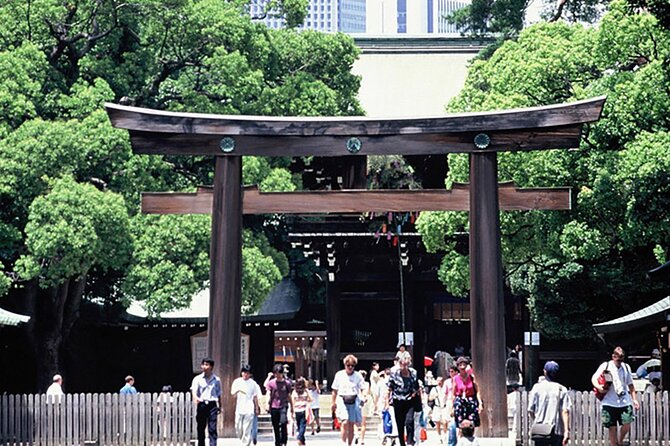
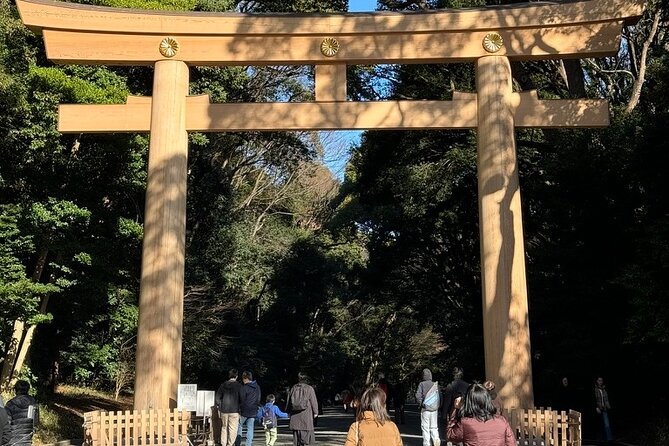
You begin at Meiji Jingu Shrine, with about 50 minutes on site. The shrine is dedicated to Emperor Meiji and was completed in 1920, which gives this stop a modern anchor even though it feels timeless once you’re inside the grounds.
This is also a smart first stop. You’re not immediately thrown into the busiest intersections. Instead, you start with a place designed for silence and reflection, so the contrast with later stops like Shibuya hits harder—in a good way.
Admissions are listed as free, so what you’re really paying for here is interpretation: the guide’s cultural context and help noticing what you might miss on your own. If you want a shrine visit that feels more than just a quick photo stop, this is the part of the tour that does the heavy lifting.
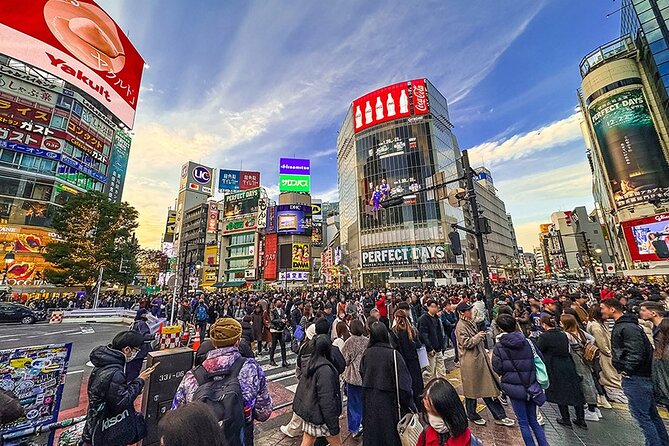
Shibuya Crossing: how to handle the chaos without missing the point
Next comes Shibuya Crossing, with around 20 minutes here. It’s set in the middle of Shibuya Station, and the most famous feature is the pedestrian crossing itself—one of those places where the choreography looks effortless until you’re standing in it.
This stop is short by design. The idea isn’t to linger for hours—it’s to show you what the area is about and help you time your crossing. The guide also helps with positioning, especially when crowds swell. One review credited Yoshi with making it easy to navigate crowded sites while answering questions about Japanese culture and history, and that skill matters most at places like this.
Admissions are listed as free. Your value comes from the guidance: where to stand, when to move, and how to look beyond the spectacle to the surrounding neighborhood.
Asakusa and Senso-ji: old Tokyo you can actually walk through
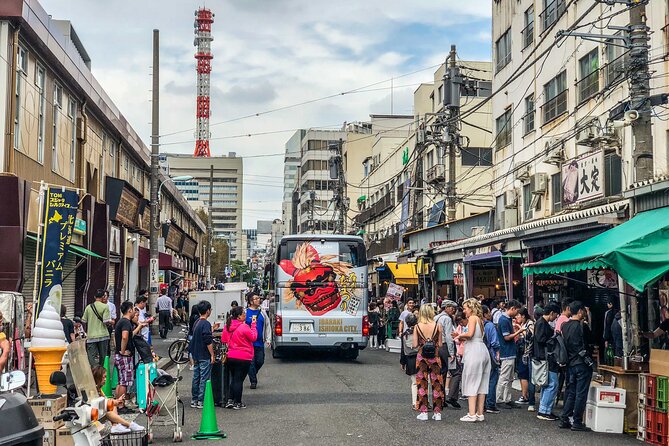
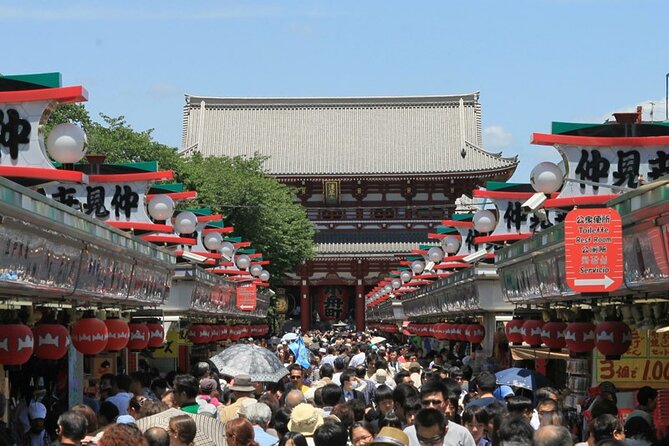
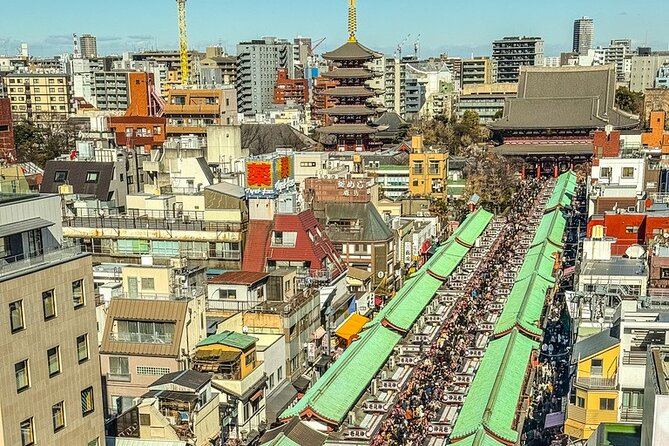
After Shibuya, you shift into Asakusa, spending about 20 minutes in the area. Asakusa is known for traditional shops and street-level browsing—souvenirs, crafts, and snack-style treats—so it’s a good “feel the neighborhood” stop.
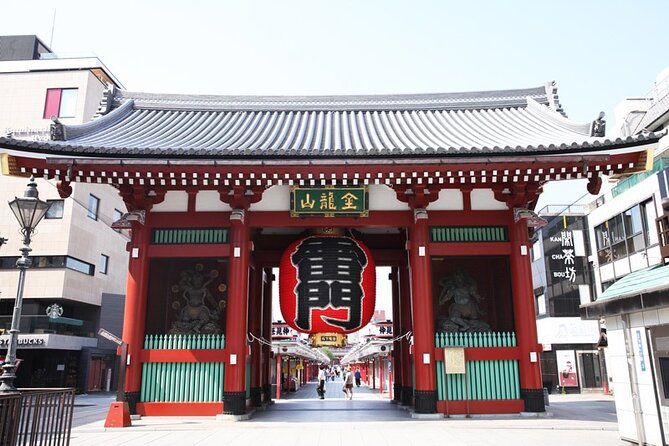
Then you move to Senso-ji Temple, where you get about 40 minutes. Senso-ji is described as one of the oldest and largest Buddhist temples in Tokyo, with history dating back to 645. That’s the kind of timeline that makes you slow down a bit, even if the crowds don’t.
Admissions are listed as free. The difference is what you do with the time. With a guide, you’re more likely to understand the symbolism around the temple and the cultural reasons people gather here. You also get help moving efficiently so you don’t waste minutes trying to orient yourself in a place that’s famous for feeling busy.
One review specifically highlighted how the tour helped people learn the subway system and get acclimated to Tokyo’s layout. In practice, that same orientation benefit carries into Asakusa and Senso-ji: once you understand how the route is organized, you spend your energy exploring instead of searching.
Tsukiji Outer Market around 2 pm: a satisfying finish with less historical confusion
The tour ends at Tsukiji Fish Market’s Outer Market around 2:00 pm, with about 30 minutes to explore. Important detail: the wholesale market was relocated to Toyosu in 2018, but the Outer Market area is still in the same place and continues to draw big crowds.
This matters because many people arrive expecting one thing. With the relocation, Tsukiji is no longer about wholesale auctions in the way people imagine, but the Outer Market still has the feel of a working food district where you can browse, snack, and pick up small items.
Admissions are listed as free, so again the cost goes toward access and the guide’s ability to get you there efficiently. If you like finishing a walking tour with a food-focused window, this is a strong way to end. You’ll also have more time later in the day to choose dinner on your own, instead of feeling boxed in by a tour schedule.
Walking outdoors for 4.5 hours: what to plan for
This isn’t a sit-and-glide experience. The tour involves a “good amount of walking outdoors,” and you’re advised to have moderate physical fitness and wear sneakers or comfortable shoes.
In real life, that means you should plan for steady movement, not big breaks. It also means you should start the day fueled and hydrated, because the itinerary packs multiple neighborhoods into one arc.
The good news: subway navigation plus a private guide helps reduce “lost time.” Several reviews praised how guides handled the train system so people could reach destinations quickly. If you’re the type who gets stressed by station transfers, this tour is designed to take that edge off.
Also bring rain gear. The tour recommends an umbrella or raincoat, and the experience requires good weather, which makes sensible packing part of the value.
Private guide dynamics: you set the pace, not the itinerary
A private tour means you’re only traveling with your group. That’s a practical advantage when crowds peak—your guide can shape the experience to your comfort level.
You can also benefit from the guide’s teaching style. One review praised Izumi for helping navigate the subway and seeing more of Tokyo than they would have on their own. Another mentioned Hiromi as kind and helpful, which is a good reminder that you’ll likely be asking lots of quick questions: which direction to go, what a place represents, and how to keep moving without getting separated.
A small but important takeaway: if you have different energy levels in your group, the private format makes it easier to accommodate. One review noted a guide’s patience with slower travelers, which is exactly what a private guide should do when timing and crowds collide.
Price check: what $136.82 buys you (and when it’s worth it)
At $136.82 per person, the obvious question is: is this worth paying for a guide and transit when Tokyo has excellent signage and transit maps?
Here’s the balanced way to think about value:
- You’re paying for hotel pickup, which can save serious time and energy on a first day.
- You’re paying for an English-speaking guide, which is the difference between seeing places and understanding them.
- You’re paying for transportation via a one-day Metro Pass, which reduces guesswork on fares.
- Admissions are listed as free at the stops, so you’re not taking on surprise entrance costs.
So when is it most worth it? If you have limited time, want a “great hits” orientation, and would rather trade money for speed and clarity, this fits well. If you’re comfortable planning routes, navigating subway transfers, and reading Tokyo signage with confidence, you might be able to DIY it. But DIY won’t offer the same explanations and it often takes longer—especially at stations like the ones around Shibuya.
One more nudge: the average booking time is about 22 days in advance. That suggests demand, so if you’re set on a date, don’t wait until the last week.
Weather and route changes: how flexible you should expect it to be
The itinerary can shift due to weather or operational reasons. You should expect that some visits may be omitted or substituted, and in that situation the tour fare won’t be refunded.
That doesn’t mean the day falls apart—it means you’re protected from a total washout. Still, this is a walking tour outdoors, so your best move is practical: pack rain gear and have a backup mindset for “plan B” routing.
If you’re traveling during a season known for sudden rain, schedule this early in your trip. That way, if the tour adjusts, you’re more likely to still have other days to explore.
Who should book this Tokyo private subway walking tour?
This is a great match if you:
- Want a private introduction to Tokyo’s major sights in one half-day
- Plan to use the subway but want help with route efficiency
- Prefer a guide to explain context at Meiji Jingu, Shibuya, Asakusa, and Senso-ji
- Have limited time and want to skip the “how do I get there” part
It may not be the best fit if you:
- Want minimal walking or lots of downtime
- Dislike outdoor weather conditions
- Prefer fully self-paced days with no structured route
The best part is that it balances iconic Tokyo with a “reasonable” amount of time at each stop, instead of turning your day into a sprint.
Should you book it?
If your goal is to see Tokyo’s highlight circuit—Meiji Jingu, Shibuya, Asakusa/Senso-ji, and Tsukiji Outer Market—in one private, subway-based morning/afternoon plan, I’d book it. The combination of hotel pickup, Metro Pass, and an English guide is exactly what helps first-time visitors get oriented without turning the day into logistics.
Book it especially if you value pace and clarity. Reviews highlight guides like Yoshi, Hiromi, and Izumi for making navigation easier, saving time, and handling crowds with patience—skills that matter most when you’re walking a lot and transferring through busy stations.
If you’re on a strict DIY budget and you’re confident navigating trains solo, you can build something similar yourself. But you’ll likely spend more time planning, and you’ll miss some of the cultural framing that turns a checklist visit into something you remember.
FAQ
How long is the Tokyo private guided subway and walking tour?
The tour runs for about 4 hours 30 minutes.
Is this tour private or shared?
It’s a private tour/activity. Only your group will participate.
What’s included in the price?
Included are hotel pick-up, an English-speaking guide, and the transportation fee via a one-day Metro Pass.
Are admissions included for the main stops?
Admission is listed as free for the included stops: Meiji Jingu Shrine, Shibuya Crossing, Asakusa, Senso-ji Temple, and Tsukiji Fish Market (Outer Market).
What time does the tour end, and where?
The tour concludes around 2:00 pm at Tsukiji Fish Market (Outer Market).
Is lunch included?
No, lunch is not included.
Do I need to walk a lot?
Yes. The tour involves a good amount of walking outdoors, and you should have moderate physical fitness. Comfortable shoes are recommended.
What happens if weather is bad?
The experience requires good weather. If it’s canceled due to poor weather, you’ll be offered a different date or a full refund.
Tokyo, compared.
 ★ 5.0Mt Fuji and Hakone 1-Day Bus Tour Return by Bullet TrainFrom $16326,383 reviews
 ★ 5.01-Day Tokyo Bus TourFrom $12914,250 reviews
 ★ 4.6teamLab Planets TOKYO Digital Art Museum Entry TicketFrom $259,779 reviews
 ★ 4.0Mt Fuji & Hakone Cruise, Drum Show Bullet Train 1 Day from TokyoFrom $1497,413 reviews
 ★ 5.0Shinjuku Food Tour (13 Dishes at 4 Local Eateries)From $866,603 reviews
 ★ 4.4Tokyo Mt Fuji 5th St & Hakone Cruise Bus Tour w/Bullet TrainFrom $1545,024 reviews
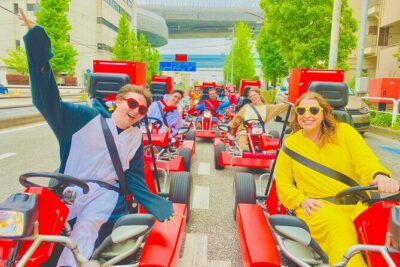 ★ 5.0Flagship 2-Hours Official Street Go-Kart Tour – Tokyo Bay ShopFrom $644,974 reviews
 ★ 4.5From Tokyo: Mount Fuji Full-Day Sightseeing TripFrom $684,970 reviews