
Reviewed · TOKYO
Tokyo: Exquisite Wagyu Beef Experience at Yakiniku Nikunone
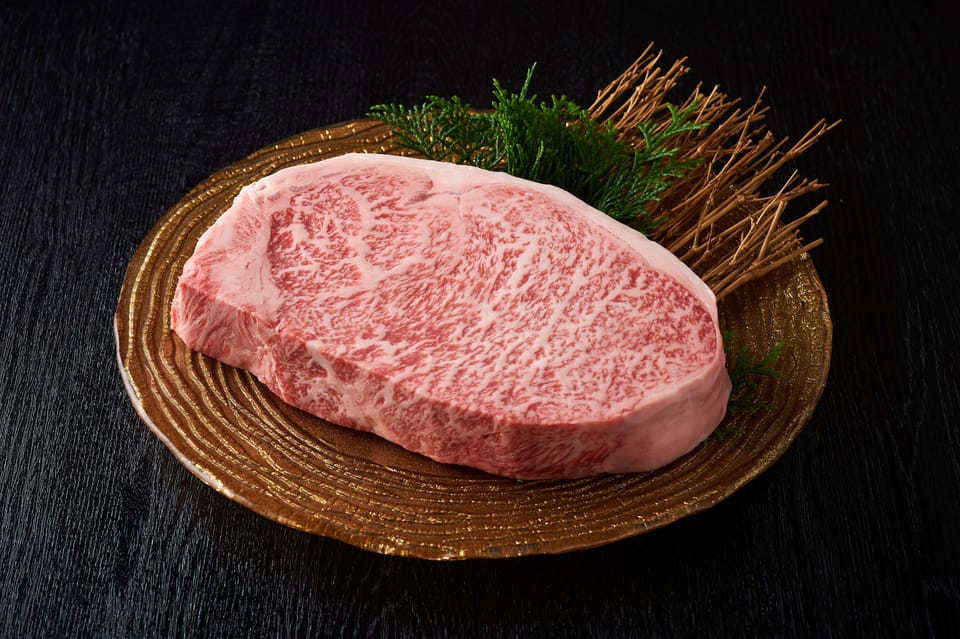
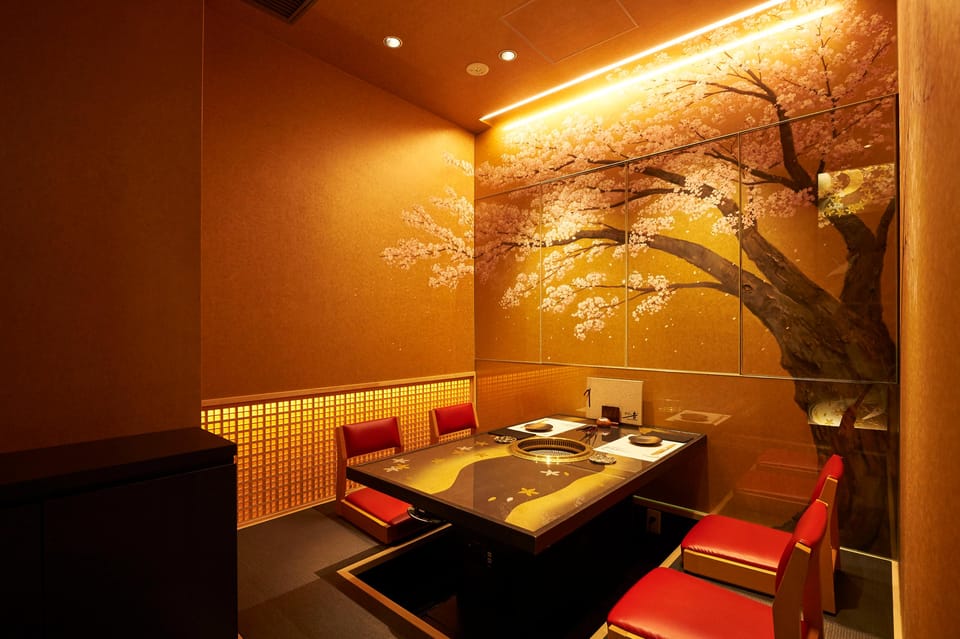
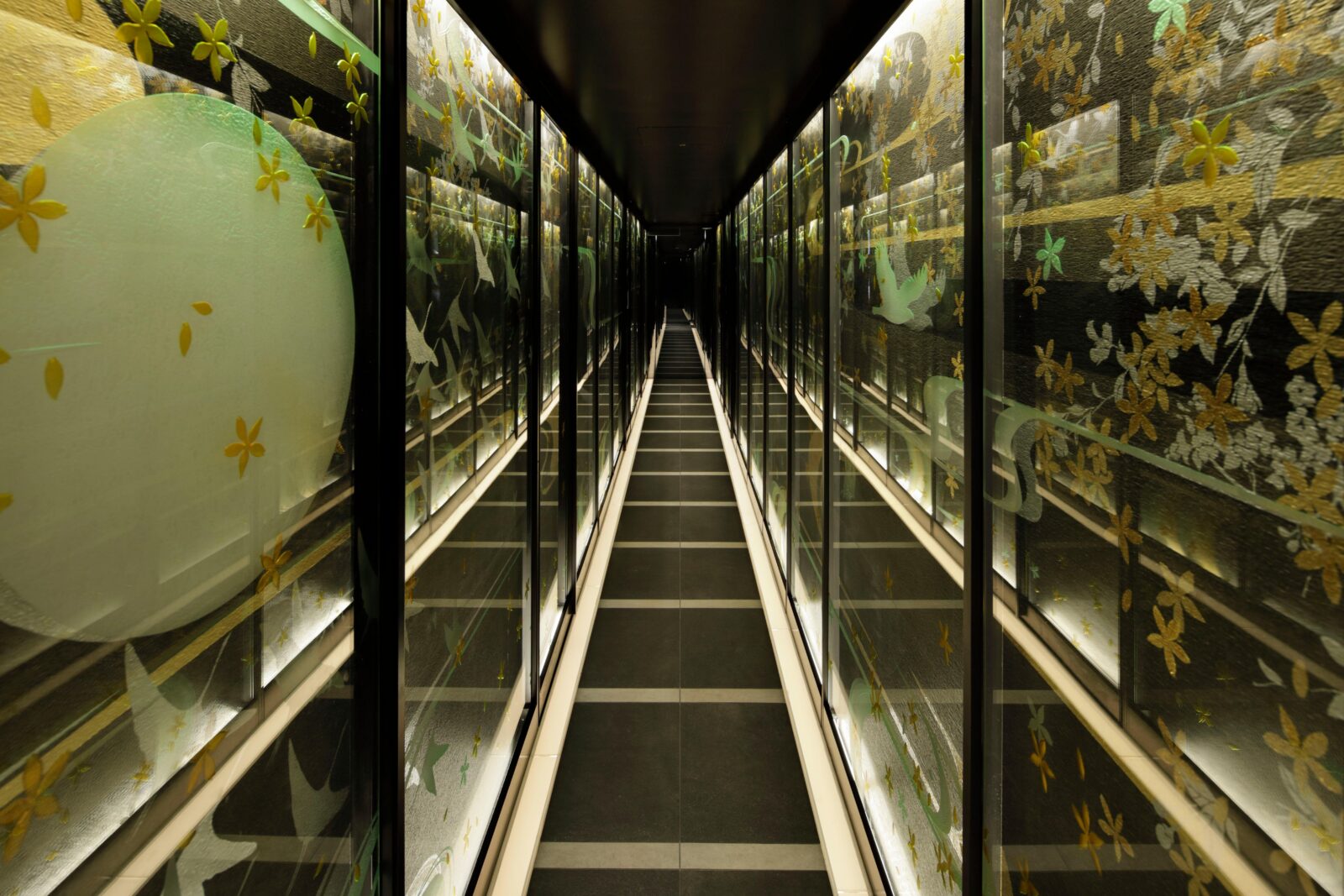
A private room makes wagyu feel personal. At Yakiniku Nikunone, the whole meal is designed around private dining and top-tier A5 Wagyu, served in quiet rooms inspired by Japan’s four seasons. You’re not bouncing between tables or standing around waiting for your turn.
I love the restaurant’s laser focus on wagyu-only dining, because it keeps the menu coherent and the flavors intentional. You also get standout extras beyond plain grill: welcome drinks, wine-and-wagyu pairings, and rare ingredients like Dragon Eggs and algae salt rice from specific Japanese regions.
One drawback to plan for: you’re signing up for a fixed, multi-course menu (about 2 hours). If you have strong dietary limits or you want total freedom to order your own pacing, this setup may feel less flexible.
In This Review
- Key things that make Nikunone special
- Entering the four-season private-room vibe
- A5 Wagyu course design: what you’ll taste over two hours
- The private room detail that actually changes your dinner
- The menu highlights: Dragon Eggs, algae salt rice, and caviar wagyu
- Tongue, shabu-shabu style, and the texture play
- Wine and wagyu pairing: included, not intimidating
- Your three course choices: Nikunone, Kirameki, Kinzakura
- Nikunone Course: the lighter entry with the exclusive wagyu sushi + caviar moment
- Kirameki Course: more seafood and more variety, with wasabi and caviar sushi
- Kinzakura Course: the richest caviar experience and the celebratory end
- How to get the most value from $113 per person
- Logistics: meeting point and how the timing works
- Who this wagyu course suits best
- Should you book Yakiniku Nikunone in Tokyo?
- FAQ
- Is this a guided tour?
- How long is the experience?
- Where do I go for the reservation?
- What is included in the price?
- Is there free cancellation?
- Are drinks included, and is there an age limit?
- Can I mention dietary restrictions?
- Is the restaurant wheelchair accessible?
Key things that make Nikunone special
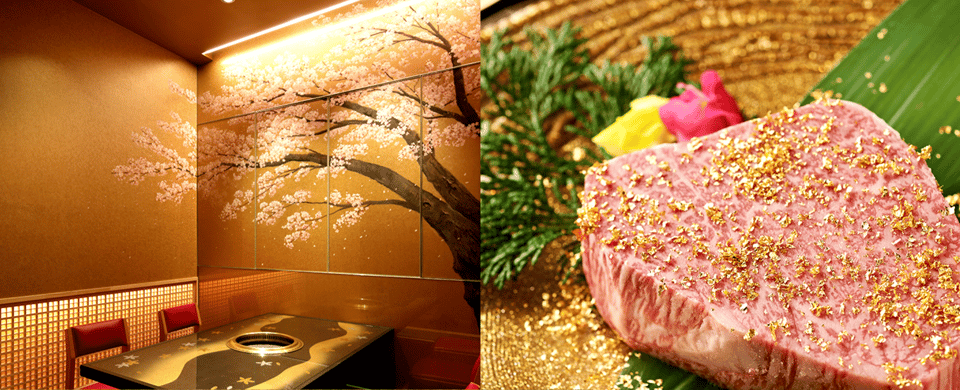
- Private rooms themed to Japan’s four seasons for a calmer, more intimate meal
- A5 wagyu-only focus, with each course built around premium cuts and textures
- Rare ingredients like Dragon Eggs from Oita and algae salt rice from Oki Islands
- Caviar + wagyu sushi moments that differ by course level
- Tongue and shabu-shabu style dishes mixed into the yakiniku flow
- Wine-friendly dining with welcome drinks included in all course options
Entering the four-season private-room vibe
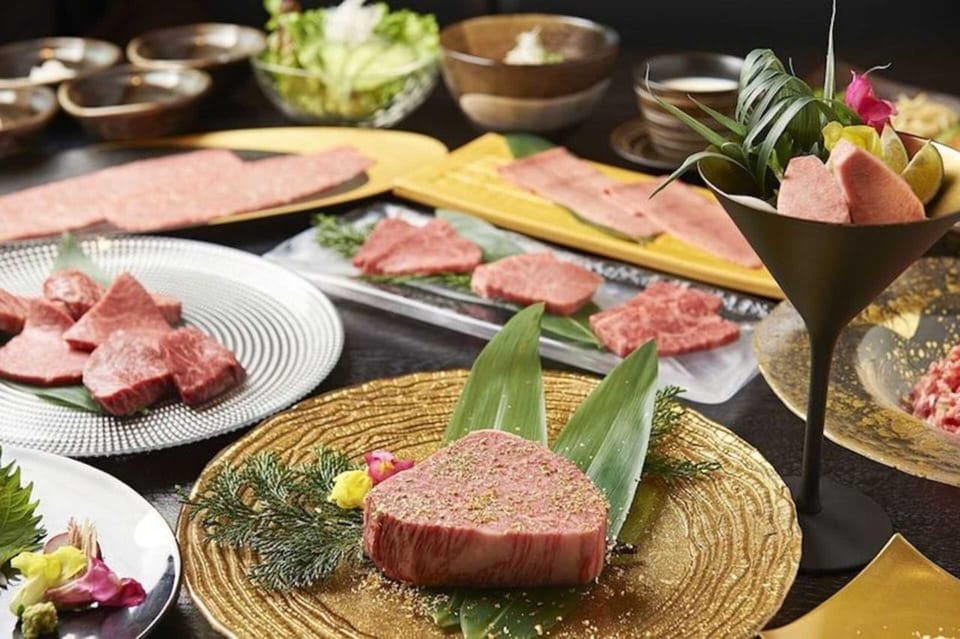
This isn’t a loud yakiniku joint where you share a grill with half the restaurant. Instead, you reserve a set course and settle into your own private room for the full experience. The room design takes cues from Japan’s four seasons, which matters more than it sounds: it changes how the food lands, because the mood stays steady while the courses shift from cold to hot to grilled.
The service style follows that same idea. You’ll be guided through the menu pacing inside your room, and the staff attention is meant to feel precise rather than showy. One practical note: the seating window is capped at 2 hours, so you’re eating with a real sense of flow, not stretching the night into a late, wandering dinner.
Price-wise, you’re not paying for a generic meal. At about $113 per person, you’re paying for (1) A5-grade beef, (2) a structured multi-course program, and (3) the reservation itself. In Tokyo, that combination usually costs extra when you try to recreate it yourself at steakhouses with add-ons.
A5 Wagyu course design: what you’ll taste over two hours
Think of the meal as layers: small starters, then warm bowls and shabu-shabu-like plates, then grilled and sushi-style wagyu, finishing with dessert. The restaurant builds variety without changing the core theme: premium beef, consistently handled.
A key quality cue is how often the menu spotlights tender, high-value parts. You’ll see signature items like a wagyu sinew stew and multiple tongue preparations, plus lean meat marinated options. In practice, that means you’re not just tasting “wagyu flavor.” You’re tasting texture and richness in different forms—broth-warmed, shabu-shabu style, and grilled.
You also get repeated chances to reset your palate with sides. The meal includes kimchi and namul (Japanese-style seasoned vegetables) and a salad between heavier courses. That’s smart dining design: if everything is rich, your best bites would blur together. Here, the program keeps contrast coming.
The private room detail that actually changes your dinner
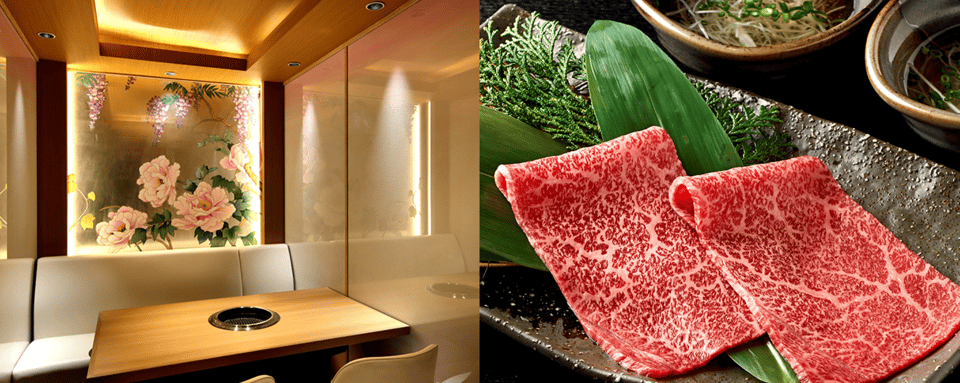
The four-season theme is more than decor. Private rooms help you enjoy course explanations and pairings without the noise pressure you get in shared dining spaces. When the room is quiet, you notice the small touches: how the first plate arrives, how the warm course cools the palate, and how the next grilling moment feels like a step up.
It also makes this meal work for special nights where you don’t want chaos. If you’re celebrating a birthday, an anniversary, or even just a “we’re doing Tokyo right” evening, this is the kind of dinner that feels intentional from the moment you walk in.
From service feedback you can expect professionalism: attentive staff that doesn’t hover too hard. One useful detail: specific seat types can’t be guaranteed, so if you’re picky about exact room placement, go in with flexible expectations.
The menu highlights: Dragon Eggs, algae salt rice, and caviar wagyu
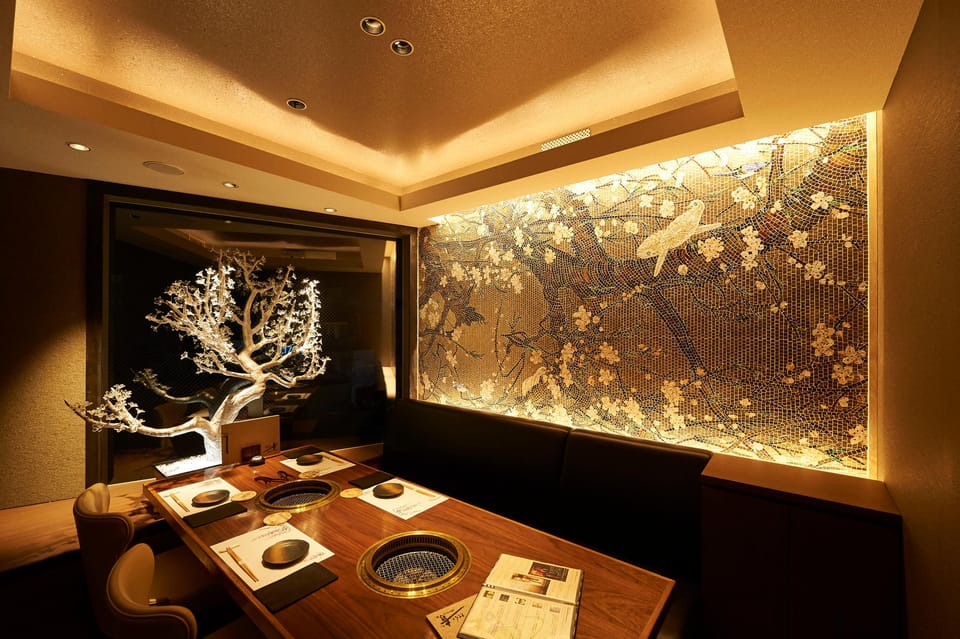
You’ll see rare ingredients named right in the concept, including Dragon Eggs from Oita and algae salt rice from Oki Islands. Even if you don’t know what to expect, the idea here is clear: the restaurant isn’t just relying on beef. They add regional specialties to make the meal feel deeper than a standard wagyu set.
Then come the signature moments that separate Nikunone from run-of-the-mill yakiniku:
- Wagyu sinew stew as a comfort-rich start
- Grilled tongue dishes, including special tongue grilled shabu-shabu
- Exclusive salted “today’s special” parts that vary by course
- Wagyu sushi with caviar, which is limited depending on which course you pick
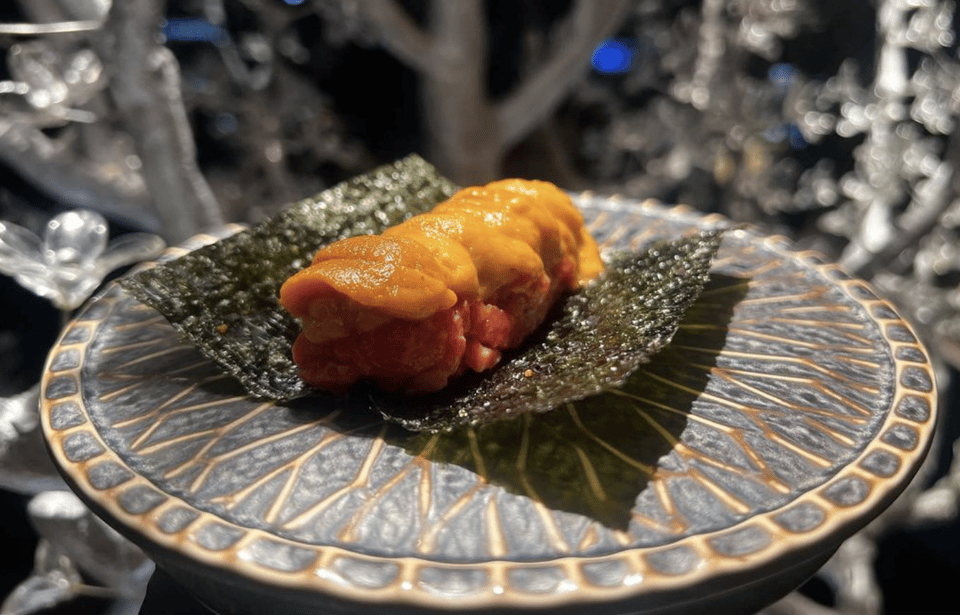
Caviar shows up in different forms across the three menu levels. In the Nikunone and Kirameki courses, you get one piece of seared wagyu sushi with caviar as an exclusive feature. In the Kinzakura course, the caviar inclusion is more extensive: you receive a jar of caviar, plus a few dishes designed to let you use it.
If you’re into seafood-forward bites, there are also sea urchin moments. The Kirameki course includes Miyazaki beef sashimi with sea urchins, and Kinzakura leans into a hand-roll sea urchin tartar sushi with caviar. These aren’t random add-ons. They’re placed where the menu can use them as a fresh counterpoint to fatty wagyu.
Tongue, shabu-shabu style, and the texture play
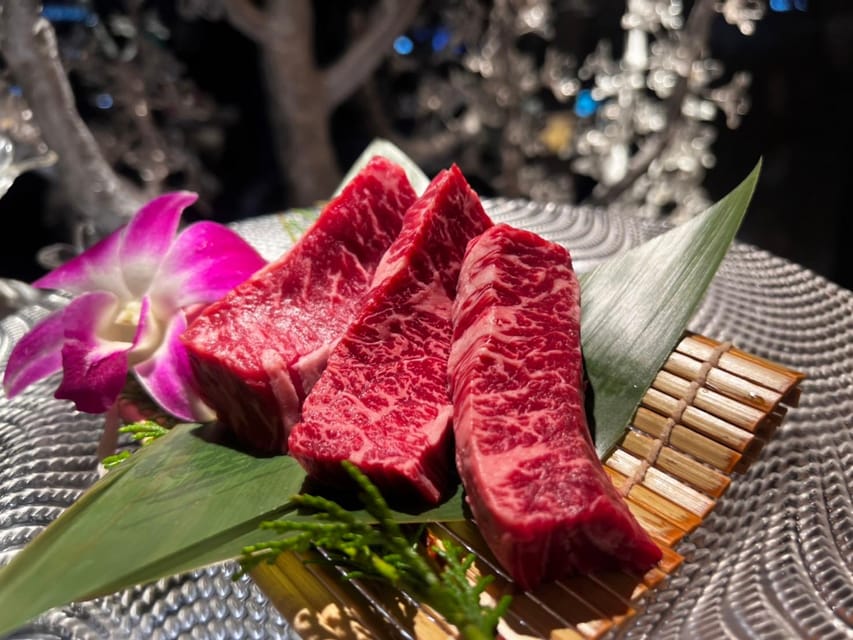
One of the most praised parts of the meal is tongue. It’s not just “tongue exists.” The courses build tongue into the experience in a way that highlights tenderness and flavor. You’ll see tongue listed as both a platter-style item and in special grilled shabu-shabu format.
In other words, the kitchen isn’t treating tongue as a gimmick. They treat it like a star ingredient, and the cooking method does a lot of the work. Grilled tongue brings a deeper, caramelized note, while shabu-shabu style treatments keep it softer and more delicate.
There’s also a spicy stew experience mentioned in feedback that sticks with people because it proves the meal isn’t only about meat. You might find something like chige-style spice depending on how courses land for your set, but the broader point is consistent: the program includes non-grill flavors that keep the meal from feeling monotonous.
Wine and wagyu pairing: included, not intimidating
All three courses include welcome drinks. Nikunone and Kirameki include one drink. Kinzakura includes two drinks, and it explicitly mentions fruit champagne. This is where value matters: you’re not paying extra for pairing at the register. The menu expects that you’ll be drinking during the meal, and the course pacing gives the drinks somewhere to work.
You don’t need to be a wine expert to enjoy this part. The practical benefit is timing. Drinks arrive early enough that you can start the evening with your palate calibrated, then continue through heavier beef courses with something to balance them.
One thing to keep straight: Japan’s legal drinking age is 20+. If you’re booking for a group, plan who can enjoy the drinks.
Your three course choices: Nikunone, Kirameki, Kinzakura
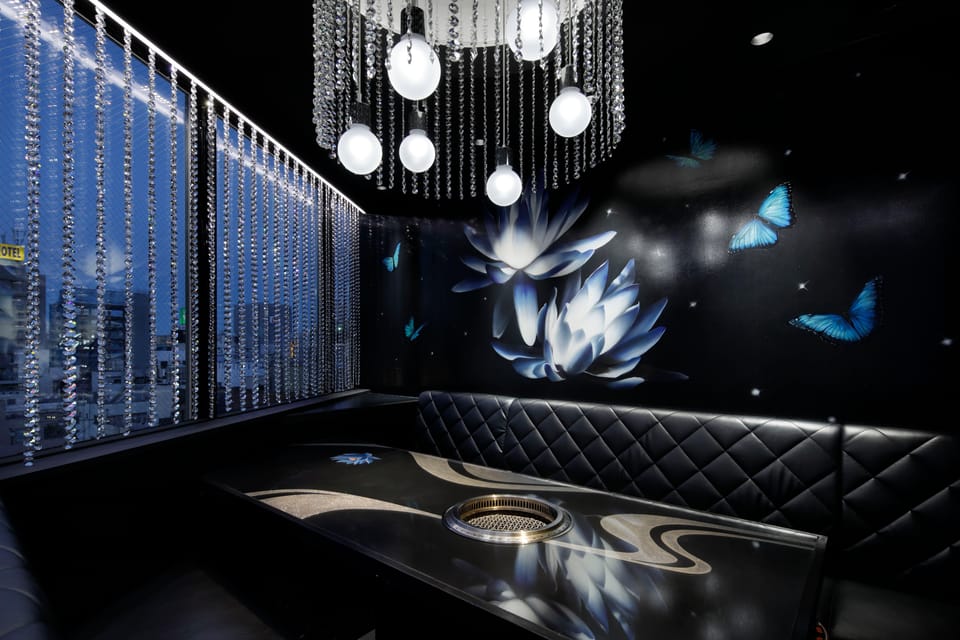
All options are full course menus served in private rooms, and all come with welcome drinks. What changes is the ingredient mix, the number of drinks, and which premium moments are exclusive.
Nikunone Course: the lighter entry with the exclusive wagyu sushi + caviar moment
Nikunone runs 12 dishes and includes one drink plus one piece of seared wagyu sushi with caviar that’s exclusive to this course. You also get kimchi and namul, wagyu sinew stew, salad, special tongue grilled shabu-shabu, and today’s special exclusive salted parts.
You’ll also get chestnuts grilled shabu-shabu and selected two kinds of lean meat marinated, then grilled wagyu sushi (2 pieces). It ends with yuzu sorbet, which is a strong closer because it cuts fat with bright citrus.
If you’re new to this style, or you want a satisfying but slightly tighter program, this is the most straightforward entry.
Kirameki Course: more seafood and more variety, with wasabi and caviar sushi
Kirameki runs 14 dishes and includes one drink and the same type of exclusive wagyu sushi with caviar moment. The menu includes kimchi and namul again, plus wagyu sinew stew, then moves into Miyazaki beef sashimi with sea urchins.
You also get salad, special tongue grilled shabu-shabu, and a special skirt steak served with fresh wasabi. Today’s special shows up again with two exclusive salted parts, then you shift into marinated lean meats and either sirloin steak or rump steak.
The meal portion includes cold noodles or wagyu ochazuke. Dessert is your choice. If you want more going on besides grilled wagyu, this course gives you more mid-course variety and a bigger spread.
Kinzakura Course: the richest caviar experience and the celebratory end
Kinzakura runs 14 dishes and includes two drinks, explicitly including fruit champagne, plus a jar of caviar. You also get hand-roll sea urchin tartar sushi with caviar, salad, special tongue grilled shabu-shabu, and a chateaubriand served with truffle salt.
Today’s special includes two exclusive salted parts again, and the menu adds chuck flap grilled sukiyaki plus a wagyu steak sandwich. You’ll also choose between cold noodles or grilled wagyu sushi with sea urchins (2 pieces). Dessert is your choice.
Finally, there’s a small bottle of caviar that you can use on items like the sea urchin tartar, depending on how you want to assemble bites. This course is for people who really want the caviar moment to last, not just appear once.
How to get the most value from $113 per person
Here’s how I look at price on experiences like this: it’s only a good deal if it replaces expensive decision-making. Nikunone does that. You don’t need to guess cuts, piecemeal order, or negotiate which side dishes to add. You pay once for a structured menu that the restaurant already designed around A5 wagyu and signature premium ingredients.
You also get sales tax included in the package. That may sound small, but it removes another uncertainty while you’re planning your Tokyo budget.
So the value question becomes simple:
- If you want a premium wagyu night with private-room pacing, this is a reasonable way to do it.
- If you only want a quick bite or you hate fixed menus, you’ll feel the price more than the benefits.
Logistics: meeting point and how the timing works
You’ll meet across from Lawson Gran Customa. On the day, you go directly into the restaurant when it’s your reservation time. There’s no guide provided, so plan on handling your own arrival and check-in with the staff in the room.
The schedule is built to keep seating to a maximum of 2 hours. That means the kitchen and service team are not slowing down for pauses between courses. If you like to take your time photographing every plate for 20 minutes, you might feel rushed. If you like a smooth, intentional meal, you’ll match the rhythm well.
If you have dietary restrictions, you should leave a comment during checkout. The menu is course-based, so communicate needs ahead of time rather than hoping for changes mid-meal.
Who this wagyu course suits best
This experience fits best if you:
- Care about A5 wagyu quality and want it treated as the main event
- Prefer private dining with quiet conversation over shared grills
- Like the idea of a structured tasting that mixes grill, shabu-shabu style, and sushi
- Are excited by premium add-ons like sea urchin and caviar
It may not fit as well if you:
- Want to order off a menu à la carte
- Have strict allergies or complex dietary needs and haven’t confirmed they can accommodate
- Are looking for an all-day food crawl instead of a focused 2-hour dinner
Should you book Yakiniku Nikunone in Tokyo?
Book it if you want a high-end wagyu dinner that feels special without turning into a complicated planning project. The private-room setup, four-season themes, and wagyu-only specialization make this more than just a meal. It’s a planned experience with premium moments that aren’t common everywhere.
Skip it only if you strongly dislike fixed course menus, or you’re chasing variety at a budget. This is a splurge dinner, and it works best as a deliberate highlight night.
If you’re choosing between the courses and you’re unsure, here’s the simple rule: Nikunone is the clean entry, Kirameki adds more seafood and steak variation, and Kinzakura is the celebration pick for fruit champagne and the most substantial caviar focus.
FAQ
Is this a guided tour?
No. This is a restaurant reservation for a special course menu, and no guide will be provided.
How long is the experience?
The seating/course is set for 2 hours.
Where do I go for the reservation?
The meeting point is across from Lawson Gran Customa, and you enter the restaurant directly at your reservation time.
What is included in the price?
The price includes the full course menu, sales tax, and the reservation.
Is there free cancellation?
Yes. You can cancel up to 2 days in advance for a full refund.
Are drinks included, and is there an age limit?
Yes. Each course includes welcome drinks, and Japan’s legal drinking age is 20 years or older.
Can I mention dietary restrictions?
Yes. If you have dietary restrictions, leave a comment during checkout.
Is the restaurant wheelchair accessible?
Yes, it is listed as wheelchair accessible.
If you tell me your group size and which course you’re leaning toward (Nikunone, Kirameki, or Kinzakura), I can help you pick the best fit based on your food preferences.
Tokyo, compared.
 ★ 5.0Mt Fuji and Hakone 1-Day Bus Tour Return by Bullet TrainFrom $16326,383 reviews
 ★ 5.01-Day Tokyo Bus TourFrom $12914,250 reviews
 ★ 4.6teamLab Planets TOKYO Digital Art Museum Entry TicketFrom $259,779 reviews
 ★ 4.0Mt Fuji & Hakone Cruise, Drum Show Bullet Train 1 Day from TokyoFrom $1497,413 reviews
 ★ 5.0Shinjuku Food Tour (13 Dishes at 4 Local Eateries)From $866,603 reviews
 ★ 4.4Tokyo Mt Fuji 5th St & Hakone Cruise Bus Tour w/Bullet TrainFrom $1545,024 reviews
 ★ 5.0Flagship 2-Hours Official Street Go-Kart Tour – Tokyo Bay ShopFrom $644,974 reviews
 ★ 4.5From Tokyo: Mount Fuji Full-Day Sightseeing TripFrom $684,970 reviews