
Reviewed · ASAKUSA TOURS
Tokyo: Asakusa Walking Tour with Japanese Comedian
Comedy meets Tokyo’s oldest streets. This Asakusa walking tour pairs a temple-and-shrine route with humor from Ryo, a local comedian guide who explains what you’re seeing and why it matters. You start with landmarks like Tokyo Skytree-area views, then move through icons such as Kaminarimon before ending inside the main temple area at 本堂.
I like the way Ryo connects the sights to Japanese life, not just dates and facts. Two things I especially appreciate: the religious context of Buddhism and Shinto side by side, and the fact that it’s designed for a small group so you can actually ask questions in English or Japanese.
One drawback to consider: the itinerary is fairly set. If your plan already includes all the major spots in Asakusa, this may feel like a guided version of what you would do anyway, and it doesn’t turn into a long shopping stroll.
In This Review
- Key highlights worth planning for
- Why a comedian guide makes Asakusa click
- Price and what 90 minutes actually buys you
- Meeting at Tokyo Cruise and starting on time
- Sumida Park to Kaminarimon: views, photos, then context
- Nakamise Shopping Street: learning the story without turning it into shopping
- Asakusa Shrine and Sensō-ji side by side
- What “skip the ticket line” feels like in practice
- How to turn the tour into a better first-day plan
- Who this tour suits best (and who might not)
- Should you book this Asakusa tour with Karate Comic Ryo?
- FAQ
- How long is the Tokyo Asakusa walking tour with a Japanese comedian?
- Where is the meeting point?
- What are the main stops on the itinerary?
- Does the tour include skip-the-ticket-line entry?
- What languages does the guide speak?
- Is it wheelchair accessible?
- Is food or souvenir shopping included?
Key highlights worth planning for
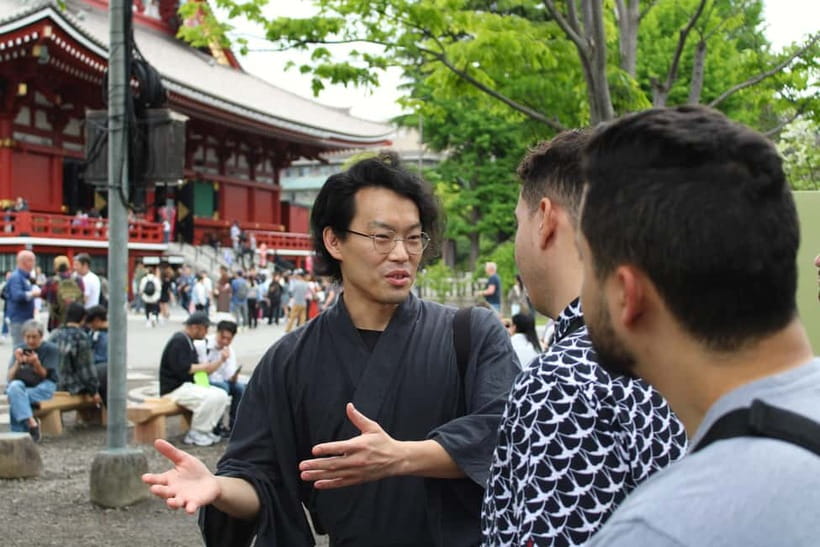
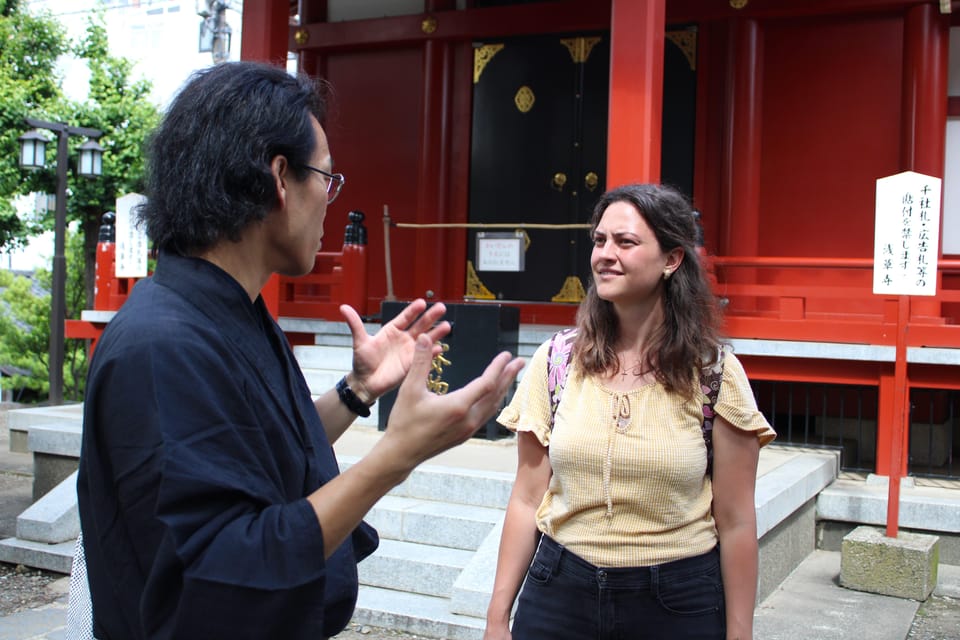
- Karate Comic Ryo guides in English and Japanese, with comedy tied to standup culture
- A tight 90-minute route that still hits the big Asakusa icons and supporting sights
- Learn why Asakusa pairs Buddhist temples and Shinto shrines in the same neighborhood
- Photo stops at Kaminarimon Gate and the Nakamise approach before you step into the religious core
- You’ll get explanations for Buddhist deity statues and temple symbolism, not just a walking checklist
- Limited to 8 participants, which keeps the pace workable and questions more likely to land
Why a comedian guide makes Asakusa click
Asakusa can feel a bit like two things at once. On the surface, it’s classic postcard Tokyo: temples, incense, gates, and crowds. Underneath, it’s also a neighborhood where people live with older beliefs as part of daily culture. This tour helps you connect those dots fast.
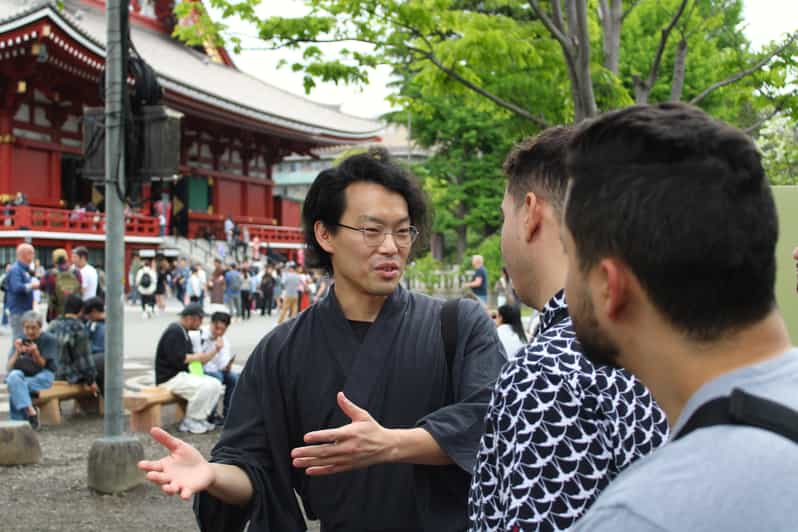
What makes it work is Ryo’s angle. He’s not only a guide; he has years of local experience in Asakusa as a rickshaw driver, so he knows how the area functions beyond the monument level. And he uses humor in English that’s meant to be understandable even if you’re new to Japanese comedy history. That matters because it keeps the tour from turning into a lecture while still giving you real context.
I also like that he points out what you can overlook when you’re self-guiding. Asakusa has a lot of visual symbols, statues, and small details that can blur together in photos. With Ryo, you’re more likely to notice what each element is communicating.
If you want a tour that makes you laugh a little and then helps you read the place with better eyes, this style fits.
Price and what 90 minutes actually buys you
At $31 per person for a 1.5-hour walking tour, the value is mostly about coverage and guidance quality—not about buying anything. You’re paying for a local guide who leads you through multiple stops, explains what each one represents, and keeps the route moving so you’re not wasting half your time figuring out where to go next.
You also get a few practical benefits folded in:
- Skip the ticket line (so you spend time walking and learning, not waiting)
- A small group capped at 8 (better pacing than a huge crowd)
- A set itinerary that includes major icons and supporting sights, plus time for photo stops
Is the price “cheap” in absolute terms? Not necessarily. But for Tokyo, the combination of a knowledgeable local guide plus guided access and a focused route usually feels fair. And based on how people describe the experience, the best payoff comes from the explanations—especially around the meaning of Buddhist and Shinto elements—because that’s hard to recreate on your own without research.
Meeting at Tokyo Cruise and starting on time
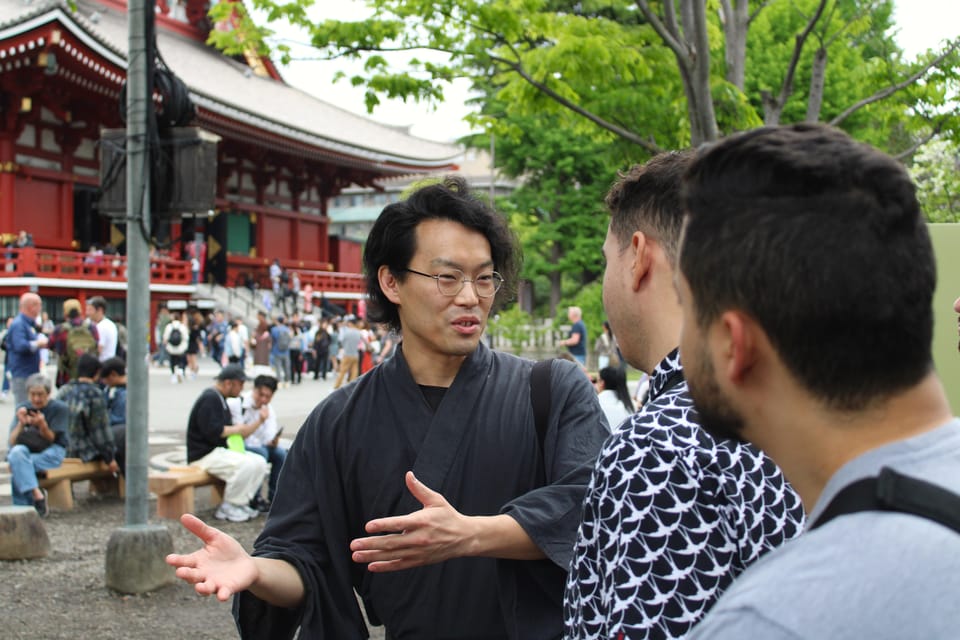
Your meeting point is in front of Tokyo Cruise (Asakusa pier). It’s about a 1–2 minute walk from Asakusa Station on the Tokyo Metro Ginza Line. That’s a relief if you’re arriving by train and don’t want to hunt for a tiny storefront meeting spot.
Plan to arrive 5 minutes early. The tour starts on time and they won’t wait for late arrivals. This is important because you’re walking, and the route is paced to fit the 90 minutes.
Also note the boundaries: the guide can’t pick you up at your hotel, and after the tour you part ways. You’ll finish at 本堂, inside the larger temple complex area. If you want to continue exploring (or head straight to lunch), keep that in mind so you don’t get surprised about where the tour ends.
Sumida Park to Kaminarimon: views, photos, then context
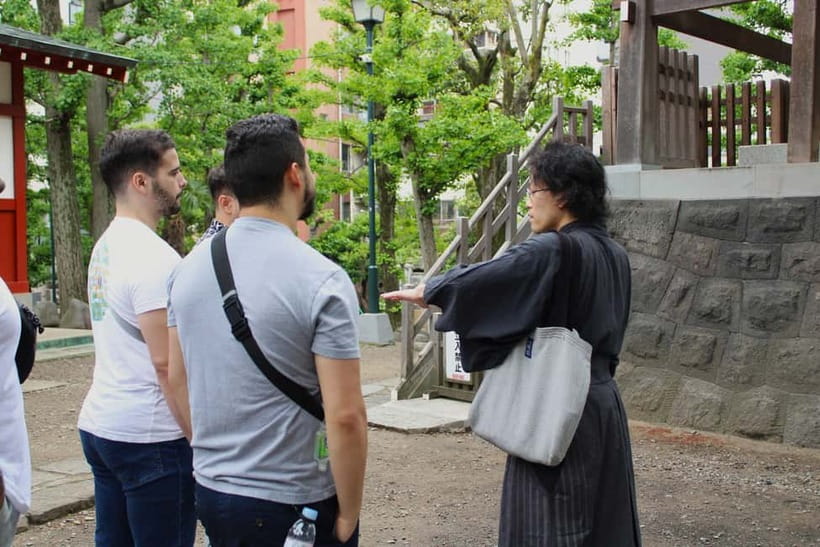
The first walking blocks are about getting oriented. The route begins at Sumida Park, which sets you up for the “Asakusa along the river” feeling before you head into the shrine-and-temple zone.
Before you even reach Senso-ji, your guide Ryo shows landmarks like Tokyo Skytree and Asahi Beer Company. You also get a free view of Asakusa from the top of a nearby building. That one piece is more than a quick photo moment. It helps you understand where everything sits relative to the river and the neighborhood—so later, the streets feel less confusing.
Then comes Kaminarimon, the famous gate with its big lantern. You’ll get a photo stop and guided context. In a self-guided visit, it’s easy to treat Kaminarimon like just a dramatic entrance. On the tour, you’ll hear why it’s such a strong symbol for Asakusa and how it frames what comes next.
The trade-off: you’re not going slowly. This is a “see the highlights with meaning” route. If you want long pauses for wandering, this may feel a bit timed. But if your goal is to understand the layout quickly, it’s a smart start.
Nakamise Shopping Street: learning the story without turning it into shopping
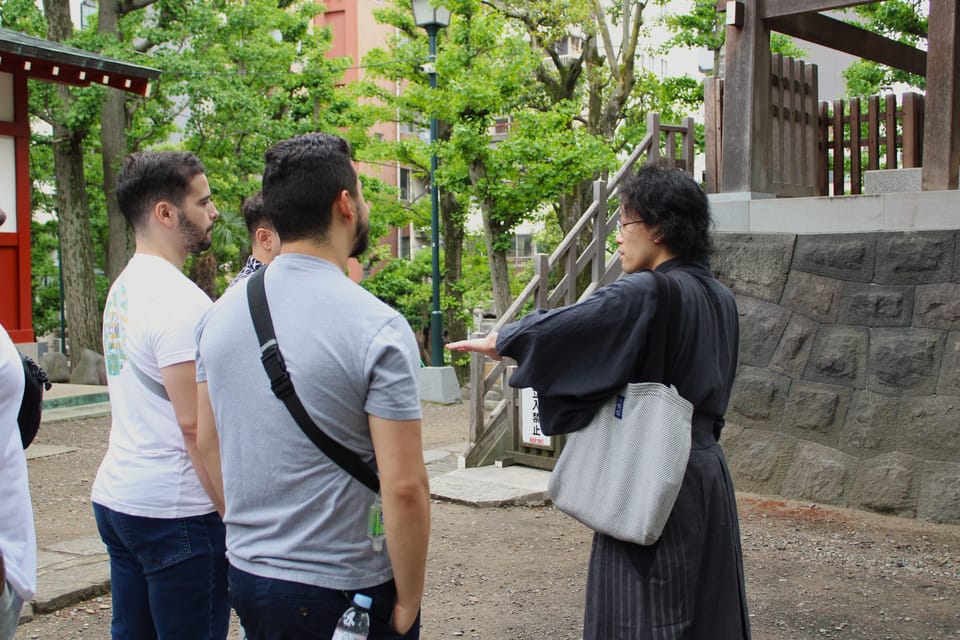
Next you’ll walk through Nakamise Shopping Street. This is one of those places where first-time visitors often focus on snacks and souvenirs. On this tour, the guide keeps it story-focused.
Ryo explains the origin of Senso-ji using illustrations. He also talks about how the temple was supported over time, from locals to influential figures across different periods. That kind of historical framing changes how you experience the street. Instead of reading it as a commercial corridor, you start seeing it as part of how people have approached the temple for generations.
Important practical note: the tour doesn’t stop to buy food or souvenirs. You can browse, but the itinerary isn’t built around shopping. Ryo will give recommendations after the tour if you ask, which is a good compromise if you want the cultural context first and shopping later.
If you love to shop and snack for an hour straight, you might wish the tour had more free time here. If you’re the type who wants context first and shopping second, this pacing is a win.
Asakusa Shrine and Sensō-ji side by side
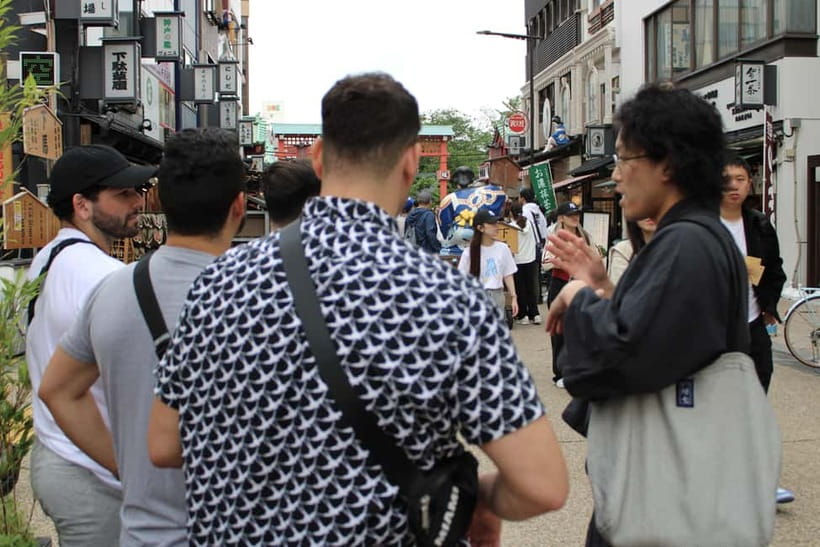
This is where Asakusa becomes more than a sightseeing route. You’ll visit Asakusa Shrine, then move into Sensō-ji Temple (finish at 本堂).
One of the biggest takeaways is the neighborhood’s distinct pairing of a Buddhist temple and a Shinto shrine next to each other. Japan’s religious life is often more flexible than people expect from the outside. Your guide will explain the religious views among Japanese people and how visitors should think about both spaces without forcing them into a single category.
You’ll also learn about Buddhist deity statues around the area. That’s useful because these statues can look similar from far away, and many tourists photograph them without understanding what they represent. With Ryo, you get significance, so the images stop being random.
And inside the Senso-ji complex, the explanations keep you from feeling like you’re just walking through a busy queue. The experience is structured so you can absorb meaning even in a crowd.
What “skip the ticket line” feels like in practice
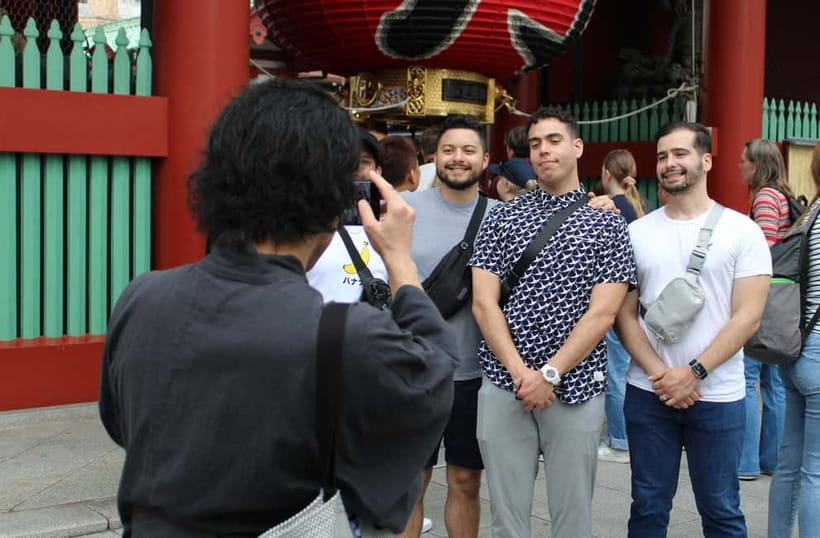
Even for major attractions, waiting can eat your whole schedule. This tour includes skip-the-ticket-line, which helps you maintain your 90-minute flow.
It doesn’t mean you’ll avoid everything—Asakusa is still full of foot traffic—but it reduces one major point of friction. For first-time Tokyo visits, that’s a big deal because the rest of your day depends on keeping momentum.
The small group size (limited to 8) also helps with pacing. You’re less likely to get pulled into awkward single-file movement the way you can with larger tours. It’s still walking, still crowded, but it’s easier to ask questions and stay with the group.
If you’re trying to fit Asakusa into a packed itinerary, this is the kind of tour that protects your time while still giving you explanations.
How to turn the tour into a better first-day plan
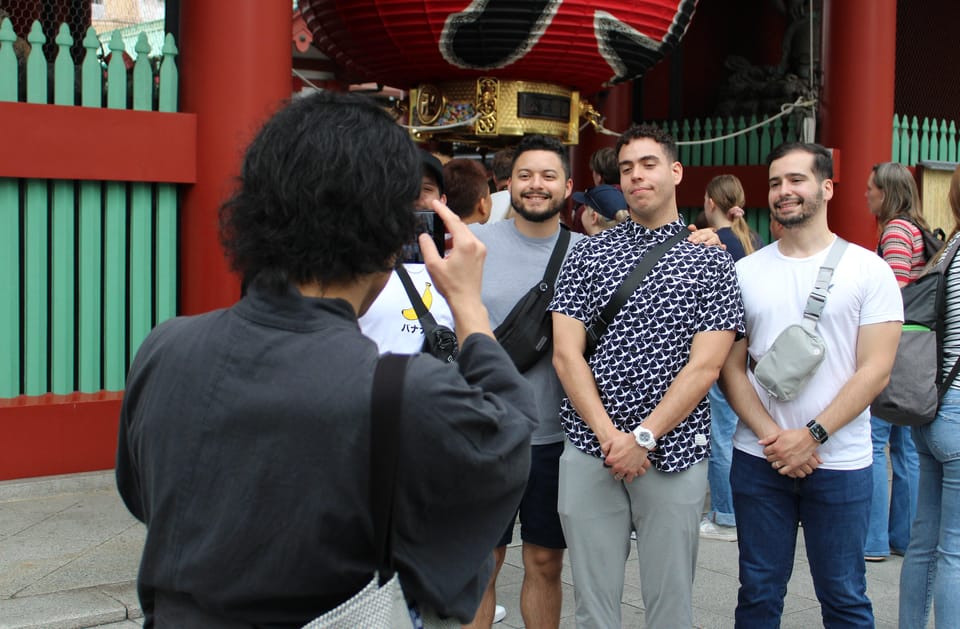
This tour works best as a starting point. It covers the core area, explains the symbolism, and gives you a mental map so you can keep exploring afterward with confidence.
Here’s how I’d use it on your itinerary:
- Take this early enough that you still have energy to return to favorite spots.
- After finishing at 本堂, consider using your new context to choose where to linger rather than trying to decide on the fly.
- If you want shopping, plan that for after. The tour intentionally doesn’t turn into a food and souvenir stop loop.
You’ll also get practical guidance from your guide’s perspective as someone who’s worked in the area for years. One of the repeat themes in the guide’s feedback is that you’ll come away with better bearings and a stronger appreciation for how Asakusa developed.
That “context first” approach is what makes the tour feel valuable even if you’re already aware of the famous landmarks.
Who this tour suits best (and who might not)
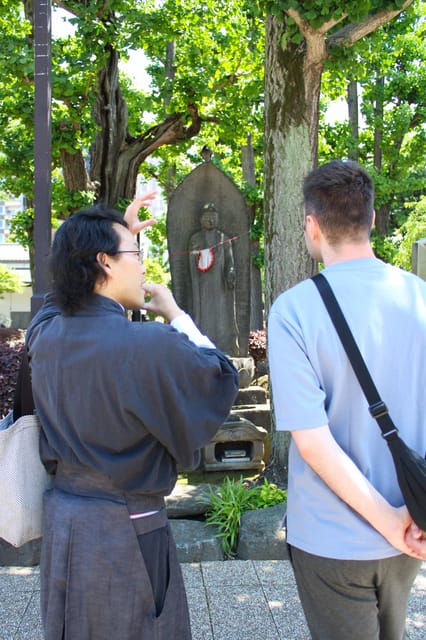
This walking tour suits you if:
- You want a first-time Asakusa orientation with real explanations.
- You like learning about religion as culture, not as trivia.
- You appreciate humor that’s designed to make the history easier to remember.
- You want a guide you can ask questions to, in English or Japanese, in a small group.
You might not love it if:
- You already planned an independent Asakusa day focused on lots of shopping and long wandering.
- You prefer tours with more free time at each location.
- You’re very sensitive to guide style. Some people want extra showiness; the tour is guided and informative, and your enjoyment will depend on how much you vibe with Ryo’s pacing.
Should you book this Asakusa tour with Karate Comic Ryo?
Book it if you want the fastest path to understanding Asakusa beyond the obvious photos. Ryo’s mix of local experience, cultural explanations, and comedy makes the stops—Kaminarimon, Nakamise, Asakusa Shrine, and Senso-ji—feel connected rather than random.
Skip it if your main goal is shopping time or if you’d rather spend the day at your own pace without a fixed route. Also consider your expectations about overlap: the tour hits the major icons you’d likely see anyway, so the payoff comes from the “why,” not just the “what.”
At $31 for 90 minutes with skip-the-line access and a small-group comedian guide, it’s a solid value for travelers who want meaning with their monuments.
FAQ
How long is the Tokyo Asakusa walking tour with a Japanese comedian?
The tour lasts 90 minutes.
Where is the meeting point?
Meet in front of Tokyo Cruise (water bus station), which is about 1–2 minutes’ walk from Asakusa Station on the Tokyo Metro Ginza Line.
What are the main stops on the itinerary?
The tour includes Sumida Park, Kaminarimon, Nakamise Shopping Street, Asakusa Shrine, and Sensō-ji Temple, finishing at 本堂.
Does the tour include skip-the-ticket-line entry?
Yes. This tour includes skip the ticket line.
What languages does the guide speak?
The tour is offered with a live guide in English and Japanese.
Is it wheelchair accessible?
Yes, the tour is listed as wheelchair accessible.
Is food or souvenir shopping included?
No. The itinerary is not designed for shopping for food or souvenirs, but the guide can recommend places to shop after the tour.
Asakusa Tours, compared.
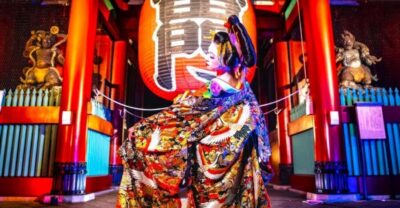 ★ 4.8Japanese Dance Cabaret Theater Asakusa-Kaguwa TicketFrom $492,270 reviews
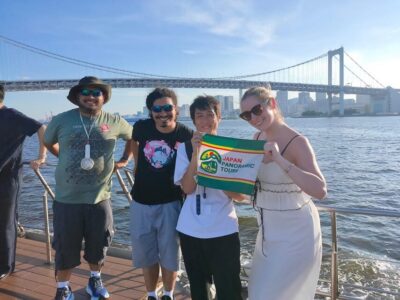 ★ 4.7Meiji Shrine, Asakusa, Skytree Bus Tour and CruiseFrom $1221,986 reviews
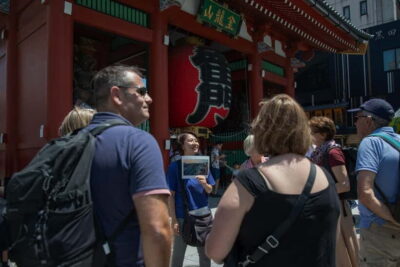 ★ 4.8Asakusa Walking Tour with Sensoji Temple VisitFrom $221,583 reviews
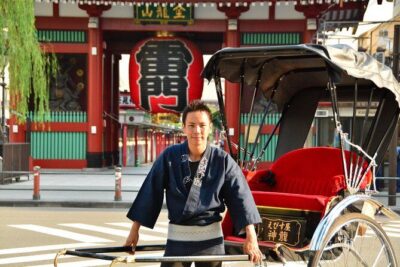 ★ 5.0Tokyo Asakusa Rickshaw TourFrom $421,375 reviews
 ★ 4.5Tokyo Panoramic 1 Day: Meiji Shrine, Asakusa, Odaiba and SKYTREE®From $851,222 reviews
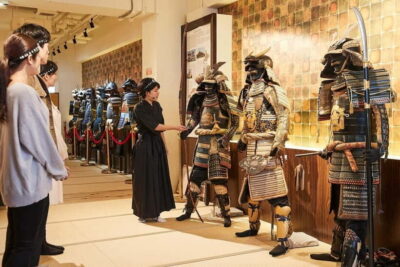 ★ 4.8Samurai Ninja Museum Asakusa: Samurai Sword Lesson & TourFrom $63306 reviews
Asakusa Sightseeing Tour by RickshawFrom $35195 reviews
Asakusa Kimono Dressing and Matcha ExperienceFrom $56173 reviews
★ 4.8Samurai Ninja Museum Asakusa: Samurai Sword Lesson & TourFrom $63306 reviews
Asakusa Sightseeing Tour by RickshawFrom $35195 reviews
Asakusa Kimono Dressing and Matcha ExperienceFrom $56173 reviews
Browse the lists this tour appears in