
Reviewed · TOKYO
Tokyo: 3-Hour E-Bike Tour of the City’s Riverside Areas
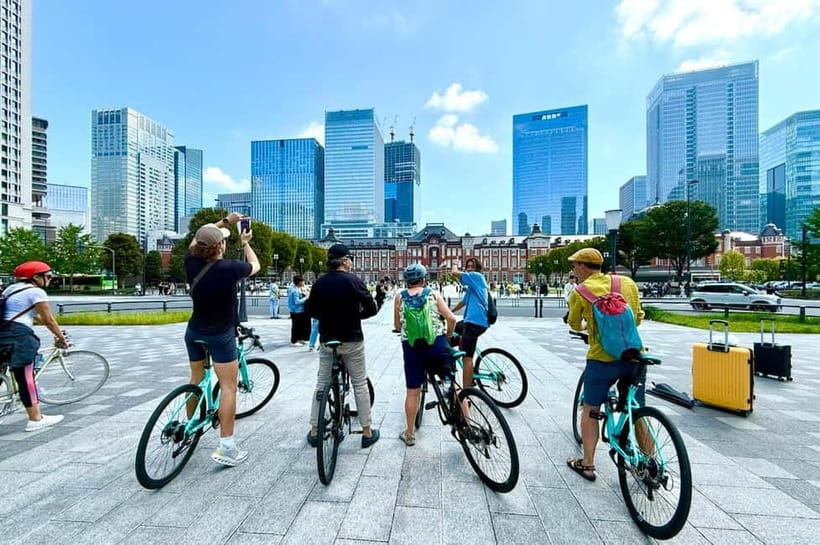
A bike makes Tokyo feel human. This Tokyo 3-hour e-bike tour strings together riverside Tokyo and city landmarks in a way that feels doable even if you’ve already seen plenty. You’ll roll from Hibiya Park toward Ginza, down through Tsukiji, and across the Sumida River area, with stops timed for photos and short guided breaks.
I like two things a lot. First, the e-bike assist turns “too far on foot” routes into an easy ride, so you can keep your energy for the sights. Second, the guide’s stories make each stop make sense, and I’ve heard names like Nooki and Casey pop up in the group—people describe them as caring and genuinely fun.
One thing to consider: the route isn’t a complete car-free fantasy. Ginza has a moment that can feel busier and more traffic-oriented than the rest, so if you’re anxious around cars, go in with a calm mindset and let the guide set the pace.
In This Review
- Key takeaways before you book
- Why this Tokyo riverside ride feels different on an e-bike
- Where the tour starts: Hibiya Park and a smooth first setup
- Ginza and Kabuki-za: quick landmark moments that don’t eat the whole trip
- Tsukiji Hongan-ji and the Outer Market: spiritual pause plus real food energy
- Tsukishima Monja Street and Sumiyoshi Jinja: a look at daily Tokyo
- Kiyosumi Gardens: the included entrance break you’ll be glad for
- Naritasan Fukagawa Fudōdō finish: optional entry and a clean ending
- Price and value: is $78 worth it for Tokyo?
- Safety, comfort, and what to bring (so the ride stays easy)
- Who this tour suits best (and who should skip it)
- My practical advice for your best day on this route
- Should you book this Tokyo e-bike tour?
- FAQ
- How long is the Tokyo riverside e-bike tour?
- What languages do the guides speak?
- How big is the group?
- What is included in the price?
- Is food included?
- Do I have to pay to enter Fukagawa Fudō-dō at the end?
Key takeaways before you book
- Electric assist for real convenience: the bike helps you keep moving without turning the tour into a workout
- Small group size: limited to 8 participants, so you’re not lost in a crowd
- Local-guide storytelling at each stop: short guided visits that connect the dots
- A balanced mix of landmarks and everyday Tokyo: you get both big-name scenes and quieter streets
- Kiyosumi Gardens entrance included: one notable attraction you don’t have to figure out on your own
- Final temple stop is optional: you can finish with or without paying the ¥1000 cash entry fee
Why this Tokyo riverside ride feels different on an e-bike
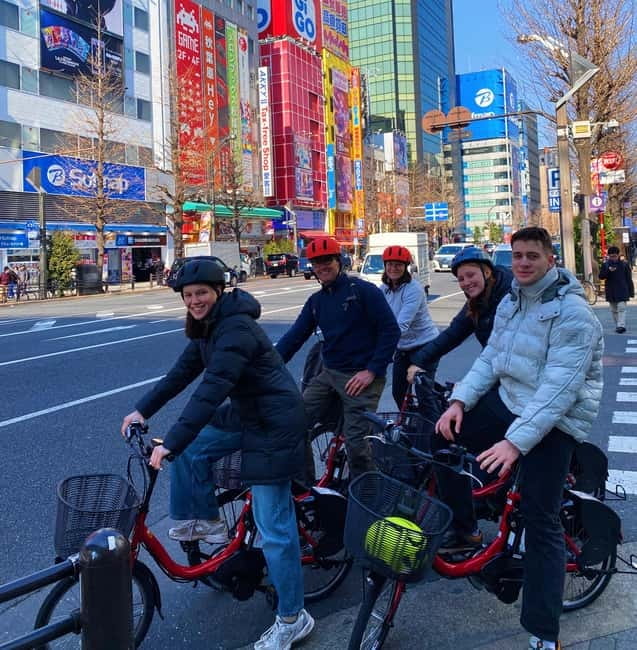
Tokyo can be exhausting when you’re hopping between stations all day. This tour gives you another way to see the city: on a bike, with the e-assist doing the heavy lifting. That shift matters. It lets you cover more ground than a walking route, but still slow down enough to notice the details you usually miss from a train window.
You’ll see a practical slice of Tokyo too. The route connects polished downtown sections with older neighborhoods and temple grounds. Along the way, you’ll get guidance on what you’re looking at, including how certain places fit into the city’s everyday rhythms.
The e-bike is also a big quality signal. You’re not renting a random scooter and hoping for the best. The bikes come with a basket for your bag, and the tour includes bike insurance, which is a comfort if you’re thinking about safety and reliability.
Where the tour starts: Hibiya Park and a smooth first setup
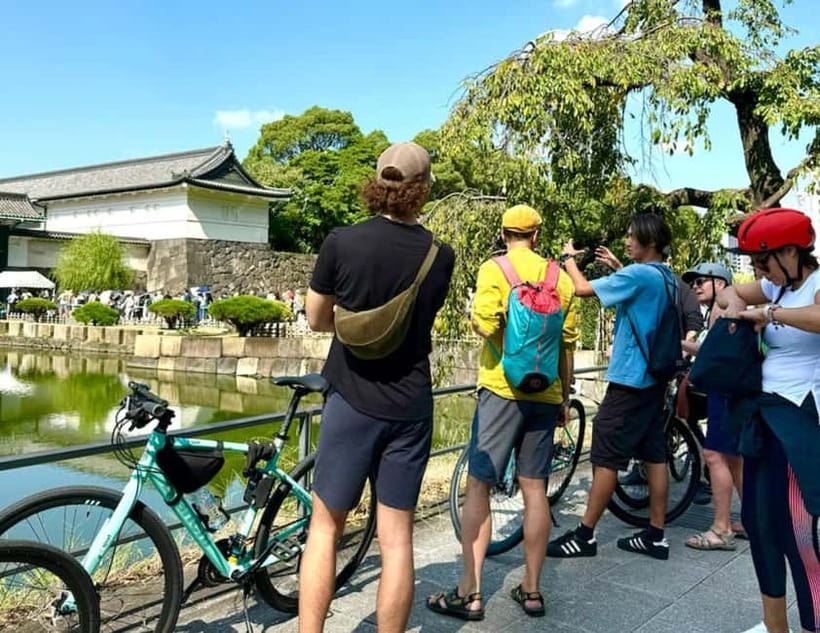
You meet at the right of the kiosk in Hibiya Park (at 1-3 Hibiyakōen). Arrive about 10 minutes early, because you’ll want a little time to get oriented: bike fit, basket setup, and any basic instructions before you roll out.
This start point is handy. Hibiya Park is close enough to downtown that your first day in Tokyo isn’t instantly a logistics problem. It also keeps the group together, which matters when you have a mixed skill set.
The tour is limited to 8 participants, and that smaller group size makes the early minutes feel more controlled. You’re less likely to feel like you’re constantly waiting, and it’s easier for the guide to keep track of everyone’s pace.
Ginza and Kabuki-za: quick landmark moments that don’t eat the whole trip
The route hits Ginza first with a short photo stop and a guided moment (about 10 minutes). This is the kind of stop that works well in an e-bike tour: you get the visual impact fast, then you’re on your way before you start feeling stuck in traffic or long lines.
Right after, you’ll do a Kabuki-za photo stop and another brief guided segment (also about 10 minutes). Kabuki-za is instantly recognizable, and a short stop here gives you a satisfying landmark anchor without dragging the schedule.
A consideration: Ginza can be the one stretch that feels like more of a city-road challenge. I’ve heard that the circulation there can be a bit difficult compared with later, calmer streets. The good news is that the same reports say the rest of the ride tends to be easier after this initial segment—so think of Ginza as the “pay attention” part, not the whole experience.
Tsukiji Hongan-ji and the Outer Market: spiritual pause plus real food energy
Next up is Tsukiji Hongan-ji (around 15 minutes). This is a temple stop, but it’s also an education moment. You’ll get guided insight into what you’re seeing and why it matters in the neighborhood’s story. It’s the kind of break that helps the ride feel more than just sightseeing.
Then comes the Tsukiji Outer Market (about 20 minutes). This is where the tour adds a very Tokyo flavor. You get time to walk around the market area, soak in the energy, and pick up a snack if that’s your style—one of the tour reviews specifically calls out delicious snacking.
A practical note: 20 minutes can’t cover the entire market in depth, and that’s actually a feature. You’re not trying to do everything. You’re getting a focused look that pairs well with cycling between stops.
If you’re the type who likes to linger in food streets, just know you’ll have to choose where to spend your minutes. The tour timing is built to keep the biking moving.
Tsukishima Monja Street and Sumiyoshi Jinja: a look at daily Tokyo
After Tsukiji, the tour moves into Tsukishima Monja Street (about 10 minutes). This stop leans more neighborhood than museum. You’ll get a guided photo stop and a short introduction, and it’s a chance to see how Tokyo food culture shows up in specific streets.
Then you’ll visit Sumiyoshi Jinja (around 10 minutes). Shinto shrines can feel similar across Japan, but guides can point out what’s going on right there—meaning, symbols, the setting, and how the area connects to local life. Even if you only get a brief time on-site, this kind of stop adds context that you’d miss if you only stuck to big-name attractions.
These two stops also help your ride feel balanced. After the market’s noise and motion, the shrine gives you a quieter reset before you move again.
Kiyosumi Gardens: the included entrance break you’ll be glad for
The highlight in the schedule is Kiyosumi Gardens (about 25 minutes), and this one is notably included: entrance fees are part of the tour.
That inclusion matters because gardens are where time can quietly get away from you. Once you’re inside, you’ll want to slow down and look at details—paths, pond views, and seasonal mood. Even with only 25 minutes, the guided stop helps you know where to look without feeling rushed.
If you’re the kind of traveler who’s tired of only photographing buildings, this is your mental breather. The e-bike gets you there efficiently, and the garden gives you a calmer payoff.
Naritasan Fukagawa Fudōdō finish: optional entry and a clean ending
The ride concludes at Fukagawa Fudō-dō (Naritasan Tokyo branch), with a guided photo stop and visit segment (about 20 minutes).
Here’s how the payment piece works based on the tour info: the entrance fee to Fukagawa Fudōdō is optional and is ¥1000 per person, paid by cash. The tour ends there, so you do not have to enter if you’d rather stop after the guided time outside or if you want to save your energy for the next part of your day.
This ending style is practical. You get closure without forcing a “must go in” decision. And because it’s the final stop, you’re not looking at a long ride afterward where any fatigue would build.
Price and value: is $78 worth it for Tokyo?
At $78 per person for 3 hours, the value comes from how the tour reduces your friction.
You’re paying for:
- an English-speaking local guide (and Japanese as well)
- a quality electric bike with a basket
- entrance to Kiyosumi Gardens
- bike insurance
- local insights delivered in real time at stops
The entrance fee inclusion helps justify the price because gardens can cost extra, and it removes one planning task. Add in the guide time, and you’re not just buying transportation. You’re buying direction—what to notice, why a place matters, and how it fits into the city.
The other value is pacing. A tour like this can help you see more than a walking-only half-day without the “I’m running to the next station” stress. If you’re in Tokyo for a few days and already feel like you’ve hit the main sights by bus or subway, this type of route offers a different angle.
Safety, comfort, and what to bring (so the ride stays easy)
This tour is designed to keep you safe and protected on the road, and the bikes are described as high quality. Still, you’ll get the best experience if you show up prepared.
Bring:
- water
- comfortable shoes
- comfortable clothes
- sunscreen (recommended)
- sunglasses are a good idea
Wear clothing you can move in, not just “pretty on photos.” You’ll be cycling for the duration, and Tokyo weather can shift quickly.
Also, the tour has clear boundaries: no smoking, no alcohol or drugs, and no littering. It’s the kind of rule set that makes group rides feel respectful.
Who this tour suits best (and who should skip it)
This ride is built for people who can comfortably ride a bike, and it’s not a good fit for everyone.
It’s not suitable for:
- children under 12
- pregnant women
- people with back problems
- anyone who can’t ride a bike
If you’re an adult who can ride confidently, even at a relaxed pace, this tour is a smart choice. It also works well if you’ve already been in Tokyo several days and want new neighborhoods without committing to a whole day of planning.
It’s especially good for groups. One review notes it was great for seeing new spots even after days in the city. And small group size makes it easier to manage with friends and family.
My practical advice for your best day on this route
If you want the ride to feel smooth, do these things before you start:
- arrive on time so you can get a proper bike fit and avoid rushing at the first stop
- keep your phone charged but don’t spend every minute filming—save time for the guided explanations
- treat Ginza like a short “traffic-aware” segment, not the vibe for the whole day
- plan to end at Fukagawa Fudō-dō and decide on the ¥1000 cash entry when you get there based on your energy
If you’re the type who loves food, Tsukiji’s Outer Market is where you’ll likely enjoy yourself most. If you want calmer moments, Kiyosumi Gardens is the ticket.
Should you book this Tokyo e-bike tour?
If your Tokyo trip needs a break from transit hopping and you want a bike-based view of riverside areas plus historic stops, I think this tour is a strong booking. The combo of an e-bike, short guided visits, and included Kiyosumi Gardens entrance makes the $78 feel more like a day plan than just a ride.
Book it if:
- you can ride a bike and want an easy, assisted pace
- you like guided context at landmarks and neighborhoods
- you want a small group experience (max 8)
Skip or reconsider if:
- you’re not comfortable in busier road moments like the Ginza stretch
- you have physical limitations that make bike riding tough
- you’d rather spend the entire day lingering in Tsukiji or only doing one attraction deeply
FAQ
How long is the Tokyo riverside e-bike tour?
The tour lasts 3 hours.
What languages do the guides speak?
The tour includes a live guide in English and Japanese.
How big is the group?
The tour is a small group with a limit of 8 participants.
What is included in the price?
Included items are the English-speaking guide, electric bikes (with a basket for your bag), bike insurance, entrance fee to Kiyosumi Gardens, and local insights/stories.
Is food included?
No. Food and drinks are not included.
Do I have to pay to enter Fukagawa Fudō-dō at the end?
The entrance fee to Fukagawa Fudō-dō is optional. It costs ¥1000 each by cash, and the tour ends there, so you can choose not to enter.
If you want, tell me your travel dates and your comfort level with traffic, and I’ll help you decide whether this route timing fits best with your Tokyo day plan.
Tokyo, compared.
 ★ 5.0Mt Fuji and Hakone 1-Day Bus Tour Return by Bullet TrainFrom $16326,383 reviews
 ★ 5.01-Day Tokyo Bus TourFrom $12914,250 reviews
 ★ 4.6teamLab Planets TOKYO Digital Art Museum Entry TicketFrom $259,779 reviews
 ★ 4.0Mt Fuji & Hakone Cruise, Drum Show Bullet Train 1 Day from TokyoFrom $1497,413 reviews
 ★ 5.0Shinjuku Food Tour (13 Dishes at 4 Local Eateries)From $866,603 reviews
 ★ 4.4Tokyo Mt Fuji 5th St & Hakone Cruise Bus Tour w/Bullet TrainFrom $1545,024 reviews
 ★ 5.0Flagship 2-Hours Official Street Go-Kart Tour – Tokyo Bay ShopFrom $644,974 reviews
 ★ 4.5From Tokyo: Mount Fuji Full-Day Sightseeing TripFrom $684,970 reviews