
Reviewed · TOKYO
Osaka/Kyoto/Nara: Private Full-Day Sightseeing Tour
A day with a car beats chaos. This private full-day plan is built around Kyoto classics like Fushimi Inari and bamboo in Arashiyama, with the freedom to shape the route to your interests. You’ll get hotel pickup and drop-off and an English-speaking driver guiding the day.
I like two things right away: you can tailor the order of stops, and you get a driver instead of playing taxi roulette. I also like that the experience targets the “big Kyoto” picture in one go, not just one temple and a quick photo stop.
One consideration: there’s a real risk around pickup reliability. The only feedback shown is negative, including reports of the tour not happening or the driver not showing up, so I’d treat confirmation as non-negotiable.
In This Review
- Key things to know before you go
- How this private Osaka, Kyoto, Nara day actually works
- Fushimi Inari and Arashiyama bamboo: the two photos that feel like a story
- Building a Kyoto day around your interests (without getting lost)
- Kinkaku-ji Golden Pavilion: what to notice besides the gold
- Kiyomizu-dera: the hillside views are the whole point
- Kodaiji Temple and Yasaka Shrine, plus the calm near tradition
- Gion and Hanami-koji Street: where you can choose the vibe
- Nara or staying in Kyoto: how to decide the day mix
- Price and value: when $439 per group feels worth it
- One risk to take seriously: pickup reliability
- Who this private tour suits best
- Should you book this Osaka, Kyoto, Nara private full-day tour?
- FAQ
- What is the price for this tour?
- How many people can be in a group?
- Where do you get hotel pickup and drop-off?
- What’s included in the tour?
- What’s not included?
- Can the itinerary be customized?
- What English-speaking support do you get?
- What languages are available?
- What are some possible highlights during the day?
- Is there a reserve & pay later option?
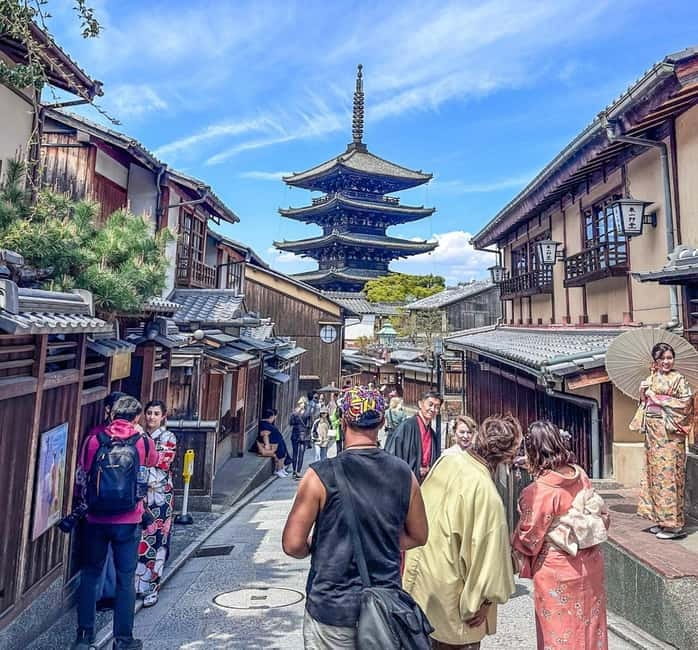
Key things to know before you go
- Fushimi Inari’s vermilion torii path: plan for time on your feet and take breaks when you need them
- Arashiyama bamboo: a visual hit that feels both calm and oddly surreal
- Kyoto in a day: you get the overview first, then you can spend longer on what you like most
- Driver-led flexibility: your day can be rearranged around your pace, not the other way around
- Private transport: fewer logistical headaches than hopping between bus lines
- Tickets and food aren’t included: you’ll budget entry fees and meals separately
How this private Osaka, Kyoto, Nara day actually works
This is a full-day private car tour centered on Kyoto, with pickup and drop-off tied to Osaka, Nara, or Kyoto. After booking, you connect with the team to tailor your plan for the day, then the driver collects you at your hotel at a time that fits your schedule.
The big idea is simple: you’ll cover multiple iconic areas without the mental load of figuring out transit, transfers, and timing. In a place like Kyoto, where neighborhoods feel like separate worlds, that advantage matters. You’re not stuck sprinting between stops because your train departs in ten minutes.
Your day is also designed to be flexible. The tour description includes a set of possible highlights, but the order and mix should match your interests. That means if you’re temple-focused, you can lean that way. If you prefer streets and neighborhoods, you can spend more time in places like Gion and Hanami-koji.
One more practical note: the driver is English-speaking, and the listing also says languages include Hindi. So if you prefer a Hindi-speaking guide, it’s worth asking during planning.
Fushimi Inari and Arashiyama bamboo: the two photos that feel like a story
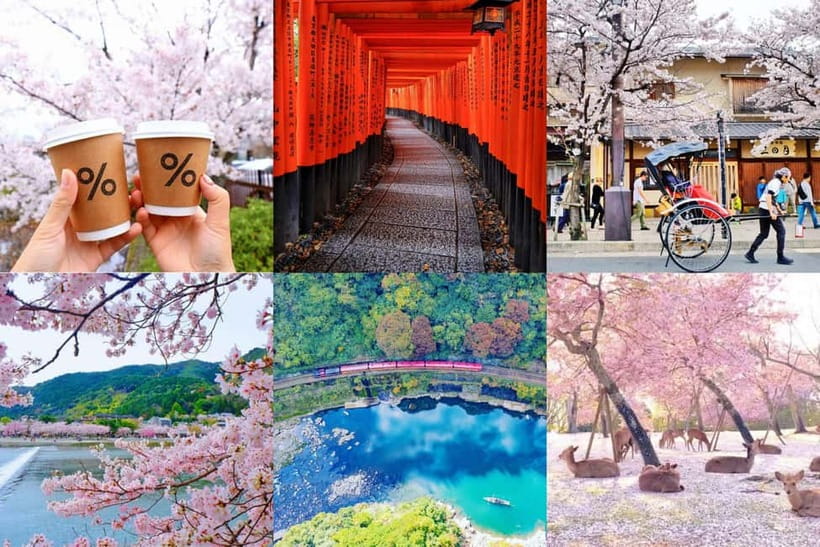
Let’s start with the two headline experiences: Fushimi Inari Shrine and Arashiyama bamboo. These are the kinds of stops that instantly change the mood of the day. One is an endless walk through vermilion torii gates. The other is a long stretch of tall stalks that makes you slow down and look up.
At Fushimi Inari, you’re essentially walking through a corridor of torii gates. It’s iconic, yes, but also easy to underestimate because your legs do the heavy lifting. I’d treat it like a mini hike. If you’re prone to knee pain or you don’t love crowds, go for an early start and build in a rest stop halfway so the second half doesn’t feel like punishment.
In Arashiyama, the bamboo is tall enough that it almost crowds your attention. The effect isn’t just visual; it’s sensory. Sound changes, light changes, and your brain goes quiet for a second. If you want the calm version of Arashiyama, it helps to time it well and avoid rushing. Even on a private tour, rushing makes bamboo feel like a stop, not an experience.
Between these two, you’re covering a big cultural range: Shinto shrine ritual space in one direction, then a more nature-and-atmosphere Kyoto moment in the other.
Building a Kyoto day around your interests (without getting lost)
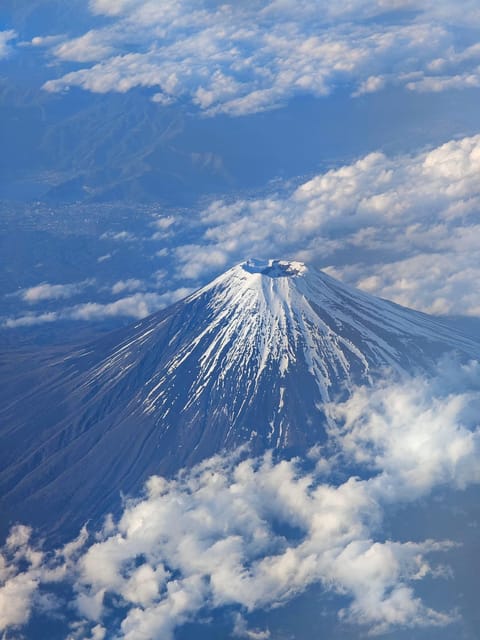
Kyoto is famous for being sectioned into distinct areas: temples on hills, old streets near shrines, and shopping streets that feel worlds apart. A private driver doesn’t magically remove distance, but it helps you avoid the most annoying part—planning your way across town all day long.
Here’s how I’d think about your day design: pick one “anchor” area in the morning, one in the afternoon, and keep a flexible slot for whatever you fall in love with on the ground. That way, if you spend extra time at a viewpoint or you find an area you want to photograph twice, you won’t ruin your whole schedule.
The tour description suggests your itinerary might include a full spread of Kyoto highlights such as Kinkaku-ji (Golden Pavilion), Kiyomizu-dera, Kodaiji Temple and Yasaka Shrine, Gion and Hanami-koji Street, plus Fushimi Inari. That’s a lot of famous ground for one day, but it’s workable because you’re traveling by private vehicle.
The smartest move is to decide what kind of Kyoto you want most:
- If you want “Kyoto postcard” temples, prioritize Kinkaku-ji and Kiyomizu-dera first.
- If you want street life and atmosphere, lean into Gion and Hanami-koji.
- If you want iconic walking, give Fushimi Inari the time it needs.
If you like variety, you can mix all of the above. Just don’t treat every stop like a checklist. Kyoto rewards slow attention, even during a day tour.
Kinkaku-ji Golden Pavilion: what to notice besides the gold
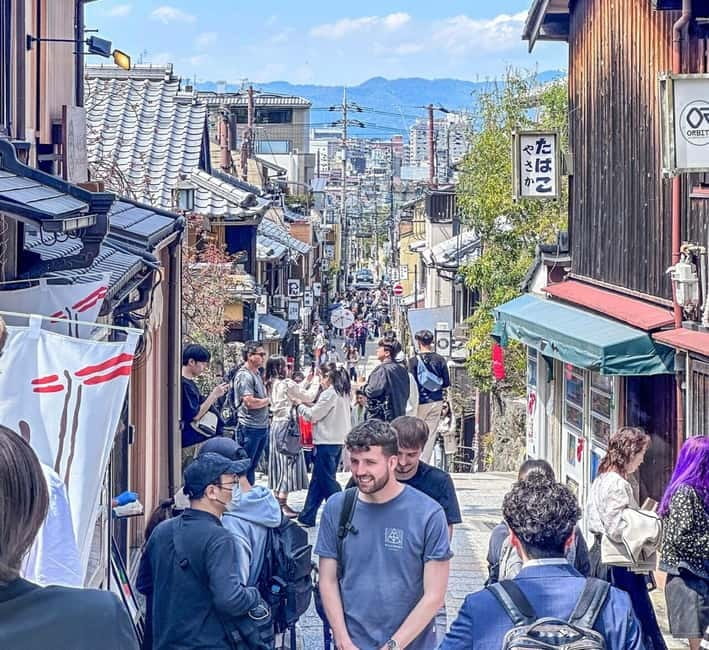
Kinkaku-ji (Golden Pavilion) is listed as a possible highlight, and it’s the kind of temple where the setting matters as much as the building. The gold-leafed Zen temple look is the obvious draw, but the surroundings give it depth—reflections, seasonal tones, and quiet courtyards that change how the gold reads in different light.
On a private tour, you can spend longer without feeling like you’re stealing time from anyone else. I’d use that freedom to slow down and look from multiple angles. If you rush, it becomes a one-minute photo and out. If you take it in, it becomes a real moment.
A small planning reality: entry tickets aren’t included, so you’ll want to budget for admission. Also, temples often have rules about photo zones and quiet movement, so be ready to slow your pace inside.
Even if you’ve seen pictures before, Kinkaku-ji can still surprise you because it’s not just a color—it’s a whole composition. Your driver can help you fit it into the rest of the day so it doesn’t conflict with other hilltop or high-foot-traffic sites.
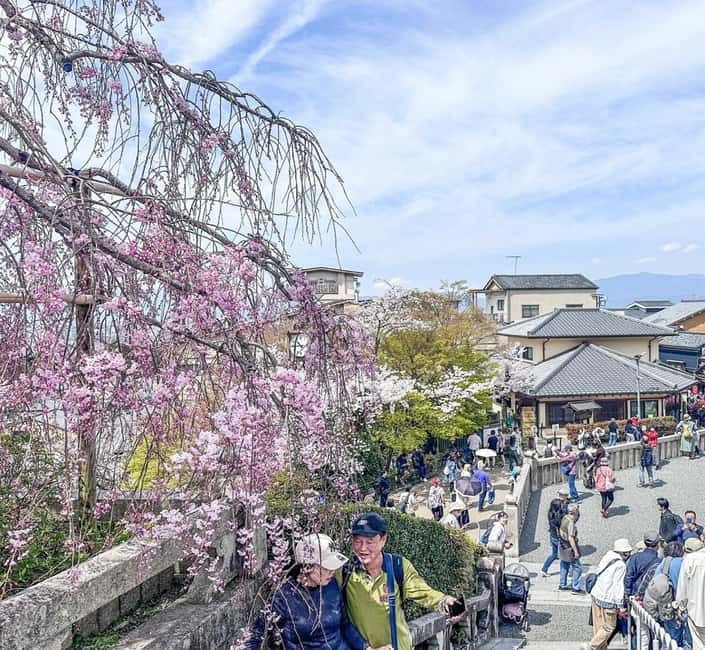
Kiyomizu-dera: the hillside views are the whole point
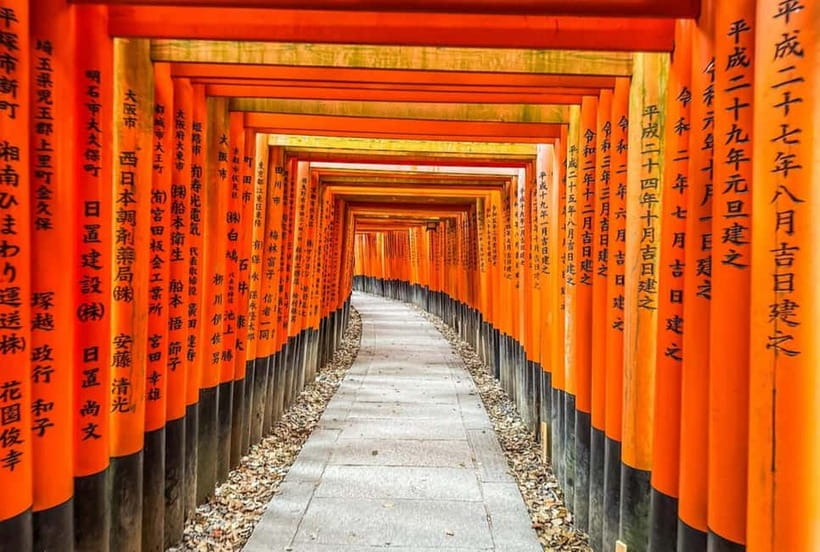
Kiyomizu-dera is another possible highlight, and it’s described as an iconic hillside temple with panoramic city views. That means you’re not only visiting a building. You’re visiting a viewpoint.
In practice, this matters because weather and daylight can change how good the views are. If your day is cloudy, you might still get a beautiful temple scene, but the panoramic effect may be softer. If it’s clear, you’ll want time to stand, look, and let your eyes adjust.
This is also one of those stops where crowds can make movement slow. With a private car, you can manage the arrival time better than if you were bouncing around on public transit. If your itinerary allows it, arriving earlier tends to give you a calmer experience.
As with other temples, entry tickets are not included, and you should plan time to walk within the complex. The payoff is the viewpoint. Don’t treat it as a quick photo and move on.
Kodaiji Temple and Yasaka Shrine, plus the calm near tradition
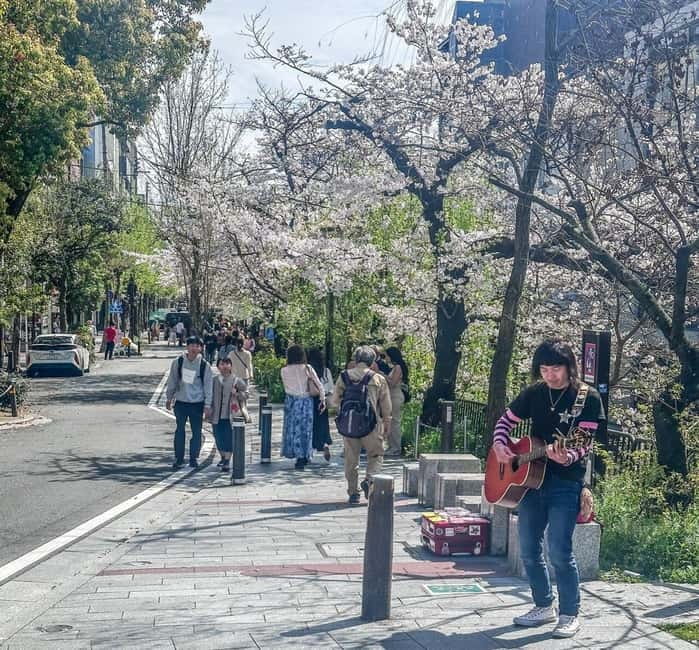
The tour description mentions Kodaiji Temple & Yasaka Shrine as a possible pairing. That combo makes sense because they connect you to Kyoto’s traditional spaces without the same single-focus feel as one signature building.
Kodaiji is described as historic temples filled with tradition, while Yasaka Shrine is grouped with it as an experience of tradition and atmosphere. The value here is texture. Kyoto isn’t only famous monuments—it’s also the everyday rhythm of shrines, pathways, and ritual spaces.
If you’re the type who enjoys details like how a garden frames a view or how a shrine space feels when you stop walking, this is a good place to slow down. It can also serve as a recovery stop between more intense areas like Fushimi Inari.
Again, tickets may apply at individual sites, and food and drinks are not included. I’d plan a simple snack strategy so you don’t end up making rushed meal decisions later.
Gion and Hanami-koji Street: where you can choose the vibe
The listing points to Gion District & Hanami-koji Street, with the option to rent a kimono for a more local experience. This is the Kyoto most people picture when they imagine old streets and traditional styling, but the practical value of this stop is that it’s flexible.
You can walk slowly, window-shop, and observe the street life without needing to stand in one long line at a single attraction. And if you do rent a kimono, it’s a time commitment—so I’d only do it if you’re comfortable spending part of your day on costumes and slower walking.
Hanami-koji Street is described as a street you can stroll. That fits well with a private tour because you can pause for photos, ask the driver about what area to see next, and adjust if you feel like lingering.
One honest note: this section of Kyoto can be busy depending on time of day. The private advantage is that you can time your arrival better, not that you’ll magically avoid every crowd.
Nara or staying in Kyoto: how to decide the day mix
The tour is designed for Osaka/Kyoto/Nara pickup and drop-off, but the listed highlights are strongly Kyoto-focused. That doesn’t mean Nara is impossible, but with the info provided, I can’t promise a specific Nara lineup.
So here’s the decision framework: if you want Kyoto’s major sights in one day, you’ll likely get the best value by keeping most of your time in Kyoto neighborhoods and temple clusters. If you want Nara, you’ll need to trade off some Kyoto time.
Nara is usually a different kind of experience—more open, more animal-friendly, less temple-hill-photo intensity. If your goal is a first-time overview of Japan’s cultural heart, Kyoto-heavy can be the smoother route for most people.
Ask your planning contact how they’re balancing distance and highlights. A private car helps, but time is still time.
Price and value: when $439 per group feels worth it

The price is listed as $439 per group up to 6. That’s not cheap for a day, but it can be good value depending on your group size and priorities.
Here’s the math in plain terms. If you’re traveling as a pair, you’re paying more per person than a public-transit day. If you’re traveling with a family of four or a group of six, the private car cost becomes much easier to swallow.
The value isn’t only the car. It’s the combination of hotel pickup and drop-off, a professional English-speaking driver, and the flexibility to tailor the day. In Kyoto, that can save you from stress and wasted time—time you can’t buy back later.
Two “hidden” costs you should include in your thinking:
- Entry tickets at temples and shrines are not included.
- Food and drinks are not included.
If you’re the kind of traveler who wants to hit multiple big-name spots (like Fushimi Inari, Kinkaku-ji, Kiyomizu-dera, and Gion) without juggling transit, you’re paying for convenience and time. For that style of day, the price can make sense.
One risk to take seriously: pickup reliability
Everything about this tour hinges on pickup. If the driver doesn’t show, you lose the whole plan. The only feedback provided is negative, including reports like it never happened and they did not show up.
That doesn’t mean the tour will fail for you. It does mean I’d handle this like a pro:
- Confirm the pickup details early.
- Save the contact info for the planning team and driver.
- Make sure your hotel front desk knows the pickup time window.
A private tour is only worth it when the logistics actually land on the ground.
Who this private tour suits best
This experience fits best if you want a high-control, low-stress day. It’s especially good for:
- First-timers who want an overview of Kyoto’s biggest sites in a single day
- Small groups or families who want to avoid multiple transit connections
- People who value flexibility and want their day tailored around interests
- Travelers who prefer a driver-led approach instead of navigating neighborhoods on their own
It may be less ideal if you’re traveling solo on a tight budget. Paying $439 for a group can make more sense when you split it. Also, if you can’t risk any chance of a missed pickup, consider how you’ll handle last-minute changes.
Should you book this Osaka, Kyoto, Nara private full-day tour?
If your priority is a flexible Kyoto day with hotel pickup, a private vehicle, and the chance to see major sights like Fushimi Inari, Arashiyama bamboo, Kinkaku-ji, and Kiyomizu-dera, then the concept is strong. The itinerary options cover both landmark temples and classic street-and-atmosphere Kyoto.
My caution comes from the booking risk: there are reports of the tour not happening and of no-shows. If you book, confirm pickup details carefully and keep a plan for quick backup coordination with your hotel.
If you want a smooth, curated-feeling day without the transit grind, this is the right format. Just treat pickup confirmation as part of your travel prep, not an afterthought.
FAQ
What is the price for this tour?
The price is listed as $439 per group, up to 6 people.
How many people can be in a group?
This tour is priced per group for up to 6 people.
Where do you get hotel pickup and drop-off?
Hotel pickup and drop-off are offered from Osaka, Nara, or Kyoto.
What’s included in the tour?
Included are a private vehicle, hotel pickup and drop-off, and a professional English-speaking driver.
What’s not included?
Food and drinks are not included, and entry tickets are not included.
Can the itinerary be customized?
Yes. The tour is designed around your interests, and you’ll tailor your plan after booking.
What English-speaking support do you get?
You’ll have a professional English-speaking driver.
What languages are available?
The tour lists English and Hindi.
What are some possible highlights during the day?
Possible highlights include Kinkaku-ji (Golden Pavilion), Kiyomizu-dera, Kodaiji Temple & Yasaka Shrine, Gion District & Hanami-koji Street (with the option to rent a kimono), and Fushimi Inari Shrine.
Is there a reserve & pay later option?
Yes. The listing says reserve & pay later, with no payment due today. It also states you can cancel up to 24 hours in advance for a full refund.
Tokyo, compared.
 ★ 5.0Mt Fuji and Hakone 1-Day Bus Tour Return by Bullet TrainFrom $16326,383 reviews
 ★ 5.01-Day Tokyo Bus TourFrom $12914,250 reviews
 ★ 4.6teamLab Planets TOKYO Digital Art Museum Entry TicketFrom $259,779 reviews
 ★ 4.0Mt Fuji & Hakone Cruise, Drum Show Bullet Train 1 Day from TokyoFrom $1497,413 reviews
 ★ 5.0Shinjuku Food Tour (13 Dishes at 4 Local Eateries)From $866,603 reviews
 ★ 4.4Tokyo Mt Fuji 5th St & Hakone Cruise Bus Tour w/Bullet TrainFrom $1545,024 reviews
 ★ 5.0Flagship 2-Hours Official Street Go-Kart Tour – Tokyo Bay ShopFrom $644,974 reviews
 ★ 4.5From Tokyo: Mount Fuji Full-Day Sightseeing TripFrom $684,970 reviews