
Mt Fuji in one day is a real mission.
This private day trip from Tokyo strings together the classic Fuji sights with smart timing: you get pickup, an English-speaking driver, and a full circuit of viewpoints and nature stops in about 10 hours.
I especially like the mix of iconic places and hands-on variety. First, the Mt. Fuji 5th Station stop gives you the famous mountain backdrop right on schedule. Second, you’re not stuck translating or figuring out logistics because the guide and route are built around an itinerary you can follow. One thing to plan for: admission tickets and lunch are not included, so your total cost depends on what you choose to pay for at each stop.
In This Review
- Key highlights before you book
- Private Mt Fuji Day Trips: Why This Route Beats DIY
- Getting Off To A Clean Start: Pickup, Mobile Ticket, And Timing
- Stop 1: Mt. Fuji 5th Station For The Classic Mountain Moment
- Stop 2: Oshino Hakkai And The 8-Pond Break
- Stop 3: Arakurayama Sengen Park And Its Famous Observation Deck
- Stop 4: Lake Yamanaka And The Fuji Five Lakes Angle
- Stop 5: Yamanakako Hananomiyako Park For Seasonal Flower Color
- Stop 6: Narusawa Ice Cave For A Temperature-Changing Surprise
- Optional Stops: Oishi Park Views Or Gotemba Premium Outlets
- Oishi Park (Optional)
- Gotemba Premium Outlets (Optional)
- English Speaking Driver: What You Gain From A Real Itinerary
- Air-Conditioned Comfort And Small-Group Flow
- Price And Value: $652.15 Per Group For Up To Five
- What To Budget For During A Long Fuji Day
- Should You Book This Mt. Fuji Private Day Trip?
- FAQ
- What time does the Mt Fuji Private Day Trip start?
- How long is the tour?
- Is pickup from my accommodation included?
- Is the driver English speaking?
- How many people are in a group?
- Are tickets and admissions included?
- Is lunch included?
- Is WiFi available during the trip?
- Are bottled drinks included?
- What is the cancellation policy?
Key highlights before you book
- Small group, private feel: up to 5 people per group (with a stated max of 6 travelers)
- English-speaking driver plus onboard WiFi: easier questions, smoother flow
- 5th Station + parks + lakes: a full Fuji route, not just one viewpoint
- Oshino Hakkai’s 8 ponds: a quick, scenic break with souvenir and snack shopping
- Narusawa Ice Cave history in 864: a geology stop with a temperature change as you go
- Optional extras: Oishi Park views or Gotemba outlet shopping, if you want them
Private Mt Fuji Day Trips: Why This Route Beats DIY
A day like this is easier when someone else handles the driving and sequencing. The big value here is privacy: you’re not trying to coordinate with a big bus group, and the route is designed to hit multiple Fuji-related stops with limited time at each one.
You also start and end cleanly. Pickup is offered, and the day finishes back at your starting point in Tokyo. That matters because Fuji-area transport can chew up time fast when you’re figuring it out on your own. With an air-conditioned vehicle and a schedule built around about 10 hours, you spend more time where you want to be and less time stuck in transit.
Finally, the English-speaking driver plus onboard WiFi makes the trip feel modern. You can ask questions as you go, and you can use your phone for quick map checks while you’re on the move. Even if you know Japan well, it’s a comfort to have it all handled.
Getting Off To A Clean Start: Pickup, Mobile Ticket, And Timing
The tour starts at 8:00 am and is designed as a full-day loop. You’ll receive a confirmation at booking, and you’ll use a mobile ticket. The schedule is paced in blocks of around an hour per major stop, with a shorter stop at the ice cave and optional shopping/views later.
Here’s what to remember for timing: admission and walking time can vary based on conditions and personal pace. Since some stops list admission as not included, you’ll want a simple mindset: arrive, take your time, and plan to pay any site fees separately. The route is set up so you’re not stuck skipping huge portions due to time, but you should expect to be moving consistently.
Also, this is near public transportation, which is handy if you’re already in Tokyo and need flexibility. And service animals are allowed, which can make a difference for some families.
Stop 1: Mt. Fuji 5th Station For The Classic Mountain Moment
Your first major stop is Mt. Fuji 5th Station, with about 1 hour on site. This is the place most people picture when they think of Mt Fuji: direct mountain presence, wide views over the valleys, and the feeling that you’re actually getting into the mountain zone rather than just looking at it from afar.
The tour notes that the admission ticket is not included, so you’ll pay on the day if there’s a fee at the station area. That’s normal for Japan’s sight spots, but it’s still a budget item you shouldn’t ignore.
Why the 5th Station timing works: it’s early in the day, so you can enjoy the views before fatigue sets in. It also sets the tone for every later stop—lakes and parks feel more meaningful when you’ve already seen the mountain up close.
Stop 2: Oshino Hakkai And The 8-Pond Break
Next up is Oshino Hakkai for about 1 hour, and it’s free in terms of admission. This stop is famous for eight ponds fed by fresh water from Mt Fuji. The idea is simple: you get a calmer, more intimate Fuji-side moment than you’ll get at the mountain station.
The ponds are also paired with practical things you’ll appreciate on a long day: vendors for food and souvenirs. That means you can pick up a snack without hunting around later, and you can browse small local keepsakes that feel connected to the area rather than mass souvenir stands.
Possible consideration: because you’re doing multiple stops, Oshino Hakkai works best as a focused hour. If you drift into long shopping loops, you’ll feel the squeeze later. I like treating it as a short visit: see the ponds, walk the area, grab a quick bite, and move on.
Stop 3: Arakurayama Sengen Park And Its Famous Observation Deck
Then you head to Arakurayama Sengen Park for about 1 hour. The tour mentions shrines and pagodas in the park, and the standout feature is the Mount Fuji Observation Deck halfway up the mountain, a spot often used in brochures and postcards.
Admission for this stop is listed as not included, so plan for possible fees. Also note what this stop really is: it’s not just one viewpoint platform. It’s a park experience, tied to religious architecture and a scenic lookout. That means some of your time can be spent walking between points within the park.
The best way to enjoy it is to match your pace to the deck payoff. If you like photos and viewpoints, you’ll probably want to spend time there. If you prefer fewer stops and less walking, keep a clear time plan so you still enjoy the rest of the day.
Stop 4: Lake Yamanaka And The Fuji Five Lakes Angle
After the shrine-and-deck stop, the itinerary shifts to nature and open views with Lake Yamanaka. You get about 1 hour, and admission is listed as free.
This lake is part of the Fuji Five Lakes set, and the tour highlights two specific points: Lake Yamanaka is the largest by surface area and also the highest in elevation. Those details matter because they help you understand why this lake is such a common Fuji framing location. Even if you don’t get a perfect view, the setting is designed for mountain-and-water scenes.
A practical way to use this stop: take your photos early, then slow down for a walk or just scenic breathing room. It’s a good mid-day reset before flower fields and then the ice cave.
Stop 5: Yamanakako Hananomiyako Park For Seasonal Flower Color
Your next stop is Yamanakako Hananomiyako Park (Flower Park) for about 1 hour, with admission listed as not included.
Here’s what makes this stop distinct based on the tour info: the park fills the lakeside bank of Lake Yamanakako nearest Mt. Fuji, and it’s known for seasonal flowers. The tour also notes the location’s elevation—1,000 meters above sea level—which helps explain why this area can feel different from Tokyo and why the flower season can be a highlight.
If you’re traveling outside peak flower timing, you might still enjoy the lakeside setting, but the “wow” factor is usually tied to what’s in bloom that week. Keep your expectations flexible: treat it as a scenic Fuji-lake stop first, and flowers as the bonus.
Stop 6: Narusawa Ice Cave For A Temperature-Changing Surprise
Next is Narusawa Ice Cave for about 50 minutes. This is one of the most interesting stops on the route because it’s built around a specific geological story.
The tour explains that the cave was created after Mt. Nagao erupted violently in 864. Lava hollowed out a large underground cave, and temperatures drop steadily as you move along the route inside. Even without adding any extra facts, that built-in temperature shift is a real, sensory reason to stop here. It’s not just another view.
Admission is listed as not included, so add that to your planning. Also, because you only get about 50 minutes, come ready to move at a normal walking pace. If you’re the type who likes to stop for every photo angle, this might be the one time you’ll wish you had 20 more minutes. Still, it’s a short slot with a strong payoff.
Optional Stops: Oishi Park Views Or Gotemba Premium Outlets
At this point in the day, the tour offers two optional choices, each around 30 minutes.
Oishi Park (Optional)
Oishi Park is a park by Lake Kawaguchi. The highlight is a panoramic view of lavender fields by the lake, with Lake Kawaguchi and Mt Fuji in the frame. Admission is listed as free.
This is best if you want a softer, color-forward scenery stop after the colder feel of the ice cave. If you prefer less walking and more open views, it’s a good option.
Gotemba Premium Outlets (Optional)
If shopping is your thing, Gotemba Premium Outlets is a popular alternative. The tour describes it as having 210 stores offering luxury, sports, and international brands. Admission is listed as free, and you get about 30 minutes.
A word of advice: this is fast outlet time. Pick a shortlist before you go, or you’ll waste your limited slot wandering. If you bring a shopping plan, it can be a fun way to turn the day into more than just sightseeing.
English Speaking Driver: What You Gain From A Real Itinerary
The strongest theme in the tour’s feedback is the experience with the guide. One review specifically calls out Dev as an awesome tour guide and praises his knowledge of the itinerary. The provider name listed is HAROON TAHIR, so you may see that guide identity in confirmation details. Either way, the point is the same: this is a day trip where the route is guided with real understanding, not just driving.
So what does that mean for you on the ground?
- You can ask questions without struggling through translation.
- You’re less likely to miss the meaning of what you’re seeing, because explanations are part of the drive-and-stop rhythm.
- You get a smoother flow between places since the itinerary is designed as a sequence.
Also, you’ll have support for comfort details: bottled water is included, and the vehicle has WiFi. On a long day, those small comforts help you stay cheerful instead of cranky.
Air-Conditioned Comfort And Small-Group Flow
This trip includes an air-conditioned vehicle, which is a big deal on a 10-hour day, especially when you’re going from city to viewpoints and back. The route involves multiple exits and re-entries into the car, so comfort in transit is more valuable than it sounds.
The vehicle also includes WiFi on board and bottled water. That’s not just convenience. It helps you keep your day running: check routes, plan photos, or confirm which optional stop you want, right from your seat.
Group size is capped at maximum 6 travelers, and the price is set per group for up to 5. Either way, the point is the same: this is not a massive tour bus crowd. You’ll feel more like you’re traveling with a small, shared schedule.
Price And Value: $652.15 Per Group For Up To Five
Let’s talk real value, not hype.
The price is $652.15 per group for up to 5 people. If you split it evenly at the max group size, that’s about $130 per person for a private, 10-hour Fuji day with pickup and an English-speaking driver. That can be excellent value when you factor in that the tour handles transport between the key sites, not just one stop.
But there’s also a clear cost caveat. Lunch is not provided, and admission fees are not included for multiple stops. So your all-in budget depends on:
- Whether you pay entrance fees at the station and parks
- Whether you choose the optional stops
- What you buy for food during the day
I like the pricing structure because it’s predictable upfront: you know what you’re paying for the private day. Then you add the variable parts that are normal for sightseeing in Japan.
What To Budget For During A Long Fuji Day
Even with a planned route, the day still needs a little personal strategy. Here’s what I’d plan for based on the tour details.
First: bring a money plan for admissions. Several stops specifically list admission as not included, including the Mt. Fuji 5th Station, Arakurayama Sengen Park, Yamanakako Hananomiyako Park, and Narusawa Ice Cave.
Second: handle food on your own. The tour states that the company will not provide lunch, and there are no food drinks included. You’ll have the chance to find snacks and food at Oshino Hakkai, but don’t count on a full sit-down meal being available on the schedule.
Third: remember what is not included. The tour mentions cruise and rope way tickets are not included. If you’re the type who loves specific transport rides, you’ll want to research those separately before you go.
If you plan for these three things, you’ll have a smoother day and avoid last-minute stress.
Should You Book This Mt. Fuji Private Day Trip?
Book it if you want a private, English-friendly day with a sequence of Fuji highlights, timed for a full day without the hassle of planning transit block by block. It’s especially good for couples, small families, or friends who prefer comfort, want door-to-door pickup, and like the idea of hitting both viewpoints and the calmer Fuji-side stops like Oshino Hakkai and the lakes.
Skip it or think harder if you’re trying to keep the day as close to a fixed budget as possible. Since lunch and several admissions are not included, your final total can rise depending on which paid sites you choose and how much shopping you do. Also, it’s an active day with several stops, so if you want a very slow, unstructured outing, this may feel too packed.
FAQ
What time does the Mt Fuji Private Day Trip start?
The tour starts at 8:00 am.
How long is the tour?
The duration is about 10 hours.
Is pickup from my accommodation included?
Pickup is offered, and the tour ends back at the meeting point.
Is the driver English speaking?
Yes, the day trip includes an English speaking driver.
How many people are in a group?
It’s priced for up to 5 people, and the tour/activity states a maximum of 6 travelers.
Are tickets and admissions included?
Admission ticket fees are not included for several stops, and the tour lists admission tickets fee as not included overall.
Is lunch included?
No. Lunch is not provided.
Is WiFi available during the trip?
Yes. WiFi on board is included.
Are bottled drinks included?
Yes. Bottled water is included.
What is the cancellation policy?
You can cancel for a full refund if you cancel up to 24 hours in advance of the experience start time. If you cancel less than 24 hours before, it’s not refunded.
Mt Fuji Day Trips, compared.
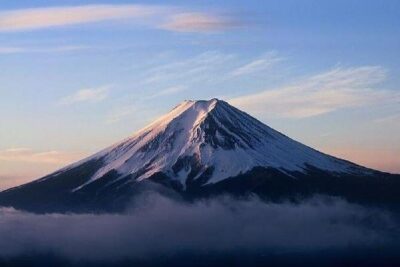 ★ 4.0Mt Fuji & Hakone Cruise, Drum Show Bullet Train 1 Day from TokyoFrom $1497,413 reviews
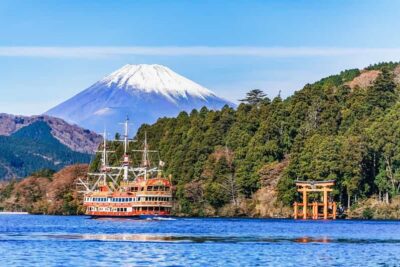 ★ 4.4Tokyo Mt Fuji 5th St & Hakone Cruise Bus Tour w/Bullet TrainFrom $1545,024 reviews
 ★ 4.5From Tokyo: Mount Fuji Full-Day Sightseeing TripFrom $684,970 reviews
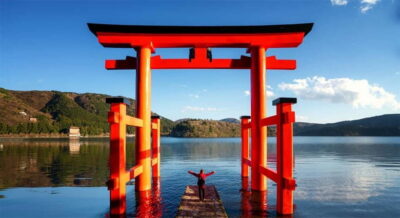 ★ 4.7Mt. Fuji Tour, Hakone Ropeway, Owakudani, Lake AshiFrom $544,002 reviews
 ★ 5.0Private Tour to Mt. Fuji and Hakone (Fully Licenced Operator)From $4971,910 reviews
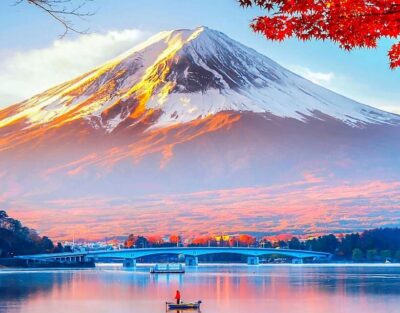 ★ 4.9Mount Fuji Full-Day Private Tour from Tokyo (Customizable)From $3931,470 reviews
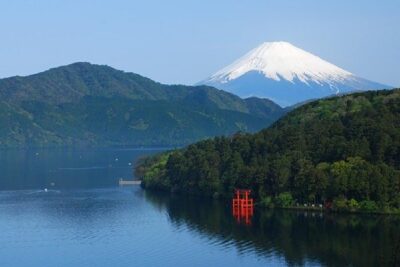 ★ 4.0Mt Fuji & Hakone Cruise, Drum Show Bus 1 Day from TokyoFrom $1221,287 reviews
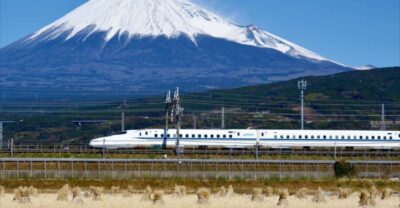 ★ 4.2From Tokyo: Mt. Fuji & Hakone Tour w/ Return by Bullet TrainFrom $1171,278 reviews
Browse the lists this tour appears in