
Reviewed · TOKYO
Mount Fuji-Lake Kawaguchi Private Tour with Bilingual Driver
Fuji days feel bigger when they are private. This Mount Fuji–Lake Kawaguchi tour strings together the best viewpoints, shrine stops, and unique volcanic features into one smooth 10-hour day. I love the English-speaking driver who can explain what you’re seeing (and keep the pace sane), and I love the way you get both classic Mt. Fuji icons and quieter nature moments like lava caves. One thing to plan for: weather can affect views and the optional 5th Station, so keep your expectations flexible.
The payoff here is not just the places. It’s the fact that you ride in a luxury car with only your group, which means fewer waiting games and more time for photos, short walks, and real breaks. In the small set of past bookings, the name that kept popping up was Maz, praised for being informative and for going the extra mile with details that make the day feel tailored.
You’ll start in central Tokyo or from Haneda Airport, then work your way around Kawaguchiko and the Fuji Five Lakes region. Expect a day that mixes postcard-perfect spots like Chureito Pagoda with hands-on stops like Oshino Hakkai’s spring-water ponds and optional fun at Lake Kawaguchi.
In This Review
- Key Things I’d Do Right Away
- A Private Luxury Day Around Mount Fuji’s Most Photogenic Stops
- Meet Your English Driver (Maz) and Why That Changes the Day
- Timing and Route: How the 10 Hours Stay Realistic
- Chureito Pagoda to Oshino Hakkai: Fuji Views and Spring-Water Ponds
- Arakurayama Sengen Park: Stairs, Cedar Trees, and a Shrine Built to Be Seen
- Saiko Iyashi no Sato Nemba: A Reconstructed Village Moment on Lake Saiko
- Narusawa Ice Cave and Fugaku Wind Cave: Volcanic Weirdness That’s Worth the Time
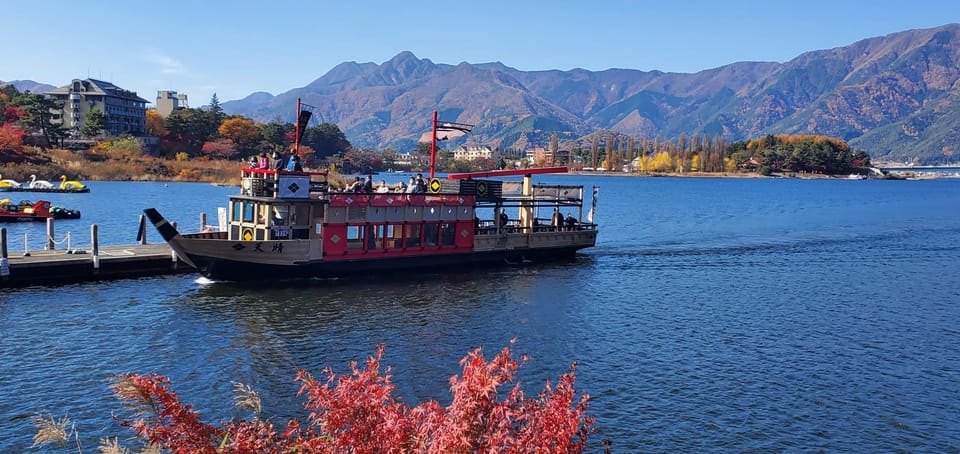
- Lake Kawaguchi: Where Lunch Makes Sense and Mt. Fuji Views Gather
- Mt. Fuji 5th Station: The Optional High-Altitude Moment
- Price and Value: What $445 Per Group Actually Buys
- Practical Notes That Will Save Your Day
- Should You Book This Mt. Fuji–Lake Kawaguchi Private Tour?
- FAQ
- Where does pickup happen for this tour?
- What’s included in the price, and what costs extra?
- How many people can join, and is it private?
- Does the tour include Mt. Fuji 5th Station?
- Is the driver only English?
- Do I need a child seat for kids?
Key Things I’d Do Right Away
- Private luxury car for up to 5: easier timing and less hassle than public transit.
- English-speaking driver/guide: you get context, not just directions.
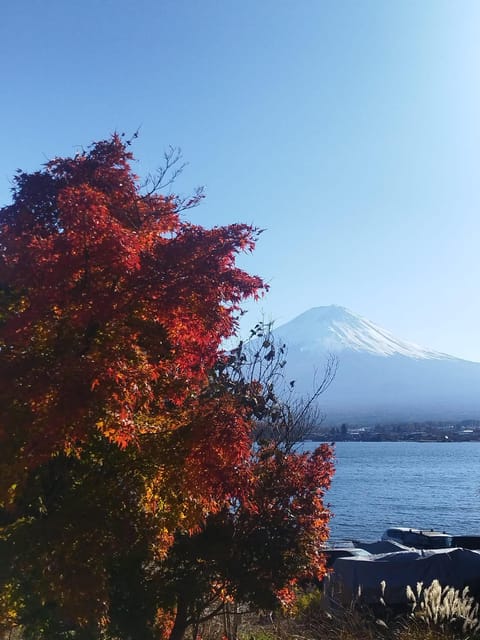
- Oshino Hakkai + Lake Kawaguchi: classic Fuji viewpoints plus spring water and lake time.
- Lava caves (Ice Cave and Wind Cave): a different side of the Fuji area.
- Optional Mt. Fuji 5th Station: high-altitude views if conditions allow.
- Easy custom flow: you can tweak what matters most for your group.
A Private Luxury Day Around Mount Fuji’s Most Photogenic Stops
Mount Fuji is famous for a reason, but the “famous” part can still feel oddly rushed when you’re hopping between buses. This tour is built for a calmer rhythm: you get a car, you get a driver who speaks English, and you can spend your time where you actually want to look longer.
The route is also well-shaped for a first visit. You don’t just see one scenic spot and call it a day. You hit shrine viewpoints, spring-water ponds, reconstructed village streets, and two different lava-tube caves, then finish with lake views around Kawaguchiko.
And because it’s private, the day stays centered on your group. That matters if you want a slower pace, need a restroom stop without negotiating a crowd schedule, or just want to linger where the light is best.
Meet Your English Driver (Maz) and Why That Changes the Day
The best reason to do this tour is not the car. It’s the human help.
With an English-speaking driver/guide, you can actually understand the story behind the stops. For example, the shrine areas connect to the history and faith of people who climbed toward Mt. Fuji, so the red-painted halls, cedar-lined steps, and scenic overlooks start to mean something beyond photos.
The reviews you’ll see for this experience highlight a guide named Maz, specifically praised for being informative and pleasant, and for offering helpful ideas. If you’re the type who likes learning while you walk, that kind of attention makes the day feel more memorable.
Practical note: the driver list includes English, Japanese, and Hindi. Even if English is your main language, it’s good to know communication coverage is broad.
Timing and Route: How the 10 Hours Stay Realistic
Ten hours sounds long until you’re sitting in traffic, walking stairs at viewpoints, and trying to sync everyone’s timing for photos. This plan is organized to keep transitions short and meaningful.
Your day typically follows this flow:
- Early shrine and pagoda viewpoints (about 30 minutes at Chureito Pagoda)
- Spring-water ponds (about 40 minutes at Oshino Hakkai)
- Shrine park overlook (about 20 minutes at Arakurayama Sengen Park)
- Mt. Fuji 5th Station as an optional stop (about 30 minutes, with an entrance fee not included)
- Two lava-cave options (short but memorable stops)
- Lake Kawaguchi time (about 1.5 hours, often your best lunch window)
You’ll be in a vehicle the whole way, which reduces the “where is the next bus?” stress. Still, the day isn’t built for a heavy, stop-everywhere approach—so if you’re the type who wants hours at one location, you’ll need to prioritize.
Chureito Pagoda to Oshino Hakkai: Fuji Views and Spring-Water Ponds
Chureito Pagoda is one of the most photographed spots near Mt. Fuji, and the appeal is immediate: a classic 5-tiered pagoda with Mt. Fuji popping in behind it when the weather cooperates. Even if you’ve seen images online, the real value is how quickly the viewpoint opens up, letting you adjust your angle and timing.
From there, Oshino Hakkai changes the mood. This area is known for its spring water rising from Mt. Fuji, and the village feel makes it more than a quick photo stop. You’ll see the set of eight ponds, which is where the name actually comes from (hakkai relates to eight). It’s peaceful, and it’s a good contrast after stair-heavy viewpoints.
A practical tip: bring water and comfy shoes. The pathways can include small walks between pond spots and viewpoint edges, and you’ll feel it by the time you’ve done the caves later in the day.
Arakurayama Sengen Park: Stairs, Cedar Trees, and a Shrine Built to Be Seen
Arakurayama Sengen Park is all about the climb-with-a-view experience. You’ll walk up stairs toward the shrine area, surrounded by cedar trees and stone lanterns that set a very old-school tone.
The main highlight here is the combination of:
- the historical shrine connection to Mt. Fuji faith and climbers
- dramatic viewpoint framing
- the way seasonal flowers can transform the stairway area (cherry blossoms are specifically mentioned)
One drawback to be aware of: there are stairs. If anyone in your group has mobility limits, you’ll want to plan your pace and consider what you’ll skip.
Also note that this stop is short (around 20 minutes), so it’s not really a “wander for ages” type of place. It works best when you’re ready to move, look, take photos, and move on.
Saiko Iyashi no Sato Nemba: A Reconstructed Village Moment on Lake Saiko
After the viewpoints and ponds, this is the stop that feels more human-scale. Saiko Iyashi no Sato Nemba is a reconstructed Japanese village, described as a former farming village area on the Lake Saiko side of the Fuji region.
The value here is atmosphere. You’re not just chasing Mt. Fuji angles. You’re stepping into a street-like setting where you can explore houses and soak up how rural Japan is presented here for visitors. The option to rent traditional clothing is mentioned, which can be fun for photos or for a more immersive feel—just know it’s optional and you’ll want to keep an eye on time so it doesn’t eat into your lake or cave plans.
This is also a good “reset” moment. If the day has you feeling like a camera on wheels, this stop helps you switch from viewpoints to slower sightseeing.
Narusawa Ice Cave and Fugaku Wind Cave: Volcanic Weirdness That’s Worth the Time
If your only idea of Mt. Fuji is postcard mountains and temples, the lava caves are where this tour surprises you.
Narusawa Ice Cave is a lava tube located in the Aokigahara forest. It’s short (about 15 minutes), but it’s exactly the kind of stop that turns a normal Fuji day into a more complete story of how the region works. You’re seeing a landscape shaped by volcanic activity, not just architecture.
Then you’ll move to Fugaku Wind Cave, described as the largest of the lava tubes in the Aokigahara forest area near the northern foot of Mt. Fuji. That “largest” detail matters because it signals you’re not doing two redundant stops. The idea is: different caves, different character, still tied to the same volcanic region.
Candid advice: caves can feel cool and a bit tight compared to open-air stops. Wear layers, even in warmer seasons, and plan on a quick but focused walk-through.
Lake Kawaguchi: Where Lunch Makes Sense and Mt. Fuji Views Gather
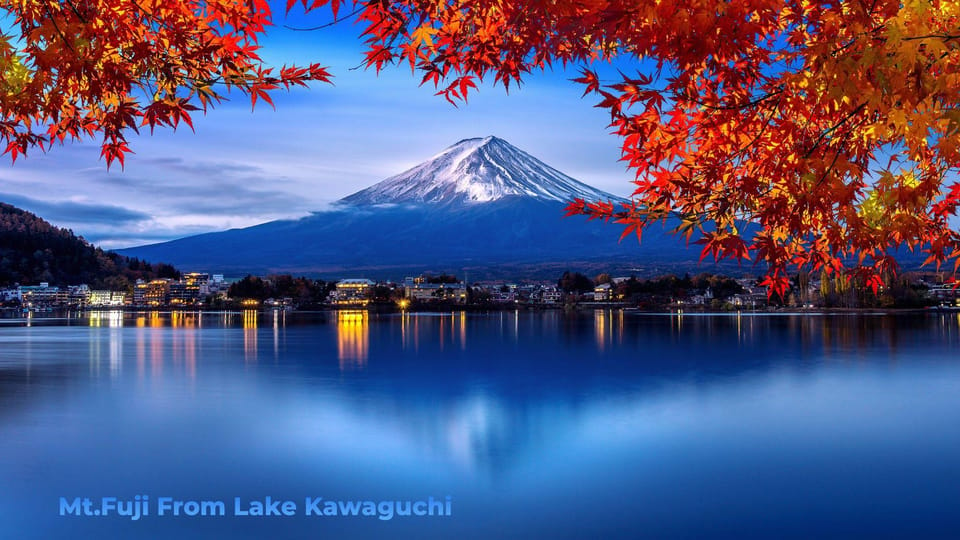
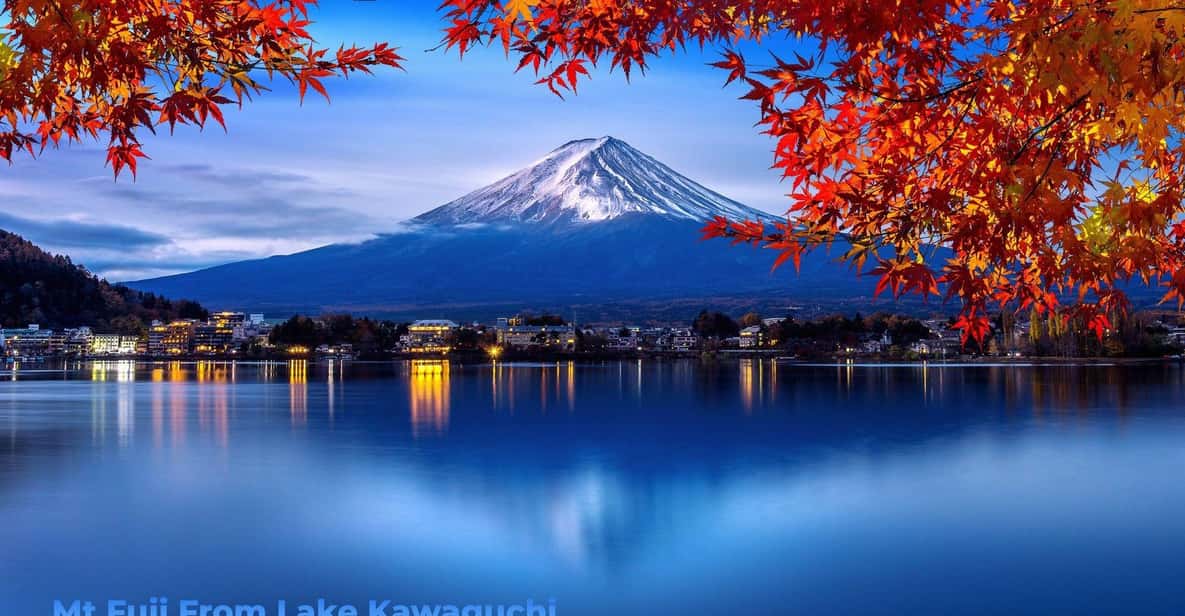
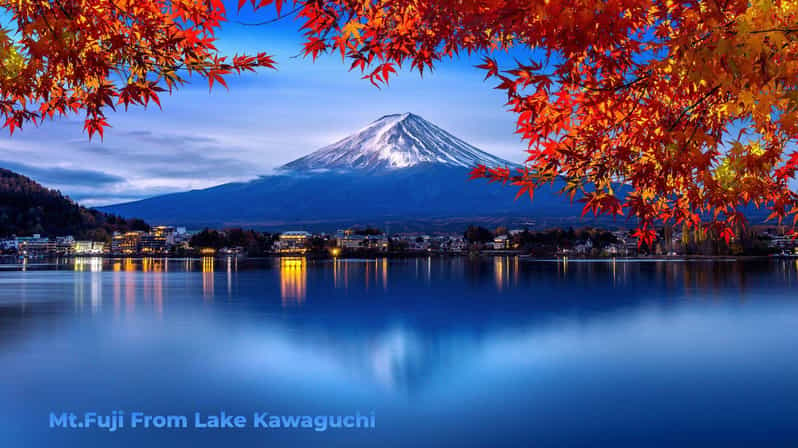
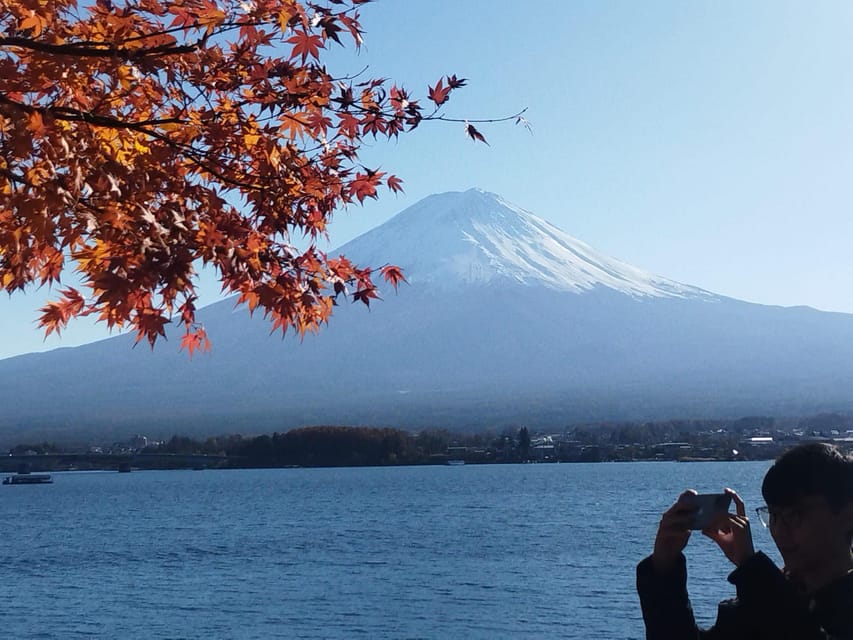
Lake Kawaguchi is the heart-beat of this day. You’ll spend about 1.5 hours here, with big views of Mt. Fuji and the surrounding Fuji Five Lakes region (Yamanaka, Kawaguchi, Saiko, Shoji, and Motosu).
This is also your likely lunch window, and it’s a smart place to eat because the area has lots of restaurants around the lake. If you’ve been hopping between viewpoints all day, lunch here doesn’t feel like a detour. It feels like part of the scenery.
The tour also calls out options you may be able to fit depending on the schedule:
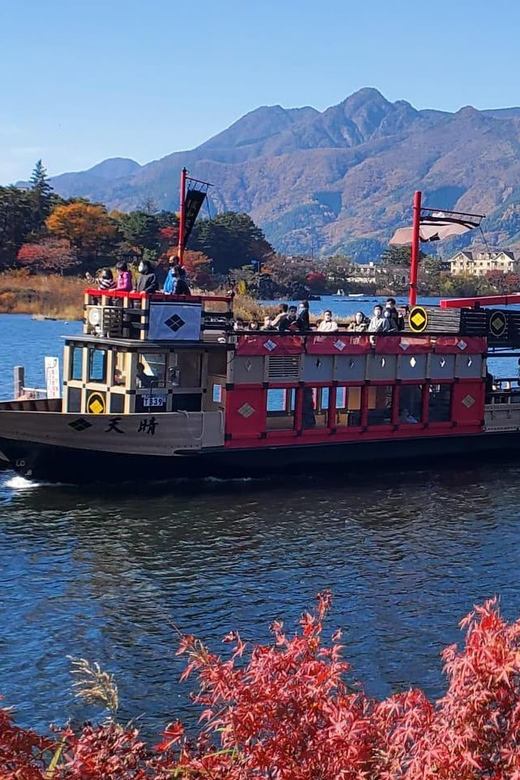
- Kawaguchiko cruise
- motor boating and paddle boats
- Mt. Fuji Panoramic Ropeway (near the lake)
I like this flexibility. You can choose what matches your energy level that day. If the day is moving fast, you can skip extras and still get lake time and views. If conditions are good, you can add one of the rides.
One thing to remember: timing. Ropeway and cruise-type activities depend on schedule, so don’t count on everything without checking with your driver’s flow that day.
Mt. Fuji 5th Station: The Optional High-Altitude Moment
The Mt. Fuji 5th Station stop is optional and subject to weather and highway conditions. That means on some days you’ll get the high-altitude payoff; on others, you might not.
When it is possible, the area sits at about 2,300 meters and is associated with the Yoshida Trail start. The practical reason it’s included is that you can see Mt. Fuji’s broader region, including the Fuji Five Lakes and sometimes the sea-of-cloud type of views—when the sky allows it.
You should also plan for the extra cost. The 5th Station entrance fee (2,100 jpy per vehicle) is listed as not included. The tour also mentions Mt. Fuji-themed food items common at the station, like Mt. Fuji curry and Mt. Fuji melon bread. If you love food souvenirs, this is one of the more fun places in the day to grab something.
If you’re short on time or worried about the cold and crowds, treat 5th Station as a bonus. The rest of the route still gives strong value even if conditions don’t cooperate.
Price and Value: What $445 Per Group Actually Buys
This tour costs $445 per group up to 5 people for a 10-hour day. That price is best thought of as a convenience plus a control package:
- You avoid the “coordination cost” of multiple transit transfers.
- Your schedule is guided by a car and driver, not by the next bus.
- You’re in only your group, which means you’re not spending the day squeezed into a crowded vehicle.
If you’re traveling solo or as a couple, private tours can feel expensive until you break down the per-person cost. But even then, there’s a strong argument for this kind of day trip: Mt. Fuji region logistics can be annoying, and the paid convenience reduces friction.
Also remember what’s included:
- hotel pickup and drop-off within Tokyo’s 23 wards and Haneda Airport
- a luxury car
- English-speaking driver
- tolls and fuel
- passenger insurance
What’s not included is mostly the things you’d expect on an all-in-one day: parking fees, entrance fees, and your food and drinks. The biggest add-on you might feel is the 5th Station entrance fee if you go.
For most groups, value comes from not just seeing places, but moving efficiently between them while still having time to look, photograph, and take short breaks.
Practical Notes That Will Save Your Day
A few details matter more than people think.
Weather matters. The tour explicitly notes that the Mt. Fuji 5th Station depends on weather and highway conditions, and the whole experience depends on visibility. If Mt. Fuji is hidden by cloud, some viewpoints will still be pretty, but the “big reveal” may be muted.
Dress for layers. You’ll move from lakeside and village walking to shrine steps and then into caves. Caves can feel cooler, and the stations at altitude (if you make it) can be colder than Tokyo.
Bring comfortable shoes. You’ll encounter stairs and walkways at Chureito Pagoda area and Arakurayama Sengen Park.
Child seats need planning. If you’re traveling with kids under 6, a child/booster seat is required and should be mentioned when booking.
Lunch is on you. Food and drinks are not included, so plan to buy lunch around Lake Kawaguchi where the options are convenient.
Extra time costs extra. If your day runs long, the tour lists extra hour charges (5,000 jpy per hour). It’s not something you should plan on, but it’s good to know.
Should You Book This Mt. Fuji–Lake Kawaguchi Private Tour?
I’d book this if you want a first-time Fuji day that feels organized, not chaotic, and you care about understanding what you’re seeing. The mix of icon viewpoints, Oshino Hakkai spring-water ponds, traditional village atmosphere, and lava caves makes this more than a simple highlight loop.
It’s also a strong choice if your group size is up to 5 and you’d rather spend money on comfort and timing than on wrestling with transfers. The English driver support is a big deal, and the praise for Maz is a helpful clue that the guide can shape the day.
I’d think twice if you’re mainly chasing the 5th Station or you’re traveling when weather visibility is unpredictable. Even then, the route still has plenty to enjoy, but the “Mt. Fuji wow” factor is weather-dependent.
If you want, tell me your travel month and whether your group prefers more walking or more viewpoints from easy spots. I can suggest how to prioritize the schedule so the day matches your style.
FAQ
Where does pickup happen for this tour?
Pickup is included from hotels within Tokyo’s 23 wards. Pickup is also available from Haneda Airport. Drivers will wait no longer than 15 minutes after the scheduled pickup time.
What’s included in the price, and what costs extra?
Included are hotel pickup/drop-off (Tokyo 23 wards and Haneda Airport), a luxury car, an English-speaking driver, tolls and fuel, and passenger insurance. Not included are parking fees, entrance fees, and food and drinks. Mt. Fuji 5th Station entrance fee is 2,100 jpy per vehicle.
How many people can join, and is it private?
It’s a private group tour. The price is per group up to 5 people.
Does the tour include Mt. Fuji 5th Station?
Mt. Fuji 5th Station is listed as optional and is subject to weather and highway conditions. If it’s included, the entrance fee is not included.
Is the driver only English?
The driver is listed as English speaking (with also Japanese and Hindi mentioned). The tour is designed for an English-speaking experience.
Do I need a child seat for kids?
If a child seat is required, you should mention it at booking. Children under 6 years require a child/booster seat.
Tokyo, compared.
 ★ 5.0Mt Fuji and Hakone 1-Day Bus Tour Return by Bullet TrainFrom $16326,383 reviews
 ★ 5.01-Day Tokyo Bus TourFrom $12914,250 reviews
 ★ 4.6teamLab Planets TOKYO Digital Art Museum Entry TicketFrom $259,779 reviews
 ★ 4.0Mt Fuji & Hakone Cruise, Drum Show Bullet Train 1 Day from TokyoFrom $1497,413 reviews
 ★ 5.0Shinjuku Food Tour (13 Dishes at 4 Local Eateries)From $866,603 reviews
 ★ 4.4Tokyo Mt Fuji 5th St & Hakone Cruise Bus Tour w/Bullet TrainFrom $1545,024 reviews
 ★ 5.0Flagship 2-Hours Official Street Go-Kart Tour – Tokyo Bay ShopFrom $644,974 reviews
 ★ 4.5From Tokyo: Mount Fuji Full-Day Sightseeing TripFrom $684,970 reviews