
Reviewed · YOKOHAMA TOURS
Japanese Tea Ceremony at Private Home in Yokohama, suburban Tokyo
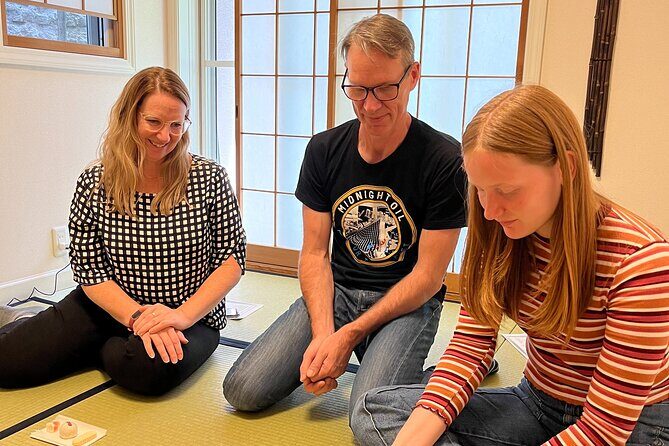
A quiet ritual, right in suburbia. This Japanese tea ceremony experience in Yokohama feels personal from the start, because it’s held in a private home with an experienced tea master leading you through guest etiquette. You’ll also get rare, hands-on elements that you usually don’t see in quick group demos.
I especially like two things about this workshop: first, the charcoal procedure—adding charcoal to boil water—is explained and shown as part of the real process. Second, you’re not just watching; you get to make matcha yourself and drink two cups of it. That kind of practice is where the meaning sticks.
One consideration: this is a tatami-room experience, so you’ll need to bring socks to step onto the tatami properly. If you forget them, you may have to scramble last-minute.
In This Review
- Key highlights you’ll care about
- A quiet Japanese tea ceremony, hosted in Yokohama
- The 1.5-hour flow: demo first, then you practice
- The rare charcoal procedure, and what it teaches
- Wagashi by the season: sweets that match your tea
- Learning guest etiquette, plus history and real conversation
- Price and value: what $52.71 gets you
- Getting there: meeting point, pickup, and the socks rule
- Build it into a Yokohama half-day: Azamino and ramen plans
- Who this suits best (and who might want a different format)
- Should you book this Japanese Tea Ceremony in Yokohama?
- FAQ
- How long is the Japanese tea ceremony workshop?
- Where does the workshop take place?
- Is pickup available?
- Is this a private experience?
- What’s included in the price?
- Do I need to bring anything?
- Do I get to make matcha myself?
- Is history and Q&A included?
- What is the cancellation policy?
Key highlights you’ll care about
- Private home setting in Yokohama, so the pace stays calm and personal
- Charcoal procedure included, a rarely seen step in most tea experiences
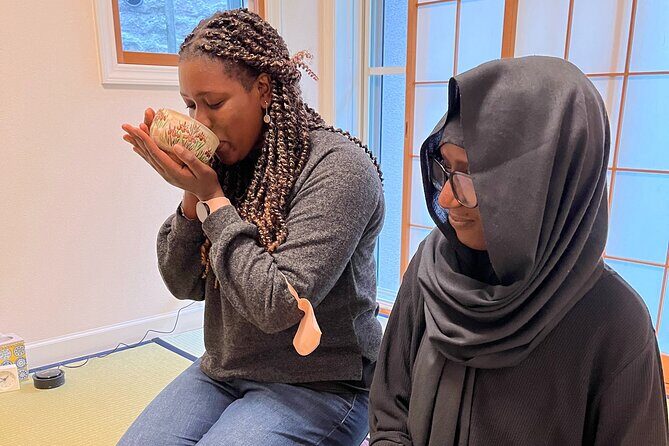
- Hands-on matcha: you’ll mix and drink matcha yourself twice
- Seasonal wagashi paired with your tea, chosen by the tea master
- Diet-aware snacks: included wagashi/snacks are described as good even for vegan and gluten free
- Q&A and history from a professional tea master with decades of practice
A quiet Japanese tea ceremony, hosted in Yokohama
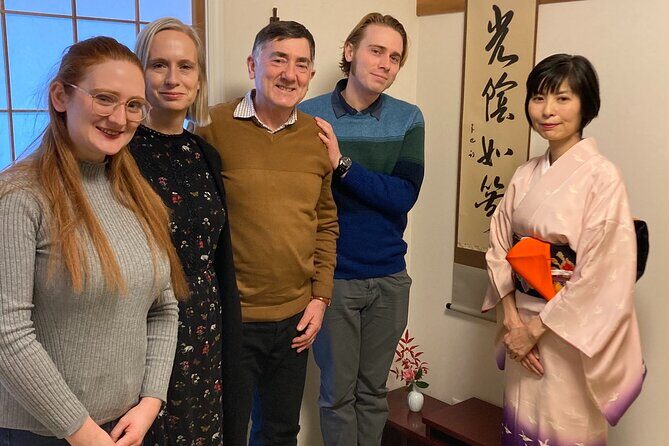
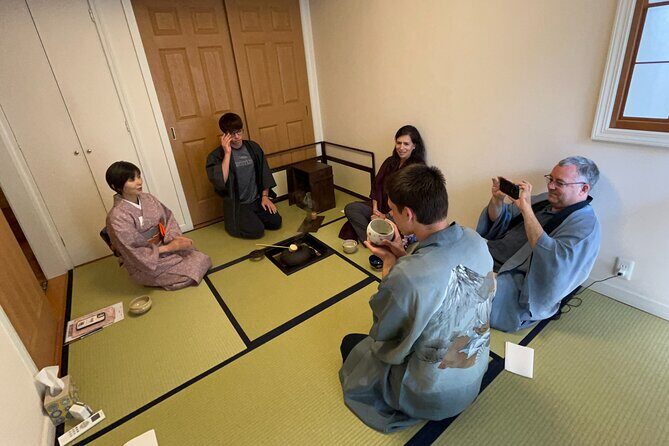
This workshop is designed like an at-home cultural lesson, not a performance. You’ll meet at a specific location in Yokohama’s Aoba Ward area, and you’ll return there at the end—simple and self-contained. It’s also listed as a private experience, meaning it’s just your group. That matters because tea ceremony etiquette is subtle. When you’re not competing with strangers for attention, you can actually ask questions and learn the flow.
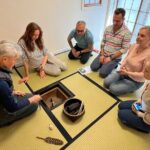
The setting is a traditional tatami tea room inside a home. That changes the tone. Instead of standing in a big room while people shuffle past, you’re sitting in a space made for the ceremony—where silence, posture, and timing are part of the lesson.
Also, the host is described as an experienced professional tea master: trained for more than 40 years and teaching for more than 15 years. That long training usually shows in how they explain things: not just the steps, but why those steps exist.
The 1.5-hour flow: demo first, then you practice
The session runs about 1.5 hours, and the sequence is built to move you from observer to participant. Here’s how it typically plays out.
You start with a guided welcome into the tatami room and a demonstration of the Japanese tea ceremony. This is your “watch and learn” phase. The tea master shows how the ceremony works as a whole—so when you later try the motions, you understand what you’re doing instead of copying gestures blindly.
Next comes the part I think most people find memorable: the charcoal procedure. The tea master shows the steps of adding charcoal to boil water. That’s not just a fun detail. It’s the kind of practical, physical process that makes the ceremony feel grounded, not abstract. After the water and setup work, the tea master makes matcha for you.
Then you shift into guest time. You’ll eat wagashi (handmade Japanese sweets) while enjoying matcha. The tea master prepares the wagashi and there are examples like nerikiri, gyuhi (mochi), and manjyu, with the specific choice depending on the season. This seasonal pairing is a big part of why tea ceremony feels connected to daily life and nature.
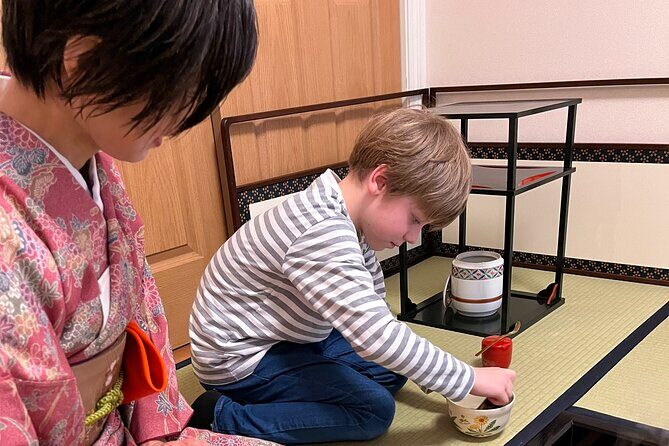
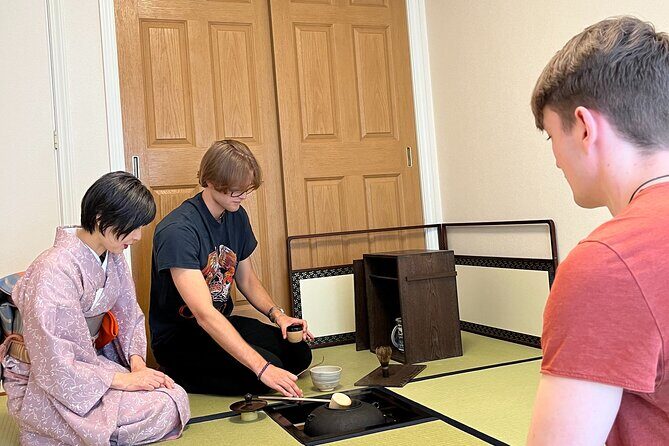
After watching, eating, and seeing the process up close, you’ll get your turn to make matcha yourself. The experience includes that you can try mixing the matcha and then drink it—two cups total—so you leave with more than a memory. You leave with a basic, personal feel for the ritual.
Finally, you’ll get time for history and questions. The teacher will explain the background of Japanese tea ceremony and you can ask anything you want. This is where the lesson stops being a sequence of steps and becomes cultural understanding.
The rare charcoal procedure, and what it teaches
The most unusual element here is the charcoal procedure. Adding charcoal to boil water isn’t described as a “special effect.” It’s part of how the tea master handles heat and preparation as part of the ceremony.
Why this matters for you: charcoal heat creates a different rhythm than modern heating methods, and the procedure gives you a window into older tea-making traditions. Even if you’ve read about tea ceremony online, you usually don’t see that practical piece explained clearly.
You also get a stronger sense of respect for the tools and timing. Tea ceremony has rules, yes—but a lot of those rules come from managing attention: heat, water, powder, and the guest’s experience all need to come together smoothly.
If you’re the type of traveler who likes cultural experiences that go beyond “look at this,” this charcoal step is one of the best reasons to choose this particular workshop.
Wagashi by the season: sweets that match your tea
Wagashi is not just dessert in this setting—it’s part of the ceremony’s pacing and mood. The tea master chooses what you’ll eat based on the season, and the menu could include things like nerikiri, gyuhi (mochi), and manjyu. That seasonal selection makes the experience feel current, not museum-like.
What you’ll like here is that wagashi is paired directly with your tea time. You’re not eating after the lesson. You’re eating while learning how to be a guest. That helps you experience tea ceremony as a whole, not separate parts.
Diet note: included snacks and wagashi are described as good even for vegan and gluten free. That’s a helpful sign for planning. Still, if you have strict allergies, you should treat this as a “request and confirm” situation when you book, since the exact preparations aren’t listed here.
Learning guest etiquette, plus history and real conversation
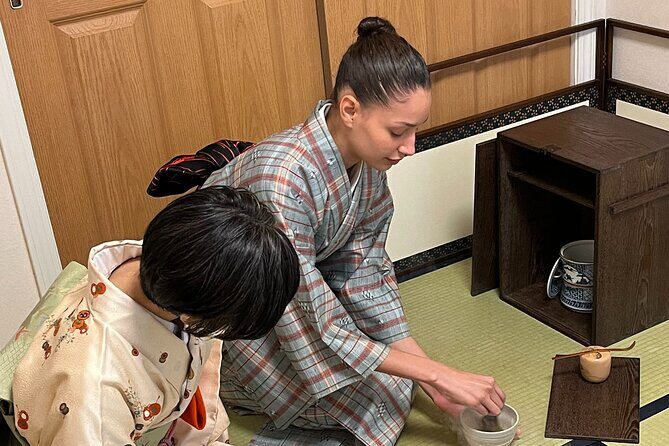
Tea ceremony is often sold as hand movements and powdered green tea. The better version is what happens around those movements: how you sit, how you look, how you receive the sweets, and how you respond to the moment.
In this workshop, the tea master not only demonstrates the procedure but also shares the history of Japanese tea ceremony. Then you can ask questions. That Q&A is where you can clear up confusion fast—like what certain gestures mean, or how the ceremony evolved into a guest experience rather than a private performance.
The reviews you’ll hear about this experience also point toward something important: it’s warm and conversation-friendly. People have described it as a lovely family experience, including time to talk with the Kono Family. That matters because tea ceremony can feel intimidating if you think you must know everything first. Here, the tone is welcoming enough that you can ask basic questions and still feel comfortable.
Price and value: what $52.71 gets you
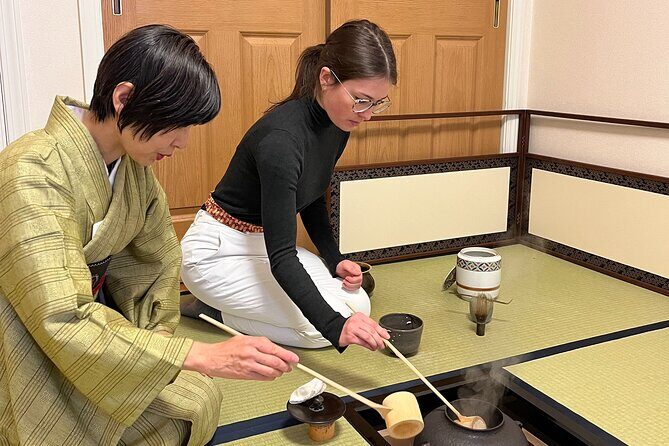
At $52.71 per person, this is priced like a serious cultural workshop rather than a quick “tea tasting.” For the money, you’re getting several value drivers in one package:
- A private home setting (not a large shared venue)
- Instruction from a tea master with decades of training
- You watch a full demonstration and the charcoal procedure
- You eat wagashi made for you
- You make and drink matcha yourself, with two cups included
- History explanation and time for your questions
Duration is about 1.5 hours, so you’re not paying for a long day where most of the time is just commuting or waiting around.
A small practical tip: this experience is often booked about 38 days in advance on average. If you’re traveling around peak times, plan early so you can choose a time that fits your day.
Getting there: meeting point, pickup, and the socks rule
The meeting point is listed in Yokohama’s Aoba Ward area, at Ōbachō, at Dorese Azamino Gardens. The activity ends back at the same spot, so you don’t need to worry about the return leg.
Pickup is offered, which can make this much easier if you’re not in the immediate station area or you’re traveling with bags. It’s also described as near public transportation, so you likely have options even if you skip pickup.
One non-negotiable detail: bring socks. The workshop asks you to wear socks to enter the tatami room. That’s common in tatami spaces, and it’s for cleanliness and comfort. Pack them like you’d pack shoes for a temple visit.
Build it into a Yokohama half-day: Azamino and ramen plans
If you’re already making a day around Yokohama’s Azamino area, this fits nicely as a culture stop before something fun and local.
The experience info suggests a good nearby pairing: Yokohama Ramen Museum around Azamino. It’s a short hop from Azamino station to Shinyokohama station using the Yokohama subway, about 15 minutes by train to the closest Shinyokohama station (as described). Even if ramen isn’t your priority, the point is smart: tea ceremony sessions can make your day more balanced—quiet and thoughtful first, then a more energetic lunch or activity afterward.
Who this suits best (and who might want a different format)
This workshop is a great match if you:
- Want a hands-on cultural experience, not just a photo stop
- Like traditions where the pacing and etiquette matter
- Enjoy food pairings, especially seasonal wagashi
- Prefer smaller, calmer learning instead of a crowded show
It may be less ideal if you want a fast, casual “tasting only” experience. This is still a structured lesson, with steps, explanation, and time spent learning how to be a guest.
It also helps that the experience is described as a private activity for your group. If you’re traveling with family or friends, that privacy tends to make questions feel natural instead of awkward.
Should you book this Japanese Tea Ceremony in Yokohama?
I’d book it if you want authenticity with a practical payoff. The combination of a private home, instruction from a long-time tea master, a rare charcoal procedure, and actual matcha practice (two cups) is strong value for the price.
I’d think twice only if you dislike instruction-based experiences or if you’re likely to forget the basics like socks. Otherwise, this is one of those cultural activities that gives you both understanding and a small skill you can carry home.
If you’re looking for a calm, real-feeling window into Japanese daily culture—this one makes it easy to experience the ceremony the right way.
FAQ
How long is the Japanese tea ceremony workshop?
It runs about 1 hour 30 minutes (approx.).
Where does the workshop take place?
It’s in Yokohama, Kanagawa, in a traditional tatami room inside a private home. The meeting point is Dorese Azamino Gardens in Aoba Ward.
Is pickup available?
Yes, pickup is offered.
Is this a private experience?
Yes. It’s listed as a private tour/activity, so only your group participates.
What’s included in the price?
You get matcha (green tea) and wagashi (handmade Japanese sweets). The included snacks/wagashi are described as suitable even for vegan and gluten free.
Do I need to bring anything?
Yes—please bring socks to enter the tatami room.
Do I get to make matcha myself?
Yes. After watching the procedure, you can try mixing the matcha yourself, and you’ll drink two cups of matcha.
Is history and Q&A included?
Yes. The tea master shares the history of Japanese tea ceremony and you can ask questions.
What is the cancellation policy?
Free cancellation is available. You can cancel up to 24 hours in advance for a full refund. If you cancel less than 24 hours before the start time, the amount paid is not refunded.
More Tour Reviews in Yokohama






More Tea Rooms Worth Booking
Next Door in Yokohama
Yokohama Tours, compared.
 ★ 4.9EVO, WRX, Skyline – JDM Night Run to Daikoku Car MeetFrom $125478 reviews
Best Price Daikoku Parking Area JDM Car MeetFrom $76192 reviews
★ 4.9EVO, WRX, Skyline – JDM Night Run to Daikoku Car MeetFrom $125478 reviews
Best Price Daikoku Parking Area JDM Car MeetFrom $76192 reviews
 ★ 4.9Daikoku & Tokyo Private JDM Tour by 700HP R34 GT-RFrom $586101 reviews
 ★ 5.0Tokyo 8hr Private Tour with Licensed Guide from YokohamaFrom $20194 reviews
 ★ 5.0【Tokyo】JDM Daikoku Parking Area & Nissan Facility TourFrom $5587 reviews
 ★ 4.5Narita Airport: One Way Private Transfer to Tokyo|Yokohama HotelsFrom $7769 reviews
 ★ 5.0R34Skyline Daikoku PA Fast & Furious Private ExperienceFrom $10963 reviews
 ★ 5.0Shuttle Van Transfer, Yokohama(Port)⇒Tokyo, Narita, Haneda, TDRFrom $12263 reviews
Browse the lists this tour appears in