
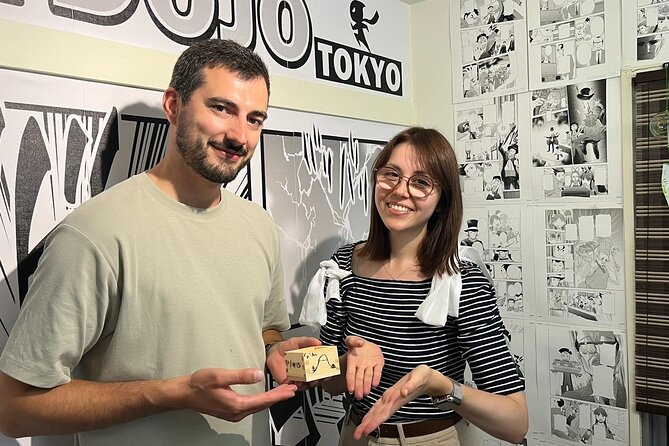
Reviewed · TOKYO
Japanese Sake Tasting and Masu Crafting Experience in Tokyo
Sake and manga in one small room.
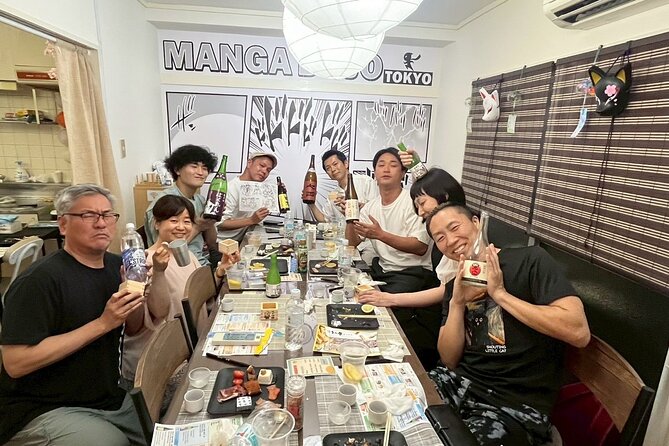
This Tokyo experience pairs a guided sake tasting (5–6 styles, including kanzake) with light snack pairings, all explained in English by the host team at Manga Dojo Tokyo. It is close to Ikebukuro Station, and the setting feels creative and personal rather than formal. I especially like the way the host (often Aki-san) turns tasting into a real learning moment, so you can tell why each sake tastes the way it does.
What I love most is the side-by-side comparison, so you taste differences instead of just sipping. I also love that you leave with your own decorated masu (a traditional wooden sake cup) using Japanese brush pens. One consideration: there is no vegetarian or vegan option listed, so if your diet is strict, you’ll want to plan around the snack menu.
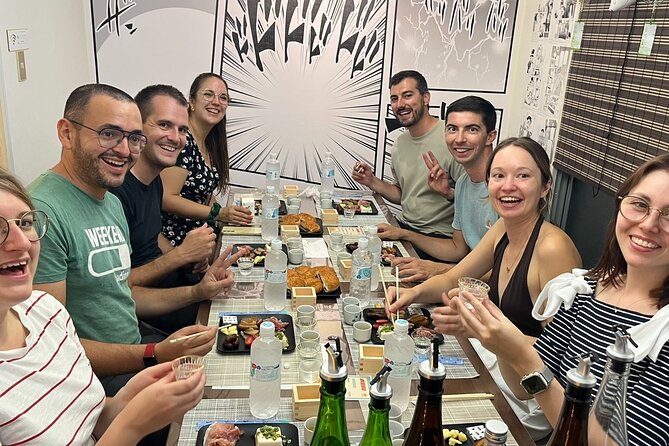
The group size stays small (up to 8), which makes it easy to ask questions and chat with the people next to you. Just note the alcohol rule in Japan: drinking is not allowed for anyone under age 20.
In This Review
- Key Things You’ll Notice Right Away
- Where Manga Dojo Tokyo Fits Into Your Ikebukuro Plans
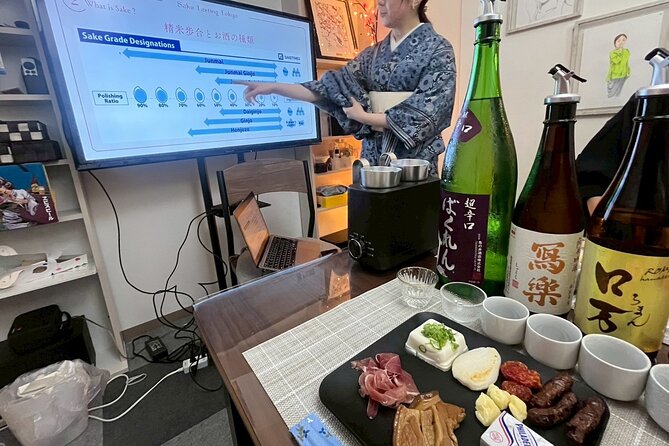
- The Sake Tasting Part: 5–6 Varieties and Real Tasting Skills
- Snacks Pairing With Sake: Small Bites That Change the Whole Flavor
- Craft Your Own Masu Cup With Japanese Brush Pens
- The Manga-Inspired Atmosphere You Get Alongside the Sake
- Group Size, Language, and Dietary Reality Check
- Price and Value: Why $60 Often Feels Fair Here
- Quick Tips So You Leave With More Than a Full Cup
- Should You Book This Tokyo Sake Tasting and Masu Workshop?
- FAQ
- How long is the sake tasting and masu crafting experience?
- What exactly do you do during the tasting?
- Is the event offered in English?
- Do you decorate a masu cup, and do you get to take it home?
- What kind of food is included?
- Is there an age requirement since alcohol is involved?
Key Things You’ll Notice Right Away
- 5–6 sake types, with both standard pours and hot kanzake to compare temperature effects
- English explanations from Aki-san and the team, including how to taste and what style terms like ginjo and daiginjo mean
- Snack pairings that actually work, including surprising matches like curry bread with sake
- Your own takeaway souvenir: a hand-decorated masu cup you keep
- Small-group format (max 8), which makes conversation feel natural
- A manga-focused vibe in the space, adding a fun cultural layer beyond the tasting
Where Manga Dojo Tokyo Fits Into Your Ikebukuro Plans
Manga Dojo Tokyo is in Toshima City, in the Higashi-Ikebukuro area, and it is a short ride (or walk) from Ikebukuro Station. The meeting point is at: 1-chōme-316 三昌ビル 602, 170-0013 Tokyo. Start time is 6:00 pm, and the experience runs about 1 hour 30 minutes, so it works nicely as a pre-dinner or early evening activity.
What makes this spot feel different is the feel of the venue itself. It is described as a room in an apartment, not a huge public hall. One review notes it is close to Animate, and that the host also runs manga workshops, with manga-related exhibits in the room. So you’re not just going to a tasting table; you’re stepping into a cozy creative space where the host can share culture in a relaxed way.
For practical planning: since it is scheduled for the evening, I’d treat it like your main “activity” for the night, then grab dinner nearby after. Also, bring your mobile ticket on your phone. It is a small detail, but it saves time when you walk in.
The Sake Tasting Part: 5–6 Varieties and Real Tasting Skills
The tasting is guided from the first pour. You start with a warm welcome, then the host explains the basics of sake: how it is made and how to think about what you’re smelling and tasting. The goal is not just to tell you which sake is good. It is to give you a method you can use later when you shop for sake in Tokyo.
The tasting itself includes 5–6 different varieties, so you get more than one style to compare. The most fun element is the temperature switch. You will sample a hot sake (kanzake) alongside other types served at different temperatures, so you can notice how warmth changes the aroma and flavor.
Here’s what I think you’ll find valuable: hot sake tends to feel rounder and more aromatic, while cooler pours can emphasize clarity and crispness. Even if you don’t know the vocabulary yet, the host’s explanations help you map what you’re tasting to why it is different. That is exactly what people want when they sign up: the surprise moments, plus the lesson that makes those surprises make sense.
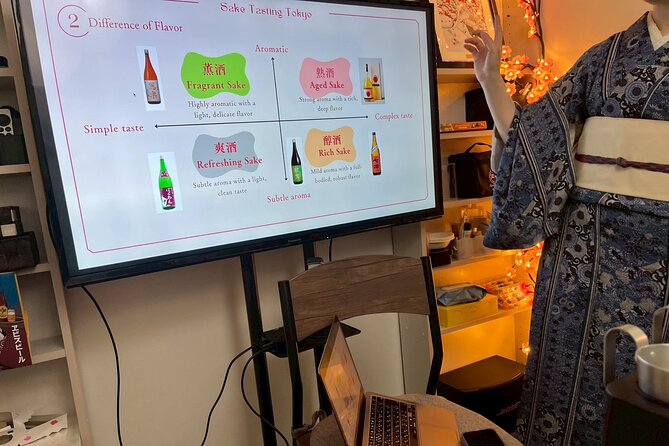
You also get terms and comparisons explained in plain language. One review highlights the kind of distinctions Japanese people bring up, like differences between ginjo and daiginjo. Even if the exact lineup varies by season, the structure stays consistent: you learn how to taste, then you test the ideas with each pour.
Snacks Pairing With Sake: Small Bites That Change the Whole Flavor
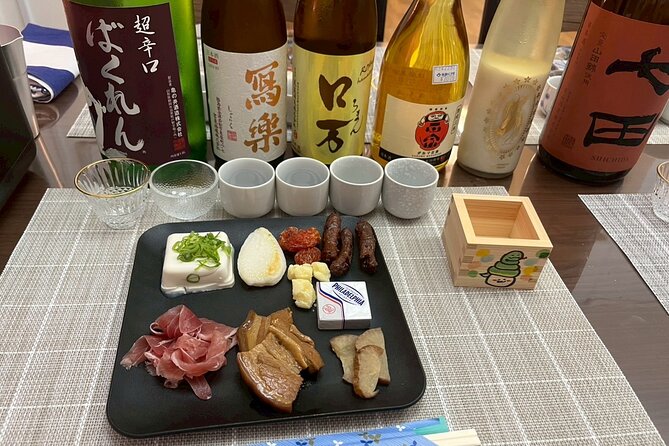
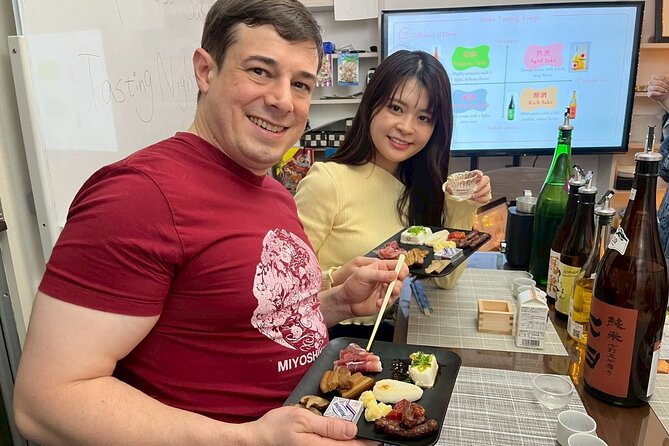
Sake and food are a better combo than most people expect, and this experience leans into that. Along the tasting, you’re served light snacks designed to pair well with the sake you’re drinking. The menu can vary with the season, and the experience notes that you can request allergy-friendly options if you inform them in advance.
In the tastings I love most, the food does more than fill space. It reveals hidden sides of the drink. One review mentions a specific surprise: curry bread pairs with sake in a way that feels more natural than you’d guess. That kind of pairing is exactly why guided tastings beat self-guided sips. You’re getting tested combinations, not random snacks.
Because it is a short, scheduled session, you won’t leave overwhelmed by food. You’ll get enough to keep your palate sharp and to notice shifts in aroma and taste as each snack hits. And since the pairing is tied to the sake style you’re sampling, it turns the tasting into a mini lesson in balance: salty, savory, soft, crisp, and how each one meets a different sake profile.
Craft Your Own Masu Cup With Japanese Brush Pens
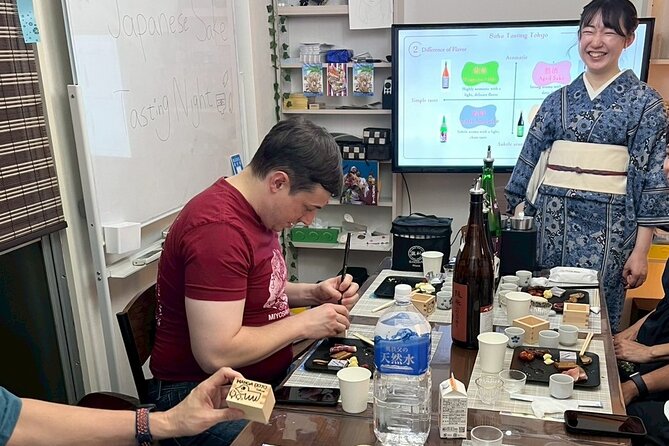
After the tasting and snack pairing, the experience shifts to hands-on craft. You decorate your own traditional wooden masu cup using Japanese brush pens. This is one of the most memorable parts because it gives you a physical reminder of the night, not just a story about what you drank.
The vibe here is creative and doable. You don’t need prior art skills. The cup is the centerpiece, and the brush pens let you make your own design while the host keeps things moving and friendly. You take the masu home, which makes the whole experience feel like it has an ending you can keep on your shelf.
Why this matters for value: souvenirs in Tokyo can turn into clutter fast. A masu cup is small, functional in a symbolic way, and it connects directly to what you learned. It is not just a generic trinket; it ties to Japanese drinking culture you actually experienced in the same room.
If you want a night that blends drinking, learning, and doing something with your hands, this craft portion is a big part of the appeal.
The Manga-Inspired Atmosphere You Get Alongside the Sake
One extra layer that makes Manga Dojo Tokyo fun is the manga connection. The experience happens in a room that has manga exhibits and a workshop-like atmosphere. One review notes it was close to Animate, and that the host is also involved with manga workshops, which made the space feel playful and culturally mixed.
This matters because sake tastings can sometimes feel overly formal, especially if you’re a beginner. Here, the creative mood gives you permission to relax. You can focus on the tasting, ask questions, and enjoy conversation without feeling like you’re in a classroom with strict rules.
In practical terms, a cozy setting also helps a small group feel warmer. When people can chat easily, you learn faster, and the tasting becomes more than just a sequence of pours.
Group Size, Language, and Dietary Reality Check
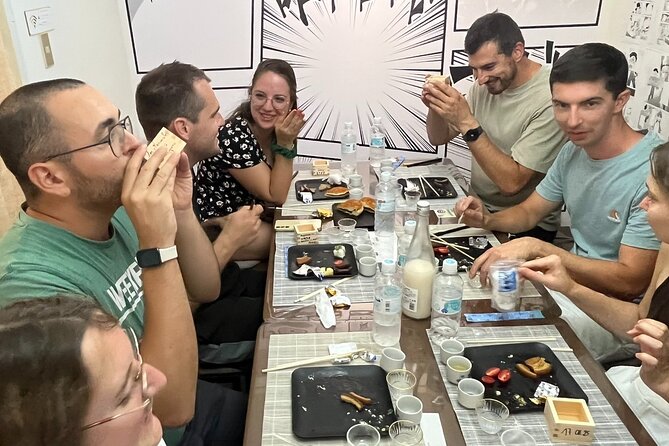
This activity is conducted in English, and it caps at 8 travelers, which is great if you want interaction rather than a lecture that happens at you. A small group also means the host can react to what you’re asking, and you’re more likely to talk with other people during the experience.
Two important realities to keep in mind:
- Alcohol rules in Japan: drinking is prohibited for anyone under age 20 under Japanese law.
- Food limits: there are no vegetarian or vegan options listed. Allergy-friendly options are available if you tell them about your allergies in advance. The menu may also vary by season.
If you’re traveling with friends who eat differently, this is where you may want to plan ahead. If you have no dietary restrictions, you’re likely to have a smooth experience because the food pairings are part of the structure.
Price and Value: Why $60 Often Feels Fair Here
At $60 per person for about 1 hour 30 minutes, this is not a bargain-style street price, but it also does not feel inflated for what you actually get. Here is the value breakdown in plain terms:
- 5–6 sake tastings, including a hot sake comparison (temperature-driven learning is a big part of the cost)
- Light snack pairings served during the session, not something you have to hunt down yourself
- English guidance on how to taste and understand sake styles
- A take-home handmade souvenir: your decorated masu cup made during the workshop
Also, the price reflects that this is taught by people who know how to run a tasting and craft session in a small space. You are paying for a guided experience that strings together learning, food, and a physical keepsake.
If you’re the type of traveler who likes to understand what you’re drinking (not just do a quick tour), this value tends to click.
Quick Tips So You Leave With More Than a Full Cup
You don’t need a checklist, but a few habits help:
- Come with questions about what you like. If you prefer sweet, dry, or aromatic, say it early so the host can frame the tastings around your taste.
- Pace yourself. The experience includes multiple pours plus snacks, and hot sake can sneak up on you.
- If you have allergies, message ahead. The experience states allergy-friendly options are available if you inform them in advance.
- Take your time with the masu craft. The souvenir is the part you’ll remember every time you see it later.
And one more practical note: because the session starts at 6:00 pm, plan your dinner after, not right before.
Should You Book This Tokyo Sake Tasting and Masu Workshop?
Yes, I’d book it if you want a Tokyo evening that is small-group, English-friendly, and built around two things people remember: tasting variety and a take-home item.
This is especially worth it if:
- you’re new to sake and want a method for tasting, not just more drinking
- you like cultural learning that feels relaxed in a cozy room
- you want a souvenir that is tied directly to the experience, not a random gift shop purchase
- you enjoy conversation, since the small size makes it easier to connect with the people around you
I’d hesitate if:
- you need vegetarian or vegan food options (none are offered per the details)
- you want a big, formal “tour bus” style experience with lots of walking and sightseeing (this is a seated, indoor session with craft)
If that sounds like your kind of night, Manga Dojo Tokyo is a smart pick. You’ll walk out with a better sense of what sake style means, plus a masu cup you helped design with your own hands.
FAQ
How long is the sake tasting and masu crafting experience?
It lasts about 1 hour 30 minutes.
What exactly do you do during the tasting?
You’ll learn the basics of sake and how to taste it, then sample 5–6 different sake varieties, including a hot sake.
Is the event offered in English?
Yes, the session is conducted in English.
Do you decorate a masu cup, and do you get to take it home?
Yes. You decorate your own traditional wooden masu cup with Japanese brush pens, and you keep it as a souvenir.
What kind of food is included?
Light snacks are served to pair with the sake. The snack menu may vary by season, and there are no vegetarian or vegan options listed.
Is there an age requirement since alcohol is involved?
Yes. Drinking alcohol is prohibited for anyone under age 20 under Japanese law.
Tokyo, compared.
 ★ 5.0Mt Fuji and Hakone 1-Day Bus Tour Return by Bullet TrainFrom $16326,383 reviews
 ★ 5.01-Day Tokyo Bus TourFrom $12914,250 reviews
 ★ 4.6teamLab Planets TOKYO Digital Art Museum Entry TicketFrom $259,779 reviews
 ★ 4.0Mt Fuji & Hakone Cruise, Drum Show Bullet Train 1 Day from TokyoFrom $1497,413 reviews
 ★ 5.0Shinjuku Food Tour (13 Dishes at 4 Local Eateries)From $866,603 reviews
 ★ 4.4Tokyo Mt Fuji 5th St & Hakone Cruise Bus Tour w/Bullet TrainFrom $1545,024 reviews
 ★ 5.0Flagship 2-Hours Official Street Go-Kart Tour – Tokyo Bay ShopFrom $644,974 reviews
 ★ 4.5From Tokyo: Mount Fuji Full-Day Sightseeing TripFrom $684,970 reviews