Reviewed · TOKYO
Japanese Cooking Class and Cultural Experience Around Tokyo
Cooking in Japan has a way of turning curiosity into real skill. In this Japanese home-style cooking class around Chiba, you make dashi and 3–4 familiar, popular dishes together, learning the ingredients and the basics of how Japanese flavors come together. After the cooking, you get a cultural follow-up: sake tasting time, or an alternative like Japanese tea tasting or calligraphy if you prefer not to do alcohol.
Two things I really like about this experience are the hands-on pace and the culture built right into the schedule. You are not just watching—you cook, taste what you make, and learn the reasons behind the steps. And the second big win is that the class adapts: if sake is not your thing, you can switch to something else without having to drop the whole experience.
One consideration: menu choice depends on how many groups attend that day. You pick from menu options A, B, C, or D, but if multiple groups are scheduled, you might not be able to choose your first pick.
In This Review
- Key highlights you can plan around
- Japanese home-style cooking class near Chiba Station
- The full schedule: cooking first, then sake (or tea) or calligraphy
- Cooking together: making 3–4 dishes the home-style way
- Dashi: the backbone you’ll actually remember
- Menu choices (A, B, C, or D) and how to handle allergies
- Sake tasting: what you get in the culture portion
- Tea tasting option: Japan’s broader tea culture
- Calligraphy with special brushes and ink, plus your own fan
- Pickup, mobile tickets, and small-group energy
- Price and value: what $100.11 buys you
- Who should book this cooking class in the Tokyo area
- Practical tips before you go
- Should you book this Japanese Cooking Class and Cultural Experience?
- FAQ
- Where is the meeting point for the class?
- How long does the experience last?
- How many people are in the group?
- Is pickup available?
- Can I choose sake tasting, tea tasting, or calligraphy?
- What will we cook during the class?
- If I have food allergies, can the menu be adjusted?
- How does choosing menu A, B, C, or D work?
- What is the cancellation policy?
Key highlights you can plan around
- Learn dashi basics that you can reuse for future Japanese cooking
- Cook 3–4 home-style dishes with real guidance, not vague instructions
- Choose your post-cooking experience: sake tasting, tea tasting, or calligraphy
- Small group size (max 8 people) keeps the class feeling personal
- Calligraphy option includes special brushes and ink, plus fan decorating
- Allergies can be discussed in advance so the menus can be adjusted
Before you commit, see how this one stacks up against a few Chiba favourites:
- Lunch & Cultural Tour★ 5.0 · 9 reviews
- Japanese Cooking Class and Cultural Experience Around Tokyo★ 5.0 · 3 reviews
Japanese home-style cooking class near Chiba Station
The class starts at Chiba Station, in the Chuo Ward area (Shinchiba). That matters because it keeps this feeling like a real local experience rather than a far-flung activity that eats your day. If pickup is offered for your booking, you’ll save time getting to the kitchen.
This is also a small-group format. With a maximum of 8 travelers, the teaching style stays practical. That also means you’re more likely to get answers while you’re cooking—when it’s actually useful—rather than hearing general tips that don’t match your question.
And even though the setting is outside central Tokyo, it still works perfectly as a Tokyo-area experience. Chiba is close enough that you can pair it with other plans in the Tokyo region, while still getting a calmer, more neighborhood-style atmosphere.
The full schedule: cooking first, then sake (or tea) or calligraphy
Think of the timing as two clean blocks.
First, you cook for about 2.5 hours. The class is set up so you learn basic but authentic home-style Japanese cuisine. You’ll work together to make 3–4 dishes, and you’ll also learn about key Japanese ingredients as you go.
Second, you do a 0.5-hour cultural tasting or activity. That part depends on what you choose during booking:
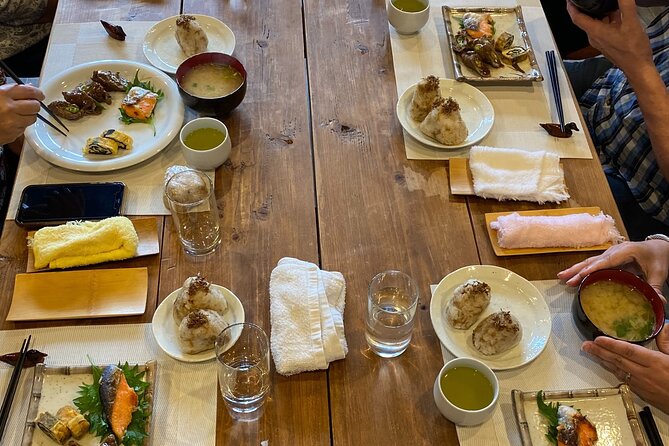
- Sake tasting, with locally distilled sake from Japan
- If you do not drink alcohol or if someone is under adult age, you can switch to Japanese tea tasting
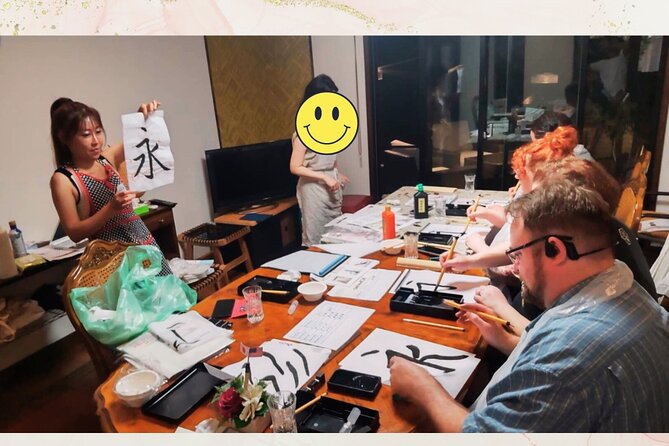
- You can also switch to calligraphy, with tools included
What I like about this structure is that you get both skill and atmosphere without feeling like the day is dragging. Three hours is long enough to learn real technique, but short enough to fit into a travel day.
Cooking together: making 3–4 dishes the home-style way
The cooking portion is the heart of the experience, and it’s built around learning how Japanese cooking works, not just copying a recipe. The instructor specifically teaches basic but authentic home-style Japanese cuisine, which is ideal if you want something you can repeat later.
You’ll cook multiple dishes, which is important because Japanese meals tend to have a balance: broth, sides, and flavors that work together. Even if you do not remember every detail, you come away with a clearer sense of how ingredients behave—especially in sauces, broths, and simple seasonings.
You’ll also hear about Japanese ingredients as you cook. That’s practical. Many ingredient names sound mysterious until you understand what they do in the final taste. Once you connect ingredient to result, shopping for Japanese basics back home gets easier.
One more small detail that’s worth noting: the instructor prepares ingredients beforehand. That keeps the focus on learning and cooking, rather than spending half your time on chopping everything from scratch.
Dashi: the backbone you’ll actually remember
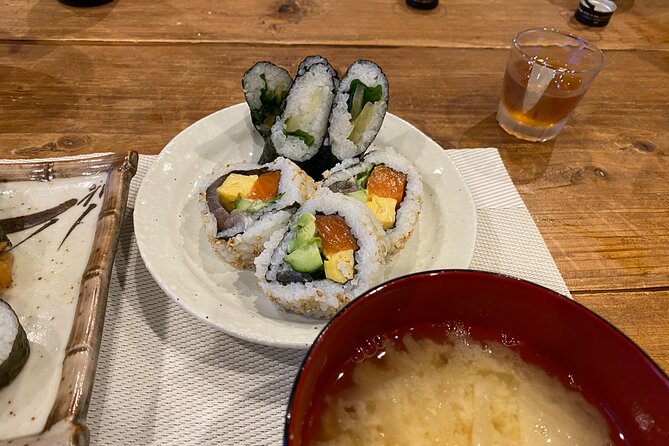
Dashi is the star lesson here. The class explicitly includes learning how to make dashi, which is Japanese soup stock used to build flavor in tons of everyday dishes.
If you’ve ever tried Japanese food and wondered why it tastes so balanced and not too heavy, dashi is one of the big reasons. Learning the basics in a class setting is valuable because you can see the texture and timing, not just read about it later.
Even if you only master the basic idea, you’re gaining something portable. After this kind of lesson, you can understand dashi as more than a label on a package. It becomes a tool: a way to add depth quickly and naturally.
Menu choices (A, B, C, or D) and how to handle allergies
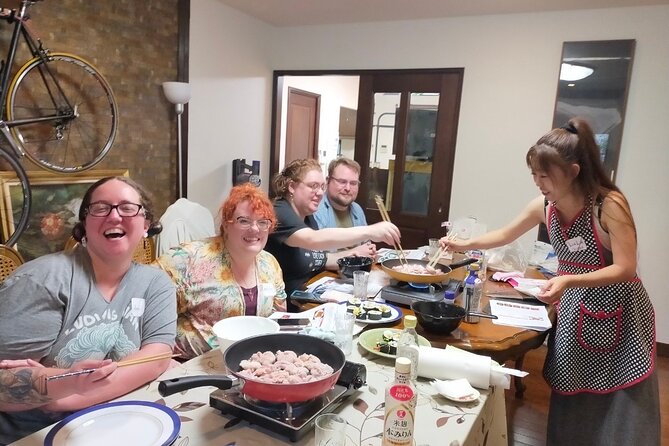
When you book, you choose your preferred menu from options A, B, C, or D. That’s a nice control knob, because not all cooking classes are flexible about what you make.
Here’s the key catch: menu choice only works smoothly if you and your group are the only participants on that day. If another group joins the same class, the menu choices may be limited. So if making a specific menu is very important to you, I’d treat menu selection as a preference, not a guaranteed outcome.
Allergies are also something you can plan for. If you have food allergies, you should let the organizer know in advance, and they can discuss menus with you. That’s a real advantage because Japanese cooking depends on ingredients that can be tricky if you avoid certain items.
If you’re traveling with dietary needs, send the details early. It improves your odds of getting a menu that fits the way you need to eat.
Sake tasting: what you get in the culture portion
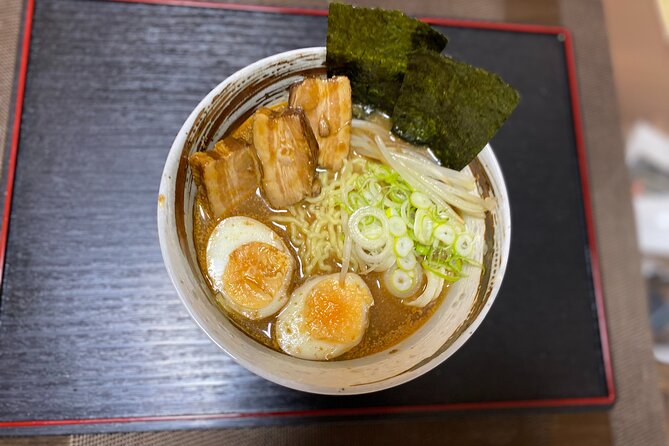
After cooking, the class shifts gears into sake tasting time. The important part is that the sake is described as very unique and rare, and locally distilled in Japan.
Even if you only take a few sips, this portion teaches you how tasting fits into Japanese food culture. Sake is often discussed alongside dishes because it can change the way you perceive flavors—sometimes balancing saltiness, sometimes cleaning the palate, sometimes complementing umami.
One practical consideration: if you’re not a fan of alcohol, you don’t have to force it. The class explicitly offers alternatives if you’re not an adult or you prefer not to drink. That flexibility is a big part of the value, because you still get the cultural add-on instead of leaving the experience feeling like you compromised.
Tea tasting option: Japan’s broader tea culture
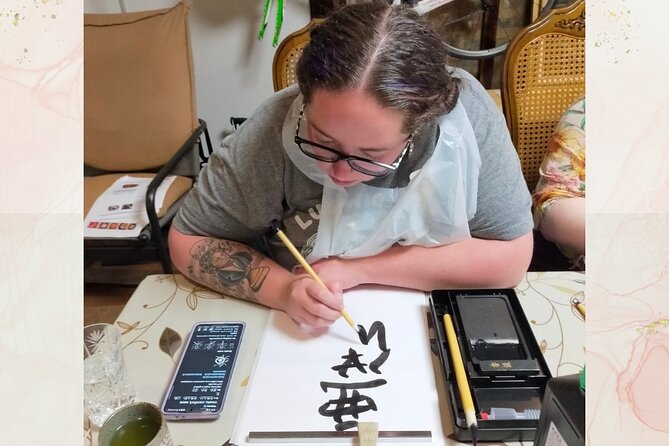
If sake is not your preference, you can switch to Japanese tea tasting. The class notes that Japan has many kinds of tea, not only green tea, which matters because it broadens what you might think of as Japanese tea.
Even a short tea tasting can change how you order or choose tea later. You start noticing differences in aroma and taste that are easy to miss when you only ever drink one style back home.
If you’re the type who enjoys learning through flavor comparisons, this option gives you that same tasting-based learning without alcohol.
Calligraphy with special brushes and ink, plus your own fan
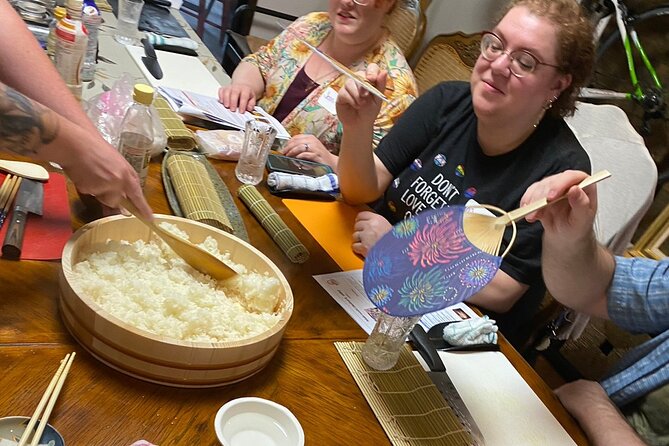
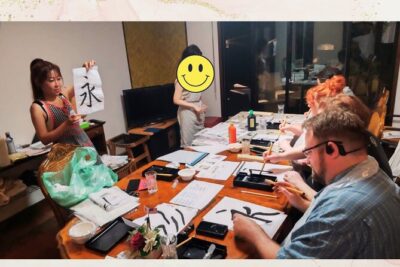
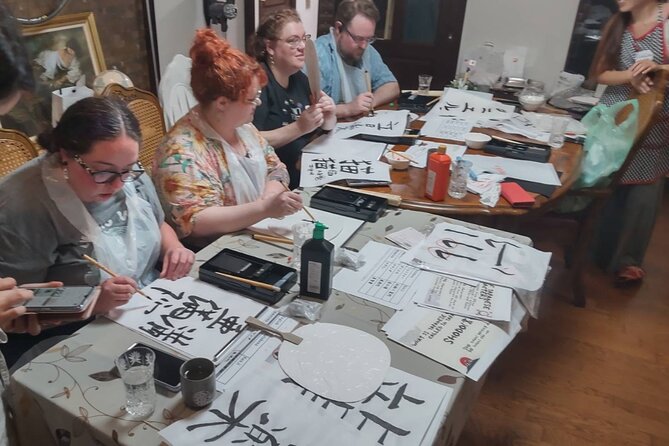
Calligraphy is the other alternative, and it’s more than a sit-and-watch demo. You can write your name or Kanji using special brushes and ink.
And the best part, based on real class experiences, is that you don’t just practice strokes. You also get to decorate your own fan after the calligraphy lesson once you learn the basics. That’s the kind of activity that feels hands-on and memorable because it gives you something physical to take home.
If you want a break from the kitchen but still want a cultural activity that uses your hands, this is the option to pick.
Pickup, mobile tickets, and small-group energy
The experience includes pickup offered and also uses a mobile ticket. In plain terms: it’s designed to reduce friction. You show up, you go, and you don’t waste time figuring out complicated paperwork.
Group discounts are also listed, which is worth considering if you’re traveling with friends. Japanese cooking classes can get pricey when you book solo, but the discount can make the experience feel more like good value than a splurge.
The maximum of 8 people is a hidden benefit. In larger classes, you often spend the cooking time waiting for the next step. In a smaller group, you can get nudges on technique while you’re cooking, which helps you actually improve rather than just finish the dishes.
Price and value: what $100.11 buys you
At $100.11 per person, this class sits in the mid-range for hands-on culinary experiences near Tokyo. Here’s what you’re getting for the price, and why it feels fair:
- Instruction for multiple dishes, not just one recipe
- Dashi included, which is a core skill and not always taught in beginner-friendly classes
- A tasting component afterward (sake, tea) or a cultural art component (calligraphy)
- Small group size (max 8), which usually means more direct help
- Pickup offered (when available) and a mobile ticket for smoother logistics
If your goal is to learn techniques you can repeat later, the price makes more sense than if you only wanted an easy photo stop. This is not a quick tasting event. It’s a short course in home-style cooking with a cultural payoff.
Who should book this cooking class in the Tokyo area
This class is especially good if you:
- Want real cooking practice, including making dashi
- Enjoy learning through ingredients and how they affect taste
- Like the idea of a short cultural add-on that you can tailor to you (sake vs tea vs calligraphy)
- Prefer small-group classes where questions are easier to ask
It’s also a solid fit for couples and small groups, especially if group discounts apply to your booking. And because it’s near public transportation and begins at Chiba Station, it’s easier to fit into an itinerary.
If you’re a total beginner, you’ll still be in the right place because the class is described as basic but authentic. If you already cook at home, you may like that it focuses on fundamentals that often get skipped.
Practical tips before you go
A few things will make your experience smoother:
- Decide what you want after cooking: sake tasting, tea tasting, or calligraphy. Pick based on your comfort, not on what looks good on paper.
- If you have allergies, tell them in advance so menus can be discussed.
- Plan for a total time commitment of about 3 hours. That schedule includes the cooking block and the short cultural portion.
- Wear comfortable clothing suitable for cooking work. You’ll be actively involved, not just standing by.
And because menu selection can depend on how many groups are attending that day, don’t assume you’ll always get your first menu choice. If one menu is essential, treat it as a priority to request early.
Should you book this Japanese Cooking Class and Cultural Experience?
If you want a hands-on Japanese cooking lesson that actually teaches fundamentals like dashi, this class is a strong choice. The biggest selling points are the practical cooking time, the small-group format, and the way the experience gives you options afterward—sake tasting, tea tasting, or calligraphy.
Book it if you value learning through doing and you want a meal-building experience you can carry home. Consider a different option only if your schedule depends on a specific menu choice being guaranteed, because the menu A–D selection can be limited when multiple groups share the same session.
FAQ
Where is the meeting point for the class?
The class starts at Chiba Station (Shinchiba), Chiba, Japan: 260-0031, Chuo Ward, Shinchiba 1-chōme1.
How long does the experience last?
It’s about 3 hours total. Cooking takes about 2.5 hours, and the sake or tea tasting (or calligraphy) takes about 0.5 hour.
How many people are in the group?
The class has a maximum of 8 travelers.
Is pickup available?
Pickup is offered (availability depends on your booking).
Can I choose sake tasting, tea tasting, or calligraphy?
Yes. After cooking, you can do sake tasting, or you can switch to Japanese tea tasting or calligraphy if you prefer not to drink alcohol.
What will we cook during the class?
You’ll cook 3–4 Japanese home-style dishes. The class includes learning how to make dashi and how to use Japanese ingredients.
If I have food allergies, can the menu be adjusted?
Yes. You should let the organizer know in advance, and you can discuss menus based on your allergies.
How does choosing menu A, B, C, or D work?
When you book, you choose your preferred menu (A, B, C, or D). If only your group is attending, you may be able to choose your favorite menu. If another group also attends that day, your menu choice may be limited.
What is the cancellation policy?
Free cancellation is available. You can cancel up to 24 hours in advance for a full refund. If you cancel less than 24 hours before the start time, the amount you paid is not refunded. If the minimum number of travelers isn’t met, you’ll be offered a different date or a full refund.