
Reviewed · TOKYO
Full-Day Tour to the Picturesque Spots of Mount Fuji
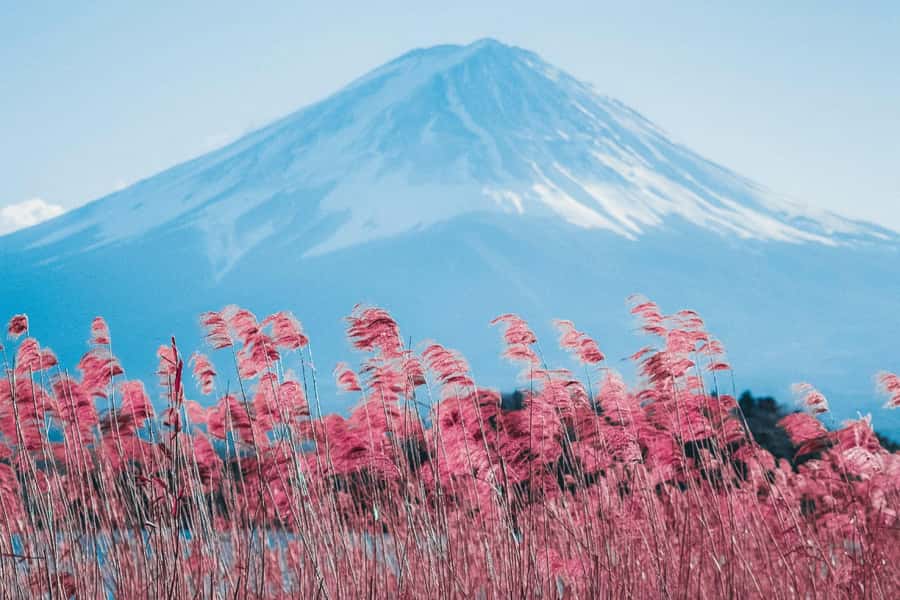
Mt Fuji days feel cinematic.
This full-day tour strings together the classic sights in a logical order, mixing traditional village views, lake walks, and shrine-and-pagoda photo stops. You’ll also get the seasonal flower scenes that make Fuji photos look extra sharp, from kochia fields to lavender-style panoramas.
I especially like the calm of Saiko Iyashi-no-Sato Nenba and the real-world magic of Oshino Hakkai, where you can taste the springs fed by Mount Fuji. Those two stops bring variety beyond just photographing a mountain from one angle.
One possible drawback: the day involves walking, and Arakurayama Sengen Park includes a 400-step climb. It’s also not suitable for wheelchair users or people with mobility impairments, so plan accordingly if you’re sensitive to stairs.
In This Review
- Key moments you’ll remember
- From Tokyo to Mount Fuji: how the day actually flows
- Saiko Iyashi-no-Sato Nenba: thatched roofs and a Fuji frame
- Lake Kawaguchiko and Oishi Park: kochia waves and flower-season scenery
- Oshino Hakkai (UNESCO): clear springs you can taste
- Arakurayama Sengen Park and the Chureito Pagoda: the 400-step photo moment
- The photo plan: where to spend time and how to avoid stress
- Price and value: what $49 gets you (and what it doesn’t)
- Small comfort and logistics that matter on a Fuji day
- Who this tour fits best
- Should you book this Mount Fuji full-day tour?
- FAQ
- Where do you meet for the tour?
- What does the $49 price include?
- Are meals included?
- Do I need cash?
- Is the tour good for people who use wheelchairs or have mobility issues?
- Is the tour suitable for pregnant women?
- When will Oishi Park be replaced?
Key moments you’ll remember
- Saiko Iyashi-no-Sato Nenba: a carefully reconstructed thatched-roof village with Fuji framed in the distance
- Oishi Park + Lake Kawaguchiko: kochia waves, reeds, and a wide Fuji reflection view
- Oshino Hakkai (UNESCO): eight springs connected to Fuji’s snowmelt, plus a chance to taste the water
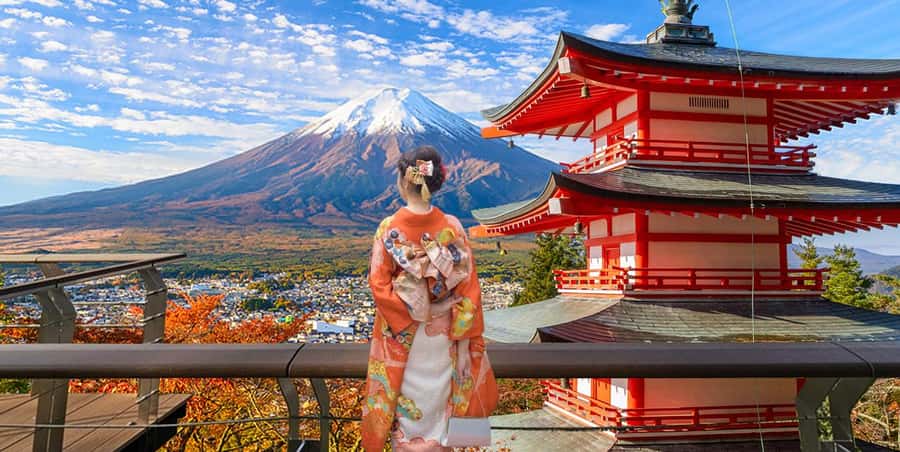
- Arakurayama Sengen Park: the Chureito Pagoda viewpoint after a 400-step climb
- Arakura Fuji Sengen Shrine: an old sanctuary atmosphere right before the big photo moment
- Seasonal flower swaps: autumn and spring versions may replace Oishi Park with Maple Corridor or cherry blossom groves
From Tokyo to Mount Fuji: how the day actually flows
This tour is built for people who want Mount Fuji without wrestling trains, transfers, and changing timetables. You start with a morning departure from Tokyo: 8:00 AM from Tokyo Station, or 8:30 AM from Shinjuku Station, with about a 2-hour ride to the Fuji area (traffic can stretch that).
You’ll spend roughly a few hours rotating through the highlights, then ride back to your original meeting point. The schedule can shift based on traffic and weather safety, which is smart for Fuji, since visibility can change fast.
The practical upside is that you don’t need to be an expert planner to hit the big-name spots: village, lake, UNESCO springs, and the pagoda viewpoint.
Saiko Iyashi-no-Sato Nenba: thatched roofs and a Fuji frame
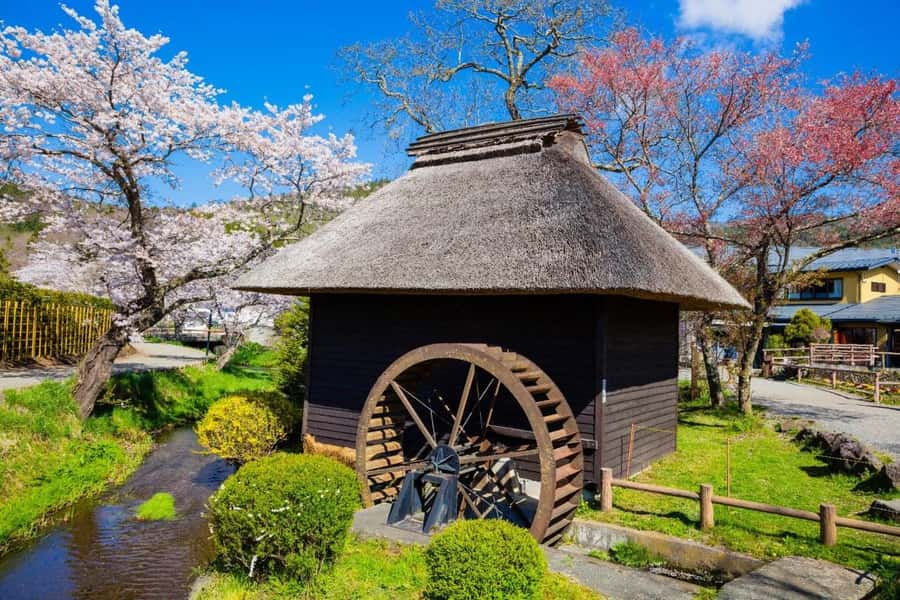
Saiko Iyashi-no-Sato Nenba is the kind of place where your brain slows down. It’s a traditional village recreation with thatched-roof homes, designed to preserve the look and feel of countryside life from long ago.
The best part for photographers and casual sightseers is the composition: on a clear day, those two thatched houses can line up like a natural picture frame for Mount Fuji in the distance. You get the rare combo of architecture in the foreground and the mountain acting like a backdrop.
Plan for gentle but real walking on village paths. It’s not a theme park; you’re moving through a calm cultural setting, so comfortable shoes matter.
Lake Kawaguchiko and Oishi Park: kochia waves and flower-season scenery
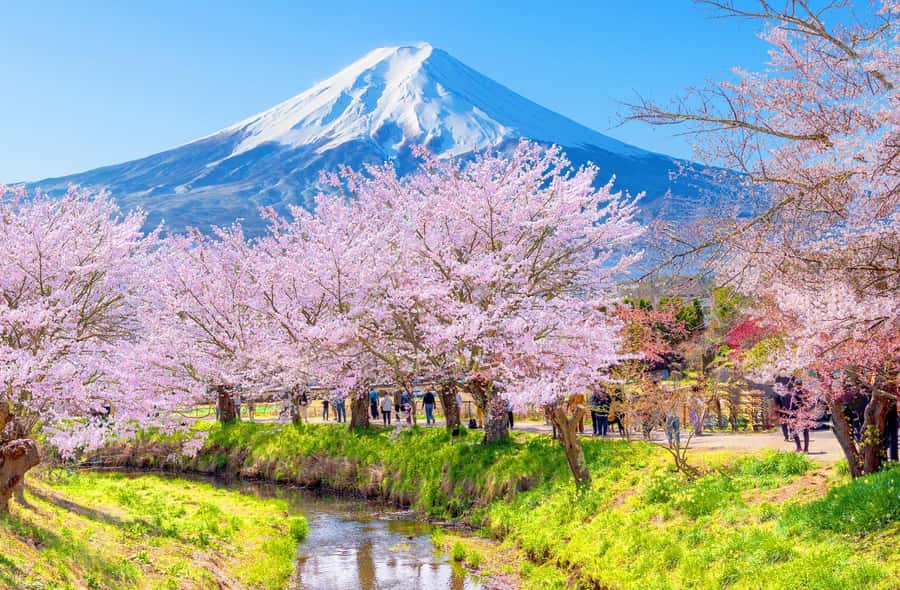
After the village, you shift to water views. Oishi Park is a short stroll-style stop focused on a very specific Fuji-friendly view: rows of kochia bushes that ripple as if the field is breathing.
On a sunny day, the shoreline and reeds give the scene motion, while Lake Kawaguchiko reflects light across the water. Across the water, Mount Fuji looms in a way that feels both dramatic and steady, like you’re seeing the mountain from a postcard that’s actually real.
One smart detail for planning: the tour notes a seasonal change. During maple season (autumn) and cherry blossom season (spring), you may go to Maple Corridor or cherry blossom groves instead of Oishi Park. If Oishi Park is your must-see, check the season timing before you book so your expectations match the flower setup that day.
Oshino Hakkai (UNESCO): clear springs you can taste
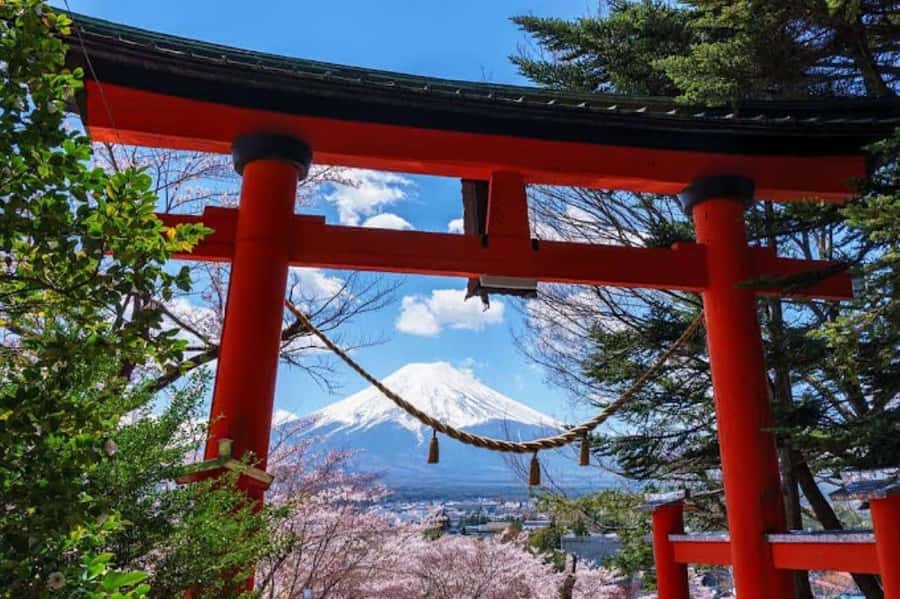
Oshino Hakkai is the stop with the strongest sensory payoff: water. The area is known for eight crystal-clear springs fed by Mount Fuji’s snow. It’s also recognized as a UNESCO World Heritage site, which signals that this isn’t just a pretty viewpoint.
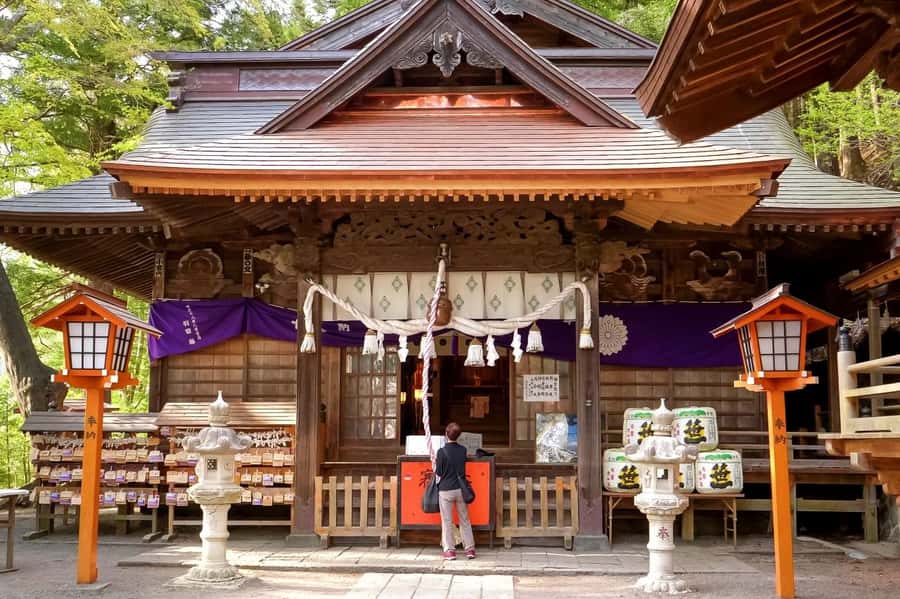
Beyond the science angle, there’s local lore. The idea is that the springs support good health and long life, so you’ll see people curious about the water for more than photos. And yes, you get a chance to taste it.
This is also where you learn how the Mount Fuji story connects to everyday details. You’re not only looking at the mountain; you’re touching the result of the mountain’s water system, in a place where the flow is still the star.
Arakurayama Sengen Park and the Chureito Pagoda: the 400-step photo moment
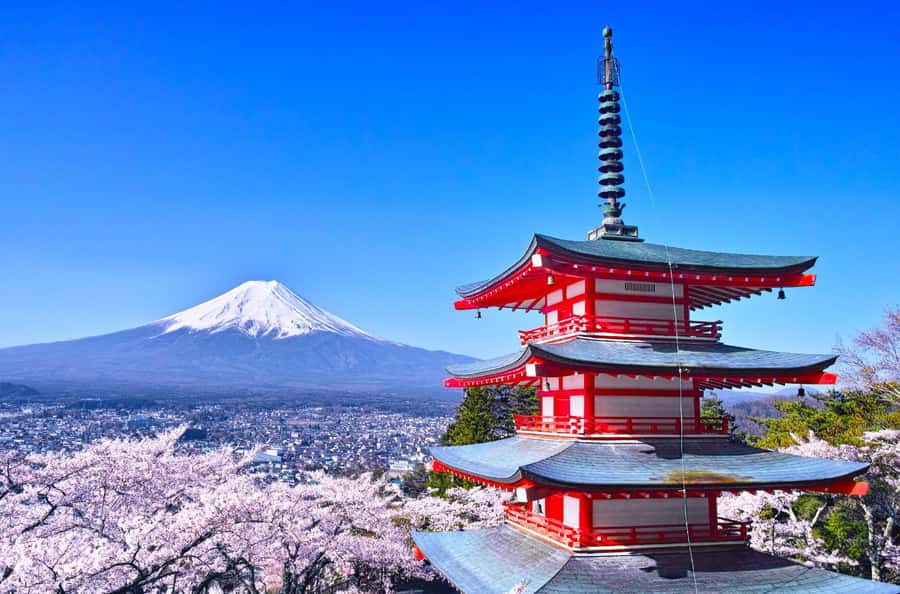
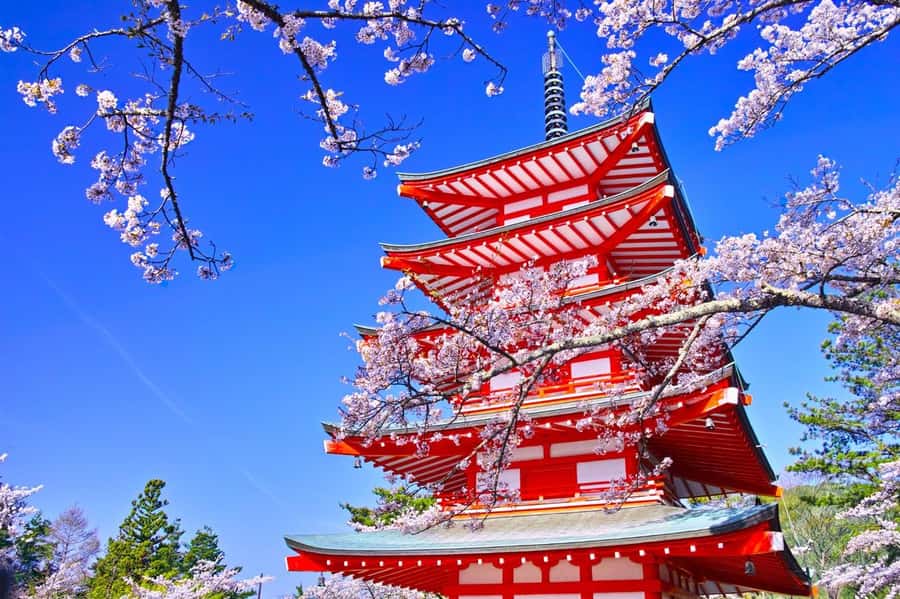
If you want the classic Mount Fuji-and-pagoda picture, this is the core stop. Arakurayama Sengen Park is a viewpoint area reached by climbing about 400 steps, and the payoff is the vermillion five-story pagoda framed with Mount Fuji behind it.
Along the way, the air usually feels cooler as you gain elevation, and the greenery is part of the walk. It’s a straightforward climb, not a technical hike, but it’s enough that you should pace yourself and take short breaks.
Right at the park area, you’ll also visit Arakura Fuji Sengen Shrine, established in 705. It’s dedicated to the deity of Mount Fuji and connects to the idea of calming eruptions through ritual, which gives the whole pagoda photo moment a more grounded, spiritual context.
This is also the stop where the tour design really matters. With a guide, you get the right order of viewpoints so you’re not running around. But you still need to be honest about your legs.
The photo plan: where to spend time and how to avoid stress
This tour is timed around several big visual hits, so the trick is not trying to photograph everything from every angle. Instead, I recommend you pick one “anchor” shot per stop and then take a few supporting pictures while you’re walking.
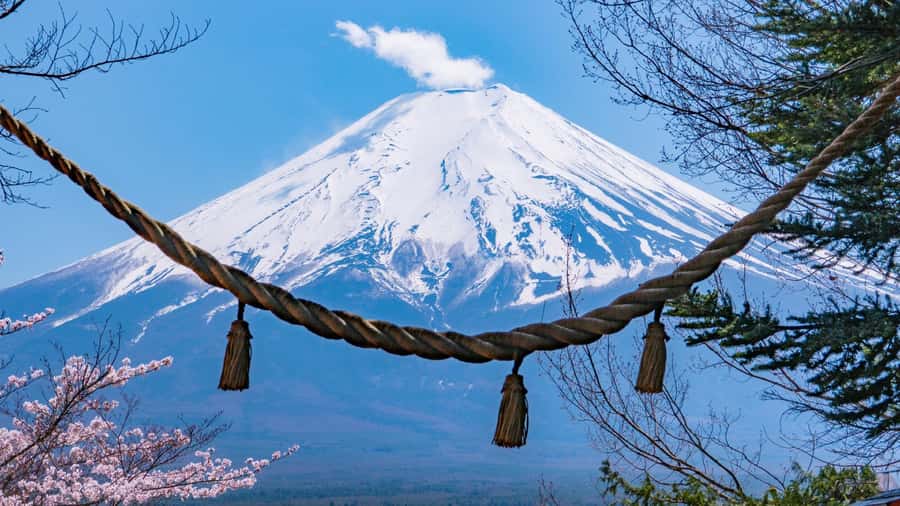
At Saiko Iyashi-no-Sato Nenba, your best move is to look for the Fuji framing before you start shooting close-up details. At Oishi Park, prioritize the wide view first, since kochia lines and shoreline reflections are what make this place work.
For Arakurayama Sengen Park, your time gets tighter near the top because everyone wants the same angle. Dress for comfort on the steps, then once you’re at the deck, slow down and grab the pagoda+Fuji shot when the light looks clean.
Price and value: what $49 gets you (and what it doesn’t)
At $49 per person, this is a value-heavy day trip from Tokyo, especially if you’d otherwise pay for separate local transport and tickets. Included in the price are round-trip transfers, a professional multilingual guide (English and Chinese), entry tickets, and vehicle A/C plus all the usual fees like parking, tolls, gas, and environmental charges.
You’re basically paying for friction removal. You get a driver, route knowledge, and someone to help translate the meaning behind what you’re seeing at the shrine, the springs, and the village.
Not included is meals and beverages, so plan on buying lunch on your own. One detail to keep in mind: the tour can include a lunch stop where admission is handled but rides cost extra, which can turn the meal into an odd value trade if you were expecting a normal restaurant setup. If you want a bigger variety meal, come hungry and have a backup plan for where you’ll eat during that break.
Small comfort and logistics that matter on a Fuji day
You’re in a vehicle for much of the day, so the A/C is more than a perk. Japan mornings can start cool, then swing warm, and a comfortable car makes the long ride easier.
Bring comfortable shoes and water. You’ll do enough walking that you’ll notice uncomfortable footwear fast, and Fuji-area weather can change even when Tokyo looks fine.
Also bring some cash. Many local merchants don’t accept credit cards, so it’s easier if you have yen on hand for snacks, drinks, or small souvenirs.
Finally, this tour isn’t for everyone physically. It’s not suitable for pregnant women, people with mobility impairments, or wheelchair users. If you’re using stairs only with difficulty, the 400 steps at Arakurayama Sengen Park are the biggest reality check.
Who this tour fits best
This is a strong pick if you want a classic Mount Fuji day with minimal planning. It works especially well for first-timers based in Tokyo who want to see multiple iconic locations in one go.
It also fits photography lovers who want the big visual signatures: thatched village framing, lake-and-mountain water views, clear spring water at UNESCO Oshino Hakkai, and the Chureito Pagoda composition.
If you dislike walking or want a slow, unstructured day, you might find the pacing too tight. And if you’re picky about lunch variety, treat the meal as a negotiable part of the day rather than the highlight.
Should you book this Mount Fuji full-day tour?
Book it if you want the highest concentration of Fuji classics without a DIY headache. The mix of cultural village (Saiko Iyashi-no-Sato Nenba), water experience (Oshino Hakkai springs), and iconic viewpoint (Chureito Pagoda at Arakurayama Sengen Park) gives your day shape, not just randomness.
Hold off or choose carefully if you’re sensitive to stairs and long walks, or if you’re traveling with mobility limitations. Also keep your expectations flexible on visibility: when weather cooperates, Mount Fuji looks incredible; when it doesn’t, the tour still delivers cultural stops, but the big mountain photos may be less dramatic.
If you do book, set yourself up for success: wear good shoes, carry water, and bring cash. Then treat the day like a photo route with meaning, not a race.
FAQ
Where do you meet for the tour?
The meeting point depends on which option you book. The day starts with a departure from Tokyo Station at 8:00 AM or Shinjuku Station at 8:30 AM, and the tour ends back at the meeting point.
What does the $49 price include?
It includes a professional multilingual guide (English and Chinese), entry tickets to attractions, round-trip transfers to and from the meet-up location, and a comfortable A/C vehicle. It also covers all taxes, parking fees, toll fees, gas fees, and environmental fees.
Are meals included?
No. Meals and beverages are not included, and the tour notes that lunch is a personal expense.
Do I need cash?
Yes, it’s advisable to bring some cash because many local merchants do not accept credit card payments.
Is the tour good for people who use wheelchairs or have mobility issues?
No. The tour is not suitable for wheelchair users or people with mobility impairments, and it involves walking and a 400-step climb at Arakurayama Sengen Park.
Is the tour suitable for pregnant women?
No. The tour is listed as not suitable for pregnant women.
When will Oishi Park be replaced?
The tour notes that during maple season and cherry blossom season, it will go to Maple Corridor in autumn and cherry blossom groves in spring instead of Oishi Park.
Tokyo, compared.
 ★ 5.0Mt Fuji and Hakone 1-Day Bus Tour Return by Bullet TrainFrom $16326,383 reviews
 ★ 5.01-Day Tokyo Bus TourFrom $12914,250 reviews
 ★ 4.6teamLab Planets TOKYO Digital Art Museum Entry TicketFrom $259,779 reviews
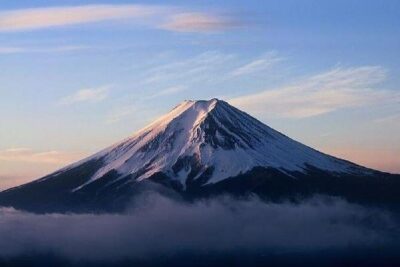 ★ 4.0Mt Fuji & Hakone Cruise, Drum Show Bullet Train 1 Day from TokyoFrom $1497,413 reviews
 ★ 5.0Shinjuku Food Tour (13 Dishes at 4 Local Eateries)From $866,603 reviews
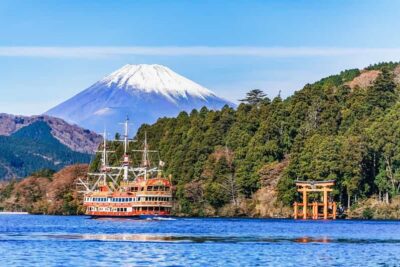 ★ 4.4Tokyo Mt Fuji 5th St & Hakone Cruise Bus Tour w/Bullet TrainFrom $1545,024 reviews
 ★ 5.0Flagship 2-Hours Official Street Go-Kart Tour – Tokyo Bay ShopFrom $644,974 reviews
 ★ 4.5From Tokyo: Mount Fuji Full-Day Sightseeing TripFrom $684,970 reviews