
Reviewed · YOKOHAMA TOURS
Unlock the Secrets of Ninja : A Private Tour into Samurai Spirit
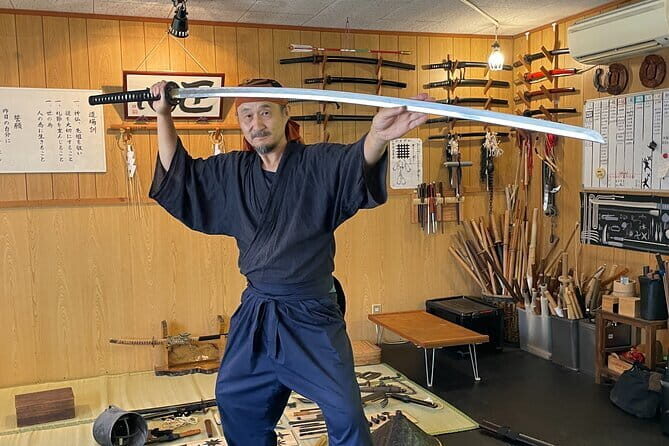
Ninja training beats museum cosplay. This private-style experience is built around a real ninjutsu dojo in Yokohama, not a rented room with a few props. You’re taught by a ninja master with national shuriken-championship experience, and you’ll also get the philosophy behind the physical drills—think discipline, mindset, and the “ninja spirit” with samurai influence.
I especially liked two parts: first, you get hands-on moments like seeing training tools and trying on traditional ninja clothing. Second, the session mixes a short performance and interactive games with practical instruction and a cultural explanation you can actually use. One thing to consider is logistics: there’s no station pickup, and the full training is about 2 hours, so it’s intense and short rather than an all-day workshop.
In This Review
- Key Things You’ll Remember
- Why Yokohama’s Ninjutsu Dojo Feels Different
- Arriving at Shikinomori Ninjutsu Dojo: Your First Reality Check
- The Intro Performance and Seeing the Tools Up Close
- Training Drills, Games, and the Ninja Mindset Lesson
- The Level 3 Yin-Yang Shinobi Certificate: A Real Keepsake
- Price and Value in Yokohama: What $195.46 Buys You
- Who This Ninja Dojo Tour Fits Best
- Booking Tips That Make the Experience Smoother
- Should You Book This Ninja Dojo Training?
- FAQ
- Where is the meeting point for this ninja tour?
- How long does the experience last?
- What does the tour include?
- Is pick-up from the station included?
- What’s the group size limit?
- What certificate do I receive at the end?
- Can families or kids participate?
Key Things You’ll Remember
- Real dojo atmosphere in Asahi Ward at Shikinomori Ninjutsu Dojo
- Instruction from an acclaimed ninja master with national shuriken achievements
- Performance plus interactive games that keep kids and adults engaged
- Ninja gear moments like seeing instruments and trying on traditional clothing
- English support via the included English guide/translator
- A Level 3 Yin-Yang Shinobi certificate to mark what you learned
Why Yokohama’s Ninjutsu Dojo Feels Different
The biggest reason this works is location and setting. You meet at Shikinomori Ninjutsu Dojo in Yokohama’s Asahi Ward, and the whole session is built around that space being used for training. That matters, because it changes the tone from show-and-tell to real practice.
This isn’t pitched as a quick “ninja photo moment.” The focus is discipline and mindset, taught alongside movement skills. You’ll also get the “why” behind the ninja way—how samurai-inspired thinking shaped the approach to stealth, restraint, and mental control.
The group size is also capped at 8, which makes it easier for the instructor and English guide to keep an eye on everyone. If you’ve ever been stuck in a big group where you can’t hear well or move safely, you’ll appreciate this format.
Arriving at Shikinomori Ninjutsu Dojo: Your First Reality Check
Plan to handle your own arrival. Pick-up from the station isn’t included, and the experience starts and ends at the meeting point. So yes, you’ll want to look up the location before you go—this is one of those places where being confident with transit saves time and nerves.
Once you’re there, expect a straightforward, guided setup. You’ll likely get an introduction to the space and the training flow before anything physical happens. Since this is a dojo environment, you should also dress and act like you’re entering a practice space: follow the lead of your English guide, listen for safety cues, and keep your focus on the instruction.
Also note the practical detail: you’ll use a mobile ticket. Bring your phone with the ticket ready so you don’t waste the first few minutes.
The Intro Performance and Seeing the Tools Up Close
A short performance comes early in the experience, and it’s not just for entertainment. It gives you a visual baseline for what you’re about to learn—how movement looks, how control is shown, and how the “spirit” side fits with the physical skills.
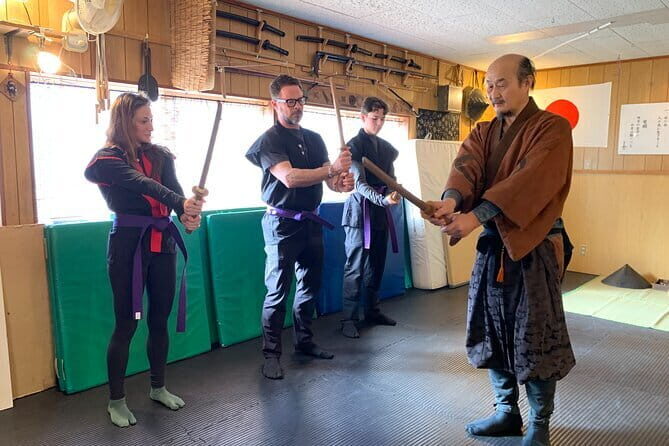
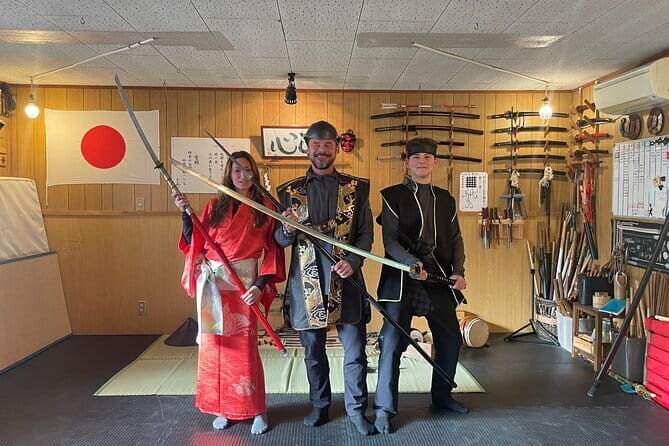
Then the session turns hands-on. In the best moments, you get to see training instruments and understand what they’re for instead of just watching from a distance. Reviews highlight that you can get close enough to actually notice details, and that you’ll also have chances to try on traditional ninja clothing.
That try-on piece is more than costume time. It helps you understand why the gear is worn the way it is—how it affects movement and comfort, and why certain clothing choices matter for practice. It’s also one of those activities that works for families, because kids get a concrete, memorable visual while adults get cultural context.
You may also interact with the performers or instructors in character. Names like Sasuke and Kyojaku show up in participant comments, especially around humor and personality during the games and training flow.
Training Drills, Games, and the Ninja Mindset Lesson

After the setup, you shift into the main value of the experience: learning from a true ninja master. The instruction isn’t just “do this, then that.” It’s tied to philosophy—how discipline and mental focus support movement.
The ninja master is described as a respected authority in traditional ninja arts and a winner of multiple national shuriken championships. Even if you’ve never thrown anything in your life, the key is that the training is guided. You’ll be shown how to approach the skills with control rather than brute force.
Then come the interactive games. This is where the session stays fun without losing purpose. Reviews mention interactive games and tournament-style moments, and that’s a smart teaching technique: it tests focus and coordination in a way that feels like play.
If you’re there with kids, you’ll likely appreciate how the instructors keep things moving. One reason this gets high marks is that it doesn’t treat children as an afterthought. The games and uniform try-on keep energy up, and the English guide helps everyone follow the cultural and practical explanations.
For adults, the “ninja spirit” discussion can be the real surprise. It’s not only physical training. The philosophy is presented as a mindset shaped by samurai-inspired discipline—practical mental habits you can recognize even if you’re not studying martial arts.
And yes, there’s a competitive edge. Shuriken throwing and footwork are referenced directly in comments, including someone being called out for tournament success. That doesn’t mean it’s a tough boot camp, but it does signal that the skills are taught seriously, not as a casual demo.
The Level 3 Yin-Yang Shinobi Certificate: A Real Keepsake

At the end, you receive a Level 3 Yin-Yang Shinobi Certificate. That’s a tangible reward you can take home, and it also gives the whole experience structure. In many workshops, you finish with memories and photos; here you finish with something official-looking that marks what you went through.
I like certificates like this because they add closure. You can compare what you remember of the drills and the explanations to what the certificate represents, and it helps you reflect afterward instead of forgetting details quickly.
Since it’s Level 3, it also signals that the dojo doesn’t treat this as the shallow end of the pool. It’s still an introduction experience in a 2-hour window, but the labeling suggests a progression system.
Price and Value in Yokohama: What $195.46 Buys You
The price is $195.46 per person for about 2 hours, and it’s not the cheapest “activity ticket” in Yokohama. So you should think of it as paying for a focused, small-group training session with specialized instruction.
Here’s what you’re buying for the money:
- A real dojo setting rather than a generic performance space
- A ninja master with championship recognition
- English guide support so you don’t miss the explanations
- Interactive games plus practical participation (not just watching)
- A certificate at the end
If you compare it to standard classes, this costs more than a basic martial arts trial. But it’s also a more theatrical and culturally layered experience—where “how to move” and “why it matters” both get attention. The max group size of 8 keeps it feeling more personal than the usual group tour.
One practical value point: because the tour ends back at the meeting point with no pickup, you’re not paying for transportation you might not need. Your cost is going into the training itself.
Who This Ninja Dojo Tour Fits Best
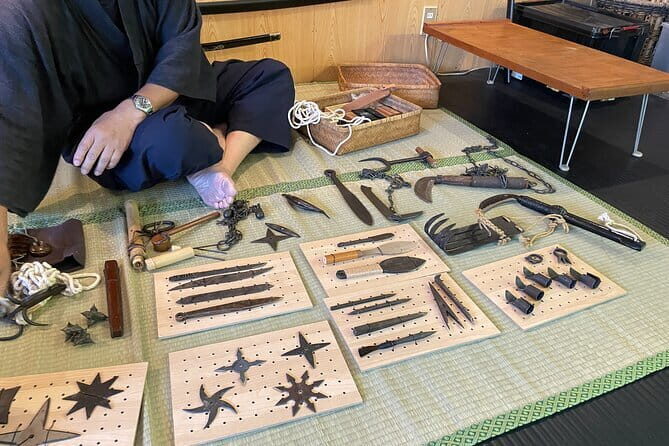
This is a strong match for three types of people.
Families with kids are often well served here. The mix of performance, interactive games, and uniform try-on gives kids something to do with their hands and attention. Comments specifically call out that adults and children both enjoyed it, and that kids loved the interactive style.
Culture-minded visitors will like the philosophy portion. Even if you’re not into martial arts, you’re getting a structured explanation of the ninja spirit and samurai-influenced mindset. That turns the session into more than athletic activity.
Martial arts curious people also have good odds here. The instructor background and references to shuriken competition suggest the technique and discipline aren’t just “for fun.” You’ll likely come away with better appreciation for control, timing, and mental focus.
Who might want something else? If you’re expecting a long, deep training program with lots of repetition across many sessions, the 2-hour length may feel too brief. Think of this as an introduction with real guidance, not a weeks-long curriculum.
Booking Tips That Make the Experience Smoother
Because there’s no station pickup, your best move is to plan your route the day of. Arrive early enough to calm down and settle in. You’ll enjoy the training more if you’re not rushing through the last steps.
Bring a mobile ticket (your phone matters), and wear clothes that let you move comfortably. Dojos often have expectations about footwear and posture, so follow the guide’s lead.
If you’re coming as a family, set expectations before you arrive: this is practice and games, with cultural explanation mixed in. That helps kids shift from excitement to focus quickly, which also helps you enjoy the philosophy part afterward.
Also, this is a small group. If you’re the type who asks questions, you’ll probably have a good time. Comments reference people asking insightful questions about the experience from different perspectives, which suggests the instructor and team are receptive.
Should You Book This Ninja Dojo Training?
If you want a hands-on, culturally grounded ninja experience in Yokohama, I’d say it’s worth serious consideration. The big strengths are the real dojo setting, instruction by an acclaimed ninja master, and the way the session balances physical practice with philosophy. Add in the certificate and the small group size, and it becomes a memorable “I did something real” activity.
I’d hesitate only if you strongly dislike planning your own arrival, since there’s no station pickup. And if you need a long training format, the 2-hour session may feel short.
My practical bottom line: book it when you want authenticity over entertainment, and you’re okay with a focused session that ends back where you start.
FAQ
Where is the meeting point for this ninja tour?
You meet at Shikinomori Ninjutsu Dojo, 1306-8 Kamishiranechō, Asahi Ward, Yokohama, Kanagawa 241-0001, Japan.
How long does the experience last?
The tour runs for about 2 hours.
What does the tour include?
It includes an English guide.
Is pick-up from the station included?
No. Pick-up from the station is not included.
What’s the group size limit?
The experience has a maximum of 8 travelers.
What certificate do I receive at the end?
You receive a Level 3 Yin-Yang Shinobi Certificate.
Can families or kids participate?
Most travelers can participate, and the experience is described as enjoyable for adults and kids, including families. Exact age ranges are not listed, though.
More Tour Reviews in Yokohama



Next Door in Yokohama
Yokohama Tours, compared.
 ★ 4.9EVO, WRX, Skyline – JDM Night Run to Daikoku Car MeetFrom $125478 reviews
Best Price Daikoku Parking Area JDM Car MeetFrom $76192 reviews
★ 4.9EVO, WRX, Skyline – JDM Night Run to Daikoku Car MeetFrom $125478 reviews
Best Price Daikoku Parking Area JDM Car MeetFrom $76192 reviews
 ★ 4.9Daikoku & Tokyo Private JDM Tour by 700HP R34 GT-RFrom $586101 reviews
 ★ 5.0Tokyo 8hr Private Tour with Licensed Guide from YokohamaFrom $20194 reviews
 ★ 5.0【Tokyo】JDM Daikoku Parking Area & Nissan Facility TourFrom $5587 reviews
 ★ 4.5Narita Airport: One Way Private Transfer to Tokyo|Yokohama HotelsFrom $7769 reviews
 ★ 5.0Shuttle Van Transfer, Yokohama(Port)⇒Tokyo, Narita, Haneda, TDRFrom $12263 reviews
 ★ 5.0R34Skyline Daikoku PA Fast & Furious Private ExperienceFrom $10963 reviews
Browse the lists this tour appears in