
Daikoku at night feels like a movie scene. This tour strings together the best Tokyo-area expressway hangouts and gets you to Daikoku without figuring out trains or transfers on your own. I like that it’s built for real car culture, not just sightseeing, and the guide keeps things moving so you see more than you’d get wandering. A key consideration: seating and fit are tight, so it’s not recommended for people over 100kg or 180cm.
I also love the mix of vehicles you can realistically expect at the meets: Japanese legends like GT-Rs and Supras alongside rotary Mazdas and even European supercars. And since the group is limited to 3 participants, you get a calmer, more personal pace for photos and questions instead of shouting over a crowd. The only drawback I’d flag is the time on the move plus self-guided viewing; you’ll want comfortable shoes and a camera setup you can manage quickly.
Here’s the practical takeaway: if you want an authentic night of engine sounds, fresh paint, and serious tuning culture around Tokyo’s expressways, this is a strong value buy for the money, especially because the access to Daikoku is part of what makes it worthwhile.
In This Review
- Key things to know before you go
- Midnight Wangan energy: what this car meet tour is really like
- Getting started: meeting at Arrow Parking Udagawachō
- Stop 1: Tokyo Tower photo break (15 minutes)
- Stop 2: Tatsumi 1st PA self-guided (15 minutes)
- Stop 3: Umihotaru self-guided (35 minutes)
- Stop 4: Daikoku Parking Area self-guided (35 minutes)
- What you’ll see at Daikoku
- How the tour’s guide adds value here
- Photography and pacing reality check
- Vehicle ride quality and group size: why it feels manageable
- The guide experience: professionalism and car-night vibes
- Price and value: is $193 worth it?
- Who this tour fits best (and who should skip it)
- Should you book this Daikoku car meet night?
- FAQ
- How long is the midnight car meet experience?
- How much does it cost?
- Where do I meet the guide?
- What languages are the tour guide speakers?
- Is transportation included?
- What stops are included during the tour?
- Is food or drinks included?
- Are there age or size limits?
Key things to know before you go
- Daikoku PA access without the headache: you’re taken straight to the action since it’s not easy by public transport.
- A tight 150-minute schedule: Tokyo Tower photo stop, then three car-meet stops with set timing.
- Self-guided time where it counts: you get moments to walk, look, and shoot at Tatsumi 1st PA, Umihotaru, and Daikoku.
- Small group energy: limited to 3 participants, so it feels like you’re hanging with the scene.
- Japan tuning etiquette talk: you’ll learn the unwritten rules around respect, craftsmanship, and how drivers interact.
- Size limits matter: the vehicle seats aren’t for everyone, so check your height and weight.
Midnight Wangan energy: what this car meet tour is really like
Japan’s car culture has a few lanes you can actually step into, and this plan is designed for night vibes around Tokyo’s expressways. The big draw is Daikoku Parking Area, one of the most famous tuning meet locations in the country. The second draw is how the tour gets you there through a set of iconic nearby spots, so you don’t lose your night to transit.
You’re paying for two things: the guided interpretation (what you’re looking at and why it matters) and the transport that gets you to Daikoku. That combination matters because Daikoku isn’t the kind of place you can casually stumble into from a hotel. Even if you’re comfortable using transit, you still spend time figuring out the last steps. Here, the tour handles that, and you spend your time on cars.
The “midnight Wangan” feel is less about a guaranteed street-racing show (nothing like that is stated) and more about the atmosphere: neon reflections, exhaust notes, turbo spooling, and the way drivers and owners slow down, park, talk, and show off.
Getting started: meeting at Arrow Parking Udagawachō
Your tour starts at Arrow Parking Udagawachō. Meet at the location and take the elevator up to the 8th floor. It’s the kind of meeting point that can feel confusing if you arrive late, so give yourself a little buffer.
This matters because the rest of the night is scheduled tightly. The overall duration is 150 minutes, so you’re not working with a long, flexible day structure where you can drift. Once you’re in the vehicle, the pacing is about maximizing viewing time at the meets.
Also note: smoking is not allowed in the vehicle. If you’re sensitive to smells or you’re planning gear, keep it simple and pack light.
Stop 1: Tokyo Tower photo break (15 minutes)
The night begins with a 15-minute photo stop at Tokyo Tower. It’s a quick anchor point early on: you get a recognizable landmark shot, and it also helps you orient before the tour heads into the expressway-world.
Is it the highlight for hardcore JDM fans? Maybe not. But it’s useful. It gives you a calm moment to settle your camera settings and confirm your group is together before things get louder later. If you’re coming from a hotel far away or you’re new to Tokyo at night, this stop can also reduce stress.
Stop 2: Tatsumi 1st PA self-guided (15 minutes)
Next up is Tatsumi 1st PA, with 15 minutes self-guided. This is your first taste of the expressway scene, and it helps you start reading the cars as you go. You’ll be looking for details like wheel fitment, body kits, paint condition, and the way owners present their builds.
The short time here is intentional. This isn’t a slow museum-style stop; it’s more like a warm-up lap. If you want to linger, you can, but you’ll likely feel the time pressure. Think of it as: arrive, scan, grab a few key photos, and keep moving.
Stop 3: Umihotaru self-guided (35 minutes)
Then you get the longer stretch at Umihotaru for 35 minutes. This is where the tour starts to feel like a proper car-night outing rather than a drive-by.
Umihotaru gives you more room to walk around and notice the variety. You may see heavily modified street cars, drift-style builds, and a mix of Japanese makes that hint at different tuning philosophies. You’ll also have time to interact in that low-pressure, respectful way that’s part of Japanese car meet culture.
In a lot of cities, people treat cars like they’re part of the background. Here, the cars feel like the reason the people show up. Even if you’re not a “car person,” you’ll likely find yourself slowing down to look at details you normally skip: intercooler setups, exhaust routing, interior condition, and stance.
Stop 4: Daikoku Parking Area self-guided (35 minutes)
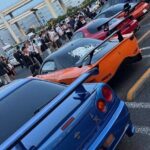
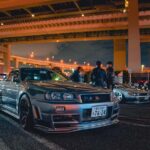
This is the main event: Daikoku Parking Area with 35 minutes self-guided. Daikoku is famous for a reason. It’s a magnet for tuning, and it tends to pack a lot into a small space, which is great for photos and for seeing a broad spread of builds in one night.
What you’ll see at Daikoku
The experience sets expectations for a mix like this:
- Japanese legends such as Nissan GT-Rs (especially the R35 crowd) and Toyota Supras
- Rotary-powered Mazdas
- Custom Hondas
- And sometimes European supercars like Ferraris, Lamborghinis, and McLarens
That mix is one of the most valuable parts of the tour, because it’s not only about “JDM vs not JDM.” It’s about craftsmanship. You can compare how different communities approach bodywork, turbo setups, and overall styling.
How the tour’s guide adds value here
You’re not just dropped into a parking lot with a map and hope. The guide’s explanations are designed to help you decode what you’re looking at. They cover Japan’s tuning scene and history, plus the practical “how people behave” side of car culture. That kind of context changes your experience. Instead of thinking, cool car, you start thinking, this person built for grip, that one built for stance, and that one chose reliability over flash.
Photography and pacing reality check
Daikoku is a dream for night shots. The bright lights and painted surfaces create reflections, and the sheer variety means you can shoot classic angles and still find something new every time you turn a corner.
But plan your approach:
- Decide if you want wide shots or close-ups first.
- Keep your gear ready so you’re not juggling cables while you’re walking.
- Be respectful with space. This is a scene with people who brought their pride and joy.
The self-guided time means you control your pace. The downside is you won’t get a long guided walkthrough of every car. You’ll need to prioritize what you care about most.
Vehicle ride quality and group size: why it feels manageable
This is a small group tour limited to 3 participants, with a live guide in English and French. That small size is not just comfort. It changes how the night feels.
In a larger group, you spend more time waiting, less time asking questions, and the guide has less flexibility to slow down for a specific car you’re curious about. Here, the experience is more like a focused outing with room to move.
There’s also a big practical note: the vehicle seating has limits. It’s not recommended for people over 100kg and over 180cm. If you’re close to those, you should take it seriously. The tour’s value is tied to how comfortable you are during the ride between stops.
The guide experience: professionalism and car-night vibes
One of the best things the reviews highlight is that the guide knows how to keep the night flowing. In one account, the guide driving was described as professional, with good music taste. That matters more than you might think. When you’re heading to car meets at night, the ride is part of the mood.
Another strong theme from reviews: the enthusiasm is real. People talk about the experience as a must for car fans because the guide clearly loves what they do and shares that energy through the night. If you’re the type who asks questions—what’s that turbo setup, what’s the point of that styling, how does tuning culture work in Japan—this tour tends to reward that curiosity.
And yes, the Nissan GT-R R35 gets called out in reviews as sublime. That lines up with Daikoku’s reputation as a place where GT-Rs show up in force.
Price and value: is $193 worth it?
At $193 per person for 150 minutes, the value depends on what you’d otherwise do.
If you tried to DIY:
- you’d need to handle transit and the tricky last mile to Daikoku,
- you’d need to coordinate the night timing,
- and you might still arrive with limited understanding of what you’re seeing and how to behave.
This tour bundles transport along the fixed route (starting at Arrow Parking Udagawachō, then the stops) plus in-depth explanations and a small-group guide. The price also makes more sense if you’re traveling with limited time in Tokyo and you want the best shot at a top meet without stress.
The only “cost” side to consider is what you bring:
- you’re responsible for food and drinks (not included),
- and you’ll spend time on photography gear or small purchases if you choose to shop.
If you love JDM culture or you want to experience Tokyo’s night car scene with fewer moving parts, this price is on the fair side.
Who this tour fits best (and who should skip it)
This tour is a great match if:
- you’re a car enthusiast or you want a structured way to see Tokyo’s tuning scene,
- you care about seeing specific icons like GT-Rs and Supras,
- you want a night plan that’s more than a quick photo stop,
- you prefer small group pacing.
It might not be for you if:
- you’re over 100kg or over 180cm, due to seat comfort,
- you don’t like self-guided walking time in a parking-lot environment,
- or you’re expecting long, slow explanations at each car. This is set up for time-efficient viewing.
Should you book this Daikoku car meet night?
I’d book it if you want an organized shot at one of Japan’s best-known tuning meet zones and you value learning while you look. The combination of guided context, quick landmark start, and concentrated time at Tatsumi 1st PA, Umihotaru, and Daikoku is built for maximizing the night.
I’d think twice if your top priority is comfort above all or if you fall outside the stated size recommendations. Also, if you’re traveling only for the biggest supercars, know that the experience description frames Daikoku as a mixed JDM and exotic scene, but the exact lineup can’t be guaranteed in advance.
If you go in with the right mindset—respect for the culture, comfortable shoes, and a camera plan—you’ll likely come away with more than photos. You’ll come away with that unmistakable Tokyo night energy where the cars are the story.
FAQ
How long is the midnight car meet experience?
The tour lasts 150 minutes.
How much does it cost?
It costs $193 per person.
Where do I meet the guide?
Meet at Arrow Parking Udagawachō. Take the elevator to the 8th floor.
What languages are the tour guide speakers?
The live tour guide speaks English and French.
Is transportation included?
Yes. Transport is provided as part of the experience along the scheduled route between stops.
What stops are included during the tour?
The tour includes a Tokyo Tower photo stop (15 minutes), Tatsumi 1st PA (15 minutes), Umihotaru (35 minutes), and Daikoku Parking Area (35 minutes), then you return to Arrow Parking Udagawachō.
Is food or drinks included?
No. Food and drinks are not included.
Are there age or size limits?
Participants under 18 must be accompanied by a responsible adult. The experience is not recommended for people over 100kg or over 180cm, since seating may be uncomfortable. Smoking is also not allowed in the vehicle.
More Tour Reviews in Yokohama
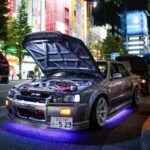
Next Door in Yokohama
Yokohama Tours, compared.
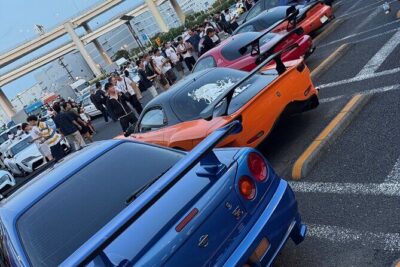 ★ 4.9EVO, WRX, Skyline – JDM Night Run to Daikoku Car MeetFrom $125478 reviews
Best Price Daikoku Parking Area JDM Car MeetFrom $76192 reviews
★ 4.9EVO, WRX, Skyline – JDM Night Run to Daikoku Car MeetFrom $125478 reviews
Best Price Daikoku Parking Area JDM Car MeetFrom $76192 reviews
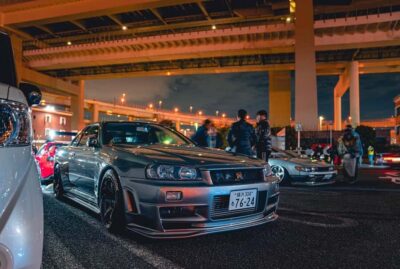 ★ 4.9Daikoku & Tokyo Private JDM Tour by 700HP R34 GT-RFrom $586101 reviews
 ★ 5.0Tokyo 8hr Private Tour with Licensed Guide from YokohamaFrom $20194 reviews
 ★ 5.0【Tokyo】JDM Daikoku Parking Area & Nissan Facility TourFrom $5587 reviews
 ★ 4.5Narita Airport: One Way Private Transfer to Tokyo|Yokohama HotelsFrom $7769 reviews
 ★ 5.0Shuttle Van Transfer, Yokohama(Port)⇒Tokyo, Narita, Haneda, TDRFrom $12263 reviews
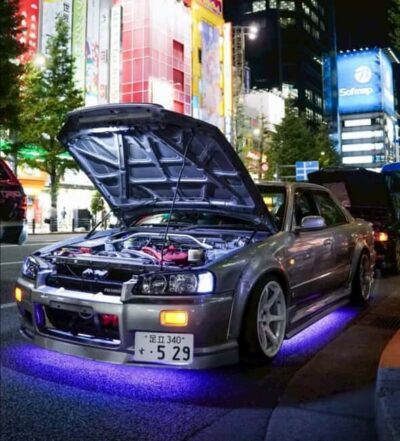 ★ 5.0R34Skyline Daikoku PA Fast & Furious Private ExperienceFrom $10963 reviews
Browse the lists this tour appears in