
Reviewed · PRIVATE DRIVERS
Tokyo Private Tour with English Speaking Driver
Tokyo gets easier with a plan. This private day in a private vehicle keeps you moving between iconic neighborhoods without fighting the subway maze, and it stays flexible so you can steer the schedule. You’ll also get no fixed route energy, meaning the driver can shape the order around what you care about most.
Two things I really like: hotel pickup makes the day feel smooth from minute one, and the English-speaking driver adds real context as you go. In the reviews, a driver named Michael and his associate were praised for running a strong all-day loop and keeping the pace lively but manageable.
One thing to consider: some stops require admission tickets, and the tour does not include a walking guide. You’ll still do short walks and crowd navigation on your own at places like Senso-ji and Shibuya.
In This Review
- Key highlights at a glance
- Private car, hotel pickup, and the English-speaking driver advantage
- Price and value: what $422.70 per group buys you
- How the flexible route works (and how to use it well)
- Tokyo Tower to Shibuya: skyline icons in one smooth run
- Harajuku at Takeshita Street: shopping street energy, without the detours
- Shinjuku Gyoen and Meiji Jingu: garden calm plus a forest escape
- Senso-ji Temple: classic Tokyo’s most photographed temple
- Tokyo Skytree: a skyline viewpoint with room to breathe
- Tsukiji Outer Market and Akihabara: food streets and tech culture
- Odaiba: Tokyo Bay views and futuristic shopping time
- Practical tips to make the day feel smooth
- Should you book this private Tokyo tour?
- FAQ
- How long is the Tokyo private tour?
- How many people can be in a group?
- Does the tour include hotel pickup and drop-off?
- Is the driver English-speaking?
- Are admission tickets included for all stops?
- Is there a fixed route?
- Can I cancel for a full refund?
Key highlights at a glance
- Hotel pickup and drop-off: you start and end at your hotel without figuring out meeting points
- English-speaking driver (private group): you get guidance in the car as you move city to city
- A flexible schedule: no single set itinerary forces your day
- Tokyo Tower, Shibuya, Senso-ji, and Skytree: you cover landmark-grade stops in one day
- Mix of viewpoints, shopping, and nature: temples, modern icons, and garden time in the same outing
Private car, hotel pickup, and the English-speaking driver advantage
Tokyo is big. The best way to see it in a single day is often to skip the “where is the train” stress and let someone else handle the navigation. This tour is built around a private vehicle with hotel pickup and drop-off, so you can get out the door already in sightseeing mode.
I love the feel of an English-speaking driver because Tokyo has a lot of context you’d miss if you’re only reading signs. The tour notes also spell out that there is no walking guide, but the driver will provide the information. That means you’re not stuck guessing what matters at each stop. It’s especially useful when you’re moving between very different parts of the city, like techy Akihabara, old-school temple lanes, and the skyline views from Tokyo Tower and Tokyo Skytree.
Another practical win: you’re not stuck in the tight rhythms of trains and buses when you’d rather just roll from point to point. With a private vehicle and a group capped at up to five people, it’s a calmer way to handle a day that can easily become exhausting.
Price and value: what $422.70 per group buys you
The price is listed as $422.70 per group (up to 5). On paper, that can sound like a splurge. In practice, it can be good value if you split it among people or you’re trying to protect time.
Here’s the value logic I use:
- You’re paying for convenience and time: hotel pickup, drop-off, and car transport between far-flung neighborhoods
- You’re paying for flexibility: no fixed route means you can adjust stops to match your interests
- You’re avoiding multiple separate taxis or transfers across the day
Also, the tour includes fuel surcharge and toll fees, plus an air-conditioned vehicle. Those are details that matter in Tokyo, where distance adds up and you’ll appreciate not sweating through the ride.
What’s not included is key: admission tickets at specific stops. In other words, you’re paying for the ride and the route support, not entry fees. If you plan around the paid admissions (Tokyo Tower, Shinjuku Gyoen National Garden, Tokyo Skytree), the overall spending usually feels more predictable.
How the flexible route works (and how to use it well)
This tour is described as having no fixed route. That’s not just marketing fluff—it’s your chance to steer the day.
You’ll see stops that include:
- Tokyo Tower
- Shibuya Crossing
- Takeshita Street
- Shinjuku Gyoen National Garden (great for cherry blossom season)
- Senso-ji Temple
- Meiji Jingu Shrine
- Tokyo Skytree
- Tsukiji Fish Market (Outer Market)
- Akihabara
- Odaiba
In a “choose your stops” style tour, the smartest move is to decide what your day must include before pickup. For example:
- If you care most about classic Tokyo sights, you’ll prioritize Tokyo Tower, Shibuya, Senso-ji, and Skytree.
- If you want at least one nature pause, build in Shinjuku Gyoen and Meiji Jingu so you don’t just power through crowds all day.
Then let your driver handle the sequencing. The time estimates listed for each stop (many around 30–45 minutes, with longer at Tsukiji and Akihabara) suggest a steady rhythm: enough time to enjoy, shop a bit, and take photos without making the day feel like a marathon.
One more tip: because there isn’t a walking guide, you’ll want to come prepared to read the vibe and ask your driver questions in the car. If something catches your eye—food stalls, a side street, a view spot—ask. A good driver can often point you to what’s worth a quick look.
Tokyo Tower to Shibuya: skyline icons in one smooth run
This tour often starts with Tokyo Tower, a landmark that’s easy to photograph and fun to understand. The details given here are the kind you’ll remember: Tokyo Tower was built in 1958, it’s 333 meters tall, and it became the tallest tower in the world when it opened, even surpassing its inspiration, the Eiffel Tower. It’s also framed as a symbol of Tokyo’s rebirth after World War II, which adds meaning beyond the view.
You’ll get about 45 minutes at Tokyo Tower, and admission isn’t included. That means you can plan to either purchase entry if you want the indoor observation experience, or simply enjoy the exterior and surrounding viewpoints if you’d rather keep entry costs down.
Next up is Shibuya Crossing, with about 30 minutes on the schedule. This is one of those “you have to see it once” places. You get the famous perspective of the busiest crossing in the world, and the energy is the point. The tradeoff is obvious: it’s popular, and you’ll be moving in a crowd. Going for photos and people-watching works best when you’re ready to wait a moment for the light to cooperate.
A practical mindset here: think “quick wow, then move.” Don’t try to linger like you’re at a museum. The value of this private format is that you can capture Shibuya’s iconic moment and keep your day rolling.
Harajuku at Takeshita Street: shopping street energy, without the detours
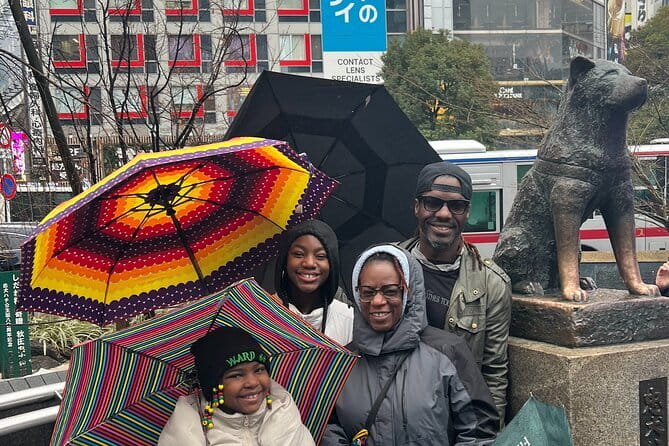
Takeshita Street is listed for about 30 minutes, and it’s free to access. It’s the kind of place where fashion boutiques, cafes, and snack stops crowd together in a pedestrian-friendly stretch in Harajuku.
What I like about including this stop in a private tour is timing. If you try to reach Harajuku the hard way, you can burn time on transfers. Here, you’re already in the neighborhood zone of the day, and you can treat Takeshita Street like a short sensory break: browse, spot colorful outfits, and grab a quick bite if you want one.
The drawback is the same as any famous shopping street: it’s busy by design. Your best approach is to pick a small goal—maybe one souvenir shop, one snack, or one photo spot—then keep moving. That way you don’t get lost in the crowd and forget you still have temples, shrines, and viewpoint stops ahead.
Shinjuku Gyoen and Meiji Jingu: garden calm plus a forest escape
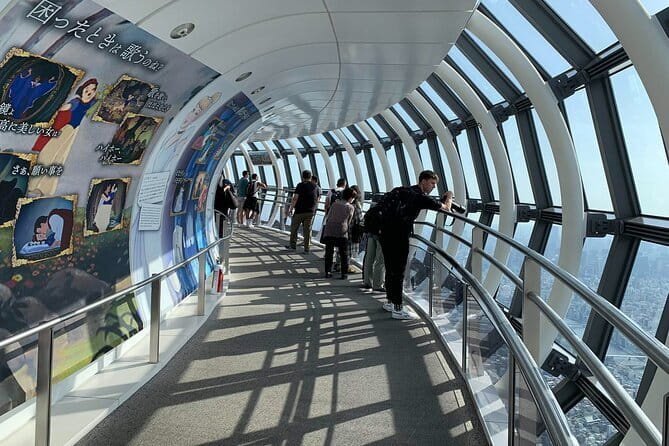
After the city buzz, two calmer nature stops help balance the day.
Shinjuku Gyoen National Garden is scheduled for about 1 hour and admission is not included. The reason it’s singled out is clear: it’s a best choice for cherry blossom season. If you’re visiting around spring, this is one of the easiest ways to add classic seasonal Tokyo to your itinerary. If you’re not in cherry blossom season, the garden still works as a breather: a slower pace, wide open space, and a clear contrast to the dense streets nearby.
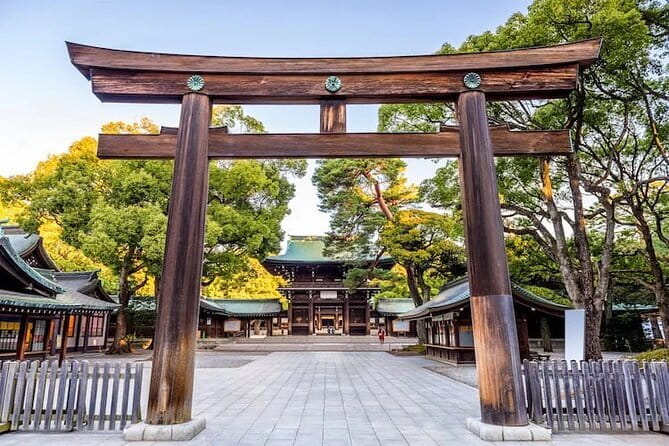
Then comes Meiji Jingu Shrine with about 45 minutes, and it’s free. The tour description calls out a massive forest area—70 hectares—inside Tokyo’s megacity footprint. That’s the point: you step in and the city noise can fade fast. It’s a great stop to reset your senses before heading back into sightseeing-heavy areas.
The main consideration here is simply logistics: these places can be shaded and cool compared to street-level Tokyo, which is nice. Bring a light layer if it’s chilly, because gardens and shrine grounds can feel different than the surrounding streets.
Senso-ji Temple: classic Tokyo’s most photographed temple
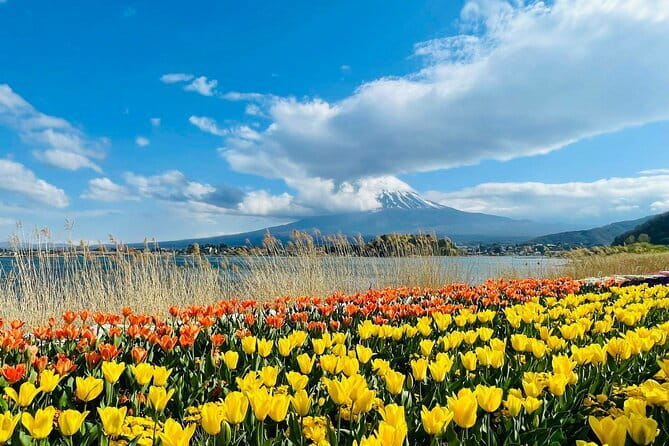
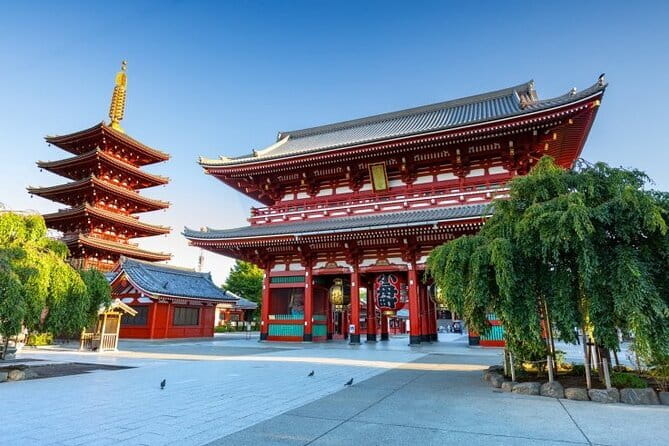
Senso-ji is scheduled for about 45 minutes, and admission is free. This is one of the most famous and photographed temples in Tokyo, and the details given are part of why it’s special: it’s described as the oldest Buddhist temple in the capital, and the five-story pagoda plus incense trails and vast eaves create a strong sense of place.
What I appreciate is that this stop delivers “old Tokyo” in a format that’s easy to experience, even on a tight schedule. You don’t need deep background to enjoy what you’re seeing. You can just wander the temple approach, watch the incense and the crowd flow, and take in the big architectural moments.
The drawback: you’ll be in a high-photography zone. If you want fewer people in your photos, be flexible with timing. If your main goal is atmosphere, don’t fight the crowd—use it. Temple areas often feel more alive because people are there for the same reason: it’s the center of attention.
Tokyo Skytree: a skyline viewpoint with room to breathe
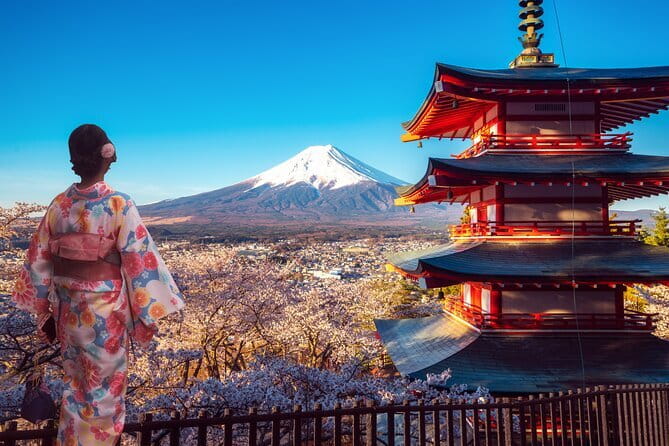
Tokyo Skytree is listed for about 45 minutes, with admission not included. It’s described as the tallest structure in Japan, reaching 634 meters. The big promise is panoramic views, and it notes that on a clear day you can get impressive visibility.
This is a smart stop late in the day if your schedule allows, because daylight and city lights change the mood quickly. If your priority is the viewpoint experience inside the tower, plan to budget for tickets. If you’d rather keep costs lighter, you can still appreciate the skyline presence, then use the time to walk around the area.
I also like pairing Skytree with earlier stops like Senso-ji and Shibuya. It gives you a “timeline” feeling: traditional temple energy in one half, then modern Tokyo height and infrastructure in the other.
Tsukiji Outer Market and Akihabara: food streets and tech culture
Tsukiji Fish Market is described with a key modern update: while the wholesale market moved to Toyosu, Tsukiji’s Outer Market still delivers fresh seafood, busy street stalls, and local delicacies. Your time here is about 1 hour, and it’s free.
The value of including it in a private tour is simple—you’ll get there without the “how do we get there” friction, which matters because Tsukiji is a place people often rush through or end up missing. With an hour, you can do a realistic loop: snack, browse, maybe grab a treat, and move on without feeling trapped.
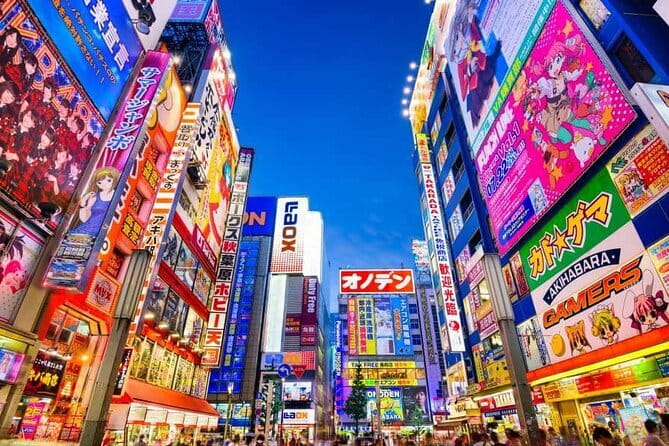
Then you head to Akihabara for about 1 hour, also free. It’s Tokyo’s tech and pop culture hub, known for electronics stores, anime and gaming culture, plus arcades and collectibles. The inclusion makes sense because it contrasts with the rest of the day. You’ve already had shrines and skylines. Akihabara gives you a more playful Tokyo side.
One practical drawback: Akihabara can be overwhelming if you don’t have a focus. If you love electronics, set your attention on specific categories. If you’re more into anime and collectibles, choose one lane of shopping rather than trying to do the whole district in one go.
Odaiba: Tokyo Bay views and futuristic shopping time
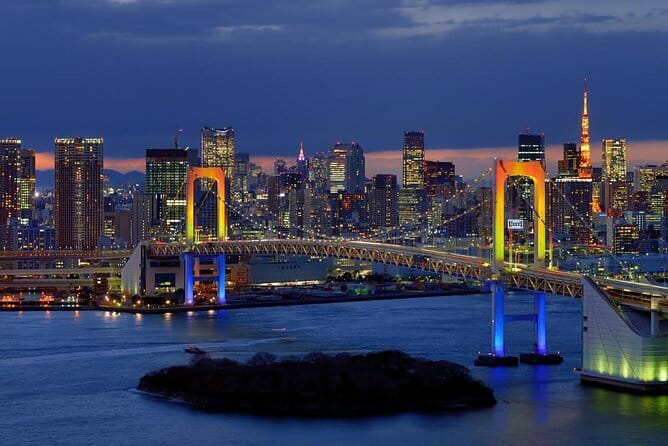
Odaiba is listed for about 1 hour and it’s free. It’s described as a futuristic entertainment district on a man-made island in Tokyo Bay, known for shopping malls, attractions like teamLab Borderless, and the Rainbow Bridge.
This stop is a good closer because it feels like a change of scenery. Even if you don’t do any paid attractions, the area is built for walking and window-shopping, and the bay setting adds a different feel than the dense streets inland.
The only consideration is that Odaiba is an “experience area,” not a single must-see building. If you want maximum satisfaction, go with an intention. For example: pick a mall you want to browse, decide whether you want to focus on bay views or shopping, then work within your hour.
Practical tips to make the day feel smooth
A private car tour works best when you treat it like a guided plan, not a free-form taxi ride.
A few things to do that I think matter:
- Use the driver for context: since there’s no walking guide, ask questions in the car before you arrive at a stop.
- Plan for paid admissions: Tokyo Tower, Shinjuku Gyoen, and Tokyo Skytree list admissions as not included. Decide early whether you want to go inside.
- Expect short walks and crowd navigation: Shibuya Crossing and Senso-ji are high-energy spots. Move with purpose.
- Keep your group size in mind: up to five people is ideal for back-and-forth with the driver and keeping the schedule manageable.
- Bring a charged phone: the tour uses a mobile ticket, and that’s how you’ll keep everything easy.
Also, it helps to think in “sets” rather than as individual sites. This itinerary naturally groups into: skyline icons, shopping street time, peaceful shrine and garden breaks, then food/tech, then bay-side modern Tokyo.
Should you book this private Tokyo tour?
I’d book this if you want a lot of Tokyo in one day without the mental load of transit. It’s strongest for people who value hotel pickup, an English-speaking driver, and an itinerary that covers landmark classics like Tokyo Tower, Shibuya Crossing, Senso-ji, and Tokyo Skytree while still giving you nature time at Shinjuku Gyoen and Meiji Jingu.
Skip it if you’re trying to keep costs ultra-low, because several key stops have admission fees. Also, if you hate crowds or hate walking, be aware that this includes crowd-friendly icons and shopping streets.
If your goal is a comfortable, well-organized sampler day—Tokyo at multiple speeds—this private format is a smart match.
FAQ
How long is the Tokyo private tour?
The tour runs about 7 to 9 hours.
How many people can be in a group?
The price is per group for up to 5 people.
Does the tour include hotel pickup and drop-off?
Yes. Hotel pickup and hotel drop-off are included.
Is the driver English-speaking?
Yes, the tour includes an English-speaking driver.
Are admission tickets included for all stops?
No. Admission ticket status varies by stop. Tokyo Tower, Shinjuku Gyoen National Garden, and Tokyo Skytree are listed as not included. Other stops like Shibuya Crossing, Takeshita Street, Senso-ji Temple, Meiji Jingu, Tsukiji Outer Market, Akihabara, and Odaiba are listed as free.
Is there a fixed route?
No. The route is flexible, and you can choose where you’d like to stop.
Can I cancel for a full refund?
Yes. You can cancel up to 24 hours in advance for a full refund. If you cancel less than 24 hours before the start time, the amount paid is not refunded.
Private Drivers, compared.
 ★ 5.0Mt Fuji Private Tour with English Speaking DriverFrom $415861 reviews
 ★ 4.5Mt. Fuji & Hakone Private Day Tour with English-Speaking DriverFrom $453824 reviews
 ★ 4.5Haneda Airport (HND) Private Transfer to Central TokyoFrom $104636 reviews
 ★ 4.5Mt. Fuji, Hakone Full-Day Private Tour with English Driver GuideFrom $495458 reviews
 ★ 5.0Mt. Fuji Day Trip from Tokyo with English Speaking Driver GuideFrom $497443 reviews
★ 4.5Mt. Fuji Private Tour with English Speaking DriverFrom $464402 reviews
★ 5.0Mt. Fuji Day Trip from Tokyo with English Speaking Driver GuideFrom $497443 reviews
★ 4.5Mt. Fuji Private Tour with English Speaking DriverFrom $464402 reviews
 ★ 4.9Mt. Fuji & Hakone Private Custom Tour English DriverFrom $322351 reviews
 ★ 4.5Narita Airport (NRT) Private Transfer to Central TokyoFrom $166300 reviews
Browse the lists this tour appears in