
Reviewed · PRIVATE DRIVERS
Tokyo Private Tour by Car with English speaking driver
Tokyo’s top sights, minus the transit stress. This private car day is built for people who want a tight route—Tsukiji Fish Market, Senso-ji, and Shibuya Crossing—without spending the whole day on trains and maps.
Two things I really like: you get hotel pickup and drop-off, so the day starts and ends smoothly, and you have the option for an English-speaking guide if you want more than just driving. The one big thing to consider is expectation management: this can run like a transportation service, and if stops change or you expected more walking-with-you guidance, the experience can feel short or flat.
If you go in with the right plan, it’s a smart way to see a lot of Tokyo in one day. Just be aware that your 10-hour schedule can shrink when locations are closed or the day gets tightened.
In This Review
- Key things to know before you go
- Hotel pickup and an English driver: the comfort base
- Your 10-hour route: a good mix of classic Tokyo and modern icons
- Tsukiji Fish Market stop: fast access to seafood Tokyo
- Senso-ji in Asakusa: temple sights plus street energy
- Tokyo Skytree: the one extra ticket you should plan for
- Imperial Palace: a quieter stop with closure risk
- Meiji Jingu Shrine: a reset from the city
- Takeshita Street and Shibuya Crossing: two very different Shibuya moods
- Odaiba District: futuristic Tokyo by the water
- Guides vs drivers: when English commentary makes a difference
- Value check: is $453.24 per group a smart use of your Tokyo time?
- Should you book this Tokyo private car tour?
- FAQ
- What’s included in the tour price?
- How many people can be in the group?
- Is hotel pickup and drop-off provided?
- Do I need to buy a ticket for Tokyo Skytree?
- How long is the tour?
- Which places are part of the planned route?
- Is a guide available, or is it just a driver?
- Is the tour ticket delivered electronically?
- What happens if I need to change my plans?
Key things to know before you go
- Hotel pickup and drop-off keeps the day simple, especially after a long flight
- Optional guide means you can choose deeper commentary or a lighter touch
- A flexible route lets your driver adjust stops to your priorities
- Private car comfort helps you save energy for the evening
- One extra ticket to budget: Tokyo Skytree isn’t included
Hotel pickup and an English driver: the comfort base
The biggest value here is the setup: you’re not trying to stitch together buses and subways while also reading signs you can’t fully decode yet. With hotel pickup and drop-off, you’re basically buying time and mental energy, not just transportation.
You’re also not stuck with a silent driver. The day includes an English-speaking driver, and there’s an optional English-speaking guide you can add for more context and smoother pacing. If your goal is to hear explanations as you travel, make it part of the plan from the start.
My practical take: this tour works best when you treat the driver as your Tokyo navigator. You’re still the one choosing what you want to prioritize, and the car makes that choice easy because you can move quickly between very different neighborhoods.
Your 10-hour route: a good mix of classic Tokyo and modern icons
This is a single-day itinerary that intentionally stitches together Tokyo’s “first-timer” landmarks. You’ll start with the famous food-market area, shift into temple culture, then move toward viewpoints and major city intersections, with a modern slice at the end.
The stops are spaced to balance photo time, entry time, and short breaks in between. That balance is part of why families often like this format: you don’t need to keep re-orienting every few blocks.
One note from real-world experiences: the advertised timing isn’t always guaranteed. In at least one case, the day ended early, and some stops were skipped due to closure timing. That doesn’t mean it will happen to you, but it’s a good reminder to keep flexibility in your expectations.
Tsukiji Fish Market stop: fast access to seafood Tokyo
Tsukiji Fish Market is the kind of place that feels like Tokyo has a pulse. Even when you’re just walking the area, you get that sensory hit—seafood sights, small stalls, and the constant motion of people who know exactly where they’re going.
On this day, you get about 1 hour 15 minutes, and admission is listed as free. The private-car part matters here because you’re not hunting for transit the moment you arrive. You can get to the area, park without stress, and focus on what you actually came for: the market atmosphere.
The only drawback is that a market visit can be “watch-and-sniff” more than it is a structured tour. If you want guided shopping tips or a step-by-step explanation of what you’re looking at, you’ll get more from an optional guide or from having your driver talk through the scene while you’re there.
Senso-ji in Asakusa: temple sights plus street energy
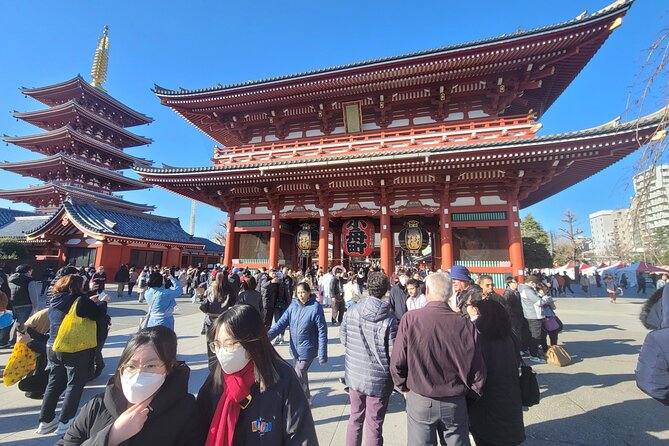
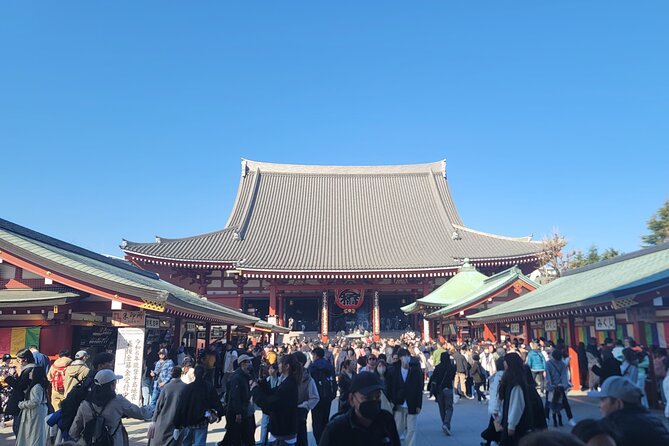
Next up is Senso-ji Temple in Asakusa, one of Tokyo’s most recognizable Buddhist temples. You’ll spend about 1 hour 30 minutes, with admission also listed as free.
This stop tends to work well with a car-based day because Asakusa is easy to overdo on foot. Here you can spend time at the temple approach and surrounding area without exhausting yourself before the afternoon rush.
A practical consideration: Senso-ji is only part of the “Asakusa experience.” The neighborhood around it is where you’ll notice the rhythm of the day—souvenir browsing, small bites, and quick photos. If you prefer a calmer pace, you can ask your driver to keep you moving between viewpoints rather than lingering in crowds.
Tokyo Skytree: the one extra ticket you should plan for
Tokyo Skytree is your tall, skyline break—about 1 hour 30 minutes on the schedule. This is the one stop where you’ll need to budget extra: the ticket isn’t included, and it’s listed as ¥2,500 per person.
That extra cost is worth thinking about. If your group is small, it’s a noticeable add-on. If you’re up to six people, the base tour price is spread across a larger group, which helps balance out the Skytree ticket.
Also, Skytree is a “pay-to-go up” attraction. If you’re hoping to spend that 1.5 hours only on the surroundings, you might end up with less payoff than expected. If the tower is a must-do for you, treat this stop as a planned highlight rather than a bonus.
Imperial Palace: a quieter stop with closure risk
The Imperial Palace stop gives you about 45 minutes, and admission is listed as free. For many first-timers, this is Tokyo’s slower contrast to the neon-and-crowds vibe—more open space, a sense of formal grounds, and a history-shaped layout.
Here’s the important consideration: opening and access can change by day. One unhappy experience specifically mentioned the Imperial Palace being closed on Mondays, and it wasn’t caught early enough by the driver. I can’t promise closures for your date, but I strongly suggest you confirm the access situation through your driver before you lock your priorities around this stop.
If it turns out you can’t get the access you expected, the private-car format helps because you can pivot. That’s where having at least a bit of flexibility in your “must-sees” list pays off.
Meiji Jingu Shrine: a reset from the city
Meiji Jingu Shrine is next, with about 45 minutes and free admission. The setting matters here: it’s a structured pause from traffic and dense streets, and it gives you a calmer rhythm while the rest of the day stays active.
What I like about keeping this on the itinerary is pacing. After market and temple sightseeing, you get a spiritual site with a different atmosphere, which makes the rest of the route feel less repetitive.
If you’re traveling with kids or anyone who gets overstimulated easily, this is the sort of stop that lets people recharge without needing a long break away from sightseeing.
Takeshita Street and Shibuya Crossing: two very different Shibuya moods
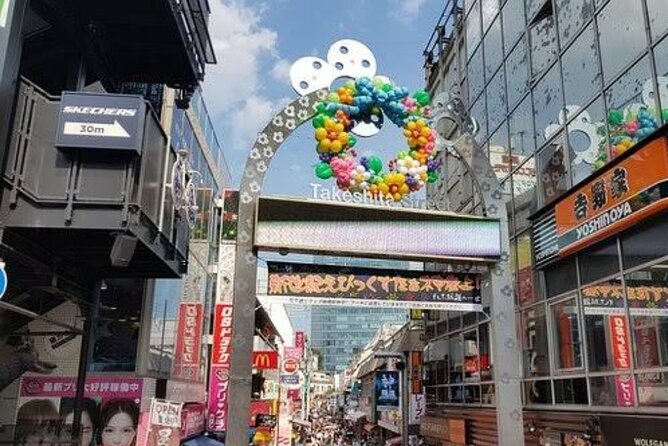
Then you hit Harajuku’s style street: Takeshita Street gets about 1 hour 15 minutes. Admission is listed as free. This is the place for fashion on the sidewalk and quick people-watching.
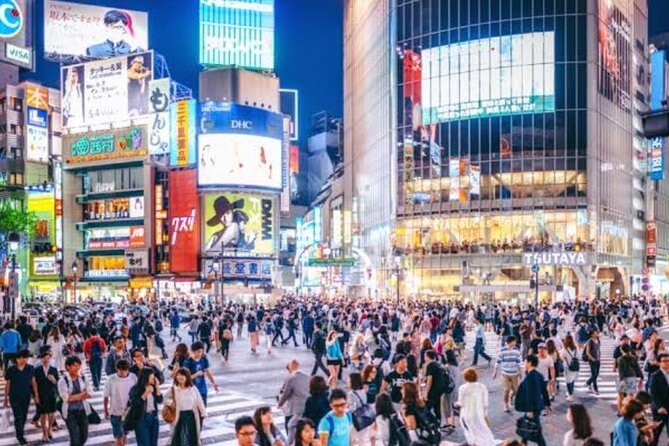
After that, you go to Shibuya Crossing for about 45 minutes, also free. This is the iconic intersection where Tokyo feels like a live video game. The private-car part is useful because Shibuya can be tricky to navigate quickly, especially if you’re juggling directions and timing.
Here’s where your expectations matter again. If you want a guided explanation of why Shibuya Crossing became such a global symbol—or how the area evolved—this is where an optional guide can earn its spot. If you’re happy just soaking in the scene and getting the photos, the driver-only setup can still work fine.
Odaiba District: futuristic Tokyo by the water
Finally, you roll into Odaiba District, scheduled for about 45 minutes. Admission is listed as not included, which usually means you might be paying for specific attractions inside the area rather than the area itself.
Odaiba tends to feel different from the rest of your day because it’s more modern and waterfront-focused. Even if you don’t buy extra activities, you’ll get a sense of Tokyo’s “tomorrow” vibe without the hassle of multiple train changes.
The time here is short by design. So if Odaiba is your top priority, you might want to discuss swapping the order or spending more time there, since the fixed day timing is limited.
Guides vs drivers: when English commentary makes a difference
This tour has an important split in what you might experience. Some days you’ll get a driver who does a strong job explaining Tokyo as you go. In other cases, you may get mostly transportation with stops and curbside drop-offs.
Real examples from the experience show both ends of that spectrum. One driver, Muneeb, was described as friendly, with excellent English and lots of Tokyo knowledge. Another standout was Bhatti, praised for flexibility, kindness, and knowledge that made the sights feel smoother.
At the same time, there are also reports of limited commentary. One guest felt the website promised more driving narration than what they experienced. Another said they expected a guided tour inside the sights and got something closer to a taxi-style ride: clean car, polite person, but not the guide experience they were looking for.
So how do you protect yourself?
- If you want more than logistics, lean toward the optional guide and ask for more explanation during the drive.
- If you’re okay with self-directed sightseeing and just want someone to get you there in comfort, a driver-only day can still be satisfying.
Value check: is $453.24 per group a smart use of your Tokyo time?
The price is listed as $453.24 per group, up to 6 people, for about 10 hours. That’s not cheap on a per-person basis if you’re traveling solo, but private-car pricing usually scales in groups.
What makes the value more reasonable is what’s included:
- Air-conditioned vehicle
- Parking fees
- Fuel surcharge
- Pickup and drop-off at your hotel
- Mobile ticket
Those items matter in Tokyo. Parking and fuel costs add up fast, and private transit planning is time-consuming. When your day is tight and you want to maximize “seeing,” that’s where paying for convenience can feel like a bargain.
The one extra cost to plan for is Tokyo Skytree tickets at ¥2,500 per person. That extra charge is straightforward, and it’s also your biggest variable depending on how many of you go up the tower.
My final value take: this is a strong pick when you care about comfort, speed, and minimizing navigation stress more than you care about deep museum-level guidance.
Should you book this Tokyo private car tour?
Book it if:
- You want one-day coverage of major Tokyo landmarks in comfort
- You’re traveling as a group (up to 6) and want to spread the private-car cost
- You like the idea of custom stops and a flexible day led by an English-speaking driver
Skip it or approach carefully if:
- You want a true “guide walks with you inside everything” style experience every step of the way
- You expect the day to always run the full 10 hours with every scheduled stop, even on closure days
- You’re the type who needs lots of spoken commentary while driving unless you’ve arranged the optional guide
FAQ
What’s included in the tour price?
The tour includes an air-conditioned vehicle, parking fees, and a fuel surcharge. The Tokyo Skytree ticket is not included.
How many people can be in the group?
This is a private tour/activity with your own group, up to 6 people.
Is hotel pickup and drop-off provided?
Yes, pickup is offered and you also get drop-off after the tour.
Do I need to buy a ticket for Tokyo Skytree?
Yes. Tokyo Skytree admission is not included, and the listed cost is ¥2,500 per person.
How long is the tour?
The duration is about 10 hours.
Which places are part of the planned route?
The planned stops include Tsukiji Fish Market, Senso-ji Temple, Tokyo Skytree, Imperial Palace, Meiji Jingu Shrine, Takeshita Street, Shibuya Crossing, and Odaiba District.
Is a guide available, or is it just a driver?
You’ll have an English-speaking driver, and an optional guide is available for deeper insights.
Is the tour ticket delivered electronically?
Yes, it includes a mobile ticket.
What happens if I need to change my plans?
Free cancellation is offered up to 24 hours in advance for a full refund.
If you tell me your travel dates and who’s coming (ages, must-sees, and whether you want the optional guide), I can suggest a smarter way to prioritize the stops so the day feels like a win.
Private Drivers, compared.
 ★ 5.0Mt Fuji Private Tour with English Speaking DriverFrom $415861 reviews
 ★ 4.5Mt. Fuji & Hakone Private Day Tour with English-Speaking DriverFrom $453824 reviews
 ★ 4.5Haneda Airport (HND) Private Transfer to Central TokyoFrom $104636 reviews
 ★ 4.5Mt. Fuji, Hakone Full-Day Private Tour with English Driver GuideFrom $495458 reviews
 ★ 5.0Mt. Fuji Day Trip from Tokyo with English Speaking Driver GuideFrom $497443 reviews
★ 4.5Mt. Fuji Private Tour with English Speaking DriverFrom $464402 reviews
★ 5.0Mt. Fuji Day Trip from Tokyo with English Speaking Driver GuideFrom $497443 reviews
★ 4.5Mt. Fuji Private Tour with English Speaking DriverFrom $464402 reviews
 ★ 4.9Mt. Fuji & Hakone Private Custom Tour English DriverFrom $322351 reviews
 ★ 4.5Narita Airport (NRT) Private Transfer to Central TokyoFrom $166300 reviews
Browse the lists this tour appears in